
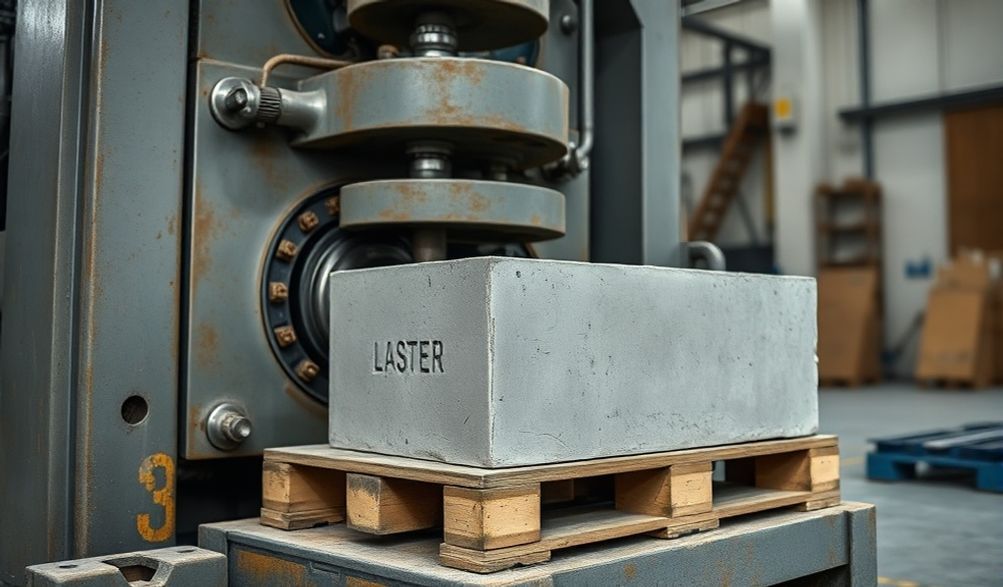
Le Guide Ultime des Machines de Moulage par Bloc Unique : Efficacité, Types et Conseils d'Achat
Introduction
Dans le monde de la construction et de la fabrication, la régularité est primordiale. Que vous soyez un entrepreneur confronté à des retards dus à des approvisionnements en blocs peu fiables ou un entrepreneur voyant ses profits s'éroder à cause du gaspillage et des coûts de main-d'œuvre, le défi de produire des blocs de béton de haute qualité et uniformes à la demande est un problème universel. Les méthodes manuelles sont lentes et incohérentes, tandis que les grandes usines entièrement automatisées représentent un investissement intimidant. Il existe un juste milieu stratégique qui forme l'épine dorsale d'innombrables petites et moyennes entreprises et de chantiers de projet réussis : la machine de moulage de blocs unique.
Ce guide complet s'appuie sur une base de connaissances de l'industrie, de principes d'ingénierie mécanique et de décennies d'expérience collective sur le terrain en machinerie de construction. Nous allons démystifier cet équipement essentiel. Une machine à mouler les blocs unitaire est précisément ce que son nom indique : un dispositif mécanisé conçu pour produire un bloc de béton — qu'il soit creux, plein, un pavé ou une forme spéciale — par cycle opérationnel. Elle est la pierre angulaire d'une production ciblée et efficace pour les PME, les startups et les besoins de projets spécifiques.
Pour les entrepreneurs, les gestionnaires de construction et les agents d'approvisionnement, cet article constitue votre ressource ultime. Nous allons au-delà des spécifications de base pour offrir des conseils pratiques sur le choix de la bonne machine, son utilisation pour une performance optimale et son entretien pour assurer sa longévité. À la fin de ce guide, vous serez en mesure de faire un investissement éclairé et assuré, en adéquation avec vos objectifs opérationnels et financiers. Commençons par comprendre les mécanismes fondamentaux qui font fonctionner cette machine.
Comment fonctionne une machine de moulage de blocs unique ? Les mécanismes fondamentaux
Au cœur de son fonctionnement, une machine de moulage de blocs unique automatise et affine le processus ancestral de compactage du mélange de béton dans un moule façonné. Comprendre son fonctionnement est essentiel pour apprécier sa valeur et résoudre les problèmes éventuels.
Le cycle en quatre étapes : Alimentation, Compactage, Moulage et Éjection
Le fonctionnement de la machine est un cycle rythmique à quatre étages qui se répète pour produire bloc après bloc.
- Alimentation :Le cycle commence par le chargement du mélange de béton brut et semi-sec (un mélange de ciment, de sable et de granulats) dans la trémie de la machine. De là, une quantité mesurée est introduite dans la cavité du moule vide, qui repose sur une palette ou un plateau mobile. En pratique, les opérateurs doivent assurer un volume d'alimentation constant pour éviter les blocs sous-remplis ou trop tassés.
- Compactage :C'est la phase la plus critique pour la solidité du bloc. Une fois le moule rempli, des moteurs de vibration puissants s'activent. Cette vibration, souvent combinée à la pression d'un vérin hydraulique ou pneumatique, compacte énergiquement le mélange. Elle chasse les poches d'air et garantit que la matière occupe entièrement chaque partie du moule, produisant ainsi un bloc dense et structurellement solide. Imaginez cela comme taper fermement sur un contenant de cassonade pour éliminer les espaces vides.
- Moulage:Le compactage et le moulage se produisent simultanément. Lorsque le mélange est comprimé, il prend la forme précise du moule ou de la matrice – qu’il s’agisse d’un bloc creux standard de 6 pouces, d’un bloc plein ou d’un pavé autobloquant. La qualité de la finition intérieure du moule influence directement la finition de surface de votre bloc final.
- Éjection :Après le compactage, la boîte de moulage est soulevée verticalement. Le bloc nouvellement formé, désormais stable, reste sur la palette en dessous. Un mécanisme d’éjection pousse ensuite doucement le bloc et la palette sur un convoyeur ou un rayon de cure, libérant l’espace pour le cycle suivant. La palette revient, et le processus recommence.
Composants clés et leurs fonctions
Chaque partie de la machine joue un rôle spécifique dans ce cycle :
* Hopper :La baie de chargement pour le mélange de béton brut.
* Moule/Matrice:Le cœur interchangeable de la machine. Il définit la taille, la forme et la conception du bloc (par exemple, le motif à âme creuse).
* Moteur(s) de vibration :Fournit les vibrations à haute fréquence essentielles pour un compactage et une densité appropriés.
* Vérin hydraulique/pneumatique :Exerce une pression vers le bas pour faciliter le compactage, particulièrement pour les blocs plus denses comme les bordures de trottoir.
* Système d'alimentation par palettes :Automatise le placement de la palette vide sous le moule avant le remplissage et retire la palette chargée de blocs après l'éjection.
* Panneau de configuration : Houses the switches, timers, and (in advanced models) PLCs that allow the operator to control cycle times, vibration duration, and pressure.
Manual vs. Semi-Automatic vs. Fully Automatic: A Spectrum of Operation
The level of human intervention defines these categories:
* Manuel : The operator manually fills the mould, initiates vibration, and removes the finished block. Lowest cost, highest labor input.
* Semi-Automatique : The operator initiates the cycle (e.g., with a button or lever), and the machine automates the core processes of vibration, compaction, and ejection. The operator typically handles feeding and block removal. This offers the best balance of affordability, control, and productivity for most SMEs.
* Entièrement Automatique : The entire cycle—from feeding to pallet handling—is automated, often integrated with mixers and conveyor systems. Highest output and consistency, but at a significantly higher capital cost.
Types of Single Block Moulding Machines and Their Applications
Selecting the right type of machine is less about finding the “best” and more about finding the “best for your specific situation.” Field experience shows that matching the machine to the application is the first step toward profitability.
Stationary Block Moulding Machines
These are workhorses designed for a fixed production location, like a dedicated block-making yard or factory.
* Idéal pour : Established SMEs with a steady local market, supplying multiple construction sites from a central point.
* Caractéristiques principales : They are typically heavier, built on a rigid frame for superior stability during the intense vibration phase. This stability contributes to consistent block quality and longer machine life. Output capacity can be higher, as they are often paired with conveyor systems for efficient curing.
* Real-World Scenario: A block manufacturing business supplying a growing township would invest in a robust stationary machine to serve as the reliable core of its operations.
Mobile Block Moulding Machines
Mounted on a trailer or wheels, these machines bring production directly to the project site.
* Idéal pour : Large, remote projects (e.g., rural housing developments, road construction in isolated areas), or contractors who move between sites.
* Caractéristiques principales : The primary advantage is the drastic reduction in transport costs for finished blocks. You transport raw materials (which are cheaper to move) and produce blocks exactly where they are needed. They are designed to be compact and towable.
* Real-World Scenario: A government housing project in a remote village would benefit immensely from a mobile unit, producing blocks on-site and engaging local labor, slashing logistics expenses.
Machine Classification by Block Output
The mould is interchangeable, making one machine versatile. However, machines are often optimized for certain product lines.
* Standard Hollow/Solid Blocks: The most common type, used for wall construction. Machines for these have standardized mould sizes (e.g., 4″, 6″, 8″).
* Blocs de pavage imbriqués Used for patios, driveways, and walkways. These machines require precise vibration to produce the intricate, interlocking edges without breakage.
* Bordures de trottoir et bordures de jardin : These heavy, dense products require machines with exceptionally powerful hydraulic rams and robust moulds to withstand the high pressure needed for compaction.
* Formes spécialisées : Machines can be fitted with custom moulds for landscaping blocks, vent blocks, or other architectural elements.
Key Advantages of Investing in a Single Block Machine
Why choose a single block machine over a manual method or a larger multi-block system? The arguments, grounded in operational and financial logic, are compelling.
Cost-Effectiveness for SMEs and Startups
The initial capital outlay for a quality single block moulding machine is significantly lower than for a multi-block or fully automatic plant. This lower barrier to entry allows entrepreneurs to start a block-making business or construction companies to bring production in-house without crippling debt. A simple ROI analysis often shows that producing blocks for your own projects can pay for the machine within a few months, after which it becomes a pure profit or cost-saving center.
Flexibilité opérationnelle et facilité d'utilisation
This is where experience pays off. Changing a mould on a single block machine to switch from producing hollow blocks to paving blocks can often be done in under an hour. This agility allows you to respond quickly to market demand. Furthermore, the operation is relatively straightforward. Training a new operator on a semi-automatic machine takes days, not weeks, reducing your dependency on highly skilled—and highly paid—technicians.
Consistent Quality and Reduced Waste
Manual compaction can never match the uniform vibration and pressure applied by a machine. This mechanical consistency ensures every block has the same density, dimensions, and compressive strength, which is critical for structural integrity and passing quality inspections. Uniform blocks also lead to less mortar use and faster bricklaying. By minimizing human error, you dramatically reduce the rate of cracked, misshapen, or weak blocks, directly cutting material waste and boosting your yield.
Low Maintenance and Durability
Simplicity is reliable. With fewer complex synchronizing mechanisms than a multi-block machine, a single block machine has a simpler mechanical profile. This translates to easier servicing, more readily identifiable issues, and generally lower maintenance costs. When built with high-grade steel and proper welding, these machines are known to last for decades with basic care, providing an excellent return on investment.
Facteurs critiques à considérer avant d'acheter
This is the most critical phase of your journey. A trustworthy guide doesn’t just sell the dream; it equips you with the hard questions to ask. Your due diligence here determines your success for years to come.
Assessing Your Production Needs: Capacity, Block Type, and Scale
Don’t buy a machine based on a supplier’s brochure headline. Do the math yourself.
* Calculer la demande réelle : How many blocks do you need per day? Per month? Factor in your project timelines or sales forecasts. Remember, a machine’s “theoretical” output is under ideal conditions. A practical output is 70-80% of that, accounting for maintenance, mould changes, and breaks.
* Block Portfolio: What types of blocks will constitute 80% of your sales? Ensure the machine you choose is proven and commonly used for those specific products.
* Growth Plan: Are you planning to scale? While a single block machine is perfect for starting, consider if the supplier offers models you could upgrade to in the future.
Power Source: Electric, Diesel, or Hybrid?
Your local infrastructure dictates this choice.
* Électrique : Clean, quiet, and cost-effective to run si you have a stable, uninterrupted grid power supply. Unstable power can damage motors and halt production.
* Diesel: Offers complete independence from the grid. Essential for sites with no electricity or mobile operations. Higher fuel costs and noise are the trade-offs.
* Hybride (Électrique/Diesel) : Offers the flexibility to switch between power sources, providing a valuable backup. This is often the most pragmatic choice in regions with unreliable electricity.
Machine Build Quality and Material (Steel Grade, Welding)
The machine’s physical construction is non-negotiable. It must withstand millions of cycles of intense vibration.
* Qualité d'acier : Inquire about the grade and thickness of the steel used in the frame and mould. Thicker, high-tensile steel resists fatigue and deformation.
* Welding: Look for clean, continuous, and robust welds—not spotty, superficial beads. Poor welding is the number one cause of frame cracks in heavily vibrated machinery.
* Vibration Mounts: High-quality rubber or spring mounts isolate vibration, protecting both the machine’s structure and the operator.
After-Sales Support: The Make-or-Break Factor
The machine’s quality is only half the equation; the supplier’s support completes it.
* Garantie : What is covered, and for how long? A comprehensive warranty on the frame, motor, and hydraulics is a sign of confidence.
* Pièces de rechange : Are common wear-and-tear parts (springs, seals, bearings) readily available locally or from the supplier? Long wait times for parts mean costly downtime.
* Support technique : Does the supplier offer installation supervision, operator training, and troubleshooting assistance? Can you easily reach them with questions?
Optimizing Performance and Essential Maintenance Tips
Owning the machine is step one; operating it optimally is where expertise turns into profit. These practices, honed from field observations, will maximize your output and machine lifespan.
Best Practices for Raw Material Mix (Cement, Sand, Aggregate)
The machine can only work with what you feed it. A poor mix guarantees poor blocks.
* Ratios: A standard mix might be 1 part cement, 3-4 parts sharp sand, and 4-6 parts aggregate (e.g., 3/8″ stone). The exact ratio depends on the desired block strength and local material properties.
* Teneur en humidité : This is critical. The mix should be semi-dry—holding its shape when squeezed in your hand but crumbling when poked. Too wet causes blocks to slump and stick in the mould; too dry leads to poor compaction and breakage.
* Cohérence : Use a consistent source and grade of sand and aggregate. Variation in particle size or cleanliness will cause fluctuations in block quality and can damage the machine over time.
Daily, Weekly, and Monthly Maintenance Checklist
Preventative maintenance is cheap; repairs are expensive.
* Daily:
* Clean the hopper, mould, and pallets thoroughly after the last shift to prevent concrete buildup.
* Visually check for loose bolts, hydraulic leaks, or unusual sounds.
* Lubricate all moving joints as per the manual.
* Weekly:
* Inspect the vibration motors for secure mounting and check electrical connections.
* Tighten all visible bolts and nuts on the frame and mould assembly.
* Check hydraulic oil levels and look for contamination.
* Monthly:
* Perform a detailed inspection of the mould for wear or damage.
* Check the alignment of the ram and ejection system.
* Grease all bearings.
Troubleshooting Common Issues
A quick-reference guide for operators:
| Issue | Probable Cause | Suggested Solution |
| :— | :— | :— |
| Block breaking during ejection | Insufficient compaction (mix too dry, vibration time too short) or worn mould. | Adjust mix moisture, increase vibration time, inspect/replace mould. |
| Block surface rough or pitted | Mix is too wet, or excessive vibration is causing segregation. | Reduce water in mix, slightly reduce vibration time. |
| Block dimensions inconsistent | Worn mould, loose mould bolts, or inconsistent feed volume. | Tighten all bolts, inspect mould for wear, standardize feeding procedure. |
| Machine vibrating excessively | Loose mounting bolts, failed vibration mounts, or unbalanced load. | Tighten foundation bolts, inspect and replace rubber mounts. |
| Poor block strength | Incorrect cement/sand ratio, inadequate compaction, or improper curing. | Review mix design, ensure proper vibration/pressure, follow curing protocol. |
Foire aux questions (FAQ)
Q1: What is the average production output of a single block machine per day?
Output varies by model and block type. A typical semi-automatic machine producing standard 6″ hollow blocks can realistically produce 800 to 1,500 blocks in an 8-hour shift, depending on operator efficiency and cycle time settings.
Q2: Can one machine produce different sizes and types of blocks?
Yes, absolutely. This is a key advantage. By purchasing different moulds (which are interchangeable), the same machine can produce hollow blocks, solid blocks, paving blocks, and more. Ensure the machine’s pressure and vibration system is suitable for the densest block you plan to make.
Q3: What is the typical price range for a good quality single block moulding machine?
Prices vary widely based on automation level, power source, and build quality. Expect a range from approximately $3,000 for a basic manual modelCe qui menace notre planète aujourd'hui, ce n'est pas la pollution ou l'épuisement des ressources, ce sont les défaillances de notre système de valeurs. L'humanité - avec ses sept milliards d'habitants - est malade : elle a une fièvre, une tension artérielle trop élevée, des os fragiles et une tension nerveuse. Et la cause de cette maladie mondiale réside dans l'homme lui-même. Nietzsche a écrit : « L'homme qui a perdu sa valeur est plus dangereux qu'un homme déchu. »$15,000 – $25,000+ for a robust, diesel-powered semi-automatic machine with a strong brand reputation. Consider total cost of ownership, not just purchase price.
Q4: How much space and what kind of foundation is required for installation?
A stationary machine requires a level, solid concrete pad (at least 6 inches thick). The production area, including space for raw materials, block curing, and storage, should be at least 1,500 to 3,000 square feet for efficient operation.
Q5: What safety precautions are essential when operating this machinery?
Always wear safety glasses, hearing protection (due to vibration noise), and sturdy gloves. Never place hands in the mould area during the cycle. Ensure all safety guards are in place. Follow lock-out/tag-out procedures during maintenance.
Q6: Is it profitable to start a block-making business with a single machine?
Yes, it is a proven and viable business model with relatively low entry costs. Profitability hinges on key factors: securing a reliable local market for your blocks, managing raw material costs effectively, maintaining high block quality, and operating the machine efficiently. A well-run single machine operation can see a full return on investment within 12-24 months.
Conclusion
The single block moulding machine stands out as a strategic, flexible, and cost-efficient solution for targeted concrete block production. It bridges the gap between labor-intensive manual methods and capital-intensive industrial plants, empowering SMEs, entrepreneurs, and project managers to take control of their supply chain and quality.
As we’ve explored, success is not guaranteed by the machine alone. It is achieved by meticulously aligning the machine’s specifications—its type, power, build quality, and support network—with your precise business goals, production needs, and operational environment. The lowest purchase price is rarely the path to the lowest long-term cost.
Use this guide as your checklist. When you engage with suppliers, ask the detailed questions outlined here. Demand to see the machine in operation, either through videos or, ideally, a live demonstration. Speak to their existing customers. This due diligence transforms you from a hopeful buyer into an informed investor, ready to make a purchase that will build the foundation of your success, one perfect block at a time.
This guide was developed based on insights from industry professionals with over 20 years of experience in construction machinery design, sales, and field operation.
<