
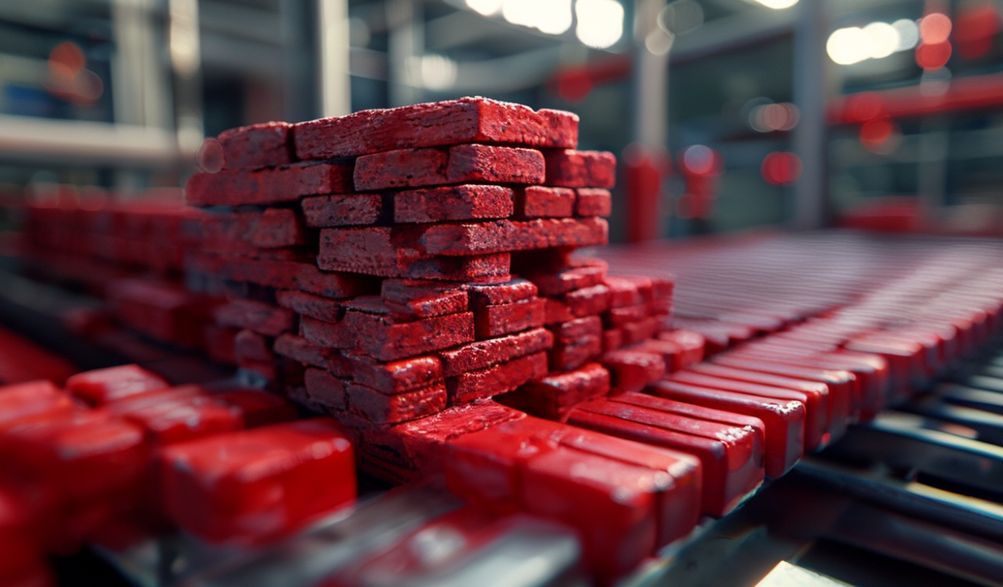
Machine Made Bricks: A Modern Guide to Manufacturing, Types & Advantages
Pengantar
Picture a traditional brickyard: artisans shaping clay by hand, each unit bearing the subtle, unique marks of its maker. Now, shift your gaze to the reality of modern construction. The skylines and suburbs of today are built with bricks of astonishing uniformity—each one a perfect twin to the next, stacked with millimeter precision. What transformed this ancient building material from a variable craft into a pillar of modern engineering? The answer lies in the rise of machine made bricks.
This guide is built on decades of evolution in construction materials and manufacturing standards. We’ll demystify the automated processes that create today’s bricks, processes governed by rigorous engineering standards like ASTM and ISO to ensure reliability and performance.
You will learn the intricate step-by-step journey from raw clay to a finished brick, explore the various types and grades available, and understand the compelling advantages—from cost-effectiveness to superior strength—that make machine-made bricks the default choice for contemporary projects. We’ll also provide a clear, objective comparison with handmade bricks to help you select the perfect material for your specific needs. This information is rooted in industry best practices, designed to help you make informed decisions for durable, beautiful, and efficient construction.
What Are Machine Made Bricks? Defining Modern Masonry
At its core, a machine made brick is a masonry unit manufactured primarily through automated mechanical processes. These processes—extrusion, molding, and cutting—minimize direct human handling, prioritizing consistency, volume, and structural predictability. This stands in contrast to handmade bricks, where each unit is individually formed.
The Core Definition and Historical Context
The story of the machine made brick is inextricably linked to the Industrial Revolution. For centuries, brickmaking was a labor-intensive, seasonal craft. The invention of steam-powered brickmaking machines in the 19th century revolutionized the industry. It allowed for:
- Year-round production.
- A dramatic increase in output.
- A significant reduction in cost.
- The birth of standardized brick sizes.
This shift was fundamental to the rapid urbanization and large-scale infrastructure projects of the modern era. Today, machine made bricks are the undisputed backbone of global construction.
Key Characteristics at a Glance
You can identify machine made bricks by several consistent traits:
- Keseragaman: They exhibit near-identical dimensions, shape, and color within a batch, facilitating faster, cleaner construction.
- Structural Consistency: The controlled manufacturing process ensures a homogenous density, leading to predictable and reliable compressive strength.
- Finishing Permukaan: Surfaces can range from smooth and precise to intentionally textured (e.g., sand-faced, rustic), achieved through controlled manufacturing techniques rather than random chance.
The Machine Made Brick Manufacturing Process: Step-by-Step
The journey from a clay pit to a pallet of bricks is a marvel of modern engineering. Here’s how it’s done.
Stage 1: Raw Material Selection & Preparation
It all starts with the right earth. Manufacturers typically use:
- Surface Clays: Mined from shallow deposits.
- Shales: Finer-grained, harder clays that require grinding.
- Fire Clays: Found at deeper levels, offering higher heat resistance.
The raw material is then prepared:
1. Grinding & Crushing: Large chunks are reduced to a fine particle size.
2. Screening: Impurities and oversized particles are removed.
3. Mencampur & Mencairkan: Water is added to achieve the perfect plasticity, and other minerals (like iron oxide for color or sand for texture) may be blended in to create a homogenous “clay body.”
Stage 2: Forming the Brick (Extrusion & Molding)
This is where the brick gets its shape. Two primary methods are used:
- Extrusion (The Most Common Method):
- The prepared clay is fed into a pugmill—a mixer that kneads and consolidates it.
- It often passes through a ruang hampa udara to remove air pockets, which prevents laminations and increases strength.
- The dense, plastic clay is then forced through a rectangular die, emerging as a continuous, solid column called a “clay column.”
- Soft-Mud Molding (For Specific Textures):
- Used for creating a more rustic, hand-thrown appearance.
- Clay with higher moisture content is pressed into individual molds.
- The molds are often sand-coated to prevent sticking and impart a distinctive “sand-faced” texture.
Stage 3: Cutting & Drying
For extruded bricks, the continuous clay column moves onto a conveyor belt.
* Wire Cutting: A series of taut wires slice through the column at precise intervals, creating individual, soft “green” bricks.
* Controlled Drying: The green bricks are then slowly dried in automated chambers. This critical phase removes moisture gradually to prevent warping or cracking before they enter the kiln. Humidity and temperature are carefully controlled.
Stage 4: Firing in the Kiln
Firing transforms soft clay into a hard, permanent ceramic material. This almost always happens in a tunnel kiln.
1. Pre-heating Zone: Bricks slowly heat up to drive off remaining chemical water.
2. Firing Zone: Temperatures soar to between 1,800°F and 2,400°F (980°C – 1,300°C). Here, sinteringdanvitrification occur—clay particles fuse together, creating permanent bonds and achieving final strength, color, and porosity.
3. Cooling Zone: Bricks are cooled in a controlled manner over several days to prevent thermal stress. The entire firing cycle can take 40 to 150 hours.
Types and Grades of Machine Made Bricks
Not all machine made bricks are created equal. They are classified by use, durability, and special features.
Classified by Use: Facing vs. Common Bricks
- Facing Bricks: These are the “finish” bricks. Designed to be visible, they have:
- Controlled, aesthetic appearance (color, texture).
- Clean edges and uniform shape.
- Used for exterior walls, facades, and feature walls.
- Common Bricks (or Building Bricks): These are workhorses for structural purposes.
- Less focus on cosmetic perfection.
- Often used in foundations, backing walls, or anywhere they will be plastered, rendered, or otherwise concealed.
- They are still strong and durable but may have minor chips or color variations.
Classified by Grade (ASTM Standards)
The ASTM C216 standard grades facing bricks based on their resistance to freeze-thaw cycles:
* Grade SW (Severe Weathering): For regions with frequent freezing and saturation. High durability and low water absorption.
* Grade MW (Moderate Weathering): For regions with less severe winters. Suitable for protected exterior or interior use.
* Grade NW (Negligible Weathering): For interior or protected outdoor use in warm climates. Not for freeze-thaw conditions.
Specialized Machine Made Varieties
- Engineered Bricks: Manufactured for exceptionally high compressive strength and low water absorption for civil engineering projects.
- Perforated Bricks: Have vertical holes, making them lighter and improving thermal insulation.
- Textured Bricks: From smooth wire-cut to heavily sand-faced or “rustic” tumbled finishes, achieved through machine processes.
Advantages of Choosing Machine Made Bricks
Why have machine made bricks become the industry standard? The benefits are clear and measurable.
Unmatched Consistency and Precision
- Uniform size and shape allow for thinner, consistent mortar joints.
- This speeds up construction time significantly, as masons don’t need to sort or adjust for irregular sizes.
- It results in a cleaner, more aligned, and structurally sound wall.
Superior and Predictable Strength
- The de-airing process during extrusion and controlled firing eliminates voids and laminations.
- This produces bricks with higher, more reliable kekuatan tekan.
- Engineers can specify with confidence, knowing the exact performance parameters of the material.
Cost-Effectiveness & Scalability
- Mass production dramatically reduces the unit cost per brick.
- Large volumes can be produced to meet the demands of big commercial, industrial, and residential projects.
- Consistent supply and predictable pricing are major logistical advantages.
Design Flexibility & Color Range
- While uniform, they are not bland. Manufacturers can precisely control color through mineral additives and kiln atmosphere.
- A vast palette—from whites and creams to deep reds, browns, and grays—is available consistently.
- A variety of textures can be engineered to suit any architectural style, from ultra-modern to traditional.
Machine Made vs. Handmade Bricks: An Objective Comparison
The choice often comes down to the project’s specific needs: modern efficiency versus artisanal character.
The Consistency vs. Character Debate
| Feature | Machine Made Bricks | Handmade Bricks |
| :— | :— | :— |
| Uniformity | Very High. Precise, repeatable dimensions. | Rendah. Size, shape, and texture vary—this is their charm. |
| Strength | High & Predictable. Consistent engineering properties. | Variable. Can be strong but less predictable batch-to-batch. |
| Biaya | Lower. Economies of scale make them cost-effective. | Higher. Labor-intensive process commands a premium. |
| Availability | Hai. Readily available in large, consistent quantities. | Lower. Often made in smaller, bespoke batches. |
| Aesthetic | Clean, modern, uniform. Can mimic rustic styles. | Rich, varied, “organic” charm with folds, creases, and color flashes. |
Choosing the Right Brick for Your Project
- Choose Machine Made Bricks for: Large-scale projects, load-bearing structural walls, budget-conscious builds, modern architectural designs requiring precision, and any application where consistent performance and supply are critical.
- Choose Handmade Bricks for: Historic restoration, high-end bespoke homes where unique character is the priority, and projects where a traditional, rustic aesthetic with inherent variation is desired.
Aplikasi dalam Konstruksi Modern
The versatility of machine made bricks ensures their use across the built environment.
Load-Bearing Structural Walls
Their predictable strength makes them ideal for walls that support the weight of floors and roofs in houses and low-rise buildings.
Veneer and Façade Systems
As facing bricks, they provide a durable, attractive, and low-maintenance cladding over structural frames in both commercial and residential buildings.
Paving and Landscaping (Pavers)
Specifically manufactured as clay pavers, they create durable, attractive, and permeable surfaces for driveways, walkways, and patios.
Internal Feature Walls
Their consistency and range of colors/textures make them perfect for creating striking accent walls in interiors, from homes to restaurants and offices.
Pertanyaan yang Sering Diajukan (FAQ)
Q: Are machine made bricks as durable as handmade bricks?
A: Yes, and often more consistently so. Their controlled manufacturing—particularly de-airing and precise kiln firing—results in higher, more predictable compressive strength and weather resistance when the correct grade (like SW) is selected for the environment.
Q: Can machine made bricks look “traditional” or “rustic”?
A: Absolutely. Modern manufacturing techniques are sophisticated. Through methods like tumbling, sand application, and controlled color blending, manufacturers can produce “machine-made rustic” bricks that beautifully mimic traditional aesthetics while retaining the benefits of size uniformity and structural consistency.
Q: What is the typical compressive strength of a machine made brick?
A: Strength varies by type, but common facing bricks often range from 8,000 to 15,000 psi (pounds per square inch) or more, conforming to ASTM standards like C216. Engineered bricks can be significantly higher. Always check the manufacturer’s specifications for the exact product.
Q: How should I calculate the number of bricks needed for a project?
A: Always use the specific dimensions of the brick you select. A standard metric modular brick is approximately 190x90x90mm. Calculate the wall area (in square meters or feet) and use a brick calculator, factoring in the chosen brick size and mortar joint width. Always add a 5-10% breakage and waste allowance to your final count.
Q: Are there sustainable or eco-friendly machine made brick options?
A: Yes. Bricks are inherently sustainable: they are made from abundant natural materials, are incredibly durable (lasting centuries), require little maintenance, and are fully recyclable. Many manufacturers now employ energy-efficient kilns, use recycled content in their clay mixes, and have Environmental Product Declarations (EPDs) that quantify their environmental impact.
Kesimpulan
Machine made bricks represent the perfect marriage of ancient material and modern engineering. They offer an unparalleled combination of precision, reliable performance, economic efficiency, and design flexibility, making them the fundamental building block of our contemporary world. From sprawling commercial developments to the family home, their consistency and strength form a trusted foundation.
Remember, success lies in selecting the correct grade and type for your specific climate and structural requirements. For any significant project, consulting with a qualified architect, engineer, or experienced mason is always a wise investment.
Call to Action: Before you finalize your plans, we strongly recommend requesting physical samples from suppliers. Seeing and feeling the color, texture, and quality in person is invaluable. And always ensure your project specifications include the relevant ASTM grade for your geographical region to guarantee long-term durability.
<