
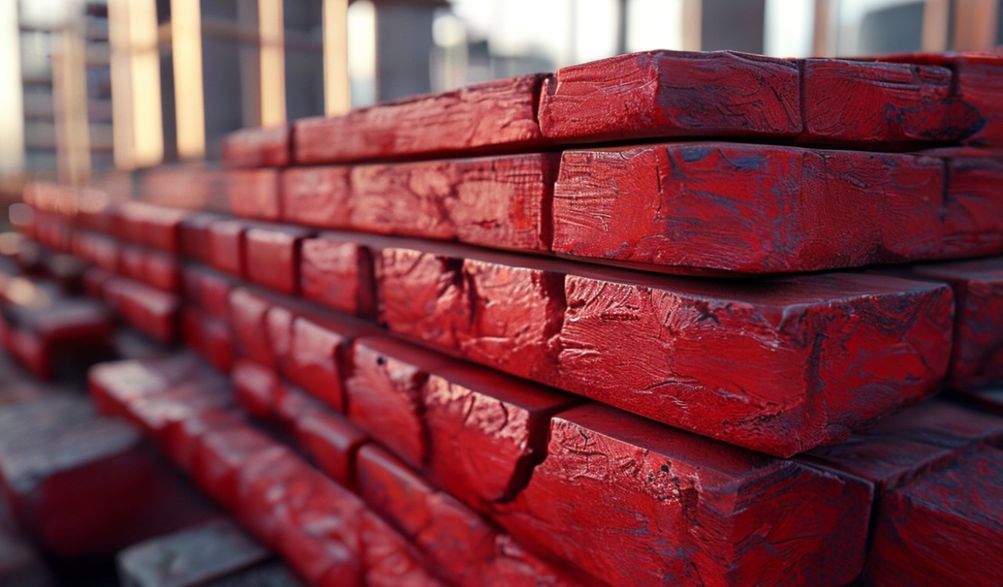
Bata Cetak Mesin: Panduan Komprehensif untuk Konstruksi Modern dan Seragam
Selama berabad-abad, bata sederhana telah menjadi fondasi peradaban, secara harfiah. Namun seiring ambisi arsitektur kita yang semakin tinggi dan proyek-proyek yang semakin besar, pencarian akan blok bangunan yang lebih andal, efisien, dan konsisten menjadi sangat penting. Muncullah bata cetak mesin—pahlawan tak dikenal konstruksi modern. Lahir dari api Revolusi Industri, ini bukan sekadar bata; ini adalah komponen yang dirancang dengan presisi untuk memenuhi tuntutan bangunan kontemporer.
Jika Anda seorang pembangun, arsitek, kontraktor, atau bahkan penggemar DIY yang berdedikasi, memahami material ini sangat penting untuk membuat keputusan yang tepat yang memengaruhi integritas struktural, jadwal, dan anggaran. Panduan ini berfungsi sebagai sumber otoritatif Anda, menggali pengalaman industri selama puluhan tahun untuk mengupas segala hal mulai dari proses produksi di lantai pabrik hingga batu bata terakhir di dinding Anda. Kami akan mengeksplorasi mengapa batu bata cetak mesin telah menjadi standar global, cara memilih kualitas terbaik, dan di mana mereka mengungguli rekan buatan tangan.
Apa Itu Bata Cetak Mesin? Mendefinisikan Standar
Pada intinya, batu bata cetak mesin mewakili perpaduan antara kerajinan tanah liat tradisional dengan otomatisasi modern. Ini adalah evolusi dari bahan bangunan dasar untuk era skala dan presisi.
Konsep Inti: Presisi Melalui Otomatisasi
Batu bata cetak mesin didefinisikan berdasarkan metode produksinya: mereka dibentuk menggunakan mesin otomatis, yang menggantikan proses manual memasukkan tanah liat ke dalam cetakan kayu individual. Otomatisasi ini memastikan setiap batu bata hampir merupakan replika persis satu sama lain, dengan konsistensi:
* Dimensions (length, width, height)
* Shape (sharp, defined edges)
* Kepadatan and internal composition
The result is a building unit that behaves predictably, which is the bedrock of efficient engineering and construction.
A Brief Historical Context: From Handcraft to Industry
The story of the brick mirrors the story of human progress. For millennia, bricks were handmade—a labor-intensive process yielding beautiful but variable products. The 19th century’s Industrial Revolution changed everything. The invention of brick-making machines, like the steam-powered press, was driven by an insatiable demand for rapid, large-scale construction of factories, railways, and urban housing.
This shift wasn’t just about speed; it was a pursuit of uniformity. Engineers needed standardized components to calculate loads accurately and build with confidence. The machine moulded brick answered that call, transforming from a crafted artifact into a reliable industrial product.
The Manufacturing Process: How Uniformity is Achieved
The consistency of a machine moulded brick is no accident. It is the direct result of a controlled, multi-stage manufacturing process. Here’s a look inside a typical modern brick plant.
Stage 1: Raw Material Selection & Preparation
It all starts with the earth. Not all clay is created equal.
* Selection: Manufacturers source specific types of clay or shale known for their plasticity and firing properties. The chemical composition is often tested.
* Tempering: The raw material is mixed with water and other additives (like sand or fly ash) in a pug mill. This crucial step, called tempering, achieves a homogeneous, workable consistency and removes air pockets.
* Purification: The mixture is passed through screens and crushers to eliminate stones, lime nodules, and other impurities that could cause defects like “popping” or spalling after firing.
Stage 2: The Moulding Machine in Action
This is where automation takes center stage. The prepared clay is fed into an extrusion press.
1. Ekstrusi: The clay is forced under immense pressure through a rectangular die, emerging as a continuous column of clay with a precise cross-section—the shape of the brick.
2. Pemotongan: A series of taut wires or a cutting head slices the clay column into individual brick units. This process can create a “wire-cut” texture on the brick faces.
3. Shaping: During extrusion, the machine can also form key features:
* Thefrog (the indentation on one bed face) is created by a shaped tool in the die. It reduces weight and improves mortar bonding.
* Perforations can be added for lighter weight and better insulation.
* Surface textures can be applied via rollers or attachments.
Stage 3: Drying and Firing for Strength
Freshly moulded bricks, or “green bricks,” are full of water and incredibly fragile.
* Controlled Drying: They are slowly dried in chamber dryers or tunnel dryers. This gradual removal of moisture is critical to prevent cracking and warping from rapid shrinkage. In our experience, rushing this stage is a primary cause of latent defects.
* High-Temperature Firing: The dried bricks are then fired in kilns (tunnel kilns are standard for continuous production) at temperatures between 900°C and 1200°C. This vitrification process fuses the clay particles, giving the brick its permanent strength, durability, and color. The firing temperature and atmosphere are tightly controlled to ensure batch-to-batch consistency.
Key Advantages of Choosing Machine Moulded Bricks
Why have these bricks become the default choice for most construction? The benefits are tangible and directly impact project success.
Superior Dimensional Consistency & Uniformity
This is the most significant advantage. Precise dimensions (typically adhering to standards like IS 1077:1992atauASTM C62) lead to:
* Konstruksi Lebih Cepat: Masons work more quickly with uniform units, requiring less adjustment.
* Less Mortar Use: Consistent size means consistent joint thickness, minimizing mortar waste. On large projects, we’ve observed mortar savings of 10-15%.
* Neater Aesthetics: Walls are plumb, level, and visually even, which is especially important for plastered surfaces or precise cladding.
Enhanced Structural Strength & Load-Bearing Capacity
The automated process delivers superior and reliable strength.
* The high-pressure compaction during extrusion creates a denser brick.
* Controlled firing ensures uniform vitrification throughout the batch.
* This typically results in higher and more consistent compressive strength compared to average handmade bricks, making them the preferred choice for load-bearing walls in multi-story buildings.
Cost-Effectiveness & Efficiency in Large Projects
Machine moulding is the epitome of economies of scale.
* Lower Unit Cost: Mass production reduces the per-brick cost.
* Reduced Labor Costs: Faster laying times directly translate to lower labor expenses.
* Minimal Wastage: Predictable quality and dimensions mean fewer rejected bricks on site and less cutting waste.
Versatility in Finishes and Applications
Contrary to belief, machine production offers variety. By altering dies and processes, manufacturers can produce:
* Different surface textures (smooth, sand-faced, rusticated).
* Various frog designs and depths.
* Perforated or hollow bricks for improved thermal performance.
* A range of colors through clay selection and firing techniques.
Applications and Use Cases in Modern Construction
The reliability of machine moulded bricks makes them suitable for a vast array of projects.
Primary Load-Bearing Walls in Residential & Commercial Buildings
Their proven compressive strength and uniformity make them the default material for constructing the structural walls of houses, apartment complexes, schools, and commercial structures. They provide a predictable and safe load path from roof to foundation.
Ideal for Infrastructure: Boundary Walls, Pavements, and Retaining Structures
For non-aesthetic, functional applications, their durability and cost-effectiveness are perfect:
* Boundary Walls: Offer security and privacy with long-lasting performance.
* Pavements and Walkways: Pavers are essentially high-grade machine moulded bricks designed for abrasion resistance.
* Retaining Walls: Specific engineering-grade bricks are used for these soil-retaining structures.
Aesthetic Uses: Exposed Brickwork and Cladding
When specified correctly, machine moulded bricks excel here too. “Face bricks” or “exposure grade” bricks are produced with higher quality control for surface finish and color consistency. They offer a clean, modern, and uniform aesthetic for feature walls, facades, and interior accents.
Machine Moulded vs. Handmade Bricks: A Practical Comparison
Choosing between the two often comes down to project vision versus practical requirements.
| Feature | Machine Moulded Bricks | Handmade Bricks |
| :— | :— | :— |
| Consistency | Hai. Uniform size, shape, color. | Rendah. Variable size, texture, and color—this is their “character.” |
| Structural Strength | High & Predictable. Consistent compressive strength. | Variable. Can be high but less predictable batch-to-batch. |
| Biaya | Lower. Economies of scale. | Higher. Labor-intensive production. |
| Construction Speed | Faster. Easy, predictable laying. | Slower. Requires more skill to accommodate variations. |
| Aesthetic | Clean, modern, uniform. | Rustic, traditional, artisanal charm. |
| Terbaik Untuk | Structural work, large projects, cost-sensitive builds, modern aesthetics. | Heritage projects, luxury builds, bespoke designs where unique character is desired. |
The Verdict: For the structural backbone of most modern buildings where performance, budget, and timeline are key, machine moulded is the logical choice. For restoration or high-end projects where aesthetic heritage is the priority, handmade bricks are invaluable.
How to Identify and Select High-Quality Machine Moulded Bricks
Not all machine moulded bricks are equal. Use this expert checklist to ensure you’re getting a quality product.
Visual and Physical Inspection Checklist
Before purchase, inspect sample bricks:
* Uniform Color: Consistent hue within a batch indicates controlled firing.
* Sharp Edges & True Shape: No warping or rounding. Check by placing several bricks together on a flat surface.
* Freedom from Defects: Look for cracks, laminations (layers), or visible impurities like stones.
* The Sound Test: Strike two bricks together. A clear, sharp metallic “ring” indicates good firing and density. A dull “thud” suggests underfiring and potential weakness.
* Hardness Test: Try to scratch the brick surface with a key or nail. A quality brick should not scratch easily.
Understanding Relevant Standards and Grades
This is non-negotiable for structural trustworthiness. Always specify bricks by their standard grade. For example:
* In India: Refer to IS 1077:1992 (Common Burnt Clay Building Bricks). Grades are defined by compressive strength (e.g., 3.5, 5, 7.5, 10, 12.5, 15 N/mm²) and water absorption classes.
* Internationally: Standards like ASTM C62 (Building Brick)atauBS EN 771-1 provide similar classifications.
Always request the manufacturer’s test certificate for the batch, verifying compressive strength, water absorption, and efflorescence ratings.
Questions to Ask Your Supplier or Manufacturer
Arm yourself with these expert-level questions:
1. “What is the average compressive strength of this batch, and can I see the test report?”
2. “What is the water absorption percentage? Is it suitable for my climate (especially in freeze-thaw cycles)?”
3. “What is the source of your clay and what is your typical firing temperature and cycle?”
4. “Do you have certification from the Bureau of Indian Standards (BIS) or other relevant national bodies?”
5. “What is the tolerance on dimensions for this grade?”
6. “Are these suitable for exposed masonry (if applicable)?”
Frequently Asked Questions (FAQ) About Machine Moulded Bricks
Q: Are machine moulded bricks stronger than handmade bricks?
A: Typically, yes. The controlled, high-pressure moulding and consistent firing in industrial kilns generally yield higher and more uniform compressive strength. This makes them highly reliable and predictable for structural engineering calculations.
Q: What is the typical compressive strength of a machine moulded brick?
A: It varies by grade and local standards. In India, common grades under IS 1077 range from 7.5 N/mm² to 15 N/mm² for standard construction, with higher grades available. Always base your specification on structural requirements and request the manufacturer’s test certificates.
Q: Can machine moulded bricks be used for exposed aesthetic brickwork?
A: Absolutely, but you must specify “face bricks” or “exposure grade” bricks. These are produced on separate lines or with tighter quality controls for surface finish, color consistency, and durability against weathering. Don’t assume standard bricks are suitable for exposure.
Q: How do I calculate the number of bricks needed for a project?
A: Thanks to their uniformity, calculation is straightforward. Use this formula for a single-brick-thick (9″ wall) plan:
Number of Bricks = (Wall Area in sq.m.) / (Length of Brick + Mortar Joint) x (Height of Brick + Mortar Joint)
For a standard 190x90x90 mm brick with a 10mm mortar joint: Bricks per sq.m. ≈ 55. Always add 5-10% for breakage and cuts.
Q: What are the main disadvantages of machine moulded bricks?
A: The primary trade-off is aesthetic: they lack the unique, rustic character of handmade bricks. Some very low-quality machine bricks can be overly smooth, potentially affecting mortar bond if not specified correctly. Their industrial origin may also not be appropriate for heritage or certain high-design contexts.
Kesimpulan
Machine moulded bricks are far more than just clay units; they are the embodiment of modern construction’s core principles: precision, efficiency, and reliability. Their unparalleled uniformity, proven structural strength, and cost-effectiveness have rightfully made them the backbone of everything from suburban homes to sprawling infrastructure projects.
The key to leveraging these benefits lies in informed selection. Suitability is always project-specific, and the importance of sourcing from reputable, standards-compliant manufacturers cannot be overstated. By applying the knowledge from this guide—asking the right questions, understanding the standards, and performing basic quality checks—you can make confident decisions that ensure the durability, safety, and value of your building projects for generations to come. Choose wisely, build solidly.
<