
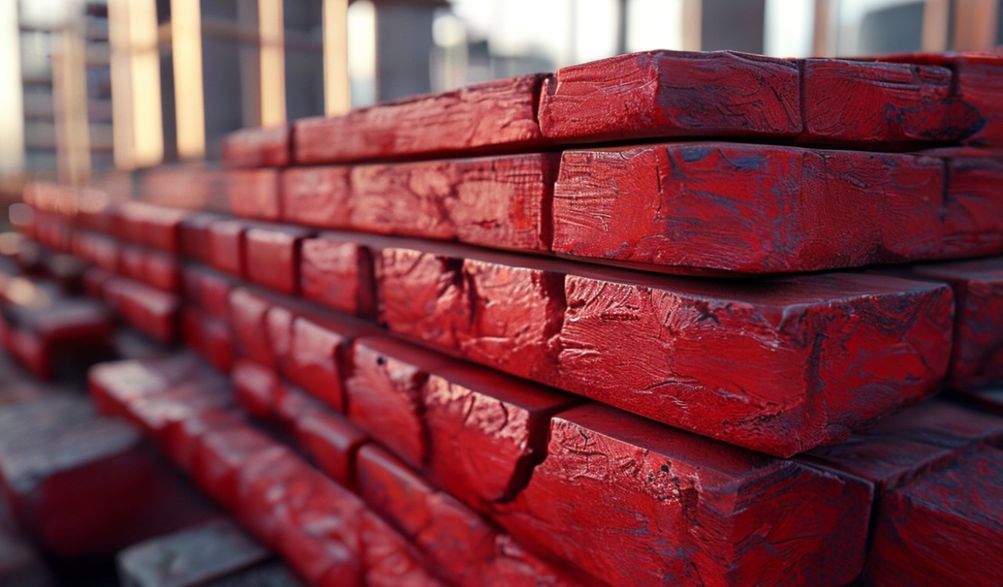
Gạch Đúc Máy: Hướng Dẫn Toàn Diện Về Xây Dựng Hiện Đại và Đồng Đều
Trong nhiều thế kỷ, viên gạch khiêm tốn đã là nền tảng của nền văn minh, theo đúng nghĩa đen. Nhưng khi tham vọng kiến trúc của chúng ta ngày càng vươn cao và các dự án ngày càng lớn hơn, việc tìm kiếm một viên gạch xây dựng đáng tin cậy, hiệu quả và đồng nhất hơn đã trở thành ưu tiên hàng đầu. Và từ đó, gạch đúc máy đã ra đời—người hùng thầm lặng của ngành xây dựng hiện đại. Được sinh ra từ ngọn lửa của Cách mạng Công nghiệp, đây không chỉ là một viên gạch thông thường; mà là một thành phần được thiết kế chính xác để đáp ứng nhu cầu của công trình đương đại.
Nếu bạn là nhà xây dựng, kiến trúc sư, nhà thầu, hay thậm chí là một người đam mê tự làm đồ chuyên nghiệp, việc hiểu rõ vật liệu này là yếu tố then chốt để đưa ra những quyết định sáng suốt, ảnh hưởng đến độ bền vững kết cấu, tiến độ và ngân sách. Cẩm nang này đóng vai trò là nguồn tư liệu đáng tin cậy của bạn, kế thừa từ nhiều thập kỷ kinh nghiệm ngành để phân tích mọi khía cạnh - từ quy trình sản xuất tại nhà máy đến viên gạch cuối cùng trên bức tường của bạn. Chúng ta sẽ cùng tìm hiểu lý do gạch đúc máy trở thành tiêu chuẩn toàn cầu, cách lựa chọn chất lượng tốt nhất, và những ưu thế vượt trội của chúng so với gạch thủ công.
Gạch Đúc Máy Là Gì? Định Nghĩa Tiêu Chuẩn
Về bản chất, gạch đúc máy là sự kết hợp giữa nghề thủ công làm gạch đất sét truyền thống với quy trình tự động hóa hiện đại. Đây là bước tiến hóa của một vật liệu xây dựng cơ bản, phù hợp với thời đại sản xuất hàng loạt và đòi hỏi độ chính xác cao.
Khái Niệm Cốt Lõi: Độ Chính Xác Thông Qua Tự Động Hóa
Gạch đúc khuôn máy được định nghĩa bởi phương pháp sản xuất: chúng được tạo hình bằng máy móc tự động, thay thế quy trình thủ công là nhồi đất sét vào từng khuôn gỗ riêng lẻ. Quá trình tự động hóa này đảm bảo mỗi viên gạch là một bản sao gần như hoàn hảo của viên tiếp theo, với sự đồng nhất về:
* Kích thước(chiều dài, chiều rộng, chiều cao)
* Hình dạng(các cạnh sắc nét, rõ ràng)
* Mật độvà thành phần bên trong
Kết quả là một đơn vị xây dựng hoạt động một cách dễ dự đoán, đây chính là nền tảng của kỹ thuật và xây dựng hiệu quả.
Bối cảnh Lịch sử Ngắn gọn: Từ Thủ công đến Công nghiệp
Câu chuyện của viên gạch phản chiếu câu chuyện tiến bộ của nhân loại. Trong hàng thiên niên kỷ, gạch được làm thủ công—một quá trình tốn nhiều công sức tạo ra những sản phẩm đẹp nhưng không đồng đều. Cuộc Cách mạng Công nghiệp thế kỷ 19 đã thay đổi mọi thứ. Sự ra đời của máy làm gạch, như máy ép chạy bằng hơi nước, được thúc đẩy bởi nhu cầu không ngừng về xây dựng nhanh chóng, quy mô lớn các nhà máy, đường sắt và nhà ở đô thị.
Sự thay đổi này không chỉ là về tốc độ; đó là một cuộc theo đuổi tính đồng nhất. Các kỹ sư cần những thành phần tiêu chuẩn hóa để tính toán tải trọng chính xác và xây dựng với sự tự tin. Viên gạch đúc bằng máy đã đáp ứng lời kêu gọi đó, chuyển mình từ một tạo tác thủ công thành một sản phẩm công nghiệp đáng tin cậy.
Quy Trình Sản Xuất: Tính Đồng Nhất Được Đảm Bảo Như Thế Nào
Độ đồng nhất của một viên gạch đúc bằng máy không phải là điều ngẫu nhiên. Đó là kết quả trực tiếp của một quy trình sản xuất được kiểm soát chặt chẽ qua nhiều giai đoạn. Hãy cùng nhìn vào bên trong một nhà máy sản xuất gạch hiện đại điển hình.
Giai đoạn 1: Lựa chọn và Chuẩn bị Nguyên liệu Thô
Tất cả bắt đầu từ đất. Không phải loại đất sét nào cũng như nhau.
* Lựa chọn:Các nhà sản xuất tìm nguồn các loại đất sét hoặc đá phiến sét cụ thể được biết đến với tính dẻo và đặc tính nung. Thành phần hóa học thường được kiểm tra.
* Tempering dịch sang tiếng Việt là "Ủ" (trong ngữ cảnh luyện kim) hoặc "Điều hòa" (trong ngữ cảnh khác). The raw material is mixed with water and other additives (like sand or fly ash) in a pug mill. This crucial step, called tempering, achieves a homogeneous, workable consistency and removes air pockets.
* Purification: The mixture is passed through screens and crushers to eliminate stones, lime nodules, and other impurities that could cause defects like “popping” or spalling after firing.
Stage 2: The Moulding Machine in Action
This is where automation takes center stage. The prepared clay is fed into an extrusion press.
1. Đùn ép: The clay is forced under immense pressure through a rectangular die, emerging as a continuous column of clay with a precise cross-section—the shape of the brick.
2. Cắt: A series of taut wires or a cutting head slices the clay column into individual brick units. This process can create a “wire-cut” texture on the brick faces.
3. Shaping: During extrusion, the machine can also form key features:
* Cácfrog (the indentation on one bed face) is created by a shaped tool in the die. It reduces weight and improves mortar bonding.
* Perforations can be added for lighter weight and better insulation.
* Surface textures can be applied via rollers or attachments.
Stage 3: Drying and Firing for Strength
Freshly moulded bricks, or “green bricks,” are full of water and incredibly fragile.
* Controlled Drying: They are slowly dried in chamber dryers or tunnel dryers. This gradual removal of moisture is critical to prevent cracking and warping from rapid shrinkage. In our experience, rushing this stage is a primary cause of latent defects.
* High-Temperature Firing: The dried bricks are then fired in kilns (tunnel kilns are standard for continuous production) at temperatures between 900°C and 1200°C. This vitrification process fuses the clay particles, giving the brick its permanent strength, durability, and color. The firing temperature and atmosphere are tightly controlled to ensure batch-to-batch consistency.
Key Advantages of Choosing Machine Moulded Bricks
Why have these bricks become the default choice for most construction? The benefits are tangible and directly impact project success.
Superior Dimensional Consistency & Uniformity
This is the most significant advantage. Precise dimensions (typically adhering to standards like IS 1077:1992hoặcASTM C62) lead to:
* Xây dựng nhanh hơn Masons work more quickly with uniform units, requiring less adjustment.
* Less Mortar Use: Consistent size means consistent joint thickness, minimizing mortar waste. On large projects, we’ve observed mortar savings of 10-15%.
* Neater Aesthetics: Walls are plumb, level, and visually even, which is especially important for plastered surfaces or precise cladding.
Enhanced Structural Strength & Load-Bearing Capacity
The automated process delivers superior and reliable strength.
* The high-pressure compaction during extrusion creates a denser brick.
* Controlled firing ensures uniform vitrification throughout the batch.
* This typically results in higher and more consistent compressive strength compared to average handmade bricks, making them the preferred choice for load-bearing walls in multi-story buildings.
Cost-Effectiveness & Efficiency in Large Projects
Machine moulding is the epitome of economies of scale.
* Lower Unit Cost: Mass production reduces the per-brick cost.
* Reduced Labor Costs: Faster laying times directly translate to lower labor expenses.
* Minimal Wastage: Predictable quality and dimensions mean fewer rejected bricks on site and less cutting waste.
Versatility in Finishes and Applications
Contrary to belief, machine production offers variety. By altering dies and processes, manufacturers can produce:
* Different surface textures (smooth, sand-faced, rusticated).
* Various frog designs and depths.
* Perforated or hollow bricks for improved thermal performance.
* A range of colors through clay selection and firing techniques.
Applications and Use Cases in Modern Construction
The reliability of machine moulded bricks makes them suitable for a vast array of projects.
Primary Load-Bearing Walls in Residential & Commercial Buildings
Their proven compressive strength and uniformity make them the default material for constructing the structural walls of houses, apartment complexes, schools, and commercial structures. They provide a predictable and safe load path from roof to foundation.
Ideal for Infrastructure: Boundary Walls, Pavements, and Retaining Structures
For non-aesthetic, functional applications, their durability and cost-effectiveness are perfect:
* Boundary Walls: Offer security and privacy with long-lasting performance.
* Pavements and Walkways: Pavers are essentially high-grade machine moulded bricks designed for abrasion resistance.
* Retaining Walls: Specific engineering-grade bricks are used for these soil-retaining structures.
Aesthetic Uses: Exposed Brickwork and Cladding
When specified correctly, machine moulded bricks excel here too. “Face bricks” or “exposure grade” bricks are produced with higher quality control for surface finish and color consistency. They offer a clean, modern, and uniform aesthetic for feature walls, facades, and interior accents.
Machine Moulded vs. Handmade Bricks: A Practical Comparison
Choosing between the two often comes down to project vision versus practical requirements.
| Feature | Machine Moulded Bricks | Handmade Bricks |
| :— | :— | :— |
| Tính nhất quán | Chào. Uniform size, shape, color. | Thấp. Variable size, texture, and color—this is their “character.” |
| Structural Strength | High & Predictable. Consistent compressive strength. | Variable. Can be high but less predictable batch-to-batch. |
| Chi phí | Lower. Economies of scale. | Higher. Labor-intensive production. |
| Construction Speed | Faster. Easy, predictable laying. | Slower. Requires more skill to accommodate variations. |
| Aesthetic | Clean, modern, uniform. | Rustic, traditional, artisanal charm. |
| Tốt Nhất Cho | Structural work, large projects, cost-sensitive builds, modern aesthetics. | Heritage projects, luxury builds, bespoke designs where unique character is desired. |
The Verdict: For the structural backbone of most modern buildings where performance, budget, and timeline are key, machine moulded is the logical choice. For restoration or high-end projects where aesthetic heritage is the priority, handmade bricks are invaluable.
How to Identify and Select High-Quality Machine Moulded Bricks
Not all machine moulded bricks are equal. Use this expert checklist to ensure you’re getting a quality product.
Visual and Physical Inspection Checklist
Before purchase, inspect sample bricks:
* Uniform Color: Consistent hue within a batch indicates controlled firing.
* Sharp Edges & True Shape: No warping or rounding. Check by placing several bricks together on a flat surface.
* Freedom from Defects: Look for cracks, laminations (layers), or visible impurities like stones.
* The Sound Test: Strike two bricks together. A clear, sharp metallic “ring” indicates good firing and density. A dull “thud” suggests underfiring and potential weakness.
* Hardness Test: Try to scratch the brick surface with a key or nail. A quality brick should not scratch easily.
Understanding Relevant Standards and Grades
This is non-negotiable for structural trustworthiness. Always specify bricks by their standard grade. For example:
* In India: Refer to IS 1077:1992 (Common Burnt Clay Building Bricks). Grades are defined by compressive strength (e.g., 3.5, 5, 7.5, 10, 12.5, 15 N/mm²) and water absorption classes.
* Internationally: Standards like ASTM C62 (Building Brick)hoặcBS EN 771-1 provide similar classifications.
Always request the manufacturer’s test certificate for the batch, verifying compressive strength, water absorption, and efflorescence ratings.
Questions to Ask Your Supplier or Manufacturer
Arm yourself with these expert-level questions:
1. “What is the average compressive strength of this batch, and can I see the test report?”
2. “What is the water absorption percentage? Is it suitable for my climate (especially in freeze-thaw cycles)?”
3. “What is the source of your clay and what is your typical firing temperature and cycle?”
4. “Do you have certification from the Bureau of Indian Standards (BIS) or other relevant national bodies?”
5. “What is the tolerance on dimensions for this grade?”
6. “Are these suitable for exposed masonry (if applicable)?”
Frequently Asked Questions (FAQ) About Machine Moulded Bricks
Q: Are machine moulded bricks stronger than handmade bricks?
A: Typically, yes. The controlled, high-pressure moulding and consistent firing in industrial kilns generally yield higher and more uniform compressive strength. This makes them highly reliable and predictable for structural engineering calculations.
Q: What is the typical compressive strength of a machine moulded brick?
A: It varies by grade and local standards. In India, common grades under IS 1077 range from 7.5 N/mm² to 15 N/mm² for standard construction, with higher grades available. Always base your specification on structural requirements and request the manufacturer’s test certificates.
Q: Can machine moulded bricks be used for exposed aesthetic brickwork?
A: Absolutely, but you must specify “face bricks” or “exposure grade” bricks. These are produced on separate lines or with tighter quality controls for surface finish, color consistency, and durability against weathering. Don’t assume standard bricks are suitable for exposure.
Q: How do I calculate the number of bricks needed for a project?
A: Thanks to their uniformity, calculation is straightforward. Use this formula for a single-brick-thick (9″ wall) plan:
Number of Bricks = (Wall Area in sq.m.) / (Length of Brick + Mortar Joint) x (Height of Brick + Mortar Joint)
For a standard 190x90x90 mm brick with a 10mm mortar joint: Bricks per sq.m. ≈ 55. Always add 5-10% for breakage and cuts.
Q: What are the main disadvantages of machine moulded bricks?
A: The primary trade-off is aesthetic: they lack the unique, rustic character of handmade bricks. Some very low-quality machine bricks can be overly smooth, potentially affecting mortar bond if not specified correctly. Their industrial origin may also not be appropriate for heritage or certain high-design contexts.
Conclusion
Machine moulded bricks are far more than just clay units; they are the embodiment of modern construction’s core principles: precision, efficiency, and reliability. Their unparalleled uniformity, proven structural strength, and cost-effectiveness have rightfully made them the backbone of everything from suburban homes to sprawling infrastructure projects.
The key to leveraging these benefits lies in informed selection. Suitability is always project-specific, and the importance of sourcing from reputable, standards-compliant manufacturers cannot be overstated. By applying the knowledge from this guide—asking the right questions, understanding the standards, and performing basic quality checks—you can make confident decisions that ensure the durability, safety, and value of your building projects for generations to come. Choose wisely, build solidly.
<