
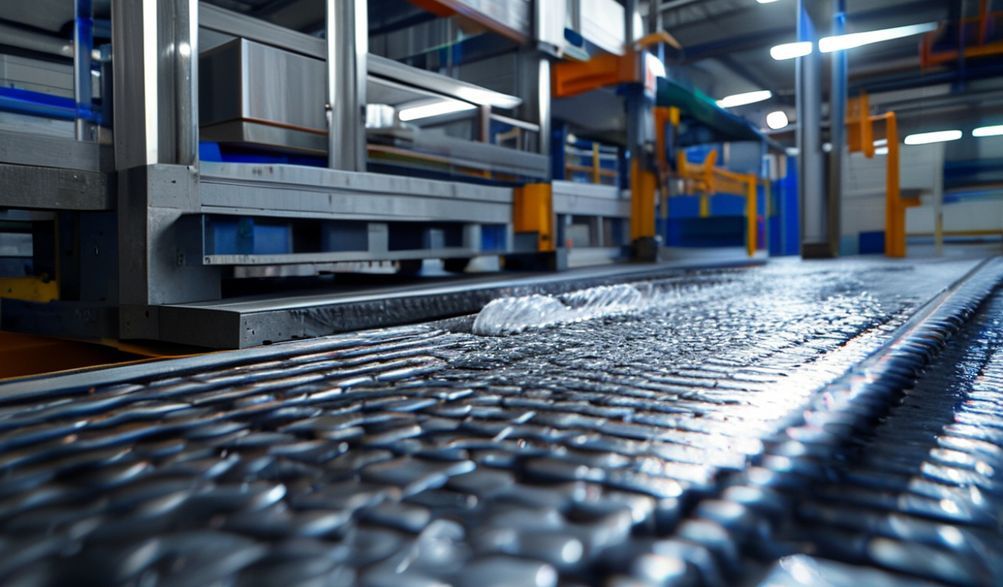
Panduan Utama Memilih Mesin Pembuat Blok Paving Beton
Pengantar
Jelajahi kota modern, pengembangan perumahan, atau ruang publik mana pun, dan Anda akan menyaksikan pekerja keras urban design yang tak bersuara: blok paving beton. Dari pola jalan masuk yang rumit hingga plaza publik yang luas dan jalan raya yang tahan lama, permintaan akan paving yang serbaguna, tahan lama, dan estetis adalah hal yang konstan secara global. Namun, permintaan ini menghadirkan tantangan signifikan bagi produsen. Mengandalkan tenaga kerja manual atau peralatan usang sering kali menyebabkan siklus frustasi dari kualitas yang tidak konsisten, output yang sangat rendah, biaya tenaga kerja yang melonjak, dan ketidakmampuan untuk memanfaatkan peluang pasar.
Solusi untuk tantangan industri modern ini adalah presisi yang direkayasa: mesin pembuat blok paving beton. Ini bukan sekadar peralatan; ini adalah inti dari transformasi, mengubah pasir mentah, agregat, dan semen menjadi aliran produk berkualitas tinggi yang menguntungkan dengan konsistensi dan efisiensi tak tertandingi. Panduan ini disusun dari keahlian industri mendalam dan pengetahuan teknis. Tujuan kami adalah memberi Anda, pemilik bisnis, kontraktor, atau pengusaha, informasi yang dapat dipercaya dan dapat ditindaklanjuti untuk membuat investasi strategis yang percaya diri.
Kami akan menjelajahi jenis-jenis mesin yang tersedia, memecah faktor teknis dan bisnis kritis dalam keputusan Anda, serta memberikan peta jalan yang jelas untuk kesuksesan operasional dan pengembalian investasi.
Memahami Mesin Pembuat Paving Block
Apa itu Mesin Paving Block Beton?
Inti dari mesin pembuat blok paving beton adalah sistem yang dimekanisasi atau sepenuhnya otomatis, dirancang untuk mencetak campuran beton menjadi bentuk-bentuk presisi dengan kepadatan tinggi. Melalui proses getaran dan kompresi terkendali, mesin ini menghasilkan paving blok saling mengunci, batu bata, ubin, lempengan taman, dan batu tepi jalan dengan tingkat pengulangan yang sangat konsisten.
Fungsinya yang utama adalah menggantikan tenaga manusia yang bervariasi dengan kepastian mekanis, menghasilkan balok-balok yang tidak hanya seragam dalam dimensi dan penampilan, tetapi juga lebih unggul dalam kekuatan struktural. Konsistensi ini merupakan kunci untuk saling mengunci yang tepat, kecepatan pemasangan, dan kinerja jangka panjang dalam berbagai aplikasi.
Komponen Utama dan Cara Kerjanya
Memahami subsistem mesin mengungkap cara kerjanya dan membantu dalam mengambil keputusan pembelian yang lebih baik. Berikut adalah hal-hal yang membuatnya berfungsi:
- Hopper & Feeder:Ini adalah titik awal, di mana campuran beton kering (perpaduan pasir, agregat, dan semen) dimuat. Dalam sistem otomatis, konveyor atau pengumpan memastikan pasokan yang konsisten dan terukur ke cetakan.
- Cetakan (Die):Jantung mesin. Komponen yang dirancang presisi ini menentukan bentuk, ukuran, pola, dan tekstur dari balok akhir. Cetakan dapat dipertukarkan, memungkinkan satu mesin untuk menghasilkan berbagai produk.
- Sistem Getaran:Kritis untuk kualitas. Meja getaran frekuensi tinggi dan amplitudo tinggi memadatkan campuran beton di dalam cetakan, menghilangkan kantong udara dan mencapai struktur padat serta kuat yang diperlukan untuk aplikasi penahan beban.
- Sistem Hidrolik atau Pneumatik:Ini memberikan gaya tekan yang kuat yang bekerja beriringan dengan getaran. Sistem hidrolik umum digunakan karena tekanan tinggi dan kontrolnya, memastikan setiap blok dipadatkan hingga kepadatan yang ditentukan.
- Sistem Kontrol:"Otak" dari operasi. Ini berkisar dari tuas manual sederhana pada model dasar hingga panel Programmable Logic Controller (PLC) canggih dengan antarmuka layar sentuh pada mesin otomatis, yang memungkinkan kontrol presisi atas setiap parameter siklus.
- Sistem Pengumpan dan Transfer Palet:Pada mesin stasioner, sebuah palet (pelat logam atau kayu) diletakkan di bawah cetakan. Setelah balok terbentuk, sistem memindahkan palet beserta balok segar ke rak atau konveyor untuk proses pengawetan, sehingga mesin dapat segera memproduksi balok berikutnya.
Jenis Mesin: Dari Manual hingga Sepenuhnya Otomatis
Memilih jenis yang tepat adalah keputusan besar pertama Anda, menyeimbangkan investasi, tenaga kerja, dan tujuan keluaran.
-
Mesin Manual atau Semi-Otomatis:
- Cara kerjanya:Sangat bergantung pada operator. Pekerja biasanya mengisi cetakan secara manual, mengaktifkan siklus getaran/penekanan, lalu mengeluarkan balok yang telah terbentuk secara manual.
- Kelebihan:Biaya modal terendah, kesederhanaan mekanis, perawatan lebih mudah. Ideal untuk startup skala sangat kecil, produk khusus, atau pasar dengan biaya tenaga kerja sangat rendah.
- Kekurangan:Rendahnya output (biasanya hanya beberapa ratus blok per hari), tingginya kebutuhan tenaga fisik, dan potensi ketidakkonsistenan produk yang lebih besar karena variabel manusia.
-
Mesin Stasioner Sepenuhnya Otomatis:
- Cara kerjanya:Ini adalah mesin andalan lini produksi. Mereka mengotomatisasi pengumpanan bahan, pencetakan, pemadatan, dan pengeluaran balok ke sistem transfer palet. Operator terutama memantau, mengelola pasokan bahan, dan menangani palet yang sudah jadi.
- Kelebihan:Output (ribuan blok per shift) yang tinggi dan konsisten, penghematan tenaga kerja yang signifikan, keseragaman produk yang sangat baik, dan kondisi kerja yang lebih baik. Standar untuk manufaktur blok komersial serius.
- Kekurangan:Investasi awal lebih tinggi, membutuhkan lebih banyak ruang dan infrastruktur (seperti pasokan beton yang stabil), serta memerlukan operator yang lebih paham secara teknis.
-
Mesin Blok Bergerak Otomatis Penuh (Tipe Bertelur):
- Cara kerjanya:Unit-unit mandiri ini mencampur, mencetak, lalu menempatkan ("meletakkan") balok-balok jadi langsung ke permukaan tanah yang telah disiapkan dan diratakan (seperti sub-dasar jalan). Unit-unit ini bergerak maju perlahan sambil memproduksi.
- Kelebihan:Menghilangkan kebutuhan akan palet, rak pengeringan, dan transportasi blok untuk penempatan di lokasi. Sangat efisien untuk proyek skala besar berbentuk linier seperti jalan, area parkir, atau apron bandara.
- Kekurangan:Terbatas pada produksi di lokasi untuk satu (atau sangat sedikit) jenis blok yang spesifik untuk proyek tersebut. Tidak dirancang untuk produksi pabrik yang beragam.
Faktor-Faktor Kritis untuk Memilih Mesin yang Tepat
Menilai Kebutuhan Produksi Anda
Mulailah dengan rencana bisnis yang jelas. Mesin Anda harus mendukung strategi pasar Anda.
- Kapasitas Output:Bersikaplah realistis. Hitung penjualan Anda saat ini dan proyeksikan dalam blok per hari atau bulan. Mesin yang beroperasi pada 80% kapasitasnya lebih efisien dan menguntungkan daripada mesin yang terus-menerus kewalahan atau, sebaliknya, menganggur. Jangan hanya membeli mesin terbesar; belilah mesin yang sesuai.berukuran tepatmesin.
- Jenis & Ukuran Blok:Apa yang diinginkan pasar Anda? Paving block interlocking standar? Paving rumput permeabel untuk lansekap? Batu pinggir jalan tugas berat? Pastikan mesin yang Anda pilih dapat menampung ukuran cetakan serta tekanan/getaran yang diperlukan untuk rentang produk yang diinginkan. Keserbagunaan cetakan merupakan faktor nilai utama.
- Pertimbangan Bahan BakuMesin harus bekerja dengan bahan yang Anda miliki secara lokal. Uji pasir dan agregat lokal Anda untuk gradasi, kandungan lumpur, dan kelembaban. Beberapa mesin canggih sensitif terhadap material berkualitas rendah, sementara model yang kokoh dirancang untuk menangani rentang yang lebih luas.
Spesifikasi Mesin Tinjauan Mendalam
Lihatlah lebih dari sekadar brosur penjualan. Detail teknis ini menentukan performa.
- Tekanan & Gaya Getaran: This directly correlates to block density and compressive strength (measured in MPa). Higher pressure and well-calibrated vibration produce stronger, more durable blocks suitable for vehicular traffic. Ask for the machine’s rated pressure and the MPa range it can achieve.
- Waktu Siklus: The total time to produce one block or one pallet of blocks. A faster cycle time means higher potential output. However, balance speed with quality—sometimes a slightly slower cycle with better compaction yields a superior, more marketable product.
- Persyaratan Daya: Most industrial machines require a 3-phase electrical supply. Verify your facility’s power capacity. Also, note the total connected load (in kW) to estimate your energy operating costs.
- Automation Level & Control: Evaluate the trade-offs. A PLC-controlled machine offers repeatability, easier troubleshooting (error codes), and potential for data logging. It may also require more skilled maintenance. Simpler systems are easier to fix but offer less precision.
Quality, Durability, and Supplier Evaluation
The machine is a long-term asset. Its construction and the company behind it are paramount.
- Kualitas Pembuatan: Inspect the frame—it should be heavy-duty, welded steel, not bolted light-gauge. Critical components like the mold table, vibration shafts, and hydraulic cylinders should be made from hardened, wear-resistant materials. This reduces long-term maintenance and downtime.
- Dukungan Purna Jual: This is non-negotiable. A reliable supplier provides comprehensive technical support, readily available spare parts, and thorough operator training. Ask for specifics: Is there a local service agent? What is the typical spare parts delivery time? Is installation and commissioning included?
- Supplier Reputation: Conduct due diligence. How long have they been in business? Ask for client references and contact them. Search for independent reviews or their presence at industry trade shows. A reputable manufacturer stands behind their product for the long haul.
The Business Case: ROI and Operational Setup
Cost Analysis and Return on Investment (ROI)
Transform the machine from a cost to a calculated investment.
- Investasi Awal:
- Machine Cost (base price)
- Mold Costs (initial set of 2-3 molds is typical)
- Auxiliary Equipment: Concrete pan mixer or batching plant, conveyor systems, pallets (hundreds may be needed), curing racks or space, forklift for handling.
- Operational Costs (Per Month):
- Raw Materials (cement, sand, aggregate, pigment)
- Labor (machine operators, mixers, forklift drivers)
- Utilities (electricity, water)
- Maintenance & Spare Parts fund
- Revenue Projections: Estimate based on:
(Machine Output per Shift) x (Capacity Utilization %) x (Selling Price per Block) x (Working Days). - Calculating Payback Period: A simplified formula:
Total Initial Investment / (Monthly Gross Profit - Monthly Operational Costs). A typical target payback period for a well-run block yard can range from 12 to 36 months.
Setting Up Your Production Line
Efficiency is born on the factory floor.
- Space & Layout: You need space for: raw material storage, the mixing area, the machine itself, a curing area (covered and protected from sun/wind), and storage for finished blocks. Design a linear workflow to minimize material and product handling.
- Auxiliary Equipment Checklist:
- Concrete Mixer (pan mixer for consistency is recommended over drum mixers).
- Material Loading Conveyor (for automatic machines).
- Pallets and Pallet Return System.
- Curing Racks or a dedicated, leveled curing yard.
- Forklift or Stacker.
- Basic Operational Workflow:
- Raw materials are batched and mixed to a consistent, semi-dry consistency.
- Mix is fed into the machine hopper.
- Machine automatically cycles: feeds mix into mold, vibrates, presses, and ejects block-on-pallet.
- Pallets are moved to the curing area for 24-48 hours of initial curing.
- Blocks are de-palletized, stacked, and continue air-curing for 2-4 weeks to reach full strength before sale.
Maintenance for Longevity and Consistent Output
Preventative care is far cheaper than emergency repairs.
- Daily/Weekly Checklist:
- Clean the machine thoroughly at the end of each shift, removing all concrete buildup.
- Check and tighten any bolts, especially on vibration mounts.
- Lubricate all moving parts as per the manual (grease nipples, guide rails).
- Check hydraulic oil levels and look for leaks.
- Tips Pro dari Lapangan: Keep a logbook. Record daily output, any machine stoppages, and maintenance performed. This data is invaluable for predicting wear-part failure and optimizing performance.
- Common Wear Parts: Be prepared to stock or source: mold liners and wear plates, vibration motor mounts, hydraulic seals and hoses, feeder scraper blades.
- Troubleshooting Common Issues:
- Blocks sticking in mold: Likely a worn mold, insufficient mold release agent, or an overly wet concrete mix.
- Poor compaction/weak blocks: Check vibration motor function, pressure settings, and ensure your concrete mix is not too dry.
- Surface defects: Often caused by a dirty mold, incorrect mix, or issues with the pallet surface.
Maximizing Success with Your Block Making Machine
Optimizing Concrete Mix Design
The machine is a tool; the mix is the raw material. Their synergy defines quality.
- The standard ratio is a starting point (e.g., 1 part cement : 3 parts sand : 3 parts aggregate), but local materials require adjustment. Aim for a semi-dry mix—it should hold its shape when squeezed but crumble apart easily.
- The mix directly affects strength, color absorption (if using pigments), and surface finish. Too much water weakens the block and causes sticking. Too little water leads to poor compaction and laminations.
- Consistency is key. Use a weigh-batching system, not volume buckets, for your raw materials to eliminate daily variation.
Ensuring Product Quality and Consistency
Quality builds your reputation and allows you to command better prices.
- Testing Block Strength: Regularly test samples in a compression testing machine. This verifies you are meeting the required MPa standards (e.g., 35 MPa for heavy traffic areas) and provides certified proof for engineers and clients.
- Akurasi Dimensi: Use calipers to randomly check block dimensions. Consistent size is critical for the interlocking system and allows for fast, hassle-free installation by your customers.
- Curing Best Practices: The first 28 days are critical. After initial setting, blocks must be kept moist (by sprinkling water or covering with plastic sheeting) and protected from rapid drying. Proper curing can increase final strength by over 50%.
Protokol Keamanan untuk Operator
A safe operation is a productive and sustainable one.
- Mandatory Personal Protective Equipment (PPE): Safety glasses, hearing protection (machines are loud), gloves, and steel-toe boots are non-negotiable.
- Keselamatan Mesin: Ensure all moving parts have guards. Implement strict Lock-Out/Tag-Out (LOTO) procedures for any maintenance or clearing of jams. Never bypass safety interlocks.
- Penanganan Material: Train staff on safe lifting techniques for bags of cement and heavy molds. Ensure clear pathways and safe practices for forklift operation in the yard.
Pertanyaan yang Sering Diajukan (FAQ)
Q1: What is the average production capacity of a standard automatic block making machine?
A: Capacity varies widely by model and block size. A typical mid-range, fully automatic stationary machine can produce between 4,000 to 10,000 standard 60mm thick pavers in an 8-hour shift. Always confirm output based on the specific block type you intend to produce.
Q2: Can one machine produce different shapes and sizes of blocks?
A: Absolutely. This is a key advantage. By changing the mold (die), the same machine can produce different products. Discuss mold changeover time with your supplier—efficient systems can allow changes in 15-30 minutes. Ensure you purchase compatible molds from your machine manufacturer.
Q3: How much skilled labor is required to operate an automatic machine?
A: For a fully automatic production line, a crew of 2-3 trained individuals is typically sufficient. One may oversee the mixer and material feed, while others manage the machine operation and handle the pallets of fresh blocks. The critical factor is proper training, not the number of people.
Q4: What is the typical lead time for delivery and installation?
A: This varies significantly by manufacturer (local vs. overseas) and machine complexity. It can range from a few weeks for local stock to 3-6 months for a custom-configured line from abroad. Crucially, before purchasing, clarify what “installation” includes—onsite commissioning, calibration, and hands-on operator training are essential services.
Q5: How do I choose between a stationary and a mobile (egg-laying) machine?
A: The choice is defined by your business model. Choose a stationary machine if you are running a factory to produce blocks for stock, sale to distributors, or multiple projects. Choose a mobile “egg-layer” if your primary business is large-scale, on-site paving contracts where you will produce and place blocks directly onto the prepared sub-base in one continuous operation.
Kesimpulan
Selecting the right concrete paving block making machine is a foundational decision that will shape the productivity, quality, and profitability of your business for years to come. It requires a careful balance of understanding your production needs, scrutinizing technical specifications, and forging a partnership with a reputable, supportive supplier. We’ve explored the journey from machine types and ROI calculations to the daily practices that ensure quality and safety.
Remember, this investment is not just in metal and hydraulics; it’s in the technology and knowledge that will build your competitive edge. By applying the insights from this guide and conducting thorough due diligence, you lay the groundwork for a sustainable and successful venture in the essential construction materials industry.
Ready to move from planning to action? Download our comprehensive free checklist: “10 Essential Questions to Ask Before Buying Your Block Making Machine,” designed to guide your conversations with suppliers and ensure you cover every critical detail.
<