
Panduan Utama Mesin Pembuat Bata Tanah di India (2026)
Pengantar
Langit-langit India meningkat dengan kecepatan yang belum pernah terjadi sebelumnya, namun dengan biaya apa? Sektor konstruksi, tulang punggung pertumbuhan ini, juga menjadi penyumbang signifikan bagi tantangan lingkungan negara. Pertimbangkan ini: industri bata tanah liat bakar tradisional diperkirakan mengonsumsi lebih dari 24 juta ton batu bara setiap tahunnya dan mengeluarkan hampir 42 juta ton CO2. Saat India melangkah menuju tujuan pembangunan berkelanjutannya, sebuah revolusi diam-diam tengah bergolak di lapangan—secara harfiah. Pencarian bahan bangunan yang terjangkau, ramah lingkungan, dan tangguh telah membawa para pembangun, arsitek, dan pengusaha kembali ke sumber daya mendasar: tanah.
Masalah dengan batu bata merah konvensional bersifat multi-aspek. Produksinya membutuhkan energi besar, mencemari lingkungan, dan sering kali melibatkan pengambilan lapisan tanah subur yang eksploitatif. Ditambah dengan biaya yang fluktuatif dan pengawasan regulasi yang semakin ketat, kebutuhan akan alternatif belum pernah sebegitu mendesaknya. Maka hadirlah mesin pembuat batu bata tanah—sebuah keajaiban teknologi yang mengubah tanah sederhana menjadi balok bangunan kokoh dan berkelanjutan.
Panduan komprehensif ini dirancang untuk menembus kebisingan informasi. Dibangun berdasarkan riset industri yang mendalam, analisis teknis, serta pemahaman menyeluruh tentang lanskap pasar India, panduan ini berfungsi sebagai sumber daya definitif. Baik Anda seorang pembangun yang bertujuan mengurangi biaya, arsitek yang menganjurkan desain hijau, atau pengusaha yang melihat peluang bisnis, panduan ini akan membekali Anda dengan pengetahuan untuk membuat keputusan yang tepat. Kami akan menyelami mekanisme mesin-mesin ini, manfaat mendalamnya, jenis yang tersedia, produsen kunci di India, proses produksi, serta faktor-faktor kritis yang harus dipertimbangkan sebelum berinvestasi.
Apa itu Mesin Pembuat Batu Bata Tanah?
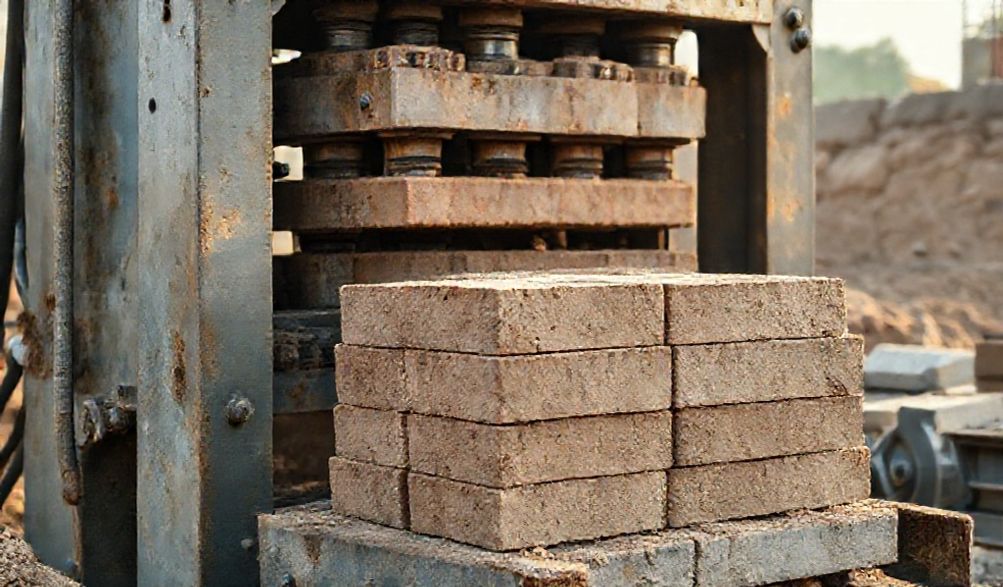
Mesin pembuat bata tanah adalah perangkat yang dirancang untuk memproduksi Blok Tanah Stabil Terkompresi (CSEB). Alat ini merupakan perpaduan antara prinsip sederhana dan rekayasa yang kokoh, menawarkan jalur modern menuju salah satu bahan bangunan tertua umat manusia.
Teknologi Inti Dijelaskan
Inti dari teknologi ini sangatlah sederhana dan elegan. Sebuah mesin CSEB mengompres campuran tanah lembap, persentase kecil stabilisator (biasanya 5-10% semen atau kapur), dan air di bawah tekanan yang sangat tinggi. Proses ini, yang dapat memberikan gaya dari 2 hingga lebih dari 40 ton, tidak bergantung pada panas. Sebaliknya, mesin secara mekanis memadatkan partikel-partikel, menciptakan ikatan yang padat dan kohesif. Stabilisator berperan sebagai bahan pengikat, bereaksi secara kimiawi untuk memberikan kekuatan jangka panjang dan ketahanan air pada blok. Hasilnya adalah bata seragam berkualitas tinggi yang siap digunakan untuk konstruksi setelah melalui periode perawatan.
Bagaimana Ini Berbeda dari Pembuatan Batu Bata Tradisional
Kontras dengan metode tradisional sangat mencolok:
* Melawan Bata Adobe yang Dijemur Matahari:Sementara Adobe juga menggunakan tanah, ia hanya dicetak dan dikeringkan di bawah sinar matahari. CSEB dikompresi secara mekanis, membuatnya jauh lebih padat, kuat, dan tahan lama. Mereka juga lebih akurat secara dimensi.
* Vs. Bata Tanah Liat yang Dibakar dalam Kiln:Ini adalah perbedaan paling signifikan. Batu bata bakar memerlukan suhu 900°C–1100°C selama berhari-hari, membakar sejumlah besar batu bara atau kayu. Proses CSEB menghilangkan tahap pembakaran ini sepenuhnya. Ini berartinol emisi dari pembakaran bahan bakarmenghasilkan penghematan energi hingga 90% dan pengurangan drastis pada jejak karbon bata itu sendiri.
Manfaat Utama Menggunakan Mesin Batu Bata Tanah di India
Mengadopsi teknologi bata tanah bukan hanya pilihan ekologis; ini adalah keputusan ekonomi dan praktis yang cerdas dengan keunggulan yang luas.
Keunggulan Ekonomi
- Investasi Modal Rendah:Mendirikan unit produksi CSEB hanya memerlukan sebagian kecil modal yang dibutuhkan untuk pembakaran bata konvensional. Tidak diperlukan tungku mahal, cerobong asap, atau lahan luas untuk penambangan tanah liat.
- Biaya Material Minimal:Bahan baku utama—tanah—sering tersedia di lokasi atau setempat dengan biaya minimal. Stabilisator seperti semen adalah satu-satunya bahan utama yang dibeli.
- High-Profit Potential: With low operational costs and a growing market demand for green building materials, the profit margins for CSEB production can be very attractive for small and medium enterprises.
Environmental & Sustainability Benefits
The environmental case for CSEBs is compelling and backed by studies, including those from institutions like the Auroville Earth Institute. Their research highlights the dramatic reduction in embodied energy.
* Near-Zero Carbon Production: As mentioned, the absence of firing removes the largest source of CO2 emissions from brick manufacturing.
* Local & Natural: Using locally sourced soil drastically cuts down on transportation fuel and preserves topsoil for agriculture, as only sub-soil is used.
* Minimal Waste: There is no spoilage or wastage in production. Unused or broken blocks can be crushed, re-wetted, and reused.
Structural and Practical Benefits
- Isolasi Termal Unggul: Earth blocks have excellent thermal mass. They absorb heat during the day and release it slowly at night, naturally regulating indoor temperatures. This can reduce air-conditioning costs by 30-40%.
- Proven Strength & Durability: When produced with the correct soil mix and stabilization, CSEBs can achieve compressive strengths exceeding those of standard clay bricks, making them perfectly suitable for load-bearing walls in low-rise construction.
- Built-In Safety: They are naturally fire-resistant, non-toxic, and offer good sound insulation. Their density also makes them resistant to termites and pests.
Types of Soil Brick Making Machines Available in India
The Indian market offers a spectrum of machines to suit different scales of operation and budgets.
Manual Press Machines
Ideal for community-led projects, rural housing initiatives, or very small-scale production.
* Kelebihan: Extremely low cost, completely portable, requires no electricity. Promotes self-help construction.
* Kekurangan: Labor-intensive, low output (typically 100-300 bricks per day), requires significant operator effort.
Mesin Semi-Otomatis
A popular choice for small businesses, housing projects, and entrepreneurs. These often feature a hydraulic or mechanical lever system and may include a pan mixer.
* Kelebihan: Offers a good balance between output, cost, and ease of use. Significantly reduces manual labor compared to manual presses. Output can range from 500 to 1500 bricks per day.
* Kekurangan: Requires a skilled operator for consistent quality. Still involves some manual handling of materials.
Mesin Otomatis Penuh
Designed for commercial-scale production. These are integrated systems with automated soil feeding, mixing, compression, and brick ejection, often with conveyor belts.
* Kelebihan: High, consistent output (2000+ bricks per day), excellent product uniformity, minimal manual labor.
* Kekurangan: High initial investment, requires a reliable power supply (electricity or diesel), and more space.
Mobile vs. Stationary Units
A key consideration is mobility. Many manufacturers offer machines mounted on trailers.
* Mobile Units: Allow for on-site production, eliminating brick transportation costs entirely. Perfect for large, remote projects.
* Stationary Units: Set up in a dedicated production yard, supplying bricks to multiple sites within a region.
Top Factors to Consider Before Buying a Machine
A successful venture hinges on choosing the right equipment. Do not skip this due diligence.
Menilai Kebutuhan Produksi Anda
Be clear about your objectives. Are you building a single house, a colony, or starting a commercial brick supply business? Your required daily output (e.g., 1000 vs. 5000 bricks) will directly dictate the type and capacity of machine you need.
Soil Suitability and Testing
This is the most critical, non-negotiable step. Not all soil is suitable. An investment can fail if the soil on your site is incompatible. Expertise here is paramount.
* The ideal soil has a balanced mix of clay (as a binder), silt, and sand (for skeletal structure).
* Always conduct a professional soil test before purchasing a machine. Reputable suppliers or local engineering colleges can guide you. The test will determine the exact proportion of stabilizer needed.
Machine Specifications & Features
- Ukuran & Bentuk Bata: Ensure the machine can produce the size (e.g., 230x190x100 mm) and interlocking shapes you require.
- Peringkat Tekanan: Measured in tonnes or PSI. Higher pressure generally produces denser, stronger bricks (aim for a minimum of 2-3 tonnes for standard blocks).
- Sumber Daya: Choose based on your location’s power reliability—electric, diesel, or hybrid.
- Build Quality & Service: Inspect the machine’s robustness. Crucially, investigate the supplier’s after-sales service network, warranty, and spare parts availability. A machine breakdown without support can halt your entire operation.
Leading Manufacturers and Suppliers of Soil Brick Machines in India
The Indian market features a mix of pioneering domestic manufacturers and distributors of international brands.
Overview of the Indian Market Landscape
The demand for sustainable construction has spurred growth in this niche. Companies range from small-scale fabricators to established firms with extensive R&D and export operations.
Review of Reputable Indian Brands
Based on market presence, technical innovation, and product range, here are a few notable names (this is an informational overview, not an endorsement):
* Auram (Auroville Earth Institute): Considered pioneers in India. They offer a wide range of manual and hydraulic presses, backed by decades of research and training.
* Kathan Engineering: Known for robust and innovative hydraulic and automatic CSEB machines, catering to medium and large-scale production needs.
* Mardini Hydraulics: A manufacturer offering a variety of hydraulic press machines, from manual to fully automatic models.
* Bharath Industrial Works: Produces a range of soil block making machines, including mobile units for on-site production.
Tips for Vetting a Supplier
- Ask for Certifications & References: Request client testimonials, especially from projects in your region.
- Insist on a Live Demo: Never buy based on a brochure alone. Demand a demonstration using a sample of your own soil to see the machine’s performance and brick quality.
- Evaluate Support: Assess their willingness to provide installation guidance, operator training, and their response time for service queries.
The Soil Brick Production Process: A Step-by-Step Guide
Producing quality CSEBs is a systematic process.
Step 1: Soil Selection and Preparation
Excavate sub-soil (not fertile topsoil). Remove debris, vegetation, and large stones. The soil should be spread and allowed to weather if too wet.
Step 2: Sieving and Mixing
Sieving is crucial to remove pebbles and achieve a uniform grain size. The sieved soil is then mixed with the precise percentage of stabilizer (cement/lime) in a dry state to ensure even distribution. Water is then added gradually to achieve optimal moisture content (usually around 10-12%).
Step 3: Compression in the Machine
The moist mix is fed into the machine’s mold chamber and compressed at high pressure. The block is then ejected onto a pallet.
Step 4: Curing and Drying
This is vital for strength development. The fresh bricks are kept under a plastic sheet or sprayed with water for 7-14 days to allow the cement to hydrate fully. After curing, they are shaded dried for another 2-3 weeks before use in construction.
FAQ: Frequently Asked Questions About Soil Brick Machines
Q1: What is the average cost of a soil brick making machine in India?
A: Prices vary dramatically. A simple manual press can start from ₹25,000, semi-automatic hydraulic machines range from ₹1.5 lakh to ₹5 lakh, while high-capacity fully automatic plants can cost ₹10 lakh and above.
Q2: Can I use any soil from my land to make bricks?
A: No. Soil must be tested. Pure clay will shrink and crack; pure sand will not bind. Most soils need blending or stabilization. A simple sediment test can give a preliminary idea, but professional lab testing is recommended.
Q3: How strong are soil-stabilized bricks compared to red clay bricks?
A: Well-made CSEBs stabilized with 5-8% cement can easily achieve a compressive strength of 5-7 MPa, which meets or exceeds the strength of many traditional clay bricks (3-5 MPa) used in low-rise construction, as per Indian Standard IS 1725.
Q4: Is special training required to operate these machines?
A: Yes. While the operation is not overly complex, training is essential for understanding soil mix design, moisture control, machine maintenance, and curing procedures. Reputable suppliers should provide basic operational training.
Q5: What are the government regulations or BIS standards for these bricks?
A: The relevant standard is IS 1725:2013 (Compressed Stabilized Earth Blocks). For building approval, consult your local municipal corporation or town planning authority, as acceptance is growing but can vary by region. Using BIS-standard blocks strengthens your case.
Kesimpulan
Soil brick making technology is more than an alternative building method; it’s a paradigm shift towards a more sustainable, equitable, and cost-effective construction future for India. It empowers local entrepreneurship, conserves precious resources, and creates healthier living spaces. The potential to address both housing shortages and environmental concerns is immense.
However, success with this technology is not automatic. It demands careful planning, a scientific approach to soil, and a strategic investment in the right equipment. We encourage you to use this guide as a starting point for deeper research, site visits to existing projects, and consultations with technical experts.
Ready to build a sustainable future from the ground up? Contact us for a personalized consultation and soil testing recommendations.
Download our free checklist: ’10 Essential Questions to Ask Before Buying a Brick Making Machine in India’.
<