
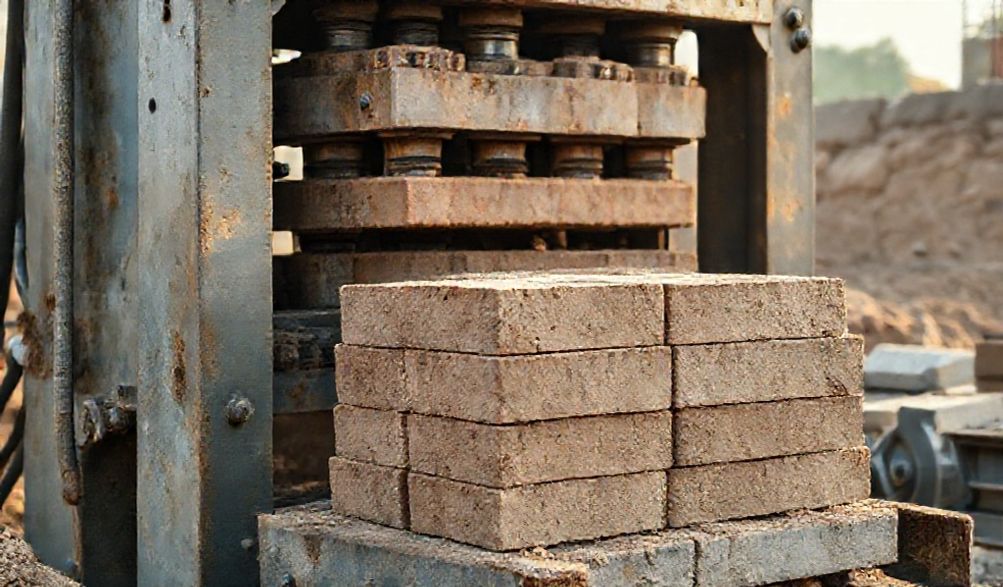
Ang Komprehensibong Gabay sa Makina ng Paggawa ng Brik na Lupa sa India (2026)
Panimula
Ang skyline ng India ay tumataas sa isang walang ulirang bilis, ngunit ano ang halaga nito? Ang sektor ng konstruksiyon, ang sandigan ng paglago na ito, ay isa ring malaking kontribyutor sa mga hamong pangkapaligiran ng bansa. Isaalang-alang ito: ang tradisyonal na industriya ng fired clay brick ay tinatayang kumukonsumo ng mahigit 24 milyong tonelada ng karbon taun-taon at naglalabas ng halos 42 milyong tonelada ng CO2. Habang nagsusumikap ang India tungo sa mga layunin nitong pang-napapanatiling pag-unlad, isang tahimik na rebolusyon ang kumakalat sa lupa—literal. Ang paghahanap ng abot-kayang, eco-friendly, at matatag na materyales sa paggawa ng gusali ay nagtulak sa mga tagapagtayo, arkitekto, at negosyante pabalik sa isang pangunahing yaman: ang lupa.
Ang problema sa mga konbensyonal na pulang ladrilyo ay maraming aspeto. Ang produksyon nito ay mabigat sa enerhiya, nagdudulot ng polusyon, at kadalasang may kaakibat na mapagsamantalang pag-aalis ng matabang lupang ibabaw. Kasabay ng pabagu-bagong mga gastos at tumitinding pagsusuri sa regulasyon, ang pangangailangan para sa isang alternatibo ay hindi kailanman naging mas kagyat. Dito pumapasok ang soil brick making machine—isang kahanga-hangang teknolohiya na nagbabago ng karaniwang lupa sa matibay at sustenableng mga bloke ng gusali.
Ang komprehensibong gabay na ito ay idinisenyo upang tumagos sa ingay ng impormasyon. Batay sa malawak na pananaliksik sa industriya, teknikal na pagsusuri, at malalim na pag-unawa sa kalagayan ng merkado sa India, ito ay nagsisilbing tiyak na sanggunian. Ikaw man ay isang tagapagtayo na naglalayong bawasan ang gastos, isang arkitektong nagtataguyod ng berdeng disenyo, o isang negosyanteng nakakikita ng oportunidad sa negosyo, ang gabay na ito ay magbibigay sa iyo ng kaalaman upang makagawa ng isang maalam na desisyon. Tatalakayin natin ang mekanismo ng mga makinaryang ito, ang kanilang malalim na benepisyo, ang mga uri na available, ang pangunahing mga tagagawa sa India, ang proseso ng produksyon, at ang mga kritikal na salik na dapat mong isaalang-alang bago mamuhunan.
Ano ang isang Makina ng Paggawa ng Bricks mula sa Lupa?
Ang makina ng paggawa ng ladrilyong lupa ay isang aparatong idinisenyo upang gumawa ng Compressed Stabilized Earth Blocks (CSEBs). Ito ay kumakatawan sa pagsasanib ng simpleng prinsipyo at matatag na inhenyeriya, na nag-aalok ng modernong daan patungo sa isa sa pinakalumang materyales sa paggawa ng bahay ng sangkatauhan.
Paliwanag sa Pangunahing Teknolohiya
At its heart, the technology is elegantly simple. A CSEB machine compresses a damp mixture of soil, a small percentage of stabilizer (typically 5-10% cement or lime), and water under extremely high pressure. This process, which can exert forces from 2 to over 40 tonnes, does not rely on heat. Instead, it mechanically compacts the particles, creating a dense, cohesive bond. The stabilizer acts as a binding agent, reacting chemically to give the block long-term strength and water resistance. The result is a uniform, high-quality brick that is ready for construction after a period of curing.
How It Differs from Traditional Brick Making
The contrast with traditional methods is stark:
* Vs. Sun-Dried Adobe Bricks: While Adobe also uses earth, it is simply molded and dried in the sun. CSEBs are mechanically compressed, making them far denser, stronger, and more durable. They are also more dimensionally accurate.
* Vs. Kiln-Fired Clay Bricks: This is the most significant difference. Fired bricks require temperatures of 900°C–1100°C for days, burning massive amounts of coal or wood. The CSEB process eliminates this firing stage entirely. This means zero emissions from fuel combustion, resulting in an energy saving of up to 90% and a drastic reduction in the carbon footprint of the brick itself.
Key Benefits of Using a Soil Brick Machine in India
Adopting soil brick technology isn’t just an ecological choice; it’s a smart economic and practical decision with wide-ranging advantages.
Economic Advantages
- Mababang Puhunan Setting up a CSEB production unit requires a fraction of the capital needed for a conventional brick kiln. There is no need for expensive kilns, chimneys, or large land parcels for clay mining.
- Minimal Material Cost: The primary raw material—soil—is often available on-site or locally at minimal cost. Stabilizers like cement are the only major purchased input.
- High-Profit Potential: With low operational costs and a growing market demand for green building materials, the profit margins for CSEB production can be very attractive for small and medium enterprises.
Environmental & Sustainability Benefits
The environmental case for CSEBs is compelling and backed by studies, including those from institutions like the Auroville Earth Institute. Their research highlights the dramatic reduction in embodied energy.
* Near-Zero Carbon Production: As mentioned, the absence of firing removes the largest source of CO2 emissions from brick manufacturing.
* Local & Natural: Using locally sourced soil drastically cuts down on transportation fuel and preserves topsoil for agriculture, as only sub-soil is used.
* Minimal Waste: There is no spoilage or wastage in production. Unused or broken blocks can be crushed, re-wetted, and reused.
Structural and Practical Benefits
- Superior Thermal Insulation: Earth blocks have excellent thermal mass. They absorb heat during the day and release it slowly at night, naturally regulating indoor temperatures. This can reduce air-conditioning costs by 30-40%.
- Proven Strength & Durability: When produced with the correct soil mix and stabilization, CSEBs can achieve compressive strengths exceeding those of standard clay bricks, making them perfectly suitable for load-bearing walls in low-rise construction.
- Built-In Safety: They are naturally fire-resistant, non-toxic, and offer good sound insulation. Their density also makes them resistant to termites and pests.
Types of Soil Brick Making Machines Available in India
The Indian market offers a spectrum of machines to suit different scales of operation and budgets.
Manual Press Machines
Ideal for community-led projects, rural housing initiatives, or very small-scale production.
* Mga Kalamangan: Extremely low cost, completely portable, requires no electricity. Promotes self-help construction.
* Mga Disbentahe: Labor-intensive, low output (typically 100-300 bricks per day), requires significant operator effort.
Semi-Automaticong Makina
A popular choice for small businesses, housing projects, and entrepreneurs. These often feature a hydraulic or mechanical lever system and may include a pan mixer.
* Mga Kalamangan: Offers a good balance between output, cost, and ease of use. Significantly reduces manual labor compared to manual presses. Output can range from 500 to 1500 bricks per day.
* Mga Disbentahe: Requires a skilled operator for consistent quality. Still involves some manual handling of materials.
Ganap na Awtomatikong Makina
Designed for commercial-scale production. These are integrated systems with automated soil feeding, mixing, compression, and brick ejection, often with conveyor belts.
* Mga Kalamangan: High, consistent output (2000+ bricks per day), excellent product uniformity, minimal manual labor.
* Mga Disbentahe: High initial investment, requires a reliable power supply (electricity or diesel), and more space.
Mobile vs. Stationary Units
A key consideration is mobility. Many manufacturers offer machines mounted on trailers.
* Mobile Units: Allow for on-site production, eliminating brick transportation costs entirely. Perfect for large, remote projects.
* Stationary Units: Set up in a dedicated production yard, supplying bricks to multiple sites within a region.
Top Factors to Consider Before Buying a Machine
A successful venture hinges on choosing the right equipment. Do not skip this due diligence.
Pagsusuri sa Iyong Pangangailangan sa Produksyon
Be clear about your objectives. Are you building a single house, a colony, or starting a commercial brick supply business? Your required daily output (e.g., 1000 vs. 5000 bricks) will directly dictate the type and capacity of machine you need.
Soil Suitability and Testing
This is the most critical, non-negotiable step. Not all soil is suitable. An investment can fail if the soil on your site is incompatible. Expertise here is paramount.
* The ideal soil has a balanced mix of clay (as a binder), silt, and sand (for skeletal structure).
* Always conduct a professional soil test before purchasing a machine. Reputable suppliers or local engineering colleges can guide you. The test will determine the exact proportion of stabilizer needed.
Machine Specifications & Features
- Brick Size & Shape: Ensure the machine can produce the size (e.g., 230x190x100 mm) and interlocking shapes you require.
- Pressure Rating: Measured in tonnes or PSI. Higher pressure generally produces denser, stronger bricks (aim for a minimum of 2-3 tonnes for standard blocks).
- Pinagmumulan ng Kuryente Choose based on your location’s power reliability—electric, diesel, or hybrid.
- Build Quality & Service: Inspect the machine’s robustness. Crucially, investigate the supplier’s after-sales service network, warranty, and spare parts availability. A machine breakdown without support can halt your entire operation.
Leading Manufacturers and Suppliers of Soil Brick Machines in India
The Indian market features a mix of pioneering domestic manufacturers and distributors of international brands.
Overview of the Indian Market Landscape
The demand for sustainable construction has spurred growth in this niche. Companies range from small-scale fabricators to established firms with extensive R&D and export operations.
Review of Reputable Indian Brands
Based on market presence, technical innovation, and product range, here are a few notable names (this is an informational overview, not an endorsement):
* Auram (Auroville Earth Institute): Considered pioneers in India. They offer a wide range of manual and hydraulic presses, backed by decades of research and training.
* Kathan Engineering: Known for robust and innovative hydraulic and automatic CSEB machines, catering to medium and large-scale production needs.
* Mardini Hydraulics: A manufacturer offering a variety of hydraulic press machines, from manual to fully automatic models.
* Bharath Industrial Works: Produces a range of soil block making machines, including mobile units for on-site production.
Tips for Vetting a Supplier
- Ask for Certifications & References: Request client testimonials, especially from projects in your region.
- Insist on a Live Demo: Never buy based on a brochure alone. Demand a demonstration using a sample of your own soil to see the machine’s performance and brick quality.
- Evaluate Support: Assess their willingness to provide installation guidance, operator training, and their response time for service queries.
The Soil Brick Production Process: A Step-by-Step Guide
Producing quality CSEBs is a systematic process.
Step 1: Soil Selection and Preparation
Excavate sub-soil (not fertile topsoil). Remove debris, vegetation, and large stones. The soil should be spread and allowed to weather if too wet.
Step 2: Sieving and Mixing
Sieving is crucial to remove pebbles and achieve a uniform grain size. The sieved soil is then mixed with the precise percentage of stabilizer (cement/lime) in a dry state to ensure even distribution. Water is then added gradually to achieve optimal moisture content (usually around 10-12%).
Step 3: Compression in the Machine
The moist mix is fed into the machine’s mold chamber and compressed at high pressure. The block is then ejected onto a pallet.
Step 4: Curing and Drying
This is vital for strength development. The fresh bricks are kept under a plastic sheet or sprayed with water for 7-14 days to allow the cement to hydrate fully. After curing, they are shaded dried for another 2-3 weeks before use in construction.
FAQ: Frequently Asked Questions About Soil Brick Machines
Q1: What is the average cost of a soil brick making machine in India?
Isalin ang teksto sa Filipino. I-output LAMANG ang isinalin na teksto. Prices vary dramatically. A simple manual press can start from ₹25,000, semi-automatic hydraulic machines range from ₹1.5 lakh to ₹5 lakh, while high-capacity fully automatic plants can cost ₹10 lakh and above.
Q2: Can I use any soil from my land to make bricks?
A: No. Soil must be tested. Pure clay will shrink and crack; pure sand will not bind. Most soils need blending or stabilization. A simple sediment test can give a preliminary idea, but professional lab testing is recommended.
Q3: How strong are soil-stabilized bricks compared to red clay bricks?
Isalin ang teksto sa Filipino. I-output LAMANG ang isinalin na teksto. Well-made CSEBs stabilized with 5-8% cement can easily achieve a compressive strength of 5-7 MPa, which meets or exceeds the strength of many traditional clay bricks (3-5 MPa) used in low-rise construction, as per Indian Standard IS 1725.
Q4: Is special training required to operate these machines?
Isalin ang teksto sa Filipino. I-output LAMANG ang isinalin na teksto. Yes. While the operation is not overly complex, training is essential for understanding soil mix design, moisture control, machine maintenance, and curing procedures. Reputable suppliers should provide basic operational training.
Q5: What are the government regulations or BIS standards for these bricks?
Isalin ang teksto sa Filipino. I-output LAMANG ang isinalin na teksto. The relevant standard is IS 1725:2013 (Compressed Stabilized Earth Blocks). For building approval, consult your local municipal corporation or town planning authority, as acceptance is growing but can vary by region. Using BIS-standard blocks strengthens your case.
Konklusyon
Soil brick making technology is more than an alternative building method; it’s a paradigm shift towards a more sustainable, equitable, and cost-effective construction future for India. It empowers local entrepreneurship, conserves precious resources, and creates healthier living spaces. The potential to address both housing shortages and environmental concerns is immense.
However, success with this technology is not automatic. It demands careful planning, a scientific approach to soil, and a strategic investment in the right equipment. We encourage you to use this guide as a starting point for deeper research, site visits to existing projects, and consultations with technical experts.
Ready to build a sustainable future from the ground up? Contact us for a personalized consultation and soil testing recommendations.
Download our free checklist: ’10 Essential Questions to Ask Before Buying a Brick Making Machine in India’.
<