
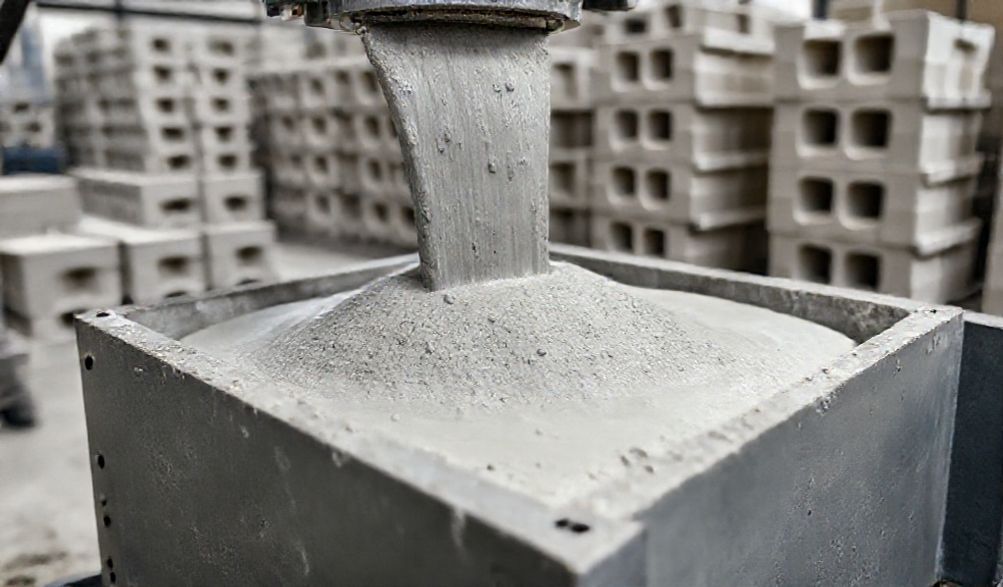
Көбік бетон блоктарын жасау машиналары туралы жан-жақты нұсқаулық: Таңдау, пайдалану және артықшылықтар
Кіріспе
Ғаламдық құрылыс саласы шешуші кезеңде тұр. Тұрақтылық, энергия тиімділігі және шығындарды азайтуға деген талаптардың өсуімен құрылысшылар мен девелоперлер дәстүрлі, ресурсқа құмар материалдарға балама іздеуде. Дәстүрлі сазды кірпіштер мен тығыз бетон блоктар сенімді болғанымен, олардың айтарлықтай кемшіліктері бар: шамадан тыс салмақ, төмен жылу өткізгіштік және үлкен көміртек ізі.
Соттық жеңіл бетон (CLC) немесе көбіктенген бетон блоктары — бұл дәл осы мәселелерді шешетін заманауи құрылыс материалы. Бұл жеңіл, жылу оқшаулағыш және өтеп қолданылатын блоктар қабырғаларды, бөліктерді, тіпті құрылымдық элементтерді түбегейлі өзгертуде. Бірақ бұл инновацияның нағыз қозғаушы күші —көбік бетон блок машинасыБұл арнайы жабдық қарапайым шикізатты жоғары сапалы құрылыс өніміне айналдырады.
Бұл жан-жақты нұсқаулық саланың терең білімі, техникалық сипаттамалар мен тәжірибелік операциялық үздік тәсілдер негізінде жасалған. Сіз жаңа материалдарды бағалап жатқан мердігер болсаңыз да, өндірістік бизнесті зерттейтін кәсіпкер болсаңыз да, немесе жақсы шешімдер іздейтін жоба менеджері болсаңыз да, бұл ресурс сіз үшін арналған. Оны оқып болған соң, сіз бұл машиналардың қалай жұмыс істейтінін, дұрыс модельді таңдаудың шешуші факторларын, өндіріс процесінің кезең-кезеңімен жүргізілуін және бұл технологияның жобаларыңызға немесе бизнес-кәсіпкерлікке әкелетін нақты артықшылықтарын анық түсінесіз.
Көбік бетон блок машинасы дегеніміз не?
Оның негізінде, көбік бетон блок машинасы цементтік суспензияда микроскопиялық ауа көпіршіктерін тұрақтандыру арқылы жеңіл бетон блоктарын өндіруге арналған біріктірілген жүйе болып табылады. Тығыз бетонды тек қысып қана қоймайтын стандартты блок жасау машинасынан айырмашылығы, бұл машинажасайдыжеңіл ұяшықтық құрылым, нәтижесінде блоктар дәстүрлі аналогтарынан 80% жеңіл болуы мүмкін.
CLC блоктарын жасау процесінің негізгі функциясы мен шығысы
Процесс өзінің қарапайымдылығымен талғампаз, ал орындалуымен нақты. Машинаның негізгі функциясы - алдын ала қалыпталған, тұрақты көбікті цемент, ұшқыл күл (немесе құм) және судың қоспасымен араластыру. Арнайы агент пен судан алынатын бұл көбік миллиондаған берік, біркелкі көпіршіктерден тұрады. Олар қоспаға біртекті түрде араласқанда, бұл көпіршіктер сақталып қалады, сөйтіп қоспа бойынша біркелкі жабық жасушалы құрылымды қалыптастырады. Содан кейін осы ауаланған қоспа әртүрлі мөлшердегі және пішіндегі қалыптарға құйылады, онда ол қатады және қатайып, жасушалы матрицаны орнында бекітеді. Нәтижесінде тасымалдауға жеңіл, бірақ берік, сонымен қатар жылу оқшаулау қасиеттері бар блок алынады.
Стандартты машинаның негізгі компоненттері
Машинаның жұмыс істеу принципін түсіну оның негізгі құрамдас бөліктерін түсіну арқылы жеңілдейді:
- Көбік генераторы:Жүйенің жүрегі. Ол қысыммен дәлдікпен есептелген көбік концентраты мен суды араластырады, өте тұрақты және құрғақ көбік алу үшін. Көбіктің сапасы түпкілікті блоктардың біркелкілігі мен беріктігін тікелей анықтайды.
- Араластыру блогы:Әдетте, мәжбүрлеп араластырғыш немесе кескіш араластырғыш цементті, ұшқын күлді, құмды (егер қолданылса) және суды мұқият араластырып, тегіс, түйіршіксіз суспензияға айналдырады. Мұнда біртектілік біркелкі блок сапасы үшін шешуші рөл атқарады.
- Қалыптау жүйесі:Бұл қарапайым, қолмен жұмыс істейтін машиналар үшін алынбалы болат табақшалардан бастап, толық автоматтандырылған желілердегі автоматты паллет бергіштері бар дірілдеуші конвейер жүйелеріне дейін болуы мүмкін. Қалыптар блок өлшемін анықтайды (мысалы, 600x200x100мм, 600x200x150мм).
- Басқару панелі:Жүйкелік орталық. Ол сорғылар мен араластырғыштар үшін негізгі қолмен басқарылатын қосқыштардан бастап, бүкіл партиялау, араластыру және құю процесін автоматтандыратын, қайталанатын дәлдікті қамтамасыз ететін жетілдірілген бағдарламаланатын логикалық басқарушы (PLC) жүйелеріне дейін қамтиды.
Көбік бетон мен дәстүрлі блоктар: материалдарды салыстыру
| Қасиет | Көбіктенген бетон (CLC) блоктар | Дәстүрлі сазды кірпіштер / Тығыз бетон блоктар |
| :— | :— | :— |
| Құрғақ Тығыздық600 – 1200 кг/м³ | 1800 – 2000 кг/м³ |
| Жылу өткізгіштік | Өте төмен (0,1 – 0,3 Вт/мК) | High (0.5 – 1.5 W/mK) |
| Compressive Strength | 3 – 7 N/mm² (suitable for load-bearing and non-load-bearing) | 5 – 20+ N/mm² |
| Sound Absorption | Excellent due to porous structure | Fair |
| Environmental Impact | Lower. Uses industrial waste (fly ash), less energy to produce. | Higher. High firing energy (bricks) or cement content (blocks). |
| Workability | Easy to cut, shape, and drill with hand tools. | Requires specialized cutting tools. |
Types of Foam Concrete Block Machines: Choosing the Right Model
Selecting the correct machine type is your first and most crucial strategic decision. The choice hinges on your production goals, budget, and available labor.
Manual / Small-Scale Machines
- Үшін Қолайлы: Entrepreneurs starting a small business, on-site production for specific projects, research and development, or educational purposes.
- Операция: These are essentially standalone units where material batching, mixing, foam generation, and pouring into molds are performed manually. Demolding is also a hands-on process.
- Шығу қабілеті: Typically 20 to 50 cubic meters per day (approx. 500-1200 blocks).
- Артықшылықтары: Lowest capital investment, minimal infrastructure needed, simple to understand.
- Кемшіліктері: High labor dependency, lower consistency in block quality, physically demanding, lower overall output.
Жартылай автоматты машиналар
- Үшін Қолайлы: Small to medium-sized enterprises (SMEs) aiming for steady commercial production to supply local builders and contractors.
- Операция: Key processes are mechanized. The mixing and foam generation are often automated and controlled via a panel. Operators manually place empty molds on the filling station and remove filled molds for curing. Some systems include a conveyor for mold movement.
- Шығу қабілеті: Ranges from 50 to 150 cubic meters per day (approx. 1200-3600 blocks).
- Артықшылықтары: Excellent balance between cost and productivity, more consistent product quality than manual machines, reduced physical strain on workers.
- Кемшіліктері: Still requires a moderate-sized operational crew, initial investment is higher than manual setups.
Fully Automatic Production Lines
- Үшін Қолайлы: Large-scale industrial production plants supplying regional or national markets.
- Операция: These are integrated systems. From raw material silos and automated batching to mixing, foam injection, pouring into molds on a moving pallet conveyor, curing in controlled chambers, and automatic demolding and stacking—the entire process is PLC-controlled with minimal human intervention.
- Шығу қабілеті: Can exceed 300+ cubic meters per day.
- Артықшылықтары: Maximum output and efficiency, unparalleled consistency in block quality, minimal labor costs per block, highest level of professionalism.
- Кемшіліктері: Very high initial capital investment, requires significant factory space and stable power supply, needs skilled technicians for maintenance.
- ROI Note: For high-volume scenarios, the speed, consistency, and labor savings of a fully automatic line can lead to a compelling return on investment, justifying the upfront cost.
Critical Factors for Selecting Your Machine
Beyond the machine type, several nuanced factors separate a profitable, smooth-running operation from a problematic one. In practice, seasoned operators emphasize looking beyond the brochure.
Өндірістік талаптарыңызды бағалау
Begin by asking concrete questions:
* Projected Daily Output: What is your current market demand? What are your growth projections for 2-3 years? Don’t buy a machine that maxes out your current needs with no room for growth.
* Block Size Variety: Will you need to produce multiple block sizes (thicknesses) or special shapes (like lintel blocks)? Ensure the machine’s molding system can accommodate this flexibility.
* Available Space & Infrastructure: Do you have adequate covered space for production, curing, and raw material storage? Is your electrical supply (3-phase power often required) sufficient?
Quality and Durability of Machinery
The adage “you get what you pay for” is profoundly true here. A cheaper machine made with inferior components will cost more in downtime and repairs.
* Frame & Build: Look for a robust, welded steel frame that resists vibration and wear.
* Critical Components: Inspect the quality of the mixing blades (should be hard-wearing steel), the foam pump (diaphragm pumps are often preferred for durability), and the slurry pump.
* Manufacturer Reputability: Research the manufacturer’s history. How long have they been in business? Can they provide references from existing clients?
Automation Level and Ease of Operation
Balance your budget with long-term operational costs.
* A semi-automatic machine might have a higher upfront cost than a manual one but will save significantly on labor wages and produce more uniform blocks, reducing waste.
* User Interface: The control panel should be intuitive. Clear labeling, logical layout, and safety cut-offs are essential.
* Maintenance Access: Can key components like the mixer shaft or pump be easily accessed for cleaning and service? Good design prioritizes serviceability.
After-Sales Support and Service
This is perhaps the most critical factor for сенімділік and long-term success. A machine is a long-term asset.
* Кепілдік: What is covered, and for how long? A reputable manufacturer stands behind their product with a clear, comprehensive warranty.
* Қосалқы бөлшектердің қолжетімділігі: Are spare parts (wear parts like seals, blades, etc.) readily available? What is the typical lead time? Local stock is a major advantage.
* Technical Training & Support: Does the supplier offer installation supervision and on-site training for your operators? Is there a dedicated technical support hotline? This support is invaluable, especially during the initial setup phase.
The Operational Workflow: From Raw Materials to Finished Block
Understanding the production process helps in planning your plant layout and quality control protocols. Here is a step-by-step breakdown based on standard industry practice.
Step 1: Raw Material Preparation & Mix Design
Consistency starts here. The common raw materials are:
* Цемент: Ordinary Portland Cement (OPC 43 or 53 grade) is standard.
* Ұшқан күл: Class F fly ash is a pozzolanic waste product from coal plants. It improves workability, reduces cement use (lowering cost and carbon footprint), and enhances long-term strength. It’s a core ingredient.
* Құм Optional. If used, it must be fine, clean, and free of silt (often sub-2mm).
* Су Potable water free of impurities.
* Foam Agent: A synthetic or protein-based concentrated liquid designed to generate high-stability foam.
Themix design—the precise ratio of these materials—is calculated based on the target density and strength of the block (e.g., 800 kg/m³, 4 N/mm²). This formula must be strictly adhered to for every batch.
Step 2: Foam Generation and Slurry Mixing
Two parallel processes occur:
1. The dry ingredients (cement, fly ash) are mixed with water in the mixing unit to form a homogenous slurry.
2. The foam generator produces a stiff, shaving-cream-like foam by diluting the foam agent with water and aerating it.
The foam is then injected into the slurry mixer in a controlled manner. The foam-to-slurry ratio is critical; more foam lowers density and strength but increases insulation. The mixture is gently blended to avoid collapsing the bubbles.
Step 3: Molding, Curing, and Demolding
- Қалыптау: The aerated slurry is poured into prepared molds (oiled for easy release). In manual systems, this is done with a hose; in automatic lines, it’s precisely dispensed.
- Емдеу: This is when the block gains strength. Natural curing involves letting the blocks sit in the molds for 12-24 hours before demolding, then storing them under damp covers or in a mist chamber for 14-28 days. Steam curing (using a boiler and curing chamber) accelerates the process, allowing demolding in 6-8 hours and achieving target strength in 24 hours, significantly boosting production turnover.
- Демонтаждау: “Green” blocks are carefully removed from the molds. They are still fragile at this stage and must be handled with care before being moved to the curing area.
Step 4: Quality Control and Testing
Proactive QC builds сенімділік and customer trust.
* On-Site Tests: Daily checks of fresh block density (weighing a known volume), dimensional accuracy, and visual inspection for cracks.
* Lab Tests: Periodic samples should be sent to a lab for compressive strength tests (as per ASTM C869 or IS 2185 Part 4), water absorption, and dry density verification. Keeping these records is essential for certification and client assurance.
Advantages of Investing in a Foam Concrete Block Plant
The benefits extend far beyond simply making blocks; they impact your entire project or business model.
Economic Benefits: Reducing Construction Costs
- Lower Material Cost: Substituting a significant portion of cement with fly ash, an inexpensive industrial by-product, reduces raw material expense.
- Reduced Structural Load: Lighter blocks mean lighter foundations, walls, and supporting structures, leading to savings on steel and concrete in the building frame.
- Жылдам құрылыс: Large-format, lightweight blocks are easier and quicker to lay, reducing masonry time and labor costs.
Superior Product Properties
- Жылу оқшаулауы: The entrapped air provides exceptional thermal resistance (high R-value), reducing heat transfer. This leads to substantial energy savings on heating and cooling for the life of the building.
- Fire Resistance & Soundproofing: Being mineral-based, CLC offers excellent fire ratings. The porous structure also absorbs sound effectively, enhancing acoustic comfort.
- Workability: Blocks can be easily sawn, nailed, drilled, and grooved with standard carpenter’s tools, allowing for easy installation of conduits and pipes.
Environmental and Sustainability Edge
This is a key driver in modern construction. Foam concrete technology aligns perfectly with green building principles.
* Utilizes Industrial Waste: It consumes fly ash, diverting it from landfills.
* Төмен көміртеқ ізі: Reduced cement usage directly lowers the CO2 emissions associated with production.
* Ресурстық тиімділік: Less raw material is used per volume compared to dense concrete, and the insulation properties lead to long-term energy savings in buildings. This contributes positively to certifications like LEED or BREEAM.
Жиі қойылатын сұрақтар (ЖҚС)
Q1: What is the typical compressive strength range of machine-made foam concrete blocks?
Strength is density-dependent. Blocks in the range of 800-1000 kg/m³ typically achieve compressive strengths between 3.5 to 5.0 N/mm², which is suitable for low-rise load-bearing walls and excellent for partition walls. Higher densities (1100-1200 kg/m³) can achieve strengths of 6-7+ N/mm².
Q2: Can I use a foam concrete block machine for other products like panels or slabs?
Yes, absolutely. By using different molds, the same machine and slurry can produce insulated wall panels, floor screed, void fill, and roofing insulation slabs. This product diversification can significantly increase business potential.
Q3: What is the average payback period for a semi-automatic machine?
This varies by region, market demand, and operational efficiency. However, with a steady market, a well-run semi-automatic plant can often see a return on investment within 18 to 36 months, considering the lower operational costs and competitive product pricing.
Q4: How important is fly ash, and what can be used as a substitute?
Fly ash is highly beneficial for cost, workability, and sustainability. If not available, it can be substituted entirely with finely ground sand (often called “sand-based CLC”). The mix design and foam dosage will need adjustment, and the block’s thermal properties may differ slightly.
Q5: What are the most common maintenance requirements for the machine?
Daily cleaning of the mixer and pumps with water to prevent slurry hardening is crucial. Regularly check and grease moving parts, inspect hoses for wear, and clean the foam generator nozzles. Following the manufacturer’s maintenance schedule is key to longevity.
Q6: Are the blocks produced suitable for load-bearing walls?
Yes, when produced at the appropriate density and strength (generally above 1000 kg/m³ and 4 N/mm²), CLC blocks are certified for use in load-bearing construction for low-rise to mid-rise buildings, as per relevant building codes. Always verify with local engineering standards.
Қорытынды
Choosing and implementing a foam concrete block machine is more than a purchase; it’s a strategic investment in productivity, product quality, and future profitability. From the compact manual unit for a startup to the sprawling fully automatic plant, this technology opens the door to manufacturing a construction material that meets the pressing demands of our time: sustainability, efficiency, and performance.
As a final piece of expert advice, prioritize the quality of the machinery and the reliability of the manufacturer’s support network over the allure of the lowest initial price. If possible, visit an existing plant using the equipment you are considering and request sample blocks for independent testing. This due diligence is invaluable.
The shift towards greener, smarter building materials is not a trend but a permanent evolution in the construction industry. Investing in foam concrete block technology positions you at the forefront of this change, offering a future-proof solution for a market that increasingly values environmental responsibility and economic efficiency.
<