
Köpükli Beton Blok Maşynlarynyň Iň Soňky Gollanmasy: Saýlama, Işletme we Peýdalary
Giriş
Dünýä gurluşyk senagaty möhüm çaknyşyk nokadynda durýar. Töwekgelçilik, energiýa tygşytlylygy we bahany peseltmek talapynyň artmagy bilen, gurluşykçylar we öndürijiler geleneksional, resurslary köp sarp edýän materiallara çalt alternatiw aňdaryp başladylar. Adaty kerpiç we ýygy beton bloklar ygtybarly bolsa-da, olaryň özüniň agramly, termiki aýratynlyklarynyň pes we uglerod iziniň uly bolmagy ýaly birnäçe kemçilikleri bar.
Hüjjejik ýeňil beton (CLC) ýa-da köpükli beton bloklary—bu häzirki zaman gurluş materialy bolup, edil şu kynçylyklaryň öňüni alyp gelýär. Bu ýeňil, ýylylyk saklaýjy we köp ugurly bloklar diwarlary, bölüjileri we hat-da gurluş elementlerini üýtgedip başlady. Ýöne bu täzeçiligiň asyl mümkinçilik berijisi bolsaköpükli beton blok maşynyBu ýörite enjam ýönekeý çig materiallary ýokary hilli gurluşyk önümine öwürýär.
Bu gollap beriji gollagma, senagat biliminden, tehniki aýratynlyklardan we amaly işleýiş usullaryndan düzüldi. Siz täze materiallary bahalaýan pudakçy bolsaňyz, öndüriş işini gözleýän telekeçi bolsaňyz ýa-da gowy çözgütleri gözleýän taslamanyň dolandyryjysy bolsaňyz, bu çeşme size niýetlenendir. Ahyrsoňy, siz bu enjamlaryň nädip işleýändigini, dogry modeli saýlamak üçin möhüm amallary, ädim-be-ädim öndüriş prosesini we bu tehnologiýanyň taslamalaryňyza ýa-da telekeçilik işiňize getirip bilýän aýdyň peýdalaryny düşünersiňiz.
Köpük Beton Blok Maşyny Näme?
Onuň esasynda, köpükli beton blok maşyny, sementli bulamaç içinde mikroskopik howa köpüklerini durnuklaşdyrmak arkaly ýeňil beton bloklary öndürmek üçin düzülen birleşdirilen ulgamdyr. Ýönekeý blok ýasama maşyny ýaly bolup, diňe ýygy betony ýygnamaz, bu maşyna...döredýärýeňil öýjükli gurluş, netijede bloklar geleneksi degişlilerinden 80% çenek ýeňil bolup biler.
Esasy Wezipa we Çykyş: CLC Blok Ýasamak Prosesini Düşündirmek
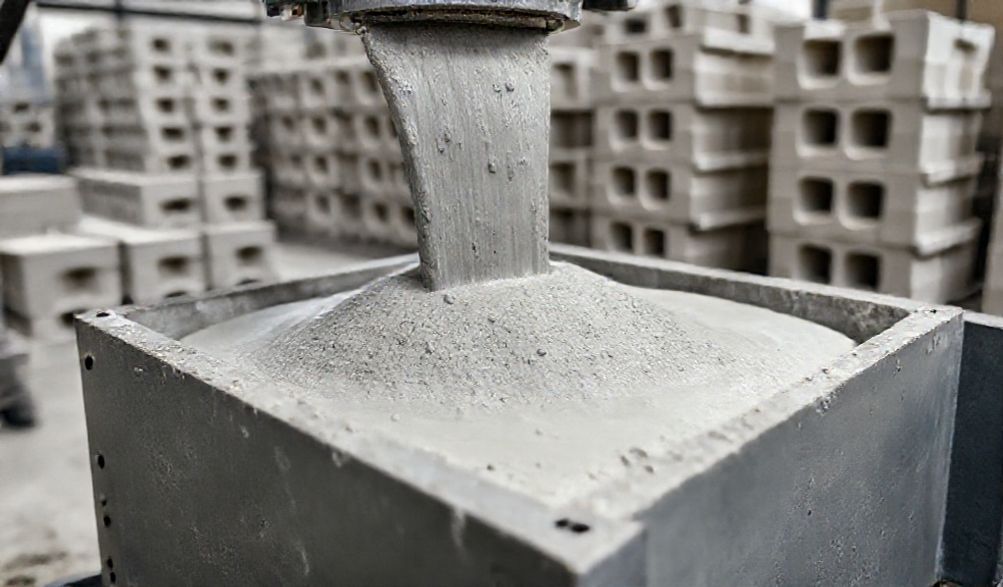
Proses öz ýönekeýligi bilen owadan, ýöne ýerine ýetirilişi bilen takyk. Maşynynyň esasy wezipesi, öň döredilen durnukly köpügi sement, uçýan kül (ýa-da çägel) we suwdan ybarat çökme bilen birikdirmekdir. Bu köpük, aýratyn agent we suwdan döredilip, millionlarça berk we deň meňzergli köpükjiklerden ybarat. Olar çökmäniň içinde deň ýagdaýda garylanda, bu köpükjikler bozulmaz galýar we garyndynyň tutuşlygyna deň ýagdaýda ýapyk öýjükli gurluş döredýär. Soňra bu howalandyrylan çökme dürli ölçeg we görnüşli kalyplara guýulýar, ol ýerde oturyp, gatyşýar we öýjükli matrisany ýerinde berkidýär. Netijede, güýçli agram gatnaşygy we tebigy izolýasiýa aýratynlyklary bolan blok alnýar.
Standart bir maşynyň esasy bölekleri
Esasy bölekleri düşünmek, maşynyň işleýişini aýdyňlaşdyrýar:
- Köpük Generatory:Sistemanyň ýüregi. Ol basyş astynda köpük konsentratynyň we suwunyň takyk gatnaşygyny garyşdyryp, ajaýyp durnukly we gurak köpük öndürýär. Köpügiň hiligi soňky bloklaryň ylalaşygyny we güýjüni kesgitläp berýär.
- Araldyş Bölümi:Адатда, цементи, көмүр күлүн, кумду (эгер колдонулса) жана сууну жылма, топаксыз эритмеге айландыруучу мажбурланган аракет же күрөк аралаштыргыч. Бул жерде бирдей блок сапаты үчүн туруктуулук негизги мааниге ээ.
- Galyplaýyş Ulgamy:Бул, қол машиналары үчін жөнөкөй, алынып салынатын болат табақчалардан бастап, толық автоматты линияларда автоматты паллет бергіштері бар дірілді тасымалдау жүйелеріне дейін болуы мүмкін. Қалыптар блоктың өлшемін анықтайды (мысалы, 600x200x100мм, 600x200x150мм).
- Kontrol paneli:Nerv merkezi. Bu, nasoslar we mikserler üçin döredijilik güýç çykgytlaryndan başlap, tutuş partiýa taýýarlamak, garyndy etmek we guýujylyk tertibini awtomatlaşdyrýan we gaýtalanylýan takyklygy üpjün edýän ösen Programmirleýin Logika Kontrolýer (PLC) ulgamlaryna çenli giňişlikdäki sistemalary öz içine alýar.
Köpükli Beton we Adaty Bloklar: Materiallaryň Deňeşdirilmegi
| Hasiýet | Köpükli Beton (CLC) Bloklar | Adaty Kerpiç / Ýygy Beton Bloklar |
| :— | :— | :— |
| Гуурақлық тығызлығы600 – 1200 kg/m³ | 1800 – 2000 kg/m³ |
| Termiki Ötürijilik | Örän pes (0.1 – 0.3 W/mK)Ýokary (0.5 – 1.5 W/mK)
| Ыкмалык кувватлылыгы3 – 7 N/mm² (ýük göterýän we ýük götermeyän üçin ýarýar) | 5 – 20+ N/mm²
| Ses ýutmagy | Ajaýyp due to porous structure | Fair |
| Environmental Impact | Lower. Uses industrial waste (fly ash), less energy to produce. | Higher. High firing energy (bricks) or cement content (blocks). |
| Workability | Easy to cut, shape, and drill with hand tools. | Requires specialized cutting tools. |
Types of Foam Concrete Block Machines: Choosing the Right Model
Selecting the correct machine type is your first and most crucial strategic decision. The choice hinges on your production goals, budget, and available labor.
Manual / Small-Scale Machines
- Ideal Üçin: Entrepreneurs starting a small business, on-site production for specific projects, research and development, or educational purposes.
- Amal: These are essentially standalone units where material batching, mixing, foam generation, and pouring into molds are performed manually. Demolding is also a hands-on process.
- Çykaryş kuwwaty: Typically 20 to 50 cubic meters per day (approx. 500-1200 blocks).
- Artalary: Lowest capital investment, minimal infrastructure needed, simple to understand.
- Kemçilikler: High labor dependency, lower consistency in block quality, physically demanding, lower overall output.
Ýary-awtomatik Maşynlar
- Ideal Üçin: Small to medium-sized enterprises (SMEs) aiming for steady commercial production to supply local builders and contractors.
- Amal: Key processes are mechanized. The mixing and foam generation are often automated and controlled via a panel. Operators manually place empty molds on the filling station and remove filled molds for curing. Some systems include a conveyor for mold movement.
- Çykaryş kuwwaty: Ranges from 50 to 150 cubic meters per day (approx. 1200-3600 blocks).
- Artalary: Excellent balance between cost and productivity, more consistent product quality than manual machines, reduced physical strain on workers.
- Kemçilikler: Still requires a moderate-sized operational crew, initial investment is higher than manual setups.
Fully Automatic Production Lines
- Ideal Üçin: Large-scale industrial production plants supplying regional or national markets.
- Amal: These are integrated systems. From raw material silos and automated batching to mixing, foam injection, pouring into molds on a moving pallet conveyor, curing in controlled chambers, and automatic demolding and stacking—the entire process is PLC-controlled with minimal human intervention.
- Çykaryş kuwwaty: Can exceed 300+ cubic meters per day.
- Artalary: Maximum output and efficiency, unparalleled consistency in block quality, minimal labor costs per block, highest level of professionalism.
- Kemçilikler: Very high initial capital investment, requires significant factory space and stable power supply, needs skilled technicians for maintenance.
- ROI Note: For high-volume scenarios, the speed, consistency, and labor savings of a fully automatic line can lead to a compelling return on investment, justifying the upfront cost.
Critical Factors for Selecting Your Machine
Beyond the machine type, several nuanced factors separate a profitable, smooth-running operation from a problematic one. In practice, seasoned operators emphasize looking beyond the brochure.
Öndürijilik Talapalaryňyzy Bahalandyrmak
Begin by asking concrete questions:
* Projected Daily Output: What is your current market demand? What are your growth projections for 2-3 years? Don’t buy a machine that maxes out your current needs with no room for growth.
* Block Size Variety: Will you need to produce multiple block sizes (thicknesses) or special shapes (like lintel blocks)? Ensure the machine’s molding system can accommodate this flexibility.
* Available Space & Infrastructure: Do you have adequate covered space for production, curing, and raw material storage? Is your electrical supply (3-phase power often required) sufficient?
Quality and Durability of Machinery
The adage “you get what you pay for” is profoundly true here. A cheaper machine made with inferior components will cost more in downtime and repairs.
* Frame & Build: Look for a robust, welded steel frame that resists vibration and wear.
* Critical Components: Inspect the quality of the mixing blades (should be hard-wearing steel), the foam pump (diaphragm pumps are often preferred for durability), and the slurry pump.
* Manufacturer Reputability: Research the manufacturer’s history. How long have they been in business? Can they provide references from existing clients?
Automation Level and Ease of Operation
Balance your budget with long-term operational costs.
* A semi-automatic machine might have a higher upfront cost than a manual one but will save significantly on labor wages and produce more uniform blocks, reducing waste.
* User Interface: The control panel should be intuitive. Clear labeling, logical layout, and safety cut-offs are essential.
* Maintenance Access: Can key components like the mixer shaft or pump be easily accessed for cleaning and service? Good design prioritizes serviceability.
After-Sales Support and Service
This is perhaps the most critical factor for yşançlylyk and long-term success. A machine is a long-term asset.
* Warranty: What is covered, and for how long? A reputable manufacturer stands behind their product with a clear, comprehensive warranty.
* Ätiýaçlyk bölekleriniň bardygy: Are spare parts (wear parts like seals, blades, etc.) readily available? What is the typical lead time? Local stock is a major advantage.
* Technical Training & Support: Does the supplier offer installation supervision and on-site training for your operators? Is there a dedicated technical support hotline? This support is invaluable, especially during the initial setup phase.
The Operational Workflow: From Raw Materials to Finished Block
Understanding the production process helps in planning your plant layout and quality control protocols. Here is a step-by-step breakdown based on standard industry practice.
Step 1: Raw Material Preparation & Mix Design
Consistency starts here. The common raw materials are:
* Sement: Ordinary Portland Cement (OPC 43 or 53 grade) is standard.
* Ултараш: Class F fly ash is a pozzolanic waste product from coal plants. It improves workability, reduces cement use (lowering cost and carbon footprint), and enhances long-term strength. It’s a core ingredient.
* Gum Optional. If used, it must be fine, clean, and free of silt (often sub-2mm).
* Suw: Potable water free of impurities.
* Foam Agent: A synthetic or protein-based concentrated liquid designed to generate high-stability foam.
Themix design—the precise ratio of these materials—is calculated based on the target density and strength of the block (e.g., 800 kg/m³, 4 N/mm²). This formula must be strictly adhered to for every batch.
Step 2: Foam Generation and Slurry Mixing
Two parallel processes occur:
1. The dry ingredients (cement, fly ash) are mixed with water in the mixing unit to form a homogenous slurry.
2. The foam generator produces a stiff, shaving-cream-like foam by diluting the foam agent with water and aerating it.
The foam is then injected into the slurry mixer in a controlled manner. The foam-to-slurry ratio is critical; more foam lowers density and strength but increases insulation. The mixture is gently blended to avoid collapsing the bubbles.
Step 3: Molding, Curing, and Demolding
- Galyplama: The aerated slurry is poured into prepared molds (oiled for easy release). In manual systems, this is done with a hose; in automatic lines, it’s precisely dispensed.
- Gowulama: This is when the block gains strength. Natural curing involves letting the blocks sit in the molds for 12-24 hours before demolding, then storing them under damp covers or in a mist chamber for 14-28 days. Steam curing (using a boiler and curing chamber) accelerates the process, allowing demolding in 6-8 hours and achieving target strength in 24 hours, significantly boosting production turnover.
- Гыпдан айыру: “Green” blocks are carefully removed from the molds. They are still fragile at this stage and must be handled with care before being moved to the curing area.
Step 4: Quality Control and Testing
Proactive QC builds awtoritarlık and customer trust.
* On-Site Tests: Daily checks of fresh block density (weighing a known volume), dimensional accuracy, and visual inspection for cracks.
* Lab Tests: Periodic samples should be sent to a lab for compressive strength tests (as per ASTM C869 or IS 2185 Part 4), water absorption, and dry density verification. Keeping these records is essential for certification and client assurance.
Advantages of Investing in a Foam Concrete Block Plant
The benefits extend far beyond simply making blocks; they impact your entire project or business model.
Economic Benefits: Reducing Construction Costs
- Lower Material Cost: Substituting a significant portion of cement with fly ash, an inexpensive industrial by-product, reduces raw material expense.
- Gurluşyk ýüküniň peseldilmegi: Lighter blocks mean lighter foundations, walls, and supporting structures, leading to savings on steel and concrete in the building frame.
- Çalt Gurluşyk: Large-format, lightweight blocks are easier and quicker to lay, reducing masonry time and labor costs.
Superior Product Properties
- Ыссылык улгемеси: The entrapped air provides exceptional thermal resistance (high R-value), reducing heat transfer. This leads to substantial energy savings on heating and cooling for the life of the building.
- Fire Resistance & Soundproofing: Being mineral-based, CLC offers excellent fire ratings. The porous structure also absorbs sound effectively, enhancing acoustic comfort.
- Workability: Blocks can be easily sawn, nailed, drilled, and grooved with standard carpenter’s tools, allowing for easy installation of conduits and pipes.
Environmental and Sustainability Edge
This is a key driver in modern construction. Foam concrete technology aligns perfectly with green building principles.
* Utilizes Industrial Waste: It consumes fly ash, diverting it from landfills.
* Lower Carbon Footprint: Reduced cement usage directly lowers the CO2 emissions associated with production.
* Серме сержелилиги Less raw material is used per volume compared to dense concrete, and the insulation properties lead to long-term energy savings in buildings. This contributes positively to certifications like LEED or BREEAM.
Frequently Asked Questions (FAQ)
Q1: What is the typical compressive strength range of machine-made foam concrete blocks?
Strength is density-dependent. Blocks in the range of 800-1000 kg/m³ typically achieve compressive strengths between 3.5 to 5.0 N/mm², which is suitable for low-rise load-bearing walls and excellent for partition walls. Higher densities (1100-1200 kg/m³) can achieve strengths of 6-7+ N/mm².
Q2: Can I use a foam concrete block machine for other products like panels or slabs?
Yes, absolutely. By using different molds, the same machine and slurry can produce insulated wall panels, floor screed, void fill, and roofing insulation slabs. This product diversification can significantly increase business potential.
Q3: What is the average payback period for a semi-automatic machine?
This varies by region, market demand, and operational efficiency. However, with a steady market, a well-run semi-automatic plant can often see a return on investment within 18 to 36 months, considering the lower operational costs and competitive product pricing.
Q4: How important is fly ash, and what can be used as a substitute?
Fly ash is highly beneficial for cost, workability, and sustainability. If not available, it can be substituted entirely with finely ground sand (often called “sand-based CLC”). The mix design and foam dosage will need adjustment, and the block’s thermal properties may differ slightly.
Q5: What are the most common maintenance requirements for the machine?
Daily cleaning of the mixer and pumps with water to prevent slurry hardening is crucial. Regularly check and grease moving parts, inspect hoses for wear, and clean the foam generator nozzles. Following the manufacturer’s maintenance schedule is key to longevity.
Q6: Are the blocks produced suitable for load-bearing walls?
Yes, when produced at the appropriate density and strength (generally above 1000 kg/m³ and 4 N/mm²), CLC blocks are certified for use in load-bearing construction for low-rise to mid-rise buildings, as per relevant building codes. Always verify with local engineering standards.
Netije
Choosing and implementing a foam concrete block machine is more than a purchase; it’s a strategic investment in productivity, product quality, and future profitability. From the compact manual unit for a startup to the sprawling fully automatic plant, this technology opens the door to manufacturing a construction material that meets the pressing demands of our time: sustainability, efficiency, and performance.
As a final piece of expert advice, prioritize the quality of the machinery and the reliability of the manufacturer’s support network over the allure of the lowest initial price. If possible, visit an existing plant using the equipment you are considering and request sample blocks for independent testing. This due diligence is invaluable.
The shift towards greener, smarter building materials is not a trend but a permanent evolution in the construction industry. Investing in foam concrete block technology positions you at the forefront of this change, offering a future-proof solution for a market that increasingly values environmental responsibility and economic efficiency.
<