
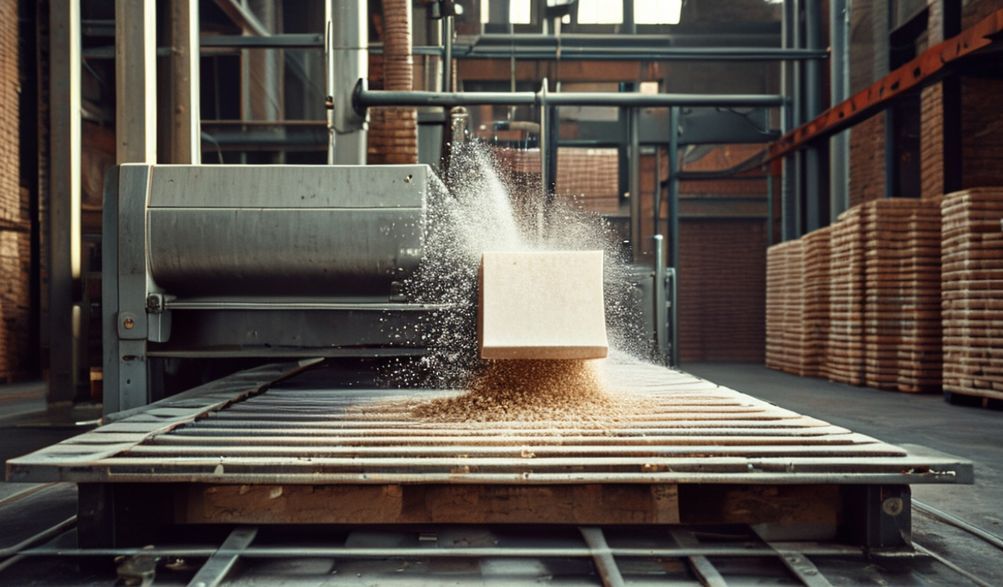
Кірпіш Өндірісінде Төңкеріс: FUDA Кірпіш Өндіріс Зауытындағы Блок Басу Машинасы
Ғасырлар бойы құрылыс саласы іргелі мәселемен күресті: тұрақты, жоғары сапалы және қолжетімді кірпіштерді табу. Бетінің әр түрлі өлшемі, өзгермелі беріктігі және еңбек сыйымды өндірісі жобаларды қиындатып, кідірістерге, шығындардың асып кетуіне және құрылымдық тұтастықтың бұзылуына әкелді. Бүгінгі таңда технологиялық шешім кірпіш өндірісінің келбетін өзгертуде – бұл блок басып шығару машинасы.
Бұл өнеркәсіптік революцияның алдыңғы шебінде FUDA Кірпіш Өндіру Зауыты тұр. Сала көшбасшысы ретінде танымал FUDA өз беделін озық технологияларды қабылдауға берілген берік міндеттемесіне негіздеді, бұл жай ғана жаңарту емес, тиімділікті арттыру, өнім сапасын көтеру және қазіргі құрылыстың үлкен талаптарын қанағаттандыру үшін негізгі философия ретінде қызмет етеді.
Бұл мақала FUDA-да орналастырылған блок басып шығару машинасын терең зерттейді. Біз оның жұмыс істеу принципін талдап, нақты артықшылықтарын сандық түрде көрсетеміз және ол сенімді, заманауи кірпіш өндірісінің алтын стандартын қалай бейнелейтінін көрсетеміз. Санат тәжірибесі мен техникалық сипаттамаларға негізделген түсініктерді пайдалана отырып, бұл нұсқаулық әлемімізді құрастыратын техниканы түсінгісі келетін құрылысшылар, мердігерлер, девелоперлер және өндіріс мамандары үшін сенімді ақпарат көзі болып табылады.
Блоктық басып шығару машинасы дегеніміз не? Негізгі технологиясының түсіндірмесі
Оның әсерін түсіну үшін алдымен машинаның өзін түсіну керек. Кірпіш жасау контекстінде "блоктық басып шығару" термині тоқыма өнерімен байланысынан шығып, басқа мағынаға ие болады. Бұл жерде ол дәл қалыптау және жоғары тығыздықта қысу сияқты күрделі процесті білдіреді, онда шикізат тамаша біртектілікпен мінсіз пішінделген, біркелкі кірпіштерге "басып шығарылады".
Кірпіш жасаудағы блокты баспа процесін анықтау
Блок басып шығару процесі - бұл қатты қалып немесе "пішін" ішінде жоғары қысымды сығу арқылы кірпіш немесе бетон блоктарын өндіру әдісі. Дәл өлшенген шикізат мөлшері - әдетте ылғалды бетон қоспасы (цемент, құм, толықтырғыш) немесе тұрақтандырылған топырақ - камераға беріледі. Содан кейін гидравликалық немесе механикалық поршень үлкен қысым түсіріп, материалды қалып пішініне сығады. Бұл әрекет тек блокты қалыптастырып қоймай, сонымен қатар бөлшектерді тығыз сығады, бұл дайын өнімнің беріктігі үшін өте маңызды. Жаңадан қалыптасқан блок содан кейін палетке шығарылып, қатаюға дайын болады.
Заманауи блоктық басып шығару машинасының негізгі құрамдастары
Қазіргі блокты басып шығару машинасы бірнеше маңызды компоненттердің біріктірілген жүйесі болып табылады:
- Хоппер және бергіш жүйесі:Бұл бастау нүктесі. Қоймалық шикізат қоспасын сақтайды, ал тасымалдау жүйесі, әдетте конвейер немесе агитатор, қалыптау камерасына тұрақты және бақыланатын ағынды қамтамасыз етеді.
- Қалыптау камерасы мен Қалыптар:Машинаның жүрегі. Бұл камера кірпіштің пішіні мен өлшемін анықтайтын ауыстырылатын болат қалыптарды орналастырады. FUDA-да әртүрлі түрлерді өндіруге мүмкіндік беретін қалыптар кітапханасы бар.
- Қатты блоктар:Максималды жүк көтеретін қабырғалар үшін.
- Қуыс блоктар: Lighter, with better insulation properties.
- Ілмек тақташалар: Designed to fit together without mortar, speeding up construction.
- Paving Stones & Decorative Blocks: For landscaping and aesthetic applications.
- Hydraulic or Mechanical Compression System: This provides the force. Hydraulic systems are prized for their smooth, controllable, and immense pressure, which can be precisely calibrated for different material mixes and desired brick densities.
- Ejection and Palletizing System: Once compacted, the system gently ejects the green (uncured) block onto a pallet or steel plate. An automated stacker often layers multiple blocks on a single pallet for efficient movement to the curing area.
Block Print Machine vs. Traditional Brick Making Methods
The contrast with older methods is stark:
- Қолмен қалыптау: Relies entirely on skilled labor, resulting in significant variations in size, density, and finish. Output is low, and the process is physically demanding.
- Extrusion Machines: These machines force material through a die to form a continuous column, which is then cut into bricks. While faster than manual methods, extrusion can sometimes produce bricks with less uniform density compared to the direct, omnidirectional pressure of a block print machine.
- The Block Print Advantage: It combines high automation with precision engineering. Every cycle produces a brick with near-identical dimensions and density. It dramatically reduces labor dependency, increases output exponentially, and ensures a product that meets strict engineering specifications.
Inside the FUDA Brick Making Factory: A Case Study in Efficiency
FUDA Brick Making Factory operates as a living testament to the power of strategic technological investment. Their facility is not just a collection of machines; it’s a synchronized ecosystem designed for peak performance.
FUDA’s Commitment to Technological Investment
FUDA’s philosophy is clear: consistency and scale are non-negotiable for serving large-scale commercial, industrial, and infrastructure projects. They view machinery like the block print machine not as an expense, but as the foundational investment for customer trust. By automating the core forming process, they eliminate human error from the equation, ensuring that every brick bearing the FUDA name meets an unwavering standard.
Integration into the Production Line
The block print machine is the pivotal component in a streamlined workflow:
- Шикізатты дайындау: Carefully selected sand, aggregate, and cement are batched and mixed with precise water content to achieve the optimal consistency for compaction.
- Тамақтандыру: The homogeneous mix is conveyed to the block print machine’s hopper.
- Printing/Compaction: The machine cycles automatically—filling, compacting, and ejecting bricks at a rapid, consistent pace.
- Емдеу: Pallets of green blocks are moved to a controlled curing chamber, where heat and humidity are managed to allow the cement to hydrate fully, achieving its designed strength.
- Drying & Stacking: After curing, bricks are dried and then automatically stacked or packaged for shipment.
Quality Control and Output Specifications
This integrated system allows FUDA to enforce rigorous quality control. Bricks produced by their block print machines are characterized by:
- Өлшемдік дәлдік: Tolerances within ±1-2mm, ensuring straight walls and simplified bricklaying.
- Жоғары Қысу беріктігі: The high-pressure compaction results in densities often exceeding 1500 kg/m³, with compressive strength reliably meeting or exceeding standards like IS 2185 (Part 1) for concrete blocks or relevant ASTM standards.
- Біркелкілік: Consistent color, texture, and weight across the entire production batch.
Top Advantages of Using a Block Print Machine for Brick Manufacturing
The adoption of block print technology delivers a compelling array of benefits that directly address the core challenges of construction.
Unmatched Product Consistency and Quality
This is the paramount advantage. Automated, cycle-after-cycle compression guarantees that every single brick has identical size, shape, and density. For architects, engineers, and masons, this consistency translates to predictable material usage, smoother construction processes, and structurally sound results.
High Production Speed and Scalability
While manual methods might produce a few hundred bricks per day, a single modern block print machine can produce 2,000 to 5,000 bricks per hour. This scalability is essential for FUDA to fulfill large orders and meet tight project deadlines without compromising on quality.
Significant Reduction in Labor Costs and Physical Strain
The machine shifts the role of personnel from strenuous manual labor to skilled machine operation, monitoring, and maintenance supervision. This improves worker safety, reduces long-term physical strain, and optimizes labor costs for the factory.
Material Efficiency and Waste Reduction
The precision feeding and molding process minimizes spillage and overuse. Furthermore, because the bricks are so consistent, the rejection rate due to defects plummets. This leads to direct cost savings on raw materials and promotes more sustainable manufacturing practices.
Versatility in Brick Design and Type
With a simple change of the mold die, the same block print machine can switch production from standard solid blocks to decorative pavers or interlocking landscaping bricks. This flexibility allows a factory like FUDA to cater to diverse market segments without capital investment in multiple dedicated production lines.
Key Considerations When Operating a Block Print Machine
Maximizing the return on this advanced technology requires attention to several operational factors.
Raw Material Preparation is Crucial
The block print machine is a precision tool, and its performance is directly tied to its input. Critical factors include:
* Proper Grading: Well-graded aggregates ensure optimal packing and strength.
* Accurate Ratios: Cement-sand-aggregate ratios must be strictly followed.
* Ылғалдылық мөлшері: This is vital. Too dry, and the brick won’t compact properly; too wet, and it may deform upon ejection. FUDA’s automated batching systems meticulously control this variable.
Machine Maintenance for Longevity
Preventive maintenance is key to avoiding costly downtime. A basic schedule includes:
* Күнделікті Cleaning of the mold, hopper, and feed system; checking hydraulic fluid levels and for leaks.
* Апталық: Inspecting and tightening bolts, checking wear parts like mold liners and ram seals.
* Monthly/Annually: More thorough inspections, hydraulic fluid analysis and changes, and replacement of high-wear components as per the manufacturer’s manual.
Operator Training and Safety Protocols
A well-trained operator is the most important safety and efficiency feature. Training should cover:
* Machine startup/shutdown procedures.
* Safe operation, including lockout/tagout protocols.
* Basic troubleshooting and identification of common issues.
* Understanding the relationship between material input and machine output.
FAQ: Your Questions About Block Print Machines and FUDA Answered
Q1: What types of bricks can a block print machine at a factory like FUDA produce?
A: FUDA’s machines, through interchangeable molds, can produce a wide range, including: Solid Concrete Blocks (for foundations, load-bearing walls), Hollow Blocks (for partition walls, offering thermal/acoustic benefits), Paving Stones (for driveways, walkways), and Interlocking Bricks (for retaining walls, quick-assembly structures).
Q2: How does the block print process affect the final strength of the brick?
A: The high-pressure compaction (often measured in tons per square inch) forces particles closer together, eliminating voids and air pockets. This dense microstructure directly translates to higher compressive strength, making block-printed bricks ideal for structural applications.
Q3: Is the block print machine suitable for small-scale or startup brick yards?
A: The significant initial investment makes it most suitable for medium to large-scale production like FUDA’s. For small yards, the volume may not justify the cost. The decision hinges on a long-term ROI calculation, balancing capital expenditure against labor savings, material efficiency, and the ability to command a premium for consistent, high-quality products.
Q4: Can FUDA’s block print machines use recycled materials?
A: Yes, absolutely. Many modern block print machines are compatible with mixes incorporating industrial by-products like ұшқын күлі (a pozzolan) or crushed recycled concrete as partial aggregate replacements. This aligns with global trends toward sustainable construction and can improve certain properties of the final block.
Q5: How does FUDA ensure the reliability of its brick-making machinery?
A: FUDA employs a multi-pronged approach: 1) Procurement: Sourcing robust machines from reputable manufacturers known for durability. 2) Preventive Maintenance: Adhering to a strict, scheduled maintenance regimen. 3) Technical Expertise: Employing trained in-house technicians and maintaining relationships with equipment suppliers for specialized support. 4) Quality Inputs: Using high-grade components and raw materials to reduce machine wear.
Қорытынды
The block print machine has unequivocally established itself as a cornerstone of efficient, high-quality brick production. As demonstrated by industry leaders like the FUDA Brick Making Factory, this technology is the bridge between raw material and reliable building component, ensuring consistency, strength, and scalability that manual or semi-automated methods cannot match.
Looking ahead, the evolution continues. We can expect further integration of the Internet of Things (IoT) for real-time machine monitoring and predictive maintenance, even greater automation in material handling, and continued innovation in sustainable material recipes for block printing.
For construction professionals, the lesson is clear: the integrity of a project begins with the quality of its most basic materials. Investing in—or sourcing from—manufacturers who utilize proven, precision technology like the block print machine is not just a procurement decision; it is a fundamental risk mitigation strategy. It ensures that the foundations of our buildings, homes, and infrastructure are as reliable as the engineering that designs them.
Call to Action: For your next project, specify machine-pressed, block-printed bricks to guarantee dimensional consistency and structural performance. When evaluating suppliers, prioritize those who, like FUDA, invest in advanced manufacturing technology—it is the most reliable indicator of a commitment to quality that will stand the test of time.
<