
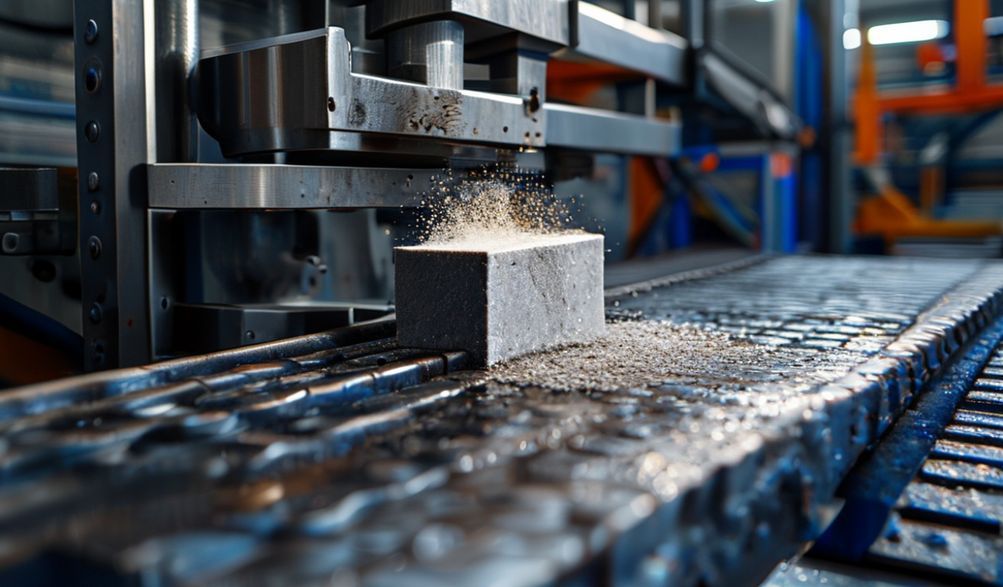
Қуыс блок өндіру машиналарының Толық Нұсқаулығы: Түрлері, құны және қалай таңдау керек
Кіріспе
Сіз берік құрылыс саласына көз салатын кәсіпкерсіз бе? Мүмкін, сіз материалдардың құнын тігілей біріктіру және бақылау үшін құрылыс бизнесінің иесісіз. Немесе сіз нақты, сұранысқа ие бизнес мүмкіндігін іздеген инвестор боларсыз. Егер солай болса, көпшілік блок өндіру әлемі сіздің радарыңызда пайда болған шығар.
Алайда, бұл салада бағдарлау қиын болуы мүмкін. Машиналардың көптігі, техникалық терминология және қажетті елеулі инвестициялар жай ғана беттік қараудан гөрі көбірек талап етеді. Сізге тек теория емес, шындыққа негізделген нұсқаулық қажет.
Бұл жан-жақты нұсқаулық бетон техникасы мен блок өндіру зауытын басқару саласында 20 жылдан астам тәжірибесі бар сала тәжірибешілерінің көзқарасымен жазылған. Біздің мақсатымыз - дұрыс кеуекті блок өндіру машинасын таңдаудан бастап, оны тиімді пайдалану және пайдалы кәсіпорын құруға дейінгі бүкіл процесті анықтау. Біз нарықтық жарнамалық астарды алып тастап, сенімді, негізделген шешім қабылдау үшін қажетті сенімді, тәжірибеге негізделген түсініктерді ұсынамыз. Жергілікті құрылыс секторын қамтамасыз етуді мақсат тұтқан болсаңыз да, немесе қолданыстағы өндіріс желіңізді оңтайландырғыңыз келсе де, мұны өзіңіздің негізгі нұсқаулығыңыз деп санаңыз.
Ұялы блок өндіру машинасы деген не?
Оның негізінде, кеуекті блок өндіру машинасы - бұл кеуекті бетон блоктарын өндіруді автоматтандыруға арналған арнайы жабдық. Бұл блоктар негізгі құрылыс материалы болып табылады, олардың беріктігі, жеңілдігі (кеуектерге байланысты), жылу оқшаулау қасиеттері және дәстүрлі кірпіштермен салыстырғандағы тиімділігі үшін бағаланады.
Негізгі функция және Соңғы өнім
Машинаның негізгі функциясы шикізаттарды—цемент, агрегаттар (мысалы, құм немесе ұсақталған тас) және суды—дәл пішінделген, жоғары тығыздықты қуыс блоктарға айналдыру. Ол өндірістің ең маңызды және еңбек сыйымды кезеңдерін автоматтандырады:
* Араластыру:Біртекті, біркелкі бетон қоспасын жасау.
* Қалыптау:Дәл қалыптарды пайдаланып ылғалды қоспаны блоктарға пішіндеу.
* Ығыстыру:Жоғары жиілікті дірілді пайдаланып, ауа қалталарын жою және құрылымдық тұтастықты қамтамасыз ету.
* Емдеу:Бастапқы орнату процесін жеңілдету, әдетте қолданылатын қысым немесе жылу арқылы жүзеге асырылады.
Бұл автоматтандыру қол әдістерімен салыстырғанда тұрақты сапаны, жоғары өнімділікті және елеулі еңбек үнемдеуді қамтамасыз етеді.
Негізгі компоненттер және олардың жұмыс істеу тәсілі
Блок машинасының негізгі бөліктерін түсіну оның жұмыс істеу принципін түсіндіреді. Міне, стандартты жартылай автоматты немесе автоматты машинаның құрылымы:
- Хоппер:Шикізаттардың (цемент, құм, тас ұнтағы) кіру нүктесі.
- Миксер: A pan or planetary mixer that blends dry materials first, then adds water to form a uniform concrete mix.
- Конвейер жүйесі:Араластырылған бетонды қалыптау аймағына тасымалдайды.
- Қалып және Дірілдеуіш Үстел: The heart of the machine. The mold, often interchangeable, defines the block’s shape (hollow, solid, paver). The vibrating table subjects the filled mold to intense vibration for compaction.
- Гидравликалық жүйе: Provides the immense pressure (measured in tons) to compress the concrete within the mold, creating dense, strong blocks. It also powers the ejection of the finished block.
- Басқару панелі: Houses the electrical systems and PLC (Programmable Logic Controller) that automates the machine’s cycle sequence.
Негізгі өндірістік цикл: Raw materials are fed into the hopper, mixed, and conveyed to the mold. The mold is filled, vibrated, and hydraulically pressed. The freshly formed “green” block is then ejected onto a pallet or curing rack to gain initial strength before final curing.
Types of Hollow Block Making Machines
The market offers a range of machines tailored to different scales of operation and levels of investment. Choosing the right type is your first critical decision.
Қолмен, жартылай автоматты және толық автоматты машиналар
- Қолдан жасалған блок машиналары: These are the most basic and affordable. Operation relies entirely on human labor for mixing, feeding the mold, and applying vibration (often via a lever). They are suitable for very small-scale projects, startups with minimal capital, or locations with unreliable electricity.
- Үшін тамаша: Producing less than 500 blocks per day.
- Жартылай автоматты блок машиналары: This is the most popular category for small to medium enterprises (SMEs). They automate the mixing, molding, and pressing processes but require operators to feed raw materials, move pallets, and handle finished blocks. They offer an excellent balance between output, cost, and labor.
- Үшін тамаша: Daily production from 1,000 to 5,000 blocks.
- Толық автоматты блок машиналары: These are computer-controlled production lines. They feature automatic material batching, robotic pallet handling, stackers, and sometimes integrated curing systems. Labor is minimal, primarily for supervision and maintenance. The investment is high, but so is the output and consistency.
- Үшін тамаша: Large-scale businesses targeting a production of 8,000 to 20,000+ blocks per day.
| Feature | Manual | Semi-Automatic | Fully Automatic |
| :— | :— | :— | :— |
| Шығу қабілеті | Very Low (100-500/day) | Medium (1,000-5,000/day) | Very High (8,000-20,000+/day) |
| Labor Requirement | High | Moderate (2-4 operators) | Low (1-2 supervisors) |
| Investment Level | Low ($1,000 – $10,000) | Medium ($15,000 – $80,000) | High ($100,000 – $500,000+) |
| Automation Level | None | Partial (Core Process) | Complete (Full Line) |
| Space Needed | Minimal | Moderate | Extensive |
Stationary vs. Mobile Block Machines
- Стационарлық машиналар: These are set up in a fixed factory location. They are typically more robust, powerful, and capable of higher production. They are the standard choice for supplying a regional market.
- Мобильді блоктық машиналар: Mounted on a trailer, these machines can be towed directly to a construction site. This eliminates transport costs for the finished blocks, making them perfect for large, remote projects like dams, military bases, or large-scale housing developments where blocks are consumed on-site.
By Block Output Type: Solid, Paver, Interlocking, etc.
Most modern block machines are versatile. By simply changing the mold, the same machine can produce a variety of concrete products:
* Ұялы блоктар (various sizes: 4″, 6″, 8″)
* Solid Concrete Blocks
* Paving Stones & Kerbstones
* Interlocking Blocks (for dry-stack construction)
* Decorative Landscape Blocks
This product diversification allows a single business to cater to multiple market segments (structural building, landscaping, paving) from one investment.
Critical Factors for Choosing the Right Machine
Selecting a machine is not about buying the biggest or the cheapest. It’s about finding the perfect fit for your business plan.
Assessing Your Production Needs and Business Scale
Өзіңізге мына негізгі сұрақтарды қойып көріңіз:
* What is my target daily or monthly output in blocks?
* What types of blocks are in highest demand in my target market?
* What is my realistic startup budget, including machine, installation, and working capital?
* What is my 3-5 year growth plan? Should I buy for today’s needs or for tomorrow’s expansion?
Machine Specifications to Scrutinize
Қажеттіліктеріңізді анықтағаннан кейін, техникалық мәліметтерге кірісіңіз:
* Cycle Time & Blocks Per Cycle: How many seconds for one complete press? How many blocks are produced in each cycle (e.g., 3 blocks of 4″ per cycle)?
* Қысым (Тоннаж): Higher tonnage (e.g., 150 tons vs. 50 tons) generally produces stronger, denser blocks by applying more compression.
* Қуат қажеттіліктері: Ensure your facility can supply the required voltage (e.g., 380V/3-phase) and horsepower (e.g., 20 HP).
* Құрылыс сапасы: This is paramount. Inspect the grade of steel used in the frame, the brand and quality of hydraulic pumps and cylinders, and the power of the vibration motors. A machine built with industrial-grade components will last decades; a cheaply built one will cost you in downtime and repairs.
Cost Analysis: Beyond the Sticker Price
The machine’s price tag is just the beginning. A realistic budget includes:
1. Machine Cost:Сатып алу бағасы.
2. Shipping & Installation: Can be significant for international orders or large lines.
3. Foundation & Utilities: Preparing the factory floor with a proper foundation and electrical/water connections.
4. Raw Material Inventory: Initial stockpile of cement, aggregates, and pallets.
5. Еңбек Wages for your operators.
6. Maintenance & Spare Parts: An ongoing annual budget (typically 2-5% of machine cost).
Understanding ROI: Calculate your cost-per-block. Add up the cost of raw materials, power, labor, and machine depreciation for a single block. Compare this to the market selling price in your area. This simple calculation reveals your gross margin and helps estimate the payback period for your investment.
The Manufacturing Process: From Raw Material to Finished Block
A deep understanding of the process is key to maintaining quality and efficiency.
Raw Material Preparation (Mix Design)
The quality of the block is born in the mix. A standard mix ratio for hollow blocks is approximately 1 part cement : 6 parts aggregate (a blend of sand and fine stone chips). Water is added to achieve a semi-dry, “no-slump” consistency—the mix should hold its shape when squeezed. Consistency in the mix is critical for uniform block strength and color.
Step-by-Step Operation of the Machine
Here is the detailed sequence for a typical semi-automatic machine:
1. Тамақтандыру: Operators load the hopper with pre-measured batches of cement, sand, and aggregate.
2. Араластыру: The mixer blends the dry materials for 1-2 minutes, then water is added for a further 3-5 minutes of wet mixing.
3. Molding & Vibrating: The mixed concrete is dropped into the mold box on the vibrating table. The mold is filled, and high-frequency vibration is applied for 5-10 seconds to compact the concrete and remove air.
4. Басу The hydraulic ram presses down on the concrete with immense force, further densifying it.
5. Атқылау және Паллеттеу: The hydraulic ram lifts, the mold opens, and the freshly formed block is pushed out onto a wooden or steel pallet.
6. Емдеу: The pallet with the “green” block is moved to a curing area. Initial curing (covered with plastic for 24 hours) is vital for proper hydration. Final curing involves sprinkling water on the blocks for 7-14 days to achieve maximum strength.
Quality Control and Testing
To ensure your blocks meet building standards:
* Compressive Strength Test: Samples are crushed in a laboratory press to verify they meet the required strength (e.g., 3.5N/mm² or 5N/mm²).
* Өлшемдік дәлдік: Use calipers to check block height, width, and length. Consistent dimensions are crucial for masonry work.
* Visual Inspection: Check for cracks, chips, or poor surface finish, which can indicate issues with the mix, vibration, or mold.
Maximizing Profitability and Efficiency
Owning the machine is one thing; running a profitable plant is another.
Optimizing Production Workflow
Plan your factory layout for a smooth, linear material flow: Raw Material Storage -> Mixing Area -> Machine -> Curing Area -> Finished Product Yard. Minimize the distance operators need to move materials or blocks. Implement organized curing stack management to track block age and ensure proper curing time.
Preventive Maintenance Checklist
- Күнделікті Clean the machine thoroughly, check hydraulic oil levels, inspect for loose bolts or leaks.
- Апталық: Grease all bearings and moving parts, check vibration motor mounts, inspect mold liners for wear.
- Ай сайын: Change hydraulic oil filters, check electrical connections, calibrate the control system if needed.
Sourcing Raw Materials and Managing Inventory
Build relationships with local cement distributors and aggregate quarries. Bulk purchasing often secures better prices. Always test new batches of sand or aggregate for consistency in size and cleanliness (clay or silt content should be low). Maintain a buffer stock to avoid production stoppages.
FAQ: Your Questions on Hollow Block Machines Answered
What is the average cost of a hollow block machine?
Prices vary dramatically. A small manual machine can start around $1,000 – $5,000. A quality semi-automatic machine typically ranges from $15,000 to $80,000. A fully automatic production line can cost $100,000 to $500,000 or more, depending on capacity and automation features.
What is the typical power consumption?
It depends on the motors. A medium-sized semi-automatic machine with a 20 HP mixer and a 10 HP hydraulic system might consume roughly 20-30 kWh per operating hour. Always calculate based on your local electricity tariff.
How many workers are needed to operate a semi-automatic machine?
Typically, 2-4 workers are needed: one to feed the mixer, one to operate the machine controls and handle pallets, and one or two to move and manage the curing blocks.
What is the payback period on the investment?
This is highly variable. In a market with good demand, a well-run semi-automatic plant can see a payback period of 12 to 24 months. Factors include your machine efficiency, local block selling price, raw material costs, and your operational overhead.
How do I find a reliable manufacturer/supplier?
* Check for a physical factory and business history.
* Ask for a list of client references and contact them.
* Request detailed videos of the machine in operation, not just promotional clips.
* Scrutinize the after-sales service terms: Is training included? What is the warranty? How quickly can they supply spare parts?
What are the most common problems and how to fix them?
* Blocks Breaking: Usually caused by incorrect water-cement ratio (too dry or too wet) or insufficient vibration/pressure. Adjust the mix and check machine settings.
* Poor Surface Finish: Often due to a worn-out mold liner or lack of mold release agent. Replace liners and apply a light oil spray.
* Hydraulic Leaks: Check and tighten hose fittings. Replace worn seals or O-rings promptly.
Conclusion and Next Steps
Investing in a hollow block manufacturing machine is a strategic move into the foundational sector of construction. It’s a business that combines manufacturing skill with market demand. Success is not guaranteed by the machine alone but is built on informed selection, efficient operation, and sound business management.
This guide, grounded in decades of industry experience, has provided the framework you need to begin your journey with clarity.
Your Next Steps:
1. Define: Finalize your project scope, target output, and budget.
2. Research: Shortlist 3-5 reputable machinery manufacturers. Use the criteria outlined in the FAQ.
3. Engage: Contact suppliers. Ask for detailed specifications, client lists, and quotations. Always prioritize those who offer comprehensive training and reliable after-sales support.
4. Plan: Simultaneously, scout for your factory location and begin preliminary talks with raw material suppliers.
With diligent planning and the right equipment partner, your hollow block manufacturing venture can lay a remarkably solid foundation for long-term growth and profitability.
This guide was compiled by our team of mechanical engineers and industry consultants with decades of combined hands-on experience in concrete product manufacturing and machinery design. Our content is regularly reviewed and updated to reflect the latest industry standards and technological advancements. We are committed to providing accurate, trustworthy information to help our readers make informed business decisions.
<