
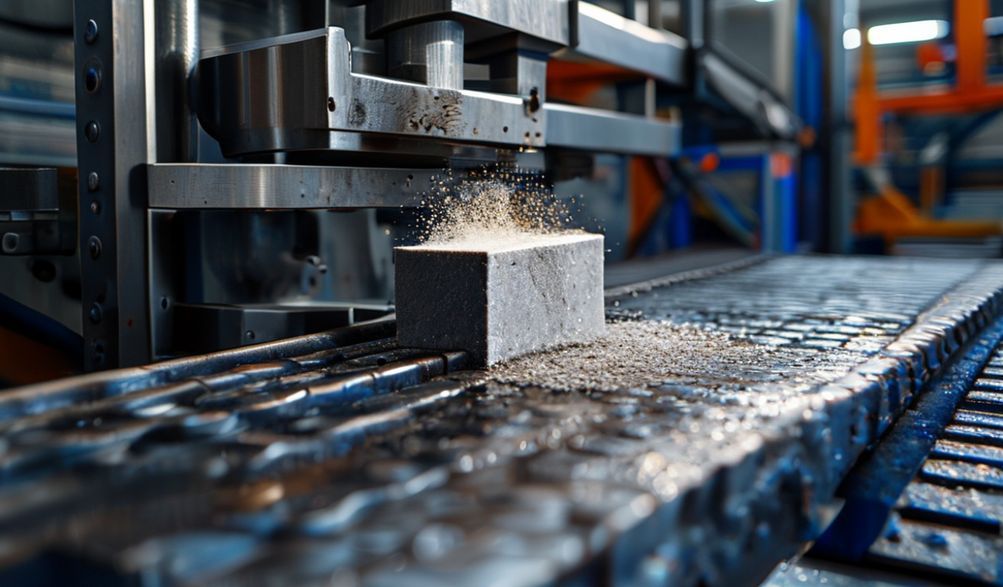
Hướng Dẫn Toàn Diện Về Máy Sản Xuất Gạch Rỗng: Phân Loại, Chi Phí và Cách Lựa Chọn
Giới thiệu
Bạn có phải là một doanh nhân đang nhắm đến ngành xây dựng kiên cường? Có thể bạn là chủ một doanh nghiệp xây dựng đang tìm cách tích hợp dọc và kiểm soát chi phí vật liệu. Hoặc có lẽ bạn là một nhà đầu tư đang tìm kiếm một cơ hội kinh doanh hữu hình, có nhu cầu cao. Nếu vậy, thế giới sản xuất gạch block rỗng có lẽ đã xuất hiện trong tầm ngắm của bạn.
Tuy nhiên, việc tìm đường trong lĩnh vực này có thể khiến ta nản lòng. Hàng loạt máy móc, thuật ngữ kỹ thuật và khoản đầu tư đáng kể cần thiết đòi hỏi nhiều hơn một cái nhìn thoáng qua. Bạn cần một hướng dẫn bám sát thực tế, không chỉ là lý thuyết.
Hướng dẫn toàn diện này được viết từ góc nhìn của các chuyên gia kỳ cựu trong ngành với hơn hai thập kỷ kinh nghiệm trong lĩnh vực máy móc bê tông và vận hành nhà máy sản xuất block. Mục tiêu của chúng tôi là làm sáng tỏ toàn bộ quy trình—từ việc lựa chọn máy sản xuất block rỗng phù hợp đến vận hành hiệu quả và xây dựng một doanh nghiệp sinh lời. Chúng tôi sẽ loại bỏ những chiêu trò tiếp thị phô trương và cung cấp những hiểu biết đáng tin cậy, dựa trên kinh nghiệm thực tế mà bạn cần để đưa ra quyết định tự tin và sáng suốt. Dù bạn hướng đến việc cung cấp cho thị trường xây dựng địa phương đang bùng nổ hay tối ưu hóa dây chuyền sản xuất hiện có, hãy xem đây như cuốn cẩm nang nền tảng của bạn.
Máy Sản Xuất Gạch Bê Tông Rỗng là gì?
Về cốt lõi, máy sản xuất gạch block rỗng là một thiết bị chuyên dụng được thiết kế để tự động hóa quá trình sản xuất gạch bê tông rỗng. Những viên gạch này là vật liệu xây dựng cơ bản, được đánh giá cao nhờ độ bền, tính nhẹ (do có lỗ rỗng), khả năng cách nhiệt và hiệu quả kinh tế so với gạch truyền thống.
Chức năng cốt lõi và Sản phẩm cuối cùng
Chức năng chính của máy là biến đổi nguyên liệu thô—xi măng, cốt liệu (như cát hoặc đá nghiền) và nước—thành những khối rỗng có hình dạng chính xác và mật độ cao. Máy tự động hóa các công đoạn sản xuất quan trọng và tốn nhiều sức lao động nhất.
* Pha trộn: Creating a homogeneous, consistent concrete mix.
* Đúc khuôn Shaping the wet mix into blocks using precise molds.
* Nén chặt: Using high-frequency vibration to remove air pockets and ensure structural integrity.
* Chữa bệnh: Facilitating the initial setting process, often through applied pressure or heat.
This automation ensures consistent quality, high output, and significant labor savings over manual methods.
Các Thành Phần Chính và Cách Chúng Hoạt Động
Understanding the key parts of a block machine demystifies its operation. Here’s a breakdown of a standard semi-automatic or automatic machine:
- Hopper: The entry point for raw materials (cement, sand, stone dust).
- Máy trộn: A pan or planetary mixer that blends dry materials first, then adds water to form a uniform concrete mix.
- Hệ thống băng tải:Vận chuyển bê tông đã trộn đến khu vực đúc khuôn.
- Khuôn & Bàn Rung: The heart of the machine. The mold, often interchangeable, defines the block’s shape (hollow, solid, paver). The vibrating table subjects the filled mold to intense vibration for compaction.
- Hệ thống thủy lực: Provides the immense pressure (measured in tons) to compress the concrete within the mold, creating dense, strong blocks. It also powers the ejection of the finished block.
- Bảng điều khiển: Houses the electrical systems and PLC (Programmable Logic Controller) that automates the machine’s cycle sequence.
The Basic Production Cycle: Raw materials are fed into the hopper, mixed, and conveyed to the mold. The mold is filled, vibrated, and hydraulically pressed. The freshly formed “green” block is then ejected onto a pallet or curing rack to gain initial strength before final curing.
Types of Hollow Block Making Machines
The market offers a range of machines tailored to different scales of operation and levels of investment. Choosing the right type is your first critical decision.
Máy Thủ Công, Bán Tự Động và Tự Động Hoàn Toàn
- Máy Định Hình Khối Thủ Công These are the most basic and affordable. Operation relies entirely on human labor for mixing, feeding the mold, and applying vibration (often via a lever). They are suitable for very small-scale projects, startups with minimal capital, or locations with unreliable electricity.
- Lý tưởng cho: Producing less than 500 blocks per day.
- Máy Định Hình Khối Bán Tự Động: This is the most popular category for small to medium enterprises (SMEs). They automate the mixing, molding, and pressing processes but require operators to feed raw materials, move pallets, and handle finished blocks. They offer an excellent balance between output, cost, and labor.
- Lý tưởng cho: Daily production from 1,000 to 5,000 blocks.
- Máy Đúc Gạch Tự Động Hoàn Toàn: These are computer-controlled production lines. They feature automatic material batching, robotic pallet handling, stackers, and sometimes integrated curing systems. Labor is minimal, primarily for supervision and maintenance. The investment is high, but so is the output and consistency.
- Lý tưởng cho: Large-scale businesses targeting a production of 8,000 to 20,000+ blocks per day.
| Feature | Manual | Semi-Automatic | Fully Automatic |
| :— | :— | :— | :— |
| Công suất đầu ra | Very Low (100-500/day) | Medium (1,000-5,000/day) | Very High (8,000-20,000+/day) |
| Yêu cầu lao động | High | Moderate (2-4 operators) | Low (1-2 supervisors) |
| Investment Level | Low ($1,000 – $10,000) | Medium ($15,000 – $80,000) | High ($100,000 – $500,000+) |
| Automation Level | None | Partial (Core Process) | Complete (Full Line) |
| Space Needed | Minimal | Moderate | Extensive |
Stationary vs. Mobile Block Machines
- Máy Cố Định These are set up in a fixed factory location. They are typically more robust, powerful, and capable of higher production. They are the standard choice for supplying a regional market.
- Máy đúc khối di động: Mounted on a trailer, these machines can be towed directly to a construction site. This eliminates transport costs for the finished blocks, making them perfect for large, remote projects like dams, military bases, or large-scale housing developments where blocks are consumed on-site.
By Block Output Type: Solid, Paver, Interlocking, etc.
Most modern block machines are versatile. By simply changing the mold, the same machine can produce a variety of concrete products:
* Gạch rỗng (various sizes: 4″, 6″, 8″)
* Khối Bê Tông Đặc
* Paving Stones & Kerbstones
* Khối xếp hình (for dry-stack construction)
* Decorative Landscape Blocks
This product diversification allows a single business to cater to multiple market segments (structural building, landscaping, paving) from one investment.
Critical Factors for Choosing the Right Machine
Selecting a machine is not about buying the biggest or the cheapest. It’s about finding the perfect fit for your business plan.
Assessing Your Production Needs and Business Scale
Start by asking yourself these foundational questions:
* What is my target daily or monthly output in blocks?
* What types of blocks are in highest demand in my target market?
* What is my realistic startup budget, including machine, installation, and working capital?
* What is my 3-5 year growth plan? Should I buy for today’s needs or for tomorrow’s expansion?
Machine Specifications to Scrutinize
Once you know your needs, dive into the technical details:
* Cycle Time & Blocks Per Cycle: How many seconds for one complete press? How many blocks are produced in each cycle (e.g., 3 blocks of 4″ per cycle)?
* Áp lực (Tấn lực): Higher tonnage (e.g., 150 tons vs. 50 tons) generally produces stronger, denser blocks by applying more compression.
* Yêu cầu về nguồn điện: Ensure your facility can supply the required voltage (e.g., 380V/3-phase) and horsepower (e.g., 20 HP).
* Chất Lượng Xây Dựng: This is paramount. Inspect the grade of steel used in the frame, the brand and quality of hydraulic pumps and cylinders, and the power of the vibration motors. A machine built with industrial-grade components will last decades; a cheaply built one will cost you in downtime and repairs.
Cost Analysis: Beyond the Sticker Price
The machine’s price tag is just the beginning. A realistic budget includes:
1. Machine Cost:Giá mua.
2. Shipping & Installation: Can be significant for international orders or large lines.
3. Foundation & Utilities: Preparing the factory floor with a proper foundation and electrical/water connections.
4. Raw Material Inventory: Initial stockpile of cement, aggregates, and pallets.
5. Lao động Wages for your operators.
6. Maintenance & Spare Parts: An ongoing annual budget (typically 2-5% of machine cost).
Understanding ROI: Calculate your cost-per-block. Add up the cost of raw materials, power, labor, and machine depreciation for a single block. Compare this to the market selling price in your area. This simple calculation reveals your gross margin and helps estimate the payback period for your investment.
The Manufacturing Process: From Raw Material to Finished Block
A deep understanding of the process is key to maintaining quality and efficiency.
Raw Material Preparation (Mix Design)
The quality of the block is born in the mix. A standard mix ratio for hollow blocks is approximately 1 part cement : 6 parts aggregate (a blend of sand and fine stone chips). Water is added to achieve a semi-dry, “no-slump” consistency—the mix should hold its shape when squeezed. Consistency in the mix is critical for uniform block strength and color.
Step-by-Step Operation of the Machine
Here is the detailed sequence for a typical semi-automatic machine:
1. Cho ăn: Operators load the hopper with pre-measured batches of cement, sand, and aggregate.
2. Pha trộn: The mixer blends the dry materials for 1-2 minutes, then water is added for a further 3-5 minutes of wet mixing.
3. Molding & Vibrating: The mixed concrete is dropped into the mold box on the vibrating table. The mold is filled, and high-frequency vibration is applied for 5-10 seconds to compact the concrete and remove air.
4. Pressing: The hydraulic ram presses down on the concrete with immense force, further densifying it.
5. Đẩy & Xếp Pallet The hydraulic ram lifts, the mold opens, and the freshly formed block is pushed out onto a wooden or steel pallet.
6. Chữa bệnh: The pallet with the “green” block is moved to a curing area. Initial curing (covered with plastic for 24 hours) is vital for proper hydration. Final curing involves sprinkling water on the blocks for 7-14 days to achieve maximum strength.
Quality Control and Testing
To ensure your blocks meet building standards:
* Compressive Strength Test: Samples are crushed in a laboratory press to verify they meet the required strength (e.g., 3.5N/mm² or 5N/mm²).
* Độ chính xác kích thước: Use calipers to check block height, width, and length. Consistent dimensions are crucial for masonry work.
* Visual Inspection: Check for cracks, chips, or poor surface finish, which can indicate issues with the mix, vibration, or mold.
Maximizing Profitability and Efficiency
Owning the machine is one thing; running a profitable plant is another.
Optimizing Production Workflow
Plan your factory layout for a smooth, linear material flow: Raw Material Storage -> Mixing Area -> Machine -> Curing Area -> Finished Product Yard. Minimize the distance operators need to move materials or blocks. Implement organized curing stack management to track block age and ensure proper curing time.
Preventive Maintenance Checklist
- Hàng ngày: Clean the machine thoroughly, check hydraulic oil levels, inspect for loose bolts or leaks.
- Hàng tuần: Grease all bearings and moving parts, check vibration motor mounts, inspect mold liners for wear.
- Monthly: Change hydraulic oil filters, check electrical connections, calibrate the control system if needed.
Sourcing Raw Materials and Managing Inventory
Build relationships with local cement distributors and aggregate quarries. Bulk purchasing often secures better prices. Always test new batches of sand or aggregate for consistency in size and cleanliness (clay or silt content should be low). Maintain a buffer stock to avoid production stoppages.
FAQ: Your Questions on Hollow Block Machines Answered
What is the average cost of a hollow block machine?
Prices vary dramatically. A small manual machine can start around $1,000 – $5,000. A quality semi-automatic machine typically ranges from $15,000 to $80,000. A fully automatic production line can cost $100,000 to $500,000 or more, depending on capacity and automation features.
What is the typical power consumption?
It depends on the motors. A medium-sized semi-automatic machine with a 20 HP mixer and a 10 HP hydraulic system might consume roughly 20-30 kWh per operating hour. Always calculate based on your local electricity tariff.
How many workers are needed to operate a semi-automatic machine?
Typically, 2-4 workers are needed: one to feed the mixer, one to operate the machine controls and handle pallets, and one or two to move and manage the curing blocks.
What is the payback period on the investment?
This is highly variable. In a market with good demand, a well-run semi-automatic plant can see a payback period of 12 to 24 months. Factors include your machine efficiency, local block selling price, raw material costs, and your operational overhead.
How do I find a reliable manufacturer/supplier?
* Check for a physical factory and business history.
* Ask for a list of client references and contact them.
* Request detailed videos of the machine in operation, not just promotional clips.
* Scrutinize the after-sales service terms: Is training included? What is the warranty? How quickly can they supply spare parts?
What are the most common problems and how to fix them?
* Blocks Breaking: Usually caused by incorrect water-cement ratio (too dry or too wet) or insufficient vibration/pressure. Adjust the mix and check machine settings.
* Poor Surface Finish: Often due to a worn-out mold liner or lack of mold release agent. Replace liners and apply a light oil spray.
* Hydraulic Leaks: Check and tighten hose fittings. Replace worn seals or O-rings promptly.
Conclusion and Next Steps
Investing in a hollow block manufacturing machine is a strategic move into the foundational sector of construction. It’s a business that combines manufacturing skill with market demand. Success is not guaranteed by the machine alone but is built on informed selection, efficient operation, and sound business management.
This guide, grounded in decades of industry experience, has provided the framework you need to begin your journey with clarity.
Your Next Steps:
1. Define: Finalize your project scope, target output, and budget.
2. Research: Shortlist 3-5 reputable machinery manufacturers. Use the criteria outlined in the FAQ.
3. Engage: Contact suppliers. Ask for detailed specifications, client lists, and quotations. Always prioritize those who offer comprehensive training and reliable after-sales support.
4. Plan: Simultaneously, scout for your factory location and begin preliminary talks with raw material suppliers.
With diligent planning and the right equipment partner, your hollow block manufacturing venture can lay a remarkably solid foundation for long-term growth and profitability.
This guide was compiled by our team of mechanical engineers and industry consultants with decades of combined hands-on experience in concrete product manufacturing and machinery design. Our content is regularly reviewed and updated to reflect the latest industry standards and technological advancements. We are committed to providing accurate, trustworthy information to help our readers make informed business decisions.
<