
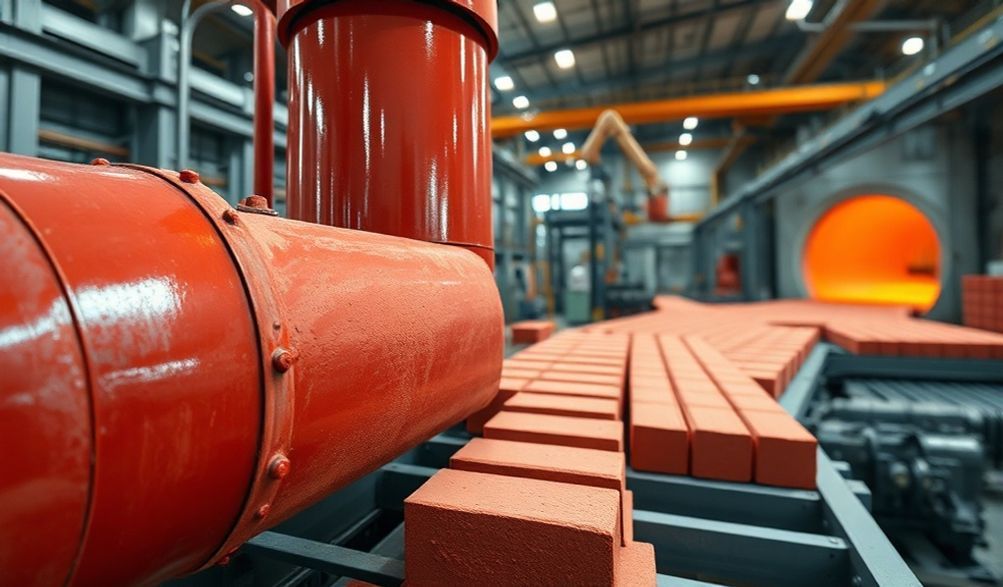
Қызыл кірпіш жасау машиналарының Толық Нұсқаулығы: Түрлері, Процестері және Заманауи Шешімдер
Мыңдаған жылдар бойы, ерекше қызыл кірпіш адамзат өркениетінің негізгі тасы болып келген. Бабылдың ежелгі қабырғаларынан бастап бүгінгі заманғы қалалық кеңістіктерге дейін, оның тұрақты тартымдылығы құрылымдық беріктік, жылу сыйымдылығы және мәңгілік эстетиканың күшті үйлесімінде жатыр. Бұл мұра, сөзбе-сөз, өндірістің үнемі жаңаруының негізінде қаланып кеткен. Бүгінгі таңда классикалық қызыл кірпішті өндіру материалтану ғылымы, механикалық инженерия және дәл процесс басқарудың күрделі өзара әрекеттесуі болып табылады.
Бұл нұсқаулық нақты, сенімді ақпарат іздеген кәсіпкерлер, жоба менеджерлері, инженерлер және инвесторларға арналған. Біз қызыл кірпіш жасау машиналары әлемін тереңірек қарастырып, негізгі сипаттамалардан аса отырып, сенімді капиталдық инвестиция жасау үшін қажетті операциялық және стратегиялық түсініктерді ұсынамыз. Бекітілген салалық тәжірибелерге, инженерлік принциптерге және заманауи өндіріс деректеріне сүйене отырып, біз кірпіш жасаудың негізгі ғылымынан бастап, саланың болашағын қалыптастыратын автоматтандырылған зауыттарға дейін барлық аспектілерді зерттейміз.
Қызыл кірпіш өндірісін түсіну: Негізгі қағидаттар мен материалтану ғылымы
Топырақтың бір үйірінен берік құрылыс блоктарына дейінгі сапар өзгеріс әкелетін бір процес. Негізгі қағидаттарды түсіну тек теориялық емес, сонымен қатар дұрыс техниканы таңдау және өндіріс желіңізді сапа мен тиімділікке оңтайландыру үшін өте маңызды.
Негізгі шикізаттар: саз, тақтатас және қоспалар
Қызыл кірпіштің жандығы - оның шикізаты. Бұл мақсатта барлық топырақ тең жасалмаған.
- Идеалды саз:Негізгі ингредиент - саз, ұсақ түйіршікті табиғи топырақ материал. Кірпіш жасауға арналған ең жақсы саздар құрамында кремнезем (құрылым үшін), глинозем (беріктік үшін) және темір оксиді сияқты балқытқыштар (түс пен балқу үшін) бар маңызды минералдарды қамтиды. Саздың пішіндеу үшін жақсы иілгіштігі болуы керек, сонымен қатар оны күйдірмес бұрын пішінін сақтайтындай жеткілікті беріктігі болуы тиіс.
- Сланцтың рөлі:Көбіне сазбен араластырылатын немесе онымен қатар қолданылатын тақтатас - бұл ұсақ түйіршікті шөгінді тау жынысы. Оны ұсақтап, ұнтақтаған кезде, ол саз сияқты әрекет етеді, бірақ араластыру кезінде әдетте аз су қажет етеді, бұл кептіру энергиясы мен жиырылуды азайтуға мүмкіндік береді.
- Заманауи Қоспалар:Бүгінгі өндірушілер өнім қасиеттері мен тұрақтылығын жақсарту үшін қоспаларды пайдаланады:
- Құм немесе Грог (алдын ала күйдірілген, ұсақталған саз):Кептіру және отқа шыдау кезінде жиырылу мен жарылуды азайту үшін қосылған.
- Iron Oxide: To intensify and standardize the classic red color.
- Barium Carbonate: To combat efflorescence—the unsightly white salt deposits that can appear on brick surfaces.
- Ұшқан күл: A coal combustion by-product that can improve workability and contribute to sustainability (discussed later).
The Firing Process: How Heat Creates the Classic Red Hue
The magic happens in the kiln. This is where the green (unfired) brick is permanently transformed.
- The Science of Oxidation: The characteristic red color is primarily due to iron oxide (Fe₂O₃) present in the clay. During firing in an oxygen-rich (oxidizing) atmosphere, the iron minerals oxidize, locking in the red hue.
- Mineral Transformation & Vitrification: As temperatures rise (typically between 900°C and 1200°C), the clay minerals undergo irreversible chemical changes. They begin to fuse in a process called vitrification, which gives the brick its hardness, strength, and water resistance. Precise temperature control is critical; under-firing results in a soft, weak brick, while over-firing can cause melting and deformation.
Types of Red Brick Making Machinery: From Manual to Fully Automated
The choice of machinery defines your production scale, product consistency, and business model. The spectrum ranges from simple, labor-intensive units to integrated, computer-controlled plants.
Қолмен және жартылай автоматты кірпіш жасау машиналары
These machines are the entry point for small-scale production, community projects, or markets with very low labor costs.
- Қолмен басу: Operated by a lever or flywheel, these machines compress clay in a mold to form a single brick at a time. Output is very low (a few hundred bricks per day), but the investment is minimal.
- “Egg-Laying” or Static Brick Machines: These are popular semi-automatic models. The machine remains stationary, molds the brick, and then “lays” it directly onto the drying yard or pallet. They often feature a simple mechanical or hydraulic press.
- Типтік шығарылым: 1,500 to 5,000 bricks per 8-hour shift.
- Еңбек Requires a crew of 4-6 for material handling, feeding, and pallet removal.
- Use Case: Ideal for small businesses, rural construction projects, or as a low-risk start-up option.
Толық автоматтандырылған кірпіш жасау зауыттары
This is the domain of industrial-scale production. A fully automatic plant is a synchronized system of machines requiring minimal human intervention.
- Негізгі компоненттер:
- Automated Feeders: Precisely meter prepared clay into the forming machine.
- High-Pressure Extruder or Hydraulic Press: The heart of the system. An extruder forces continuous clay column through a die, which is then cut into bricks. Hydraulic presses use immense pressure in a mold. Both ensure extreme density and uniformity.
- Robotic Handling Systems: Pick and place robots or sophisticated conveyor/crossover systems transfer green bricks to drying carts or kiln cars without damage.
- Automatic Stackers/De-stackers: Organize bricks for drying, firing, and final packaging.
- Негізгі артықшылықтар: Output can range from 15,000 to over 100,000 bricks per day. Labor costs plummet, and product consistency reaches levels impossible with manual methods. The entire process—from raw material to finished pallet—is integrated.
Specialized Machinery: Clay Preparation & Handling Equipment
Before clay can be formed, it must be prepared. This stage is crucial for final quality.
- Crushers & Rollers: Break down large lumps or shale rocks into a manageable, consistent size.
- Араластырғыштар және Илемдегіштер: These machines homogenize the clay, ensuring even moisture distribution and blending of additives. A pug mill goes further, de-airing the clay (removing air pockets) to prevent cracking and improve plasticity, which is critical for extrusion.
Drying and Firing Systems: Tunnel Kilns vs. Hoffman Kilns
The drying and firing stages are the most energy-intensive parts of the process.
- Tunnel Kilns: A continuous, modern system. Bricks on kiln cars move slowly through a long, fixed tunnel with different temperature zones (pre-heat, firing, cooling). It offers high thermal efficiency, consistent product quality, and is ideal for large-scale, automated plants.
- Hoffman Kilns: A continuous, circular or oval kiln. The fire itself moves through stationary chambers of bricks. While still used globally, it is generally less fuel-efficient than a modern tunnel kiln but can be more adaptable for smaller batches or varying brick types.
Key Factors for Choosing the Right Machinery
Selecting equipment is a strategic decision. The right choice aligns with your specific business reality, not just a brochure’s promise.
Assessing Your Production Scale & Output Goals
Be brutally realistic about your market.
* < 5,000 bricks/day: Consider robust semi-automatic machines.
* 5,000 – 20,000 bricks/day: Evaluate entry-level automatic lines or multiple semi-automatic units.
* 20,000+ bricks/day: A fully automatic plant becomes economically necessary. Create a 5-year demand projection to justify the investment.
Analyzing Raw Material Properties and Availability
Your clay dictates your machinery needs.
* Stiff, sandy clay: May require a powerful extruder with a heavy-duty auger.
* Soft, highly plastic clay: Might need less extrusion pressure but more careful drying control. Test your raw materials thoroughly. A reputable machinery supplier will often request samples to recommend the appropriate preparation and forming equipment.
Budget Considerations: Initial Investment vs. Operational Costs
Look at the total cost of ownership.
* Capital Expenditure (CAPEX): The purchase price of the machine, dies, and installation. A fully automatic plant can cost 10-50x more than a semi-automatic setup.
* Operating Expenditure (OPEX): The ongoing costs. This includes:
* Energy: The kiln is the biggest consumer (often 60-70% of OPEX).
* Еңбек Automated systems drastically reduce this.
* Maintenance & Spare Parts: Wear parts like augers, cutter wires, and mold liners are a recurring cost.
* Raw Materials.
Power Requirements & Plant Space Logistics
Ensure your site can support the operation.
* Electrical Load: A full plant with crushers, extruders, and fans requires significant three-phase power.
* Ғарыш: You need ample area for:
* Raw material storage and weathering.
* The machinery hall.
* Drying sheds (if using natural drying).
* The kiln and cooling area.
* Finished product storage.
Operational Best Practices & Maintenance
Owning the machinery is only the beginning. Proper operation and maintenance determine profitability and lifespan.
Routine Maintenance Checklist for Longevity
Preventative maintenance is non-negotiable. Create a daily, weekly, and monthly schedule.
- Күнделікті Lubricate all bearings and moving parts per the manufacturer’s manual. Visually inspect for loose bolts, hydraulic leaks, or unusual vibrations. Clean excess clay from molds and conveyors.
- Апталық: Check wear parts—measure auger flight thickness, inspect cutter wires for nicks, examine mold liners for deformation. Check hydraulic fluid levels and filter conditions.
- Ай сайын: Perform more thorough inspections of gearboxes, motors, and pneumatic systems. Calibrate sensors (if automated).
Optimizing the Production Process for Quality and Efficiency
Small adjustments yield significant results.
* Moisture Control: The moisture content of clay entering the extruder is critical. Too wet causes deformation; too dry leads to poor bonding and laminations. Aim for consistency, typically between 15-20%.
* Extrusion Pressure: Higher pressure creates denser, stronger bricks but requires more power. Find the optimal setting for your clay mix.
* Drying Cycles: Control drying speed to prevent cracking. Gradual, even drying is key, whether using a chamber dryer or natural air.
Common Operational Challenges and Troubleshooting
- Cracking (During Drying): Usually caused by uneven or too-rapid drying, or excessive clay plasticity. Remedy by slowing the drying rate or adding sand/grog to the mix.
- Distortion/Warping: Can be caused by uneven clay composition, incorrect extrusion pressure, or placing bricks unevenly in the kiln.
- Poor Strength: Often due to under-firing, improper clay composition (low alumina/silica), or insufficient compaction during forming.
- Color Variation: Inconsistent firing temperature or uneven atmosphere (oxidizing vs. reducing) in the kiln. Also check for variations in the raw material’s iron content.
The Future of Brick Making: Sustainability and Automation Trends
The industry is not static. Forward-thinking manufacturers are investing in technologies that reduce environmental impact and boost competitiveness.
Energy-Efficient Kilns and Alternative Fuels
The kiln is the main target for green innovation.
* Heat Recovery Systems: Modern tunnel kilns capture waste heat from the cooling zone to pre-heat incoming air or dry green bricks, improving efficiency by 20-30%.
* Alternative Fuels: The use of biomass (e.g., rice husks, sawdust), natural gas, or even synthesized fuels is growing, reducing reliance on coal and lowering carbon footprints.
Advanced Automation and Industry 4.0 Integration
The “smart factory” is coming to brick yards.
* IoT Sensors: Monitor equipment vibration, temperature, and performance in real-time, enabling predictive maintenance before a breakdown occurs.
* AI-Powered Quality Control: Cameras and image recognition software can inspect every brick for cracks, chips, or color defects, removing human error from quality checks.
* Centralized Plant Management: Software integrates all stages—from raw material inventory to kiln firing schedules—optimizing the entire production flow.
Utilizing Waste Materials in Brick Production
The circular economy is making inroads.
* Ұшқан күл кірпіштері: Using fly ash (from coal plants) as a significant clay replacement is a well-established technology, reducing clay consumption and locking away an industrial waste product.
* Other By-Products: Research continues into incorporating processed glass, paper mill sludge, or even certain types of mine tailings into brick mixes.
Frequently Asked Questions (FAQ) About Red Brick Machinery
Q1: What is the average production capacity of a fully automatic red brick making plant?
A: Capacity varies widely based on the machine model and brick size. A standard single-line plant can produce between 15,000 to 40,000 solid bricks per 8-hour shift. High-capacity plants with double-cutting systems can exceed 60,000. Always confirm capacity based on the specific brick dimensions you intend to produce.
Q2: What is the typical lead time for setting up a new brick manufacturing plant?
A: From order to production, expect a 4 to 8-month timeline. This includes machinery fabrication (8-12 weeks), shipping (4-8 weeks), and on-site installation, foundation work, and commissioning (6-10 weeks). Delays can occur with customs, civil works, or utility connections.
Q3: How important is after-sales service and technical support when purchasing machinery?
A: It is arguably the most critical factor after machine quality. Ensure the supplier provides comprehensive installation supervision, thorough operator training, detailed manuals, and—crucially—readily available spare parts. A machine breakdown without local support can halt your entire business.
Q4: Can the same machinery produce different types of bricks (e.g., hollow, paving)?
A: The core extruder or press can often be adapted, but changes are required. Producing a different brick type involves changing the mold or die and may require adjustments to the clay mix, extrusion pressure, and cutting system. Discuss versatility needs with your supplier upfront.
Q5: What are the most significant operational costs in running a brick plant?
A: The major cost centers, in typical order, are:
1. Energy/Fuel: For running the kiln and dryers.
2. Шикізаттар: Clay, shale, and additives.
3. Еңбек Wages for operators, maintenance staff, and handlers.
4. Maintenance & Spare Parts: Regular replacement of wear components.
Қорытынды
The path from a clay pit to a pallet of iconic red bricks is a complex one, meticulously engineered at every step. The machinery you choose—from the humble manual press to the fully automated smart plant—becomes the backbone of your operation, directly determining your product quality, production efficiency, and long-term profitability.
The optimal investment is never just the cheapest or the most advanced machine; it is the one that strikes a precise balance between your production goals, the science of your local raw materials, your financial parameters, and your vision for growth. This decision demands thorough due diligence.
We strongly encourage you to consult with multiple reputable manufacturers, scrutinize their client lists, and, most importantly, request live demonstrations or visits to operational plants running the machinery you are considering. See it work, talk to the operators, and assess the build quality firsthand.
Investing in modern red brick making machinery is more than a purchase; it is a commitment to building a business that is not only productive but also sustainable, efficient, and competitive for decades to come.
<