
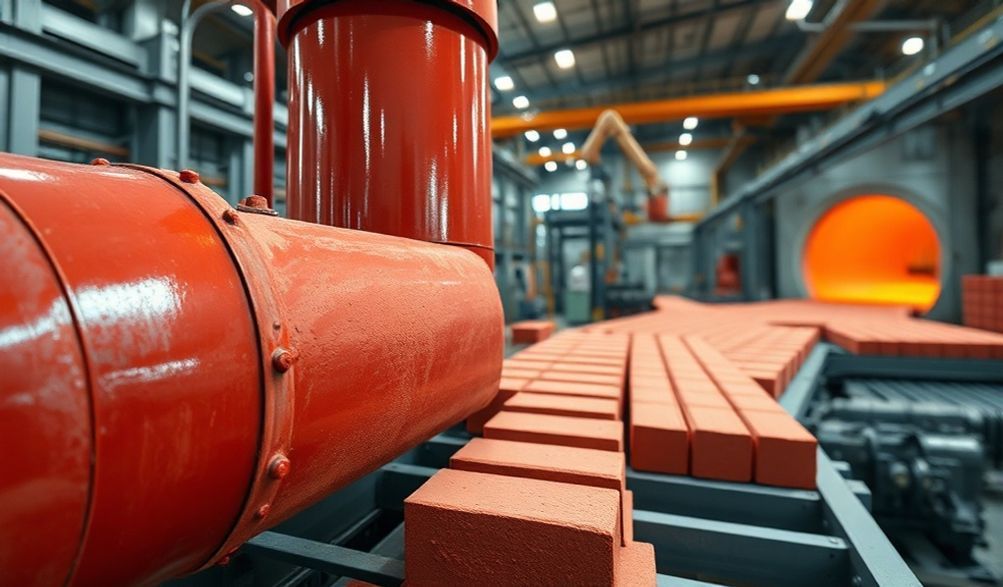
Panduan Lengkap untuk Mesin Pembuatan Bata Merah: Jenis, Proses & Solusi Moden
Selama ribuan tahun, bata merah yang tersendiri telah menjadi asas tamadun manusia. Dari tembok kuno Babylon hingga ke landskap bandar moden hari ini, daya tarikannya yang berkekalan terletak pada gabungan kuat integriti struktur, jisim haba, dan estetika abadi. Warisan ini dibina, secara harfiahnya, di atas asas inovasi berterusan dalam pembuatan. Hari ini, menghasilkan bata merah klasik adalah interaksi canggih sains bahan, kejuruteraan mekanikal, dan kawalan proses yang tepat.
Panduan ini direka untuk usahawan, pengurus projek, jurutera, dan pelabur yang mencari maklumat yang jelas dan berwibawa. Kami akan mengupas dunia jentera pembuatan bata merah, melangkaui penerangan asas untuk memberikan pandangan operasi dan strategik yang diperlukan bagi membuat pelaburan modal yang kukuh. Berdasarkan amalan industri yang mapan, prinsip kejuruteraan, dan data pembuatan moden, kami akan meneroka segala-galanya daripada sains teras pembuatan bata sehingga kilang automatik yang membentuk masa depan industri ini.
Memahami Pembuatan Bata Merah: Prinsip Teras & Sains Bahan
Perjalanan dari segumpal tanah ke blok binaan yang tahan lama adalah suatu transformasi. Memahami prinsip asas bukanlah sekadar akademik—ia penting untuk memilih jentera yang tepat dan mengoptimumkan barisan pengeluaran anda bagi kualiti dan kecekapan.
Bahan Mentah Penting: Tanah Liat, Syal, dan Bahan Tambahan
Jiwa sebuah bata merah terletak pada bahan mentahnya. Tidak semua tanah dicipta sama untuk tujuan ini.
- Tanah Liat Ideal:Bahan utama adalah tanah liat, bahan tanah semula jadi berbutir halus. Tanah liat terbaik untuk pembuatan bata mengandungi mineral utama seperti silika (untuk struktur), alumina (untuk kekuatan), dan fluks seperti ferum oksida (untuk warna dan peleburan). Tanah liat mesti mempunyai keplastikan yang baik untuk dibentuk namun cukup kuat untuk mengekalkan bentuknya sebelum dibakar.
- Peranan Syal:Sering digunakan secara bergantian atau dalam campuran dengan tanah liat, syal adalah batuan sedimen berbutir halus. Apabila dihancurkan dan digiling, ia berkelakuan serupa dengan tanah liat tetapi sering memerlukan kurang air semasa pencampuran, yang dapat mengurangkan tenaga pengeringan dan pengecutan.
- Aditif Moden:Pengilang hari ini menggunakan bahan tambahan untuk meningkatkan sifat produk dan konsistensi:
- Pasir atau Grog (tanah liat yang telah dibakar dan dihancurkan):Ditambah untuk mengurangkan pengecutan dan keretakan semasa pengeringan dan pembakaran.
- Oksida Besi:Untuk menguatkan dan menyeragamkan warna merah klasik.
- Barium Karbonat:Untuk memerangi efloresen—deposit garam putih yang tidak sedap dipandang yang boleh muncul pada permukaan bata.
- Abu Terbang:Satu produk sampingan pembakaran arang batu yang boleh meningkatkan kebolehkerjaan dan menyumbang kepada kelestarian (akan dibincangkan kemudian).
Proses Pembakaran: Bagaimana Haba Mencipta Warna Merah Klasik
Keajaiban berlaku di dalam tanur. Di sinilah bata hijau (yang belum dibakar) diubah secara kekal.
- Sains Pengoksidaan:Warna merah ciri ini terutamanya disebabkan oleh ferum oksida (Fe₂O₃) yang terdapat dalam tanah liat. Semasa pembakaran dalam atmosfera kaya oksigen (pengoksidaan), mineral ferum teroksida, mengunci warna merah tersebut.
- Transformasi Mineral & Vitrifikasi:Apabila suhu meningkat (biasanya antara 900°C dan 1200°C), mineral tanah liat mengalami perubahan kimia yang tidak boleh balik. Ia mula melebur dalam proses yang dipanggil vitrifikasi, yang memberikan bata itu kekerasan, kekuatan, dan ketahanan air. Kawalan suhu yang tepat adalah kritikal; pembakaran tidak cukup menghasilkan bata yang lembut dan lemah, manakala pembakaran berlebihan boleh menyebabkan peleburan dan ubah bentuk.
Jenis-jenis Mesin Pembuatan Bata Merah: Dari Manual ke Sepenuhnya Automatik
Pemilihan jentera menentukan skala pengeluaran, konsistensi produk, dan model perniagaan anda. Spektrumnya merangkumi daripada unit mudah yang intensif buruh sehingga ke kilang bersepadu yang dikawal komputer.
Mesin Pembuatan Bata Manual & Semi-Automatik
Mesin-mesin ini adalah titik permulaan untuk pengeluaran berskala kecil, projek komuniti, atau pasaran dengan kos buruh yang sangat rendah.
- Mesin Tekan Manual: Operated by a lever or flywheel, these machines compress clay in a mold to form a single brick at a time. Output is very low (a few hundred bricks per day), but the investment is minimal.
- “Egg-Laying” or Static Brick Machines: These are popular semi-automatic models. The machine remains stationary, molds the brick, and then “lays” it directly onto the drying yard or pallet. They often feature a simple mechanical or hydraulic press.
- Output Biasa: 1,500 to 5,000 bricks per 8-hour shift.
- Buruh: Requires a crew of 4-6 for material handling, feeding, and pallet removal.
- Kes Penggunaan: Ideal for small businesses, rural construction projects, or as a low-risk start-up option.
Loji Pembuatan Batu Bata Sepenuhnya Automatik
This is the domain of industrial-scale production. A fully automatic plant is a synchronized system of machines requiring minimal human intervention.
- Komponen Teras:
- Automated Feeders: Precisely meter prepared clay into the forming machine.
- High-Pressure Extruder or Hydraulic Press: The heart of the system. An extruder forces continuous clay column through a die, which is then cut into bricks. Hydraulic presses use immense pressure in a mold. Both ensure extreme density and uniformity.
- Robotic Handling Systems: Pick and place robots or sophisticated conveyor/crossover systems transfer green bricks to drying carts or kiln cars without damage.
- Automatic Stackers/De-stackers: Organize bricks for drying, firing, and final packaging.
- Kelebihan Utama: Output can range from 15,000 to over 100,000 bricks per day. Labor costs plummet, and product consistency reaches levels impossible with manual methods. The entire process—from raw material to finished pallet—is integrated.
Specialized Machinery: Clay Preparation & Handling Equipment
Before clay can be formed, it must be prepared. This stage is crucial for final quality.
- Crushers & Rollers: Break down large lumps or shale rocks into a manageable, consistent size.
- Pengadun & Kilang Lembut: These machines homogenize the clay, ensuring even moisture distribution and blending of additives. A pug mill goes further, de-airing the clay (removing air pockets) to prevent cracking and improve plasticity, which is critical for extrusion.
Drying and Firing Systems: Tunnel Kilns vs. Hoffman Kilns
The drying and firing stages are the most energy-intensive parts of the process.
- Tunnel Kilns: A continuous, modern system. Bricks on kiln cars move slowly through a long, fixed tunnel with different temperature zones (pre-heat, firing, cooling). It offers high thermal efficiency, consistent product quality, and is ideal for large-scale, automated plants.
- Hoffman Kilns: A continuous, circular or oval kiln. The fire itself moves through stationary chambers of bricks. While still used globally, it is generally less fuel-efficient than a modern tunnel kiln but can be more adaptable for smaller batches or varying brick types.
Key Factors for Choosing the Right Machinery
Selecting equipment is a strategic decision. The right choice aligns with your specific business reality, not just a brochure’s promise.
Assessing Your Production Scale & Output Goals
Be brutally realistic about your market.
* < 5,000 bricks/day: Consider robust semi-automatic machines.
* 5,000 – 20,000 bricks/day: Evaluate entry-level automatic lines or multiple semi-automatic units.
* 20,000+ bricks/day: A fully automatic plant becomes economically necessary. Create a 5-year demand projection to justify the investment.
Analyzing Raw Material Properties and Availability
Your clay dictates your machinery needs.
* Stiff, sandy clay: May require a powerful extruder with a heavy-duty auger.
* Soft, highly plastic clay: Might need less extrusion pressure but more careful drying control. Test your raw materials thoroughly. A reputable machinery supplier will often request samples to recommend the appropriate preparation and forming equipment.
Budget Considerations: Initial Investment vs. Operational Costs
Look at the total cost of ownership.
* Capital Expenditure (CAPEX): The purchase price of the machine, dies, and installation. A fully automatic plant can cost 10-50x more than a semi-automatic setup.
* Operating Expenditure (OPEX): The ongoing costs. This includes:
* Energy: The kiln is the biggest consumer (often 60-70% of OPEX).
* Buruh: Automated systems drastically reduce this.
* Penyelenggaraan & Alat Ganti: Wear parts like augers, cutter wires, and mold liners are a recurring cost.
* Raw Materials.
Power Requirements & Plant Space Logistics
Ensure your site can support the operation.
* Electrical Load: A full plant with crushers, extruders, and fans requires significant three-phase power.
* Angkasa: You need ample area for:
* Raw material storage and weathering.
* The machinery hall.
* Drying sheds (if using natural drying).
* The kiln and cooling area.
* Finished product storage.
Operational Best Practices & Maintenance
Owning the machinery is only the beginning. Proper operation and maintenance determine profitability and lifespan.
Routine Maintenance Checklist for Longevity
Preventative maintenance is non-negotiable. Create a daily, weekly, and monthly schedule.
- Daily: Lubricate all bearings and moving parts per the manufacturer’s manual. Visually inspect for loose bolts, hydraulic leaks, or unusual vibrations. Clean excess clay from molds and conveyors.
- Weekly: Check wear parts—measure auger flight thickness, inspect cutter wires for nicks, examine mold liners for deformation. Check hydraulic fluid levels and filter conditions.
- Monthly: Perform more thorough inspections of gearboxes, motors, and pneumatic systems. Calibrate sensors (if automated).
Optimizing the Production Process for Quality and Efficiency
Small adjustments yield significant results.
* Moisture Control: The moisture content of clay entering the extruder is critical. Too wet causes deformation; too dry leads to poor bonding and laminations. Aim for consistency, typically between 15-20%.
* Extrusion Pressure: Higher pressure creates denser, stronger bricks but requires more power. Find the optimal setting for your clay mix.
* Drying Cycles: Control drying speed to prevent cracking. Gradual, even drying is key, whether using a chamber dryer or natural air.
Common Operational Challenges and Troubleshooting
- Cracking (During Drying): Usually caused by uneven or too-rapid drying, or excessive clay plasticity. Remedy by slowing the drying rate or adding sand/grog to the mix.
- Distortion/Warping: Can be caused by uneven clay composition, incorrect extrusion pressure, or placing bricks unevenly in the kiln.
- Poor Strength: Often due to under-firing, improper clay composition (low alumina/silica), or insufficient compaction during forming.
- Color Variation: Inconsistent firing temperature or uneven atmosphere (oxidizing vs. reducing) in the kiln. Also check for variations in the raw material’s iron content.
The Future of Brick Making: Sustainability and Automation Trends
The industry is not static. Forward-thinking manufacturers are investing in technologies that reduce environmental impact and boost competitiveness.
Energy-Efficient Kilns and Alternative Fuels
The kiln is the main target for green innovation.
* Heat Recovery Systems: Modern tunnel kilns capture waste heat from the cooling zone to pre-heat incoming air or dry green bricks, improving efficiency by 20-30%.
* Alternative Fuels: The use of biomass (e.g., rice husks, sawdust), natural gas, or even synthesized fuels is growing, reducing reliance on coal and lowering carbon footprints.
Advanced Automation and Industry 4.0 Integration
The “smart factory” is coming to brick yards.
* IoT Sensors: Monitor equipment vibration, temperature, and performance in real-time, enabling predictive maintenance before a breakdown occurs.
* AI-Powered Quality Control: Cameras and image recognition software can inspect every brick for cracks, chips, or color defects, removing human error from quality checks.
* Centralized Plant Management: Software integrates all stages—from raw material inventory to kiln firing schedules—optimizing the entire production flow.
Utilizing Waste Materials in Brick Production
The circular economy is making inroads.
* Batu Bata Abu Terbang: Using fly ash (from coal plants) as a significant clay replacement is a well-established technology, reducing clay consumption and locking away an industrial waste product.
* Other By-Products: Research continues into incorporating processed glass, paper mill sludge, or even certain types of mine tailings into brick mixes.
Frequently Asked Questions (FAQ) About Red Brick Machinery
Q1: What is the average production capacity of a fully automatic red brick making plant?
A: Capacity varies widely based on the machine model and brick size. A standard single-line plant can produce between 15,000 to 40,000 solid bricks per 8-hour shift. High-capacity plants with double-cutting systems can exceed 60,000. Always confirm capacity based on the specific brick dimensions you intend to produce.
Q2: What is the typical lead time for setting up a new brick manufacturing plant?
A: From order to production, expect a 4 to 8-month timeline. This includes machinery fabrication (8-12 weeks), shipping (4-8 weeks), and on-site installation, foundation work, and commissioning (6-10 weeks). Delays can occur with customs, civil works, or utility connections.
Q3: How important is after-sales service and technical support when purchasing machinery?
A: It is arguably the most critical factor after machine quality. Ensure the supplier provides comprehensive installation supervision, thorough operator training, detailed manuals, and—crucially—readily available spare parts. A machine breakdown without local support can halt your entire business.
Q4: Can the same machinery produce different types of bricks (e.g., hollow, paving)?
A: The core extruder or press can often be adapted, but changes are required. Producing a different brick type involves changing the mold or die and may require adjustments to the clay mix, extrusion pressure, and cutting system. Discuss versatility needs with your supplier upfront.
Q5: What are the most significant operational costs in running a brick plant?
A: The major cost centers, in typical order, are:
1. Energy/Fuel: For running the kiln and dryers.
2. Bahan Mentah: Clay, shale, and additives.
3. Buruh: Wages for operators, maintenance staff, and handlers.
4. Penyelenggaraan & Alat Ganti: Regular replacement of wear components.
Kesimpulan
The path from a clay pit to a pallet of iconic red bricks is a complex one, meticulously engineered at every step. The machinery you choose—from the humble manual press to the fully automated smart plant—becomes the backbone of your operation, directly determining your product quality, production efficiency, and long-term profitability.
The optimal investment is never just the cheapest or the most advanced machine; it is the one that strikes a precise balance between your production goals, the science of your local raw materials, your financial parameters, and your vision for growth. This decision demands thorough due diligence.
We strongly encourage you to consult with multiple reputable manufacturers, scrutinize their client lists, and, most importantly, request live demonstrations or visits to operational plants running the machinery you are considering. See it work, talk to the operators, and assess the build quality firsthand.
Investing in modern red brick making machinery is more than a purchase; it is a commitment to building a business that is not only productive but also sustainable, efficient, and competitive for decades to come.
<