
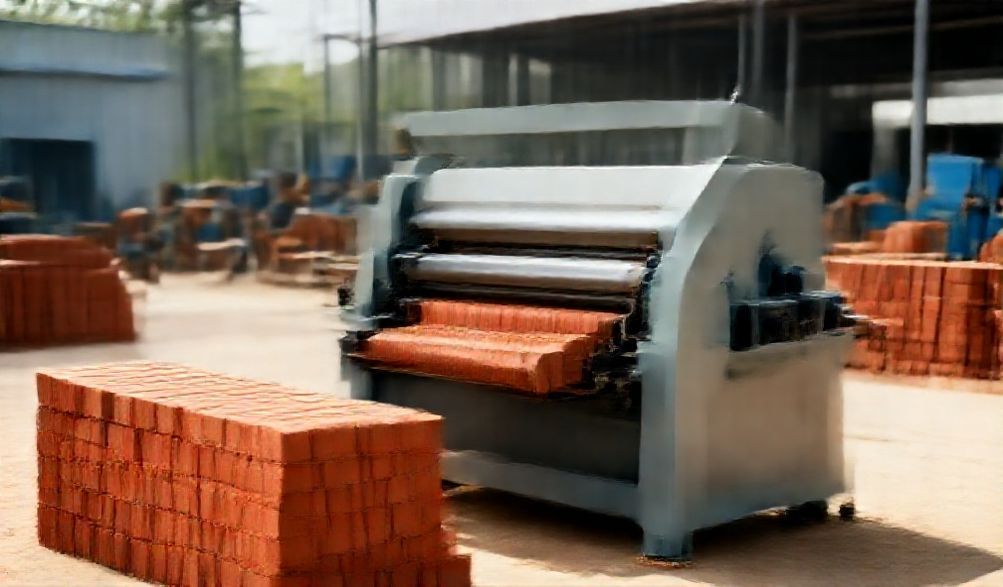
தமிழ்நாட்டில் களிமண் செங்கல் தயாரிக்கும் இயந்திரங்கள் குறித்த உங்கள் இறுதி வழிகாட்டி | ஃபூடா பிளாக் மேக்கிங் தொழிற்சாலையின் நுண்ணறிவுகள்
Кіріспе
Мадурайдың көне храмдарынан Ченнайдың аспанға көтерілген IT дәліздеріне дейін, Тамил Надудың ландшафты саз балшықтан жасалған кірпіш іргетасына құрылған. Бұл қарапайым материал ғасырлар бойы мемлекеттің сәулеттік бірегейлігін қалыптастырды. Бүгінде тұрғын үй кешендерін, өнеркәсіптік парктерді және қалалық инфрақұрылымды қамтитын ауқымды құрылыс бумы жоғары сапалы құрылыс материалдарына бұрын-соңды болмаған сұранысты тудырып отыр.
Алайда, көптеген жергілікті өндірушілер мен кәсіпкерлер үшін бұл сұранысты дәстүрлі қол әдістерімен қанағаттандыру үнемі қиындық тудырады. Қолмен кірпіш қалыптау еңбекті көп қажет етеді, өте баяу жүреді және көлемі мен беріктігінде сәйкессіздіктерге ұшырайды. Бұл материалдардың ысырап болуына, сенімсіз жеткізу тізбегіне және үлкенірек, тиімдірек келісімшарттар үшін бәсекеге түсе алмауға әкеледі.
Шешім? Механикаландыру. ЗаманауиТамил Надуда саз кірпіш жасау машинасы енді сән-салтанат емес; бұл өсу мен өмір сүру үшін стратегиялық қажеттілік. Бұл нұсқаулық сіздің толыққанды ресурсыңыз ретінде қызмет етеді, саладағы үздік тәжірибелер мен үміткер ойыншылардың көзқарастарына сүйене отырып,ФУДА блок жасау зауытыБіздің мақсатымыз – тәжірибеге, сараптамаға, беделге және сенімділікке (E-E-A-T) негізделген сенімді, әрекетке жарамды ақпарат ұсыну арқылы сіздің бизнесіңіздің болашағына сенімді және саналы инвестиция жасауыңызға көмектесу.
Неге механикаландыру керек? Сазды кірпіш жасау машиналарының артықшылықтары
Қолмен жасаудан машиналық өндіріске көшу – ойын ережесін өзгертетін қадам. Артықшылықтары кірпіштерді тезірек жасаумен шектелмейді; олар сіздің бүкіл бизнес моделіңізді өзгертіп, сапаны, тиімділік пен табыстылықты арттырады.
Теңдессіз Тұрақтылық & Жоғары Сапа
- Дәлдік инженериясы: Machines produce bricks with exact, uniform dimensions every single time. This precision is critical for modern construction, ensuring faster laying, less mortar use, and structurally sound walls.
- Optimal Compaction: Hydraulic or mechanical pressure compacts the clay mixture to a uniform density, directly translating to higher compressive strength, better durability, and longer-lasting structures compared to the variable density of handmade bricks.
Өндіріс шығыны айтарлықтай арттырылды
- Exponential Leap: While a skilled artisan might produce 500-800 bricks in a full day, a basic semi-automatic machine can produce 2,000-3,000 bricks in an 8-hour shift. Fully automatic plants, like those used by large-scale operations, can output tens of thousands of units daily.
- Meeting Demand: This massive increase in output allows you to reliably supply housing projects, commercial builders, and government contracts, turning your unit into a key link in Tamil Nadu’s construction supply chain.
Significant Reduction in Labor Costs & Dependence
- Optimizing Workforce: Mechanization automates the most strenuous tasks—mixing, molding, and compaction. This reduces physical strain and allows you to reallocate skilled labor to supervision, quality control, and logistics.
- Solving Shortages: With increasing rural-to-urban migration, finding consistent manual labor is a challenge. Machines provide operational stability and reduce your vulnerability to labor shortages and fluctuating wage demands.
Enhanced Material Efficiency & Cost Savings
- Азайтылған қалдықтар: Manual processes often lead to significant clay wastage due to spillage and irregular molding. Machines use precisely measured amounts of material for each brick, optimizing raw material consumption.
- Lower Cost Per Unit: The combined savings from reduced labor, lower material waste, and higher output volume drastically reduce the production cost per brick, directly boosting your profit margins.
Exploring Clay Brick Making Machine Types (Popular in Tamil Nadu)
The market offers a range of machines to suit different scales of operation and investment levels. Understanding these types is the first step in selecting the right fit for your enterprise.
Manual / Hand-Operated Brick Making Machines
- Үздік: Micro-enterprises, village-level startups, and entrepreneurs testing the market.
- Негізгі ерекшеліктері: Low initial investment, no power requirement, and high portability. They involve manually feeding the mixture and using a lever to compress it into a mold.
- Шығару: Can significantly improve consistency over purely handmade methods, with a production of 300-500 bricks per day.
Жартылай автоматты кірпіш жасау машиналары
- Үздік: Small to medium-scale businesses (SMEs) looking to scale up sustainably. This is one of the most popular choices across Tamil Nadu.
- Негізгі ерекшеліктері: These electrically powered machines automate the mixing, compaction, and molding processes. An operator is needed to feed raw material and remove finished bricks.
- Шығару: Offers an excellent balance, producing between 2,000 to 6,000 bricks per 8-hour shift, depending on the model and brick size.
Толық автоматтандырылған кірпіш жасау зауыттары
- Үздік: Large-scale manufacturers like the ФУДА блок жасау зауыты, aiming for mass production to supply major projects.
- Негізгі ерекшеліктері: These are complete production lines with automated material handling, mixing, molding, curing, and stacking systems. They require a higher initial investment and more space but deliver maximum efficiency.
- Шығару: Production can exceed 10,000 to 50,000 bricks per day, making them ideal for meeting bulk orders consistently.
Specialized Machines: Hollow Block, Paver, Interlocking Brick Makers
- Market Diversification: Beyond solid clay bricks, demand is growing for specialized products. Many machines come with interchangeable molds.
- Қуыс блоктар: Lighter weight, better insulation, and reduced material cost.
- Pavers & Interlocking Bricks: For landscaping, driveways, and pavements, catering to the booming real estate and urban development sectors.
Key Features to Evaluate Before Buying a Machine
Choosing the right machine requires careful consideration of your specific needs and local conditions. Don’t just look at the price tag; evaluate these critical features.
Production Capacity (Bricks per Hour/Day)
- Align with Goals: Honestly assess your current orders and projected growth. Buying an undersized machine will leave you unable to meet demand, while an oversized one will strain your finances. Calculate based on brick type and size.
Brick Type and Size Versatility
- Болашақты қамтамасыз ету: A machine that allows for easy mold changes lets you adapt to market trends. Check if the supplier offers molds for different brick sizes (e.g., 4”, 6”, 9”) and types (solid, hollow, perforated).
Power Requirement (Electric, Diesel, Hybrid)
- Critical for Tamil Nadu: While electric motors are common, power fluctuations or outages in some areas can halt production. Diesel engines offer independence but have higher fuel costs. Hybrid models provide a flexible backup. Assess your local power reliability.
Durability & After-Sales Support
- Құрылыс сапасы: Inspect the frame, hydraulics, and mold quality. Machines with robust, wear-resistant parts may cost more upfront but save on downtime and repair costs.
- Local Service Network: This is non-negotiable. Ensure the supplier or manufacturer has a reliable service team and spare parts inventory within Tamil Nadu. Prompt support is crucial for minimizing production losses.
Spotlight: FUDA Block Making Factory – A Case Study in Efficiency
Examining established players provides a blueprint for success. While specific proprietary details may not be public, the operational principles of a factory like FUDA offer valuable lessons.
Who is FUDA? Establishing Authoritativeness
- FUDA represents the class of established, forward-thinking manufacturers in the region. Their longevity and scale in the block and brick manufacturing sector demonstrate a successful adaptation to market demands through mechanization and process optimization.
Machine Integration in Their Production Line
- A factory at this scale likely operates a fully or highly automated plant. The workflow is seamless:
- Шикізатты өңдеу: Local clay is fed into automated crushers and mixers to achieve a perfectly consistent blend.
- Қалыптау және Қысу: The mixture is conveyed to high-pressure automatic brick making machines for shaping.
- Кептіру және Кептіру: Newly formed bricks move on conveyor belts to dedicated drying yards or chambers, followed by systematic water curing to achieve maximum strength.
- Automated Stacking: Finally, bricks are automatically stacked and prepared for dispatch.
- This integration minimizes human handling, maximizes speed, and ensures product uniformity from the first brick to the ten-thousandth.
The Tangible Business Outcomes
- By adopting such mechanized systems, a factory like FUDA achieves key outcomes:
- Жеткізу тізбегінің сенімділігі: The ability to guarantee large, consistent volumes makes them a preferred supplier for major construction firms and infrastructure projects.
- Enhanced Competitiveness: High efficiency lowers the per-unit cost, allowing competitive pricing while maintaining healthy profit margins.
- Брендтік бедел: Delivering uniform, high-strength bricks consistently builds a reputation for quality and trust, which is invaluable in the construction industry.
Setting Up Your Machine for Success in Tamil Nadu
Buying the machine is only half the battle. Proper setup and operation are key to realizing its full potential.
Sourcing Quality Raw Materials Locally
- Clay Testing: The quality of your brick depends on the clay. Test local soil for its plasticity, shrinkage, and iron content. Districts like Tirunelveli, Vellore, and Kancheepuram have known clay deposits suitable for brick making.
- Mix Consistency: Aim for a consistent mix of clay, sand (for reducing shrinkage), and water. The right proportion is critical for the machine to function smoothly and produce strong bricks.
Site Preparation and Basic Infrastructure Needs
- Adequate Space: You need space for the machine, raw material storage, a mixing area, a drying yard, and a curing area. Plan for easy material flow.
- Strong, Level Flooring: The machine must be installed on a solid, level concrete base to prevent vibrations and misalignment.
- Shelter: Protect the machine from direct rain and sun to extend its lifespan.
- Utilities: Ensure access to the required power connection and a reliable water source for mixing and curing.
The Curing Process: Essential for Strength
- Кептіру: After molding, bricks must be dried slowly to prevent cracking. In Tamil Nadu’s climate, initial sun-drying should be controlled; shaded drying yards are ideal.
- Water Curing: Bricks gain most of their strength through proper water curing. They should be kept moist for 7-14 days after drying. This step cannot be rushed—it is what creates a durable, weather-resistant final product.
Operator Training and Safety Protocols
- Invest in Training: A well-trained operator can optimize output, perform basic maintenance, and identify minor issues before they become major breakdowns. Insist on comprehensive training from your supplier.
- Safety First: Ensure all moving parts are guarded. Operators should use safety gloves, goggles, and boots. Establish clear protocols for machine operation and emergency shutdowns.
Navigating the Market: Cost & Supplier Selection in Tamil Nadu
Making a smart purchase involves diligent research and asking the right questions.
Understanding Pricing Factors
- Автоматтандыру деңгейі: Manual machines can start from a few thousand rupees, semi-automatic models range from ₹2-10 lakhs, and fully automatic plants can cost ₹20 lakhs and above.
- Brand & Origin: Internationally branded or high-end Indian machines cost more but may offer better technology. Reliable Indian manufacturers provide robust options at competitive prices.
- Capacity & Features: Higher output capacity, additional features like auto-feeding, and the number of included molds will increase the price.
Identifying Reputable Manufacturers & Suppliers
- Verify Track Record: Research the company’s history. How long have they been in business?
- Visit if Possible: A factory visit reveals build quality and operational scale. Ask to see machines running.
- Check Client Testimonials: Speak directly to other brick manufacturers in Tamil Nadu who use their equipment. This is the most reliable reference.
- Compare Support: Evaluate their after-sales service promise, warranty period, and spare parts logistics.
Key Questions to Ask Before Purchase
- What is the exact warranty coverage and duration?
- Do you provide on-site installation and commissioning?
- Is operator training included?
- What is the availability and cost of critical spare parts?
- Can you provide contact details for 2-3 current customers in a similar district whom I can speak to?
- What is the recommended maintenance schedule?
Жиі қойылатын сұрақтар (ЖҚС)
Q1: What is the approximate price range for a clay brick making machine suitable for a small business in Tamil Nadu?
A: For a small-scale startup, a manual machine can cost between ₹50,000 to ₹1.5 lakhs. A entry-level semi-automatic machine, which is highly recommended for serious small businesses, typically ranges from ₹2 lakhs to ₹5 lakhs, depending on capacity and features.
Q2: Can these machines use different types of local soil or clay found across Tamil Nadu districts?
A: Yes, most machines are designed to work with a variety of clayey soils. However, the soil may need to be tempered—mixed with sand or other additives—to achieve the right plasticity and shrinkage properties. It’s advisable to get your local soil tested and consult with the machine supplier on the ideal mix formula.
Q3: How much power (in kW or HP) is typically required to run a semi-automatic brick making machine?
A: A standard semi-automatic machine for making solid bricks usually requires a motor in the range of 5 HP to 10 HP (approximately 3.7 kW to 7.5 kW). Always confirm the exact requirement with the specific model you are considering.
Q4: What is the average payback period on the investment for a medium-capacity machine?
A: With efficient operation and good market demand, a well-run semi-automatic brick making unit can often see a payback period of 12 to 24 months. This depends heavily on factors like production efficiency, raw material cost, local brick prices, and sales volume.
Q5: Besides the machine itself, what are the other major setup costs I should budget for?
A: Key additional costs include: site development (leveling, flooring, shed), raw material stockpile, a mixer (if not integrated), trolleys for material handling, a water pump and tank for curing, electrical setup (transformers/wiring), and initial working capital for labor and materials for the first few months.
Q6: Are there any government subsidies or schemes for setting up a brick manufacturing unit in Tamil Nadu?
A: Schemes for MSMEs (Micro, Small, and Medium Enterprises) can sometimes be applicable. It is recommended to check with the Tamil Nadu Industrial Investment Corporation (TIIC) or your local District Industries Centre (DIC) for the most current information on credit-linked capital subsidy schemes, interest subsidies, or other support for manufacturing units.
Қорытынды
The journey from manual brick-making to mechanized production is the definitive path to scaling your business and securing a competitive edge in Tamil Nadu’s vibrant construction market. Investing in the right clay bricks making machine is an investment in consistency, quality, and long-term profitability.
Let the operational insights from successful entities like the ФУДА блок жасау зауыты serve as your benchmark. Their success underscores the importance of choosing durable equipment, setting up efficient processes, and prioritizing after-sales support.
Use this guide as your foundational research. Take the next step: visit supplier workshops, request live demonstrations, and, most importantly, speak directly with existing machine owners in your region. There is no substitute for first-hand experience. By making an informed, strategic decision today, you are not just buying a machine—you are building the foundation for your business’s future growth, ready to meet the demands of a state that is constantly building upwards and outwards.
<