
The Ultimate Guide to Sand Brick Machines: Types, Benefits, and How to Choose
소개
글로벌 건설 산업은 어마어마한 규모에 도달할 것으로 전망됩니다.2030년까지 15.2조 달러, driven by relentless urbanization and infrastructure development. Yet, at the heart of this growth lies a fundamental challenge: sourcing building materials that are not only strong and affordable but also sustainable and efficient to produce.
For centuries, the iconic red clay brick has dominated construction. However, its production comes at a significant cost. The firing process in kilns is energy-intensive, releasing substantial CO2 emissions and often relying on the depletion of topsoil. Furthermore, manual brick production is notoriously labor-intensive, slow, and prone to inconsistencies in size and strength, leading to construction delays and increased material waste.
현대적 해결책:sand brick machine. Also known as concrete block machines or sand-lime brick machines, this technology represents a paradigm shift in brick manufacturing. By automating the production of bricks from sand, lime, and/or cement, these machines offer a path to higher quality, greater efficiency, and a reduced environmental footprint.
This comprehensive guide is built on industry expertise, technical analysis, and practical insights. Our goal is to demystify this essential equipment for builders, contractors, and entrepreneurs. By the end, you will have a clear understanding of:
* The core technology behind sand brick machines.
* The different types available and their ideal applications.
* The tangible benefits and return on investment (ROI).
* The critical factors to consider when choosing a machine for your specific needs.
What is a Sand Brick Machine? Core Technology Explained
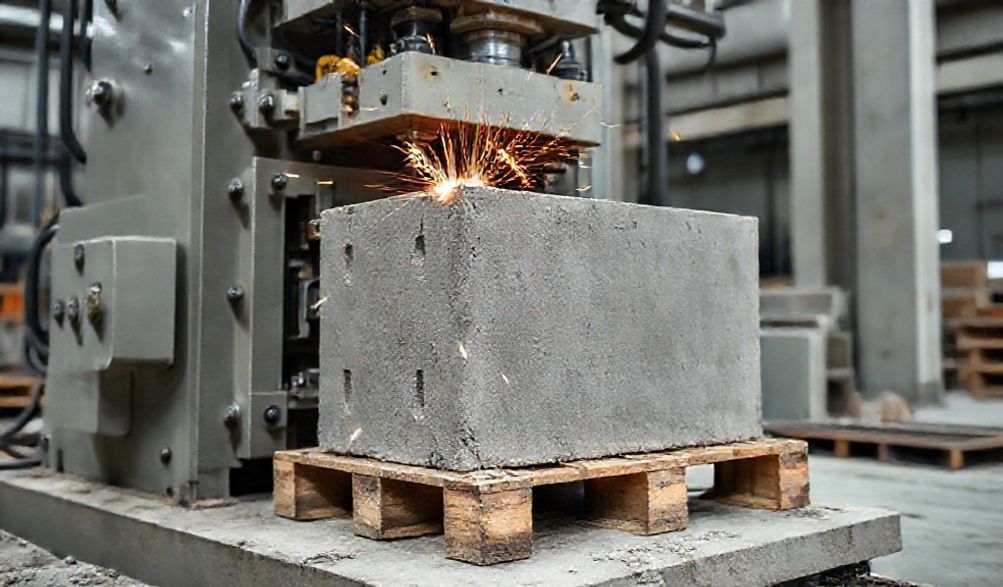
At its core, a sand brick machine is a device that automates the formation of dense, uniform bricks or blocks through a process of controlled compaction and vibration. It transforms a simple mix of raw materials into a precision-engineered building component.
The Basic Principle: Hydraulic Compression and Vibration
The magic happens through a combination of two key forces:
1. 고압 압축: A hydraulic system exerts immense pressure (measured in tons) on the raw material mix contained within a mold. This force compacts the particles, eliminating voids and air pockets.
2. 동시 진동 As pressure is applied, a vibration table shakes the mold at a high frequency. This causes the granular materials to settle and interlock more efficiently, further enhancing density and strength.
The result is a brick that is cured (often through steam or water) to achieve its final hardness, bypassing the need for energy-intensive kiln firing.
현대 기계의 핵심 구성 요소
주요 부품을 이해하는 것은 기계의 품질과 성능을 평가하는 데 도움이 됩니다.
* 믹서: Blends sand, binder, and water into a homogeneous, semi-dry mix.
* 컨베이어 시스템: Transports the raw mix to the machine hopper.
* 호퍼: The holding chamber that feeds the mix into the molding system.
* 곰팡이냐 죽음이냐: The heart of the machine. This interchangeable steel box defines the shape and size of the final brick (solid block, hollow block, paver, etc.).
* Hydraulic Press & Power Unit: Provides the immense pressure needed for compaction.
* Vibration Table/Motor: Generates the high-frequency vibrations during compaction.
* 제어판 The user interface, ranging from simple buttons to advanced PLC (Programmable Logic Controller) systems for automation.
* 팔레트 공급기 및 적재기 (In automatic models) Feeds empty pallets into the machine and neatly stacks finished, green bricks for curing.
Raw Materials: Beyond Just Sand
While sand is the primary aggregate, the recipe is crucial:
* 모래 Must be clean, well-graded, and free of organic matter. The particle size distribution affects brick strength and surface finish.
* 바인더: This is what holds the sand together. Common binders include:
* 포틀랜드 시멘트 Produces strong, durable concrete blocks.
* Lime: Used with sand to produce calcium silicate (sand-lime) bricks, which are cured with steam.
* 플라이 애시 A pozzolanic industrial by-product that can partially replace cement, enhancing sustainability.
* 물: Added in precise amounts to initiate the binding reaction without making the mix too wet.
* Potential Additives: Color pigments, water-repellent agents, or reinforcing fibers can be included.
A significant advantage is the potential to incorporate recycled materials like crushed concrete or certain approved industrial wastes, contributing to a circular economy.
Types of Sand Brick Machines: Finding the Right Fit
Selecting the right machine depends entirely on your scale, budget, and product goals. Here’s a breakdown of the primary categories.
By Operation Mode
- 수동/반자동 기계:
- 작전: Require significant operator involvement for feeding mix, operating levers, and removing finished bricks. The core compaction process is powered.
- 이상적인 대상: Small-scale startups, community projects, or low-volume production (e.g., for personal use or very small businesses). They offer the lowest capital investment.
- 완전 자동 기계:
- 작전: Entire process—from raw material feeding and mixing to molding, compaction, pallet feeding, and brick stacking—is automated via a central PLC. One operator can oversee the entire line.
- 이상적인 대상: Medium to large-scale commercial plants requiring high, consistent output with minimal labor. They represent a higher initial investment but superior long-term efficiency.
By Production Output
- Small Scale (1,000 – 5,000 bricks per 8-hour shift):
- Typically semi-automatic or entry-level automatic machines.
- Users: Small construction firms, entrepreneurial startups, and niche product manufacturers.
- Medium Scale (5,000 – 20,000 bricks per shift):
- Usually fully automatic stationary machines with pallet feeders.
- Users: Established brick-making businesses supplying local and regional construction markets.
- Large Scale Plant (20,000+ bricks per shift):
- A complete production line with automatic batching plants, multiple block machines, robotic stackers, and curing racks.
- Users: Major industrial manufacturers supplying large infrastructure projects.
By Brick Product Type
Versatility is a key feature. Most machines can produce different products by simply changing the mold:
* 솔리드 블록 & 홀로우 블록:하중 지지 및 비하중 지지 벽체용입니다.
* 포장 돌 및 인터록킹 포장재:차도, 산책로, 테라스용.
* Kerbstones & Grass Pavers:조경 및 토목 프로젝트용
* 특수 모양: Manufacturers often offer custom mold designs.
Top Benefits of Using a Sand Brick Machine
Investing in this technology delivers compelling advantages that translate directly to your bottom line and project quality.
Unmatched Product Quality and Consistency
- 치수 정밀도 Every brick is identical, ensuring straight walls, faster laying, and less mortar use.
- 높은 압축 강도: The hydraulic pressure creates bricks that often exceed the strength requirements of building codes (e.g., ASTM C90).
- Uniform Density & Finish: Eliminates the weak spots and visual imperfections common in handmade bricks.
Significant Cost Efficiency and High ROI
- 노동 비용 절감 Automation slashes the need for a large manual workforce.
- 자재 효율성 Precise mixing and compaction minimize raw material waste.
- 더 빠른 생산 주기 Produce thousands of bricks per day versus hundreds by hand, accelerating project timelines and revenue generation.
Enhanced Production Speed and Scalability
- A semi-automatic machine can produce 500-1000 bricks per hour, while a fully automatic line can exceed 3000 bricks per hour.
- Scaling production is straightforward—by increasing machine runtime or upgrading to a higher-capacity model.
Environmental and Sustainability Advantages
- 낮은 탄소 발자국: No firing process means dramatically lower energy consumption compared to clay bricks.
- Use of Local & Recycled Materials: Reduces transportation emissions and can utilize industrial by-products like fly ash.
- Soil Conservation: Uses abundant sand, preserving fertile topsoil used in clay brick production.
Critical Factors for Choosing Your Sand Brick Machine
Making the right choice requires careful self-assessment and supplier due diligence.
Assessing Your Production Needs and Budget
- Demand Projection: Calculate your current and anticipated future brick requirements (daily/weekly).
- Investment Analysis: Balance your upfront budget with long-term operational savings. Don’t just buy the cheapest machine; consider lifecycle cost and ROI.
- 제품 믹스 Determine which brick types (solid, hollow, pavers) you need to produce.
검토해야 할 주요 기계 사양
- 압력 용량 (톤수): Higher tonnage (e.g., 150 tons vs. 50 tons) generally produces denser, stronger bricks.
- 사이클 타임: How many seconds to produce one brick/pallet? Faster cycles mean higher output.
- 모터 파워 및 유압 시스템: Indicates robustness and energy consumption.
- 자동화 수준: Match this to your available labor and consistency requirements.
- Mold Versatility & Cost: Check the availability and price of different molds for product flexibility.
Supplier Evaluation: Ensuring Quality and Support
여기가 바로경험, 전문성, 권위성, 신뢰성 (E-E-A-T) become non-negotiable. A reliable supplier is as important as the machine itself.
* Reputation & History: How long has the manufacturer been in business? Look for established companies.
* Client Portfolio & References: Can they provide case studies or contacts from previous buyers in your region?
* 예비 부품 가용성: Ensure critical spare parts (hydraulic seals, vibration motors, molds) are readily available to minimize downtime.
* 사후 서비스 및 교육 Do they offer installation supervision, comprehensive operator training, and reliable technical support? This is a critical trust signal and a safeguard for your investment.
Site and Utility Requirements
- 우주 Ensure you have adequate covered and uncovered space for the machine, raw material storage, and brick curing yards.
- 전원 공급 장치: Verify electrical requirements (voltage, phase, power rating). Large machines may require a three-phase connection.
- Raw Material Storage: Plan for organized, weather-protected storage of sand, cement, and other materials.
Operational Best Practices and Maintenance
Proper operation and care maximize machine lifespan and product quality.
Daily Operation and Safety Protocols
- Standard Operating Procedure (SOP): Follow a consistent startup, operation, and shutdown sequence.
- Safety First: Operators must wear safety glasses, gloves, and steel-toe boots. Ensure all safety guards are in place. Never clear jams or perform adjustments while the machine is powered on.
Routine Maintenance Checklist
Preventive maintenance is far cheaper than major repairs.
| Frequency | Key Tasks |
| :— | :— |
| Daily | Clean the machine thoroughly, especially the mold and hopper. Check hydraulic oil levels and for leaks. Inspect bolts for tightness. |
| Weekly | Lubricate all moving parts as per the manual. Inspect mold liners for wear. Check vibration motor mounts. |
| Monthly | Perform a more detailed inspection of the hydraulic system, electrical connections, and conveyor belts. Replace filters if needed. |
Troubleshooting Common Issues
- Poor Brick Strength: Likely causes: incorrect water-cement ratio, insufficient compaction pressure, or inadequate curing.
- Surface Cracks: Usually due to too much water in the mix or improper curing (drying too quickly).
- Bricks Sticking in Mold: Worn or damaged mold liners, insufficient mold release agent, or an overly wet mix.
- Excessive Machine Vibration: Loose bolts, unbalanced load, or issues with the vibration motor mounts.
FAQ Section
Q1: What is the typical cost range for a sand brick machine?
A: Prices vary widely based on capacity and automation. A small manual/semi-automatic machine can start from $5,000 – $15,000. A robust fully automatic stationary machine may range from $30,000 – $80,000. Complete large-scale production lines can cost $150,000+. Always factor in shipping, installation, and mold costs.
Q2: Can I start a brick-making business with a small machine?
A: Absolutely. A semi-automatic machine is an excellent low-risk entry point for entrepreneurs. It allows you to validate the market, build capital, and understand the production process before scaling up. Many successful businesses started this way.
Q3: What is the difference between cement sand bricks and sand-lime bricks?
A: The key difference is the binder and curing process.
* Cement Sand Bricks/Blocks: Use Portland cement as the binder. They gain strength through hydration and are typically cured with water for 7-28 days.
* Sand-Lime Bricks: Use lime as the binder. They gain strength through a chemical reaction with silica in the sand under high-pressure steam curing (autoclaving) for 8-12 hours. They are known for their smooth finish and consistent color.
Q4: How long does it take for sand bricks to cure and be ready for use?
A: For cement-based bricks, they are demolded immediately but require curing:
* Initial Setting: Bricks can be handled after 24 hours.
* Handling Strength: Achieved in about 3-7 days with proper water curing.
* Full Design Strength: Typically reached at 28 days.
Sand-lime bricks, after autoclaving, are ready for use within a day or two of cooling.
Q5: Are bricks from these machines as strong as traditional fired clay bricks?
A: Yes, and they often exceed the strength of standard clay bricks. For example, a quality machine-produced concrete block can easily achieve a compressive strength of 7-10 MPa (1000-1500 psi) or more, which meets or surpasses common building standards like ASTM C90 for concrete masonry units. The controlled, high-pressure manufacturing process ensures reliable and certifiable strength.
결론
Sand brick machines represent more than just a piece of industrial equipment; they are a gateway to transforming construction practices. By delivering superior quality, remarkable efficiency, and a more sustainable product, this technology empowers builders and entrepreneurs alike.
Use this guide as your foundational framework. Let it steer you through the critical process of aligning a machine’s capabilities with your specific production goals, budget, and growth aspirations. Remember, thorough due diligence on suppliers—prioritizing those with proven E-E-A-T—is just as important as the technical specifications on paper.
The trend in construction is clear: towards greater automation, material efficiency, and sustainability. Investing in a sand brick machine positions you at the forefront of this shift.
Have more questions about selecting the right sand brick machine for your project? Consult with a reputable supplier, scrutinize their after-sales support, and always insist on a live production demonstration to see the machine’s quality and performance in action.
<