
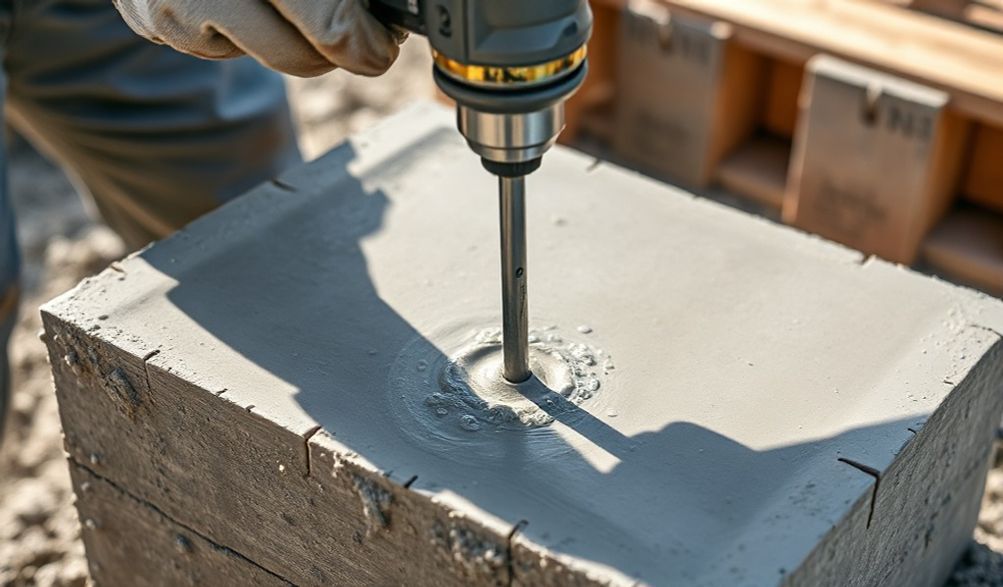
벽돌 진동 기계의 궁극적인 가이드: 종류, 사용법 및 구매 팁
소개
벽돌 거푸집에 완벽한 콘크리트 배합을 부어넣었습니다. 비율은 정확하고, 골재는 깨끗하며, 보강재는 완벽하게 배치되었습니다. 그러나 콘크리트가 경화되면서 불안한 느낌이 듭니다. 탈형 후 완성된 벽돌은 거칠고, 작은 구멍들이 숭숭 뚫린 울통불통한 표면을 드러내는데, 이는 허니컴빙(honeycombing)으로 알려진 결함입니다. 이는 단순히 미관상의 문제가 아닙니다. 구조적 약점으로 이어지는 심각한 결함입니다. 석공, 도급업자, 그리고 열정적인 DIY 건축가들에게 이 상황은 낯선 좌절이 아닙니다. 종종 자재 낭비, 비용이 많이 드는 재시공, 그리고 훼손된 구조적 안전성으로 이어지기 때문입니다.
범인은? 갇힌 공기와 부적절한 다짐입니다. 해결책은? 트로웰만큼이나 기본적인 도구인:벽돌 진동기.
이 가이드는 이 필수 장비에 관한 포괄적인 정보원입니다. 수십 년에 걸친 업계 지식, 업계 모범 사례, 그리고 현장에서의 직접적인 경험을 바탕으로 여러분이 알아야 할 모든 것을 정리했습니다. 기본적인 정의를 넘어 전문적인 결과와 아마추어의 결과를 가르는 실용적인 뉘앙스까지 다룰 것입니다. 이 가이드를 마칠 때쯤에는 단순히뭐벽돌 진동기는, 그러나어떻게프로젝트에 완벽한 것을 선택하고, 안전하고 효과적으로 작동시키며, 수년간 신뢰할 수 있는 서비스를 위해 유지 관리하는 방법.
다음 석공사 프로젝트가 완벽한 밀도와 강도의 기초 위에 세워지도록 함께 알아보겠습니다.
벽돌 진동 기계란 무엇이며 왜 중요한가요?
그 핵심은, 벽돌 진동기는 몰드나 거푸집에 갓 부은 콘크리트를 다지는 도구입니다. 이는 혼합물에 빠른 기계적 진동을 가함으로써 이루어집니다. 그러나 그 진정한 가치를 이해하려면, 이 기계가 활용하는 과학과 제공하는 실질적인 이점을 알아야 합니다.
콘크리트 다짐의 과학
신선한 콘크리트를 페이스트로 고정된 복잡한 입자 골격으로 생각해 보세요. 시멘트, 모래, 골재 같은 입자들 사이에는 갇힌 공기로 가득 찬 무수한 공극이 존재합니다. 이 상태로 방치되면 공기가 그대로 남아 약점을 형성하게 됩니다.
진동은 운동 에너지를 가함으로써 작동합니다. 이 에너지는 시멘트 페이스트( "윤활제")를 일시적으로 액화시켜 내부 마찰을 줄입니다. 이를 통해 고체 입자들이 중력의 힘 아래 더 밀집되고 밀착된 배열로 가라앉을 수 있게 됩니다. 포집된 공기는 이제 유동화된 혼합물에서 부력을 얻어 빠르게 표면으로 상승하여 탈출합니다. 그 결과 균일하고 기공이 없는 덩어리가 생성되어 모든 보강재를 완전히 감싸며 거푸집의 형태에 완벽하게 부합합니다.
적절한 진동의 주요 이점
기술적 과정은 직접적이고 현실적인 이점으로 이어집니다:
- 최대 강도와 내구성:완전히 다짐된 콘크리트 배합은 설계된 압축 강도를 달성합니다. 공극을 제거함으로써 응력 집중, 물 침투 또는 동결-융해 손상이 발생할 수 있는 지점이 줄어들어 수명이 크게 향상됩니다.
- 표면 결함 제거벌집 현상, 벌레 구멍, 모래 줄무늬가 사실상 제거되어 벽돌이나 블록에 매끄럽고 조밀한 전문가급 마감을 제공합니다.
- 구조적 안정성 향상:콘크리트는 철근과 완전한 일체형 결합을 이루어, 설계된 대로 하중과 응력을 견디기 위해 함께 작동하도록 보장합니다.
- 자재 효율성적절하게 진동을 준 콘크리트는 공기가 차지하는 "사각 공간"이 없기 때문에 동일한 강도 사양을 달성하는 데 필요한 재료가 더 적을 수 있습니다.
요약하자면, 진동은 느슨하게 모인 재료를 하나로 통합된 고성능 건축 부품으로 변환시킵니다. 이는 선택적인 단계가 아니라, 혼합 및 배치의 최종적이고 결정적인 단계입니다.
Types of Brick Vibration Machines
Choosing the right type of vibrator is your first critical decision. The best choice depends entirely on your application, scale, and working conditions. Here’s a breakdown of the most common types you’ll encounter.
External or Formwork Vibrators
- 설명: These units clamp directly onto the exterior of the brick mold or formwork. The vibration is transmitted through the mold walls into the concrete.
- 최적 대상: High-volume, precast production of standardized bricks or blocks in a factory or yard setting. Ideal for repetitive use with the same mold designs.
- 장점:
- Excellent for stiff concrete mixes.
- Doesn’t leave insertion marks on the finished surface.
- Can consolidate multiple molds simultaneously if sized correctly.
- 단점:
- Less effective on complex or deeply profiled molds.
- Requires sturdy, well-sealed formwork to be effective.
- Not practical for on-site, in-situ brickwork.
Internal or Immersion Vibrators (Needle Vibrators)
This is the most versatile and widely used type, especially for on-site work. A vibrating “head” is attached to a flexible drive shaft, which is connected to a power source (motor). The head is immersed directly into the mix.
Sub-types by Drive Mechanism:
- Electric Vibrators: The most common choice for general contractors. They are plug-and-play, relatively quiet, and require minimal auxiliary equipment (just a power source). Modern models are well-insulated for safety. They are the go-to for most small to medium-scale brickwork and foundations.
- Pneumatic (Air) Vibrators: Powered by compressed air, these are the workhorses of wet or hazardous environments. They are inherently explosion-proof, can be submerged, and are often more powerful for their size and weight than electric models. The trade-off is the need for a large, capable air compressor and the associated hose.
- Hydraulic Vibrators: These draw power from a hydraulic system, typically found on heavy machinery. They offer immense power and are incredibly durable. You’ll most often find these as dedicated systems on large, truck-mounted block-making machines or in massive precast plants, not as handheld tools for typical brickwork.
최적 대상: On-site brick laying, casting columns, filling deep foundations, and virtually any situation where you are placing concrete into forms.
Table Vibrators
- 설명: The entire casting table or pallet is mounted on a vibrating mechanism. When activated, the vibration is transferred uniformly to every mold on the table.
- 최적 대상: Extremely high-volume production of small, precise precast elements like pavers, tiles, or intricate decorative bricks. Ensures consistent quality across a full batch.
- 장점: Unmatched consistency and speed for repetitive production.
- 단점: High initial cost, inflexible (dedicated to specific table/mold sizes), not portable.
Surface Vibrators (Screed Vibrators)
- 설명: These sit on the surface of the concrete. A vibrating beam or screed board levels the concrete while providing some degree of compaction from the top down.
- 최적 대상: Preparing a perfectly level and compacted bed for laying bricks (e.g., a slab for paving) or for thin concrete toppings. Not typically used for compacting individual brick molds.
- 장점: Excellent for finishing and light compaction of large, flat areas.
- 단점: Limited compaction depth; only effective for the top several inches.
How to Choose the Right Brick Vibrator: Key Specifications
Once you’ve identified the type, you must dial in the specifications. These aren’t just numbers on a spec sheet; they determine whether the tool will work effectively for your specific concrete and molds.
Amplitude and Frequency: Understanding the Power
These two terms define the “character” of the vibration.
- Frequency is the speed of vibration, measured in vibrations per minute (VPM) or Hertz (Hz). High frequency (10,000+ VPM) is excellent for stiff mixes with small aggregate—common in brick and block production. It fluidizes the paste quickly.
- Amplitude is the “throw” or distance the vibrator head moves during each cycle, measured in millimeters. High amplitude provides more forceful, sweeping action, better for mixes with larger aggregate.
The Rule of Thumb: Use high frequency and low amplitude for stiff, dry mixes (typical in brick molds). Use lower frequency and higher amplitude for flowable mixes with larger stone.
Vibrator Head Diameter and Length
The head must be appropriate for the space you’re compacting.
- Diameter: The head diameter should be roughly 1/4 to 1/3 of the narrowest dimension of the space. For standard brick molds, heads between 25mm (1”) and 40mm (1.5”) are typical. Too large, and it won’t fit or will displace too much material. Too small, and its radius of action is insufficient.
- Length: Ensure the shaft and head are long enough to reach the bottom of your deepest mold or form without submerging the drive motor.
Power Source Considerations
This choice is dictated by your job site logistics.
- 전기 Choose for convenience, lower noise, and where reliable power (110V/230V) is available. Ideal for most residential and small commercial sites.
- Pneumatic: Choose for wet conditions, hazardous atmospheres, or where extreme durability is needed. Requires a significant investment in a quality air compressor.
- 유압식: You’ll typically “choose” this only when it’s part of a larger equipment package, like a block-making machine.
내구성과 제작 품질
This is where price often reflects longevity. Inspect or research:
- Flexible Shaft: It should be robust, with high-quality wire braiding and a protective outer casing. Kinks are a death sentence.
- Vibrator Head: Look for hardened steel construction, especially at the tip. A sealed, pre-lubricated bearing assembly is crucial.
- Motor Housing: Should be rugged, with proper cooling vents and secure connections.
Step-by-Step Guide to Effective and Safe Operation
A great tool in the wrong hands is ineffective and dangerous. Follow this protocol for optimal results.
Pre-Operation Checklist
Never skip the pre-flight check. Before plugging in or starting up:
1. Inspect the Tool: Check the entire length of the flexible shaft for kinks, cracks, or wear. Ensure the head is securely attached and not damaged.
2. Check Guards & Connections: Ensure all protective guards are in place. Verify power cords or air hoses are in good condition and properly connected.
3. Test Run: Briefly run the vibrator in air before immersing it. Listen for unusual noises (grinding, knocking) and feel for excessive or uneven vibration.
Proper Vibration Technique
Good technique ensures complete compaction without causing segregation (where the heavier aggregate settles away from the paste).
- Insertion: Insert the vibrator head vertically and allow it to descend under its own weight into the concrete.
- Duration: Vibrate at each point until the concrete surface around the head becomes level and glazed with a thin film of paste, air bubbles cease to rise, and a slight settlement is observed. This usually takes 5 to 15 seconds. Over-vibration is destructive and causes segregation.
- Withdrawal: Withdraw the head slowly to allow the cavity to close behind it.
- Spacing: Insert the vibrator at regular intervals, typically 4 to 6 times the head diameter apart. For a 30mm head, insertions should be 120-180mm apart. Always ensure the radius of action overlaps to eliminate dead zones.
Critical Safety Protocols
Concrete work is hazardous. Vibration adds moving parts and energy.
* Personal Protective Equipment (PPE) is Mandatory: Wear steel-toe boots, heavy-duty gloves, safety glasses, and hearing protection. Concrete is abrasive and caustic.
* Beware of Reinforcement: Never let the vibrating head directly contact reinforcing steel, as this can damage both the rebar coating (if any) and the vibrator itself.
* Handle the Shaft with Care: Never use the flexible shaft as a handle or to drag the tool. Keep it as straight as possible during operation to prevent internal damage.
* Lock-Out/Tag-Out: Always disconnect the power source (electrical, pneumatic, hydraulic) before performing any cleaning, adjustment, or maintenance.
Maintenance Tips for Longevity
A brick vibrator is a precision tool. Neglect its care, and it will fail prematurely, often at the worst possible time.
Routine Cleaning Procedures
This is the most important maintenance task. Concrete begins to set inside the head the moment you stop vibrating.
1. Immediately after use, immerse the running head in a bucket of clean water to flush out fresh concrete slurry.
2. Wipe down the flexible shaft with a wet rag before any spillage hardens.
3. Periodically, use a wire brush to remove any stubborn buildup from the head.
Regular Inspection and Parts Replacement
- Weekly/Monthly: Check the head for wear or a “flat spot.” Inspect the shaft casing for cuts or abrasions. Examine the power cable or air hose for damage.
- Annually/Bi-Annually: Consider having a professional service the motor bearings and check internal components, especially for high-use equipment.
Proper Storage
- Never store the vibrator by hanging it from the flexible shaft or by the power cord.
- Coil the flexible shaft in large loops (no tighter than 12 inches in diameter) to prevent permanent kinking.
- Store in a dry, clean place, off the ground.
자주 묻는 질문 (FAQ)
Q1: Can I use a regular concrete vibrator for brick molds?
A: Absolutely. A standard immersion (needle) vibrator is perfect. The key is selecting the right head diameter (typically 25-35mm) to fit within the confines of your brick mold without damaging it.
Q2: How long should I vibrate the concrete in a brick mold?
A: Avoid using time as your metric. Use visual cues: vibrate until air bubbles stop rising, the surface becomes level and glossy with paste, and the concrete visibly settles. Over-vibration, which causes the aggregate and paste to separate, is a more common and serious error than under-vibration.
Q3: What is the most common cause of brick vibrator failure?
A: Improper cleaning is the #1 killer. Allowing concrete to harden inside the head unbalances it, destroying bearings. The second most common cause is physical damage to the flexible shaft from kinking, crushing, or being used as a handle.
Q4: Are pneumatic vibrators better than electric ones?
A: “Better” is situational. Pneumatic vibrators excel in durability, are safe in all weather and hazardous locations, and are often more powerful. However, they require a significant air compressor investment. Electric vibrators offer superior convenience and lower operating costs for most standard job sites. Choose based on your environment and available infrastructure.
Q5: How do I prevent honeycombing in my brickwork?
A: Honeycombing is a direct result of inadequate compaction. To prevent it:
1. Use a workable (but not overly wet) concrete mix design.
2. Employ the proper vibration technique as outlined in this guide.
3. Ensure concrete is placed in the mold in timely layers and vibrated before it begins to stiffen.
4. Check that your formwork is well-sealed to prevent paste leakage.
결론
Achieving professional, durable, and structurally sound brickwork isn’t just about the quality of your cement or the precision of your mold. The final, transformative step is effective compaction, delivered by the right brick vibration machine. From understanding the core science to selecting the ideal type and specifications, proper operation and diligent maintenance are all part of a non-negotiable process.
View this tool not as an expense, but as an investment. An investment that pays dividends in reduced material waste, eliminated rework, and the profound satisfaction of creating masonry that stands the test of time. Before your next project, consult with reputable equipment dealers, cross-reference your concrete mix design requirements, and always, without exception, prioritize safety on site.
We’d love to hear from you. Have a vibration tip or a hard-learned lesson from the job site? Share your experience in the comments below to help fellow craftsmen.
면책 조항 Always follow the manufacturer’s operating manual for your specific equipment. This guide is for informational purposes based on general industry practices.
<