
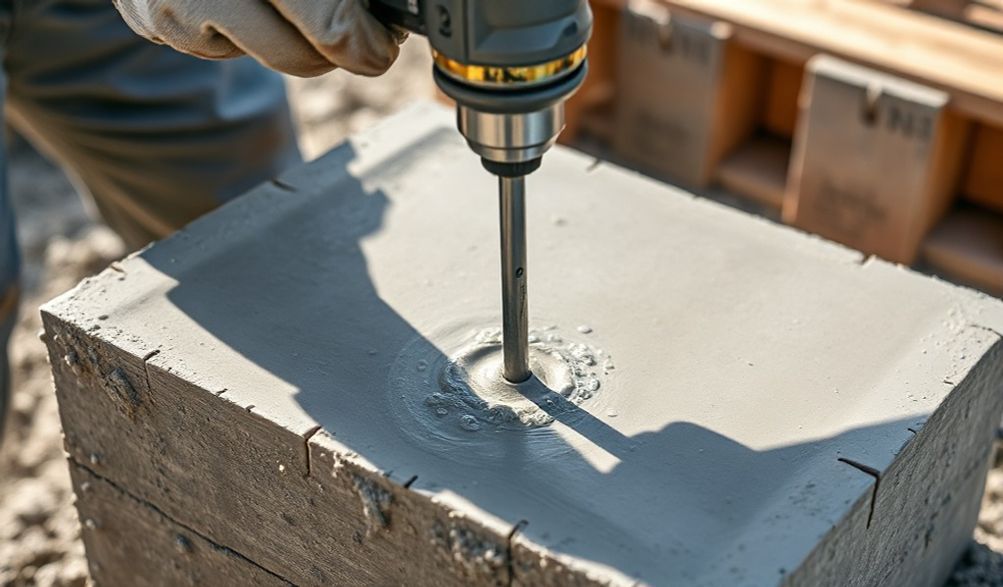
Полное руководство по вибротрамбовкам для кирпича: виды, применение и советы по выбору
Введение
Вы залили идеальную бетонную смесь в форму для кирпича. Пропорции точны, заполнитель чист, а арматура идеально размещена. Но по мере застывания смеси возникает неприятное ощущение. Готовый кирпич после извлечения из формы обнажает шероховатую, испещрённую мелкими отверстиями поверхность — дефект, известный как "соты". Это не просто эстетический изъян; это критическая слабость. Для каменщиков, подрядчиков и увлечённых мастеров-самоучек такая ситуация — знакомое разочарование, часто ведущее к перерасходу материалов, дорогостоящим переделкам и снижению структурной целостности.
Виновник? Захваченный воздух и недостаточное уплотнение. Решение? Инструмент, столь же фундаментальный, как и сам мастерок:кирпичная вибромашина.
Это руководство является вашим всеобъемлющим источником информации об этом важнейшем оборудовании. Опираясь на десятилетия совокупного опыта в отрасли, лучшие практики и непосредственный опыт работы на объектах, мы собрали всё, что вам необходимо знать. Мы выйдем за рамки базовых определений и углубимся в практические нюансы, которые отличают профессиональный результат от любительского. К концу этого руководства вы поймёте не толькочтокирпичный вибратор — это, нокаквыбрать идеальный вариант для вашего проекта, безопасно и эффективно его использовать, а также поддерживать его работоспособность на долгие годы надежной службы.
Давайте углубимся и убедимся, что ваш следующий проект каменной кладки построен на основе идеальной плотности и прочности.
Что такое вибромашина для кирпича и почему она важна?
В своей основе вибростанок для производства кирпичей — это инструмент, предназначенный для уплотнения свежеуложенного бетона в форме или опалубке. Он достигает этого за счёт быстрых механических вибраций, передаваемых смеси. Однако чтобы по-настоящему оценить его ценность, необходимо понимать используемые им научные принципы и те конкретные преимущества, которые он обеспечивает.
Наука уплотнения бетона
Представьте свежий бетон как сложный зернистый каркас, удерживаемый в пасте. Между этими частицами — цементом, песком и заполнителем — находятся бесчисленные пустоты, заполненные захваченным воздухом. Если его не трогать, этот воздух остаётся, создавая слабые места.
Вибрация работает за счет приложения кинетической энергии. Эта энергия временно разжижает цементное тесто (выступающее в роли "смазки"), снижая внутреннее трение. Это позволяет твердым частицам под действием силы тяжести уплотниться, образуя более плотную и компактную структуру. Захваченный воздух, получивший плавучесть в текучей смеси, быстро поднимается к поверхности и выходит наружу. В результате получается однородная масса без пустот, которая полностью обволакивает арматуру и идеально повторяет форму опалубки.
Ключевые преимущества правильной вибрации
Технический процесс оборачивается прямыми, практическими преимуществами:
- Максимальная прочность и долговечность:Полностью уплотненная бетонная смесь достигает своей проектной прочности на сжатие. Устранение пустот означает меньше точек концентрации напряжений, проникновения влаги или повреждений от циклов замораживания-оттаивания, что значительно повышает долговечность.
- Устранение поверхностных дефектов:Соты, раковины и песчаные прожилки практически исключены, что обеспечивает гладкую, плотную, профессиональную отделку ваших кирпичей или блоков.
- Повышенная структурная целостность:Бетон образует полное, монолитное соединение с любой стальной арматурой, обеспечивая их совместную работу для сопротивления нагрузкам и напряжениям, как и задумано.
- Материальная эффективность:Правильно уплотненный бетон часто требует меньше материала для достижения тех же прочностных характеристик, поскольку в нем отсутствуют "мертвые зоны", занятые воздухом.
Короче говоря, вибрация превращает рыхлую массу материалов в единый высокопроизводительный строительный компонент. Это не дополнительный этап, а завершающая, критически важная фаза смешивания и укладки.
Types of Brick Vibration Machines
Choosing the right type of vibrator is your first critical decision. The best choice depends entirely on your application, scale, and working conditions. Here’s a breakdown of the most common types you’ll encounter.
External or Formwork Vibrators
- Описание: These units clamp directly onto the exterior of the brick mold or formwork. The vibration is transmitted through the mold walls into the concrete.
- Лучше всего подходит для: High-volume, precast production of standardized bricks or blocks in a factory or yard setting. Ideal for repetitive use with the same mold designs.
- Плюсы:
- Excellent for stiff concrete mixes.
- Doesn’t leave insertion marks on the finished surface.
- Can consolidate multiple molds simultaneously if sized correctly.
- Минусы:
- Less effective on complex or deeply profiled molds.
- Requires sturdy, well-sealed formwork to be effective.
- Not practical for on-site, in-situ brickwork.
Internal or Immersion Vibrators (Needle Vibrators)
This is the most versatile and widely used type, especially for on-site work. A vibrating “head” is attached to a flexible drive shaft, which is connected to a power source (motor). The head is immersed directly into the mix.
Sub-types by Drive Mechanism:
- Electric Vibrators: The most common choice for general contractors. They are plug-and-play, relatively quiet, and require minimal auxiliary equipment (just a power source). Modern models are well-insulated for safety. They are the go-to for most small to medium-scale brickwork and foundations.
- Pneumatic (Air) Vibrators: Powered by compressed air, these are the workhorses of wet or hazardous environments. They are inherently explosion-proof, can be submerged, and are often more powerful for their size and weight than electric models. The trade-off is the need for a large, capable air compressor and the associated hose.
- Hydraulic Vibrators: These draw power from a hydraulic system, typically found on heavy machinery. They offer immense power and are incredibly durable. You’ll most often find these as dedicated systems on large, truck-mounted block-making machines or in massive precast plants, not as handheld tools for typical brickwork.
Лучше всего подходит для: On-site brick laying, casting columns, filling deep foundations, and virtually any situation where you are placing concrete into forms.
Table Vibrators
- Описание: The entire casting table or pallet is mounted on a vibrating mechanism. When activated, the vibration is transferred uniformly to every mold on the table.
- Лучше всего подходит для: Extremely high-volume production of small, precise precast elements like pavers, tiles, or intricate decorative bricks. Ensures consistent quality across a full batch.
- Плюсы: Unmatched consistency and speed for repetitive production.
- Минусы: High initial cost, inflexible (dedicated to specific table/mold sizes), not portable.
Surface Vibrators (Screed Vibrators)
- Описание: These sit on the surface of the concrete. A vibrating beam or screed board levels the concrete while providing some degree of compaction from the top down.
- Лучше всего подходит для: Preparing a perfectly level and compacted bed for laying bricks (e.g., a slab for paving) or for thin concrete toppings. Not typically used for compacting individual brick molds.
- Плюсы: Excellent for finishing and light compaction of large, flat areas.
- Минусы: Limited compaction depth; only effective for the top several inches.
How to Choose the Right Brick Vibrator: Key Specifications
Once you’ve identified the type, you must dial in the specifications. These aren’t just numbers on a spec sheet; they determine whether the tool will work effectively for your specific concrete and molds.
Amplitude and Frequency: Understanding the Power
These two terms define the “character” of the vibration.
- Frequency is the speed of vibration, measured in vibrations per minute (VPM) or Hertz (Hz). High frequency (10,000+ VPM) is excellent for stiff mixes with small aggregate—common in brick and block production. It fluidizes the paste quickly.
- Amplitude is the “throw” or distance the vibrator head moves during each cycle, measured in millimeters. High amplitude provides more forceful, sweeping action, better for mixes with larger aggregate.
The Rule of Thumb: Use high frequency and low amplitude for stiff, dry mixes (typical in brick molds). Use lower frequency and higher amplitude for flowable mixes with larger stone.
Vibrator Head Diameter and Length
The head must be appropriate for the space you’re compacting.
- Diameter: The head diameter should be roughly 1/4 to 1/3 of the narrowest dimension of the space. For standard brick molds, heads between 25mm (1”) and 40mm (1.5”) are typical. Too large, and it won’t fit or will displace too much material. Too small, and its radius of action is insufficient.
- Length: Ensure the shaft and head are long enough to reach the bottom of your deepest mold or form without submerging the drive motor.
Power Source Considerations
This choice is dictated by your job site logistics.
- Электрический: Choose for convenience, lower noise, and where reliable power (110V/230V) is available. Ideal for most residential and small commercial sites.
- Pneumatic: Choose for wet conditions, hazardous atmospheres, or where extreme durability is needed. Requires a significant investment in a quality air compressor.
- Hydraulic: You’ll typically “choose” this only when it’s part of a larger equipment package, like a block-making machine.
Прочность и качество сборки
This is where price often reflects longevity. Inspect or research:
- Flexible Shaft: It should be robust, with high-quality wire braiding and a protective outer casing. Kinks are a death sentence.
- Vibrator Head: Look for hardened steel construction, especially at the tip. A sealed, pre-lubricated bearing assembly is crucial.
- Motor Housing: Should be rugged, with proper cooling vents and secure connections.
Step-by-Step Guide to Effective and Safe Operation
A great tool in the wrong hands is ineffective and dangerous. Follow this protocol for optimal results.
Pre-Operation Checklist
Never skip the pre-flight check. Before plugging in or starting up:
1. Inspect the Tool: Check the entire length of the flexible shaft for kinks, cracks, or wear. Ensure the head is securely attached and not damaged.
2. Check Guards & Connections: Ensure all protective guards are in place. Verify power cords or air hoses are in good condition and properly connected.
3. Test Run: Briefly run the vibrator in air before immersing it. Listen for unusual noises (grinding, knocking) and feel for excessive or uneven vibration.
Proper Vibration Technique
Good technique ensures complete compaction without causing segregation (where the heavier aggregate settles away from the paste).
- Insertion: Insert the vibrator head vertically and allow it to descend under its own weight into the concrete.
- Duration: Vibrate at each point until the concrete surface around the head becomes level and glazed with a thin film of paste, air bubbles cease to rise, and a slight settlement is observed. This usually takes 5 to 15 seconds. Over-vibration is destructive and causes segregation.
- Withdrawal: Withdraw the head slowly to allow the cavity to close behind it.
- Spacing: Insert the vibrator at regular intervals, typically 4 to 6 times the head diameter apart. For a 30mm head, insertions should be 120-180mm apart. Always ensure the radius of action overlaps to eliminate dead zones.
Critical Safety Protocols
Concrete work is hazardous. Vibration adds moving parts and energy.
* Personal Protective Equipment (PPE) is Mandatory: Wear steel-toe boots, heavy-duty gloves, safety glasses, and hearing protection. Concrete is abrasive and caustic.
* Beware of Reinforcement: Never let the vibrating head directly contact reinforcing steel, as this can damage both the rebar coating (if any) and the vibrator itself.
* Handle the Shaft with Care: Never use the flexible shaft as a handle or to drag the tool. Keep it as straight as possible during operation to prevent internal damage.
* Lock-Out/Tag-Out: Always disconnect the power source (electrical, pneumatic, hydraulic) before performing any cleaning, adjustment, or maintenance.
Maintenance Tips for Longevity
A brick vibrator is a precision tool. Neglect its care, and it will fail prematurely, often at the worst possible time.
Routine Cleaning Procedures
This is the most important maintenance task. Concrete begins to set inside the head the moment you stop vibrating.
1. Immediately after use, immerse the running head in a bucket of clean water to flush out fresh concrete slurry.
2. Wipe down the flexible shaft with a wet rag before any spillage hardens.
3. Periodically, use a wire brush to remove any stubborn buildup from the head.
Regular Inspection and Parts Replacement
- Еженедельно/Ежемесячно: Check the head for wear or a “flat spot.” Inspect the shaft casing for cuts or abrasions. Examine the power cable or air hose for damage.
- Annually/Bi-Annually: Consider having a professional service the motor bearings and check internal components, especially for high-use equipment.
Proper Storage
- Never store the vibrator by hanging it from the flexible shaft or by the power cord.
- Coil the flexible shaft in large loops (no tighter than 12 inches in diameter) to prevent permanent kinking.
- Store in a dry, clean place, off the ground.
Frequently Asked Questions (FAQ)
Q1: Can I use a regular concrete vibrator for brick molds?
А: Absolutely. A standard immersion (needle) vibrator is perfect. The key is selecting the right head diameter (typically 25-35mm) to fit within the confines of your brick mold without damaging it.
Q2: How long should I vibrate the concrete in a brick mold?
А: Avoid using time as your metric. Use visual cues: vibrate until air bubbles stop rising, the surface becomes level and glossy with paste, and the concrete visibly settles. Over-vibration, which causes the aggregate and paste to separate, is a more common and serious error than under-vibration.
Q3: What is the most common cause of brick vibrator failure?
А: Improper cleaning is the #1 killer. Allowing concrete to harden inside the head unbalances it, destroying bearings. The second most common cause is physical damage to the flexible shaft from kinking, crushing, or being used as a handle.
Q4: Are pneumatic vibrators better than electric ones?
А: “Better” is situational. Pneumatic vibrators excel in durability, are safe in all weather and hazardous locations, and are often more powerful. However, they require a significant air compressor investment. Electric vibrators offer superior convenience and lower operating costs for most standard job sites. Choose based on your environment and available infrastructure.
Q5: How do I prevent honeycombing in my brickwork?
А: Honeycombing is a direct result of inadequate compaction. To prevent it:
1. Use a workable (but not overly wet) concrete mix design.
2. Employ the proper vibration technique as outlined in this guide.
3. Ensure concrete is placed in the mold in timely layers and vibrated before it begins to stiffen.
4. Check that your formwork is well-sealed to prevent paste leakage.
Заключение
Achieving professional, durable, and structurally sound brickwork isn’t just about the quality of your cement or the precision of your mold. The final, transformative step is effective compaction, delivered by the right brick vibration machine. From understanding the core science to selecting the ideal type and specifications, proper operation and diligent maintenance are all part of a non-negotiable process.
View this tool not as an expense, but as an investment. An investment that pays dividends in reduced material waste, eliminated rework, and the profound satisfaction of creating masonry that stands the test of time. Before your next project, consult with reputable equipment dealers, cross-reference your concrete mix design requirements, and always, without exception, prioritize safety on site.
We’d love to hear from you. Have a vibration tip or a hard-learned lesson from the job site? Share your experience in the comments below to help fellow craftsmen.
Отказ от ответственности: Always follow the manufacturer’s operating manual for your specific equipment. This guide is for informational purposes based on general industry practices.
<