1. 서론
재산 블록(플라이 애시, 석탄재, 바닥재 등 산업 부산물을 사용하여 제조)은 환경적 이점, 비용 효율성 및 구조적 신뢰성을 제공하며 지속 가능한 건설의 초석으로 부상하고 있습니다. 기존 콘크리트나 점토 벽돌과 달리, 재생 블록은 매립 폐기물을 줄이고(산업 재의 20-30% 재활용) 탄소 배출을 낮춥니다(시멘트 사용량 15-25% 감소). B2B 분야에서 활동하는 유통업자, 도매업자 및 구매자에게 재생 블록 제조 기계는 글로벌 친환경 건축 이니셔티브, 정부의 지속 가능성 의무화, 원자재 비용 상승에 힘입어 높은 성장 잠재력을 지닌 제품 범주입니다. 이러한 특수 기계는 정밀한 혼합, 다짐 및 양생 공정을 통해 재의 독특한 특성(마모성, 낮은 결합력, 수분 민감성)을 처리하도록 설계되었습니다.
2. 애시 브릭 재료 과학: 기계 설계를 위한 주요 고려 사항
2.1 벽돌 생산에 사용되는 재의 종류
재 재료 벽돌 블록 제조 기계는 특정 유형의 산업용 재를 처리하도록 설계되었으며, 각각의 재는 기계 구성에 영향을 미치는 독특한 특성을 지니고 있습니다.
- 플라이 애시발전소에서 석탄 연소 시 발생하는 미세한 분말 형태의 부산물(전체 석탄재의 80~90% 차지). F급 플라이애시(규산-알루미늄계)는 포졸란 특성(석회와 반응하여 결합성 화합물 형성)으로 벽돌 제조에 선호된다. C급 플라이애시(석회질)는 칼슘 함량이 높아 추가 시멘트 사용을 줄인다. 플라이애시 입자 크기(1~100μm)는 균일한 분포를 보장하기 위해 정교한 혼합 공정이 필요하다.
- 바텀 애시거친 입자 형태의 부산물(총 석탄재의 10-20%)로, 입자 크기는 1-20mm입니다. 재벽돌의 조립재로 사용되어 강도를 높이고 수축을 줄입니다. 바텀 애시의 각진 형태는 인터록 효과를 개선하지만, 마모를 견디기 위해 견고한 기계 부품이 필요합니다.
- 혼합 애쉬플라이 애시(70-80%)와 바텀 애시(20-30%)를 혼합하여 작업성과 강도를 균형 있게 조절합니다. 대부분의 애시 벽돌 제조 장비는 자원 활용을 극대화하기 위해 혼합 애시에 최적화되어 있습니다.
- 다른 재들쌀겨 재, 나무 재, 바이오매스 재—석탄재가 부족한 지역 시장(예: 아시아, 아프리카)에서 사용됩니다. 이러한 재는 탄소 함량이 더 높아, 혼합 비율과 양생 시간을 조정해야 합니다.
2.2 재 생산성에 중요한 재료 배합 설계: 기계 호환성을 위한 핵심
재 생산된 재질의 벽돌 품질은 정확한 배합 설계에 달려 있으며, 이는 기계 요구 사항(다짐 압력, 혼합 시간, 양생 방법)에 직접적인 영향을 미칩니다. B2B 이해관계자는 적합한 장비를 권장하기 위해 이러한 비율을 이해해야 합니다.
- 베이스 재료:
- 재 (비산재 + 바닥재): 전체 혼합물의 60-70% (주 원료).
- 시멘트(포틀랜드 또는 혼합): 10-15%(결합제, 초기 강도 제공).
- 모래/골재: 15-20% (작업성을 향상시키고 수축을 줄입니다).
- Water: 12-15% (moisture content critical for compaction—too little causes cracking, too much leads to slumping).
- 첨가제:
- Lime (calcium oxide): 2-5% (enhances pozzolanic reaction of fly ash, improves strength).
- Gypsum (calcium sulfate): 1-2% (retards setting time, prevents premature hardening).
- Plasticizers: 0.1-0.3% (reduces water content by 10-15%, improves compaction density).
- Waterproofing agents: 0.5-1% (reduces water absorption in finished bricks, critical for outdoor applications).
- Mix Consistency: Target slump value of 15-30mm (stiffer than concrete mixes) to ensure proper compaction without deformation. Ash’s low water retention requires shorter mixing times (30-45 seconds) to avoid moisture loss.
2.3 Ash Brick Properties and Machine Performance Requirements
Ash bricks have unique properties that demand specialized machine adaptations, distinguishing them from concrete or clay brick equipment:
- 압축 강도: 10-25 N/mm² (load-bearing applications require 15-25 N/mm²), requiring compaction pressure of 20-35 MPa (higher than concrete bricks due to ash’s low binding capacity).
- Water Absorption: 15-20% (lower than clay bricks but higher than concrete), requiring controlled curing to prevent excessive moisture loss.
- Density: 1600-1800 kg/m³ (lighter than concrete bricks), reducing transportation costs but requiring precise compaction to avoid porosity.
- Abrasion Resistance: Lower than concrete bricks, requiring wear-resistant machine components (molds, mixer paddles) to handle abrasive ash particles.
- Setting Time: 24-48 hours (longer than concrete due to pozzolanic reaction), requiring extended curing or steam curing to accelerate strength gain.
3. Ash Brick Block Making Machine Technology: Key Adaptations for Ash
3.1 Core Machine Components and Ash-Specific Design
Ash brick block making machines feature specialized components to address ash’s unique challenges (abrasion, low binding, moisture sensitivity). B2B stakeholders should evaluate these components when sourcing equipment:
- Mixing System:
- Dual-Shaft Mixers: Preferred over single-shaft designs for ash mixes, ensuring uniform distribution of fine fly ash and coarse bottom ash. Equipped with wear-resistant paddles (stainless steel or carbide-tipped) to withstand ash abrasion.
- Moisture Sensors: Real-time moisture monitoring (12-15% target) adjusts water flow to prevent over- or under-mixing. Ash’s low water retention requires precise moisture control to avoid dry mixes that crack during compaction.
- 압축 시스템:
- 유압 다짐: Most common for ash bricks, delivering 20-35 MPa of adjustable pressure. Hydraulic systems provide gradual, uniform force—critical for consolidating ash particles without creating internal voids.
- 바이브로 컴팩션: Combined vibration (50-80 Hz) and pressure to improve ash particle interlock. Used for high-strength ash bricks (20-25 N/mm²) or mixes with high bottom ash content.
- Extended Hold Time: 3-5 seconds of pressure hold (longer than concrete brick machines) to ensure ash-cement adhesion.
- 곰팡이:
- Hardened Steel Molds: Thicker liners (6-8mm) and reinforced edges to resist ash abrasion. Precision-machined (tolerance ±0.3mm) to ensure brick dimensional accuracy.
- Non-Stick Coatings: Teflon or ceramic coatings on mold surfaces to prevent ash adhesion—reducing demolding issues and mold wear.
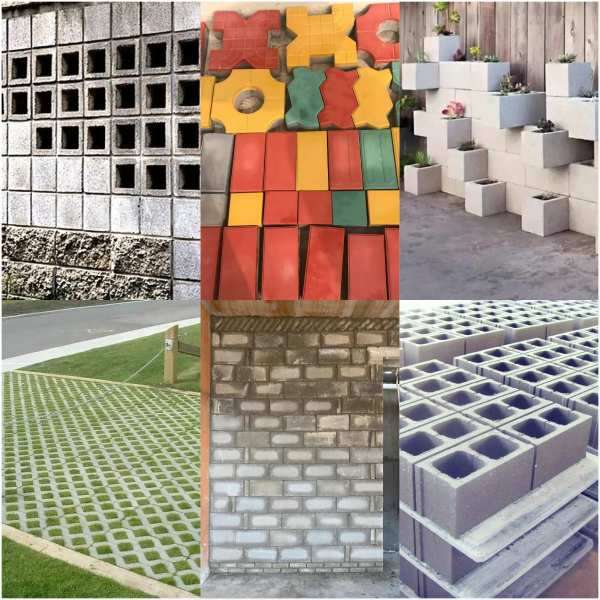
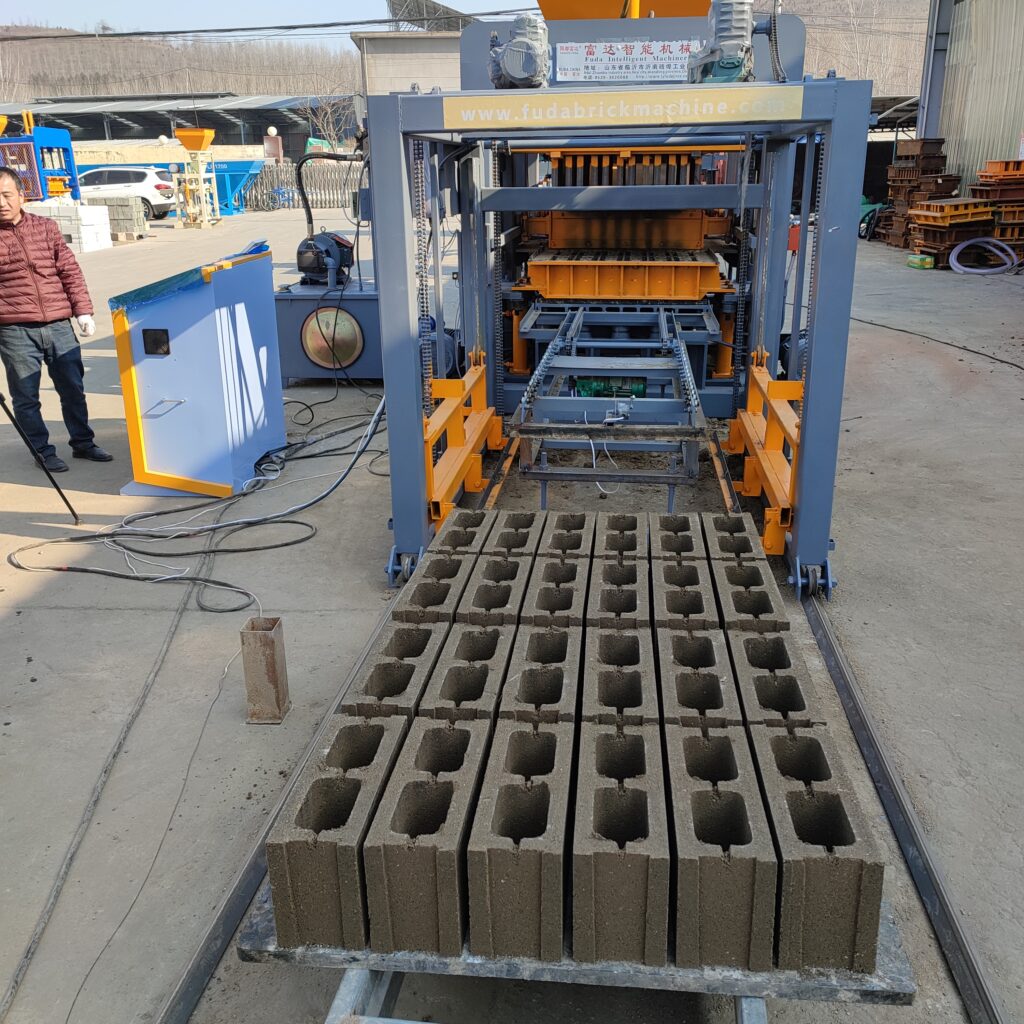
- Interchangeable Cavities: 1-4 cavity molds for different brick sizes (390×190×190mm hollow, 240×115×57mm solid, 200×100×60mm pavers).
- Curing Integration:
- Steam Curing Chambers: Integrated into large-scale machines to accelerate strength gain (24-48 hours at 40-60°C, 80-90% humidity). Critical for ash bricks, as ambient curing takes 7-14 days.
- Insulated Mold Bases: Retain heat during compaction, initiating early curing and reducing cracking.
- Material Handling:
- Closed-Loop Conveyors: Prevent ash dust contamination (hazardous and wasteful) with enclosed belts or screw conveyors. Ash’s fine particle size creates dust, requiring dust collection systems for worker safety.
- Wear-Resistant Liners: Conveyor and hopper liners (rubber or polyurethane) to withstand bottom ash abrasion.
3.2 Machine Types by Automation and Production Scale
Ash brick block making machines are segmented by automation level and production capacity, allowing B2B stakeholders to match client needs:
3.2.1 Manual Ash Brick Block Making Machines
- 생산 능력: 500-1,500 bricks/day (8-hour shift).
- 주요 특징: Manual feeding, lever-operated hydraulic compaction (20-25 MPa), basic molds, no power requirements (ideal for rural areas).
- 가격대: $2,000-$6,000 (wholesale).
- 타겟 클라이언트: Small-scale rural entrepreneurs, community projects, low-income housing initiatives.
- 장점낮은 초기 비용, 휴대성, 간편한 작동.
- 콘스: Low efficiency, high labor requirements, inconsistent quality (dependent on operator skill).
3.2.2 Semi-Automatic Ash Brick Block Making Machines
- 생산 능력: 1,500-6,000 bricks/day.
- 주요 특징: Automated hydraulic compaction (25-30 MPa), vibratory feeding, basic PLC control (moisture monitoring, pressure adjustment), electric or diesel power (5-15 HP).
- 가격대: $8,000-$30,000 (wholesale).
- 타겟 클라이언트: Regional brick suppliers, small construction firms, sustainable building projects.
- 장점: Balanced efficiency and cost, reduced labor (1-2 operators/shift), improved quality consistency.
- 콘스: Limited production scale, manual mold change.
3.2.3 Fully Automatic Ash Brick Block Making Machines
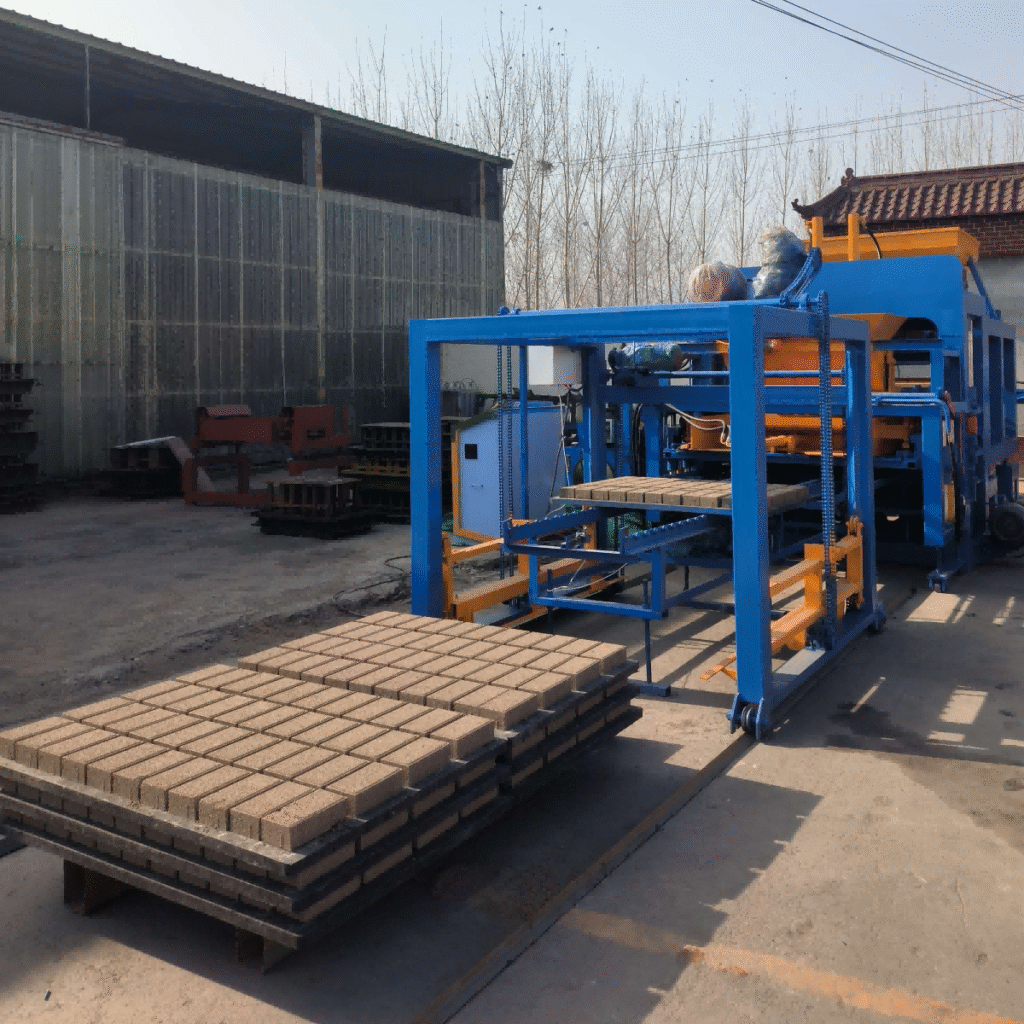
- 생산 능력: 6,000-20,000+ bricks/day.
- 주요 특징: Full automation (batching, mixing, feeding, compaction, curing, stacking), servo-hydraulic compaction (30-35 MPa), advanced PLC with IoT (remote monitoring, data analytics), integrated steam curing.
- 가격대: $40,000-$300,000+ (wholesale).
- 타겟 클라이언트: Industrial brick manufacturers, large infrastructure projects, green building developers.
- 장점: High production efficiency, minimal labor (3-5 operators/shift), consistent quality, 24/7 operation, sustainability compliance.
- 콘스높은 초기 비용, 복잡한 유지보수, 숙련된 운영자 필요.
3.2.4 Mobile Ash Brick Block Making Machines
- 생산 능력: 1,000-3,000 bricks/day.
- 주요 특징: Trailer-mounted design, diesel or dual-power (electric + diesel), semi-automatic operation, compact mixing and compaction systems.
- 가격대: $12,000-$40,000 (wholesale).
- 타겟 클라이언트: On-site construction projects, remote areas, mobile brick yards.
- 장점: Eliminates ash brick transportation costs (ash is often sourced locally near power plants), adaptable to job sites.
- 콘스고정식 자동 기계보다 생산 능력이 낮습니다.
3.3 Production Process Optimization for Ash Bricks
B2B stakeholders should educate purchasers on optimizing production processes to maximize ash brick quality and machine efficiency:
- Pre-Mixing Preparation:
- Dry mix ash, sand, and cement for 10-15 seconds before adding water to ensure uniform distribution.
- Screen fly ash to remove large particles (>1mm) that cause compaction issues.
- Compaction Parameters:
- Adjust pressure based on ash type: 20-25 MPa for Class F fly ash, 25-30 MPa for Class C fly ash, 30-35 MPa for high bottom ash mixes.
- Use vibration (50-60 Hz) for mixes with >20% bottom ash to improve particle flow.
- Curing Best Practices:
- Steam cure for 24-48 hours (70-80% of final strength) followed by 3-5 days of ambient curing.
- Avoid rapid drying (e.g., direct sunlight, wind) which causes shrinkage cracks—common in ash bricks due to high ash content.
- Mold Maintenance:
- Clean molds after each cycle to remove ash buildup—use compressed air or soft brushes (avoid abrasive cleaners that damage non-stick coatings).
- Apply release agent (vegetable oil or commercial concrete release agent) for sticky ash mixes.
4. Global Market Dynamics and Regional Adaptation
4.1 Key Market Drivers for Ash Brick Block Making Machines
The global ash brick machine market is growing at a CAGR of 9-11%, fueled by four core trends that create sustained opportunities for B2B stakeholders:
- Sustainability Mandates: Governments worldwide have implemented policies to reduce carbon emissions and industrial waste. For example:
- India’s National Green Tribunal (NGT) mandates 20-30% fly ash usage in construction materials.
- China’s “Dual Carbon” goal (peak carbon by 2030, carbon neutrality by 2060) promotes ash bricks as a low-carbon alternative to clay bricks.
- EU’s Green Deal requires 50% reduction in construction sector emissions by 2030, driving demand for recycled material-based bricks.
- Cost Efficiency: Ash is a low-cost or free raw material (power plants often pay to dispose of ash), reducing brick production costs by 15-25% compared to concrete or clay bricks. This appeals to price-sensitive markets (Africa, Southeast Asia).
- 인프라 개발: Large-scale infrastructure projects (roads, bridges, affordable housing) in emerging economies (India, Nigeria, Brazil) require high-volume, low-cost bricks—ash bricks meet both criteria.
- Waste Reduction: Global coal ash production exceeds 1 billion tons annually, with only 30-40% recycled. Ash brick machines address this waste crisis, making them attractive to environmentally conscious purchasers and government tenders.
4.2 지역 시장 적응 전략
Ash brick machine requirements vary by region, reflecting ash availability, construction standards, and sustainability policies. B2B stakeholders must tailor their offerings:
4.2.1 Asia-Pacific (Key Markets: India, China, Vietnam, Indonesia)
- Ash Availability: Abundant coal ash (India and China produce 500+ million tons annually).
- 수요 동인: Affordable housing, infrastructure development, sustainability mandates.
- 기계 적응:
- High-capacity automatic machines (10,000-20,000 bricks/day) for industrial production.
- 이중 동력(전기 + 디젤) 시스템으로 정전(인도, 베트남에서 흔함) 대비
- Molds for local brick sizes (India: 230×115×75mm, China: 240×115×53mm).
- 가격 전략: Mid-range semi-automatic ($10,000-$25,000) and automatic ($50,000-$200,000) machines to balance cost and efficiency.
4.2.2 Africa (Key Markets: Nigeria, South Africa, Kenya, Ethiopia)
- Ash Availability: Limited coal ash (concentrated near power plants in South Africa, Nigeria) → machines adapted for biomass ash (rice husk, wood ash).
- 수요 동인: Rural housing, low-cost construction, government waste reduction initiatives.
- 기계 적응:
- Low-cost manual ($2,000-$5,000) and semi-automatic ($8,000-$15,000) machines.
- Diesel-only power (unreliable electricity in rural areas).
- 먼지와 가혹한 작동 조건을 견딜 수 있는 내구성 있는 설계.
- 가격 전략예산 중심의 유연한 결제 계획 옵션(소액 금융 파트너십).
4.2.3 Europe and North America (Key Markets: Germany, UK, US, Canada)
- Ash Availability: Coal ash production declining → machines adapted for recycled concrete ash, biomass ash.
- 수요 동인: Green building certifications (LEED, BREEAM), infrastructure renewal, decorative ash bricks.
- 기계 적응:
- IoT 통합을 갖춘 에너지 효율적인 자동 기계.
- Recycled material compatibility (up to 50% recycled aggregates).
- Molds for decorative and interlocking ash bricks (high demand for residential projects).
- 가격 전략: Premium pricing ($100,000-$300,000+) for high-end, sustainable machines.
4.2.4 Middle East and North Africa (MENA) (Key Markets: UAE, Saudi Arabia, Egypt)
- Ash Availability: Limited local ash → machines designed for imported fly ash or blended ash mixes.
- 수요 동인: Mega-infrastructure projects (e.g., NEOM in Saudi Arabia), sustainable construction for events (e.g., COP28).
- 기계 적응:
- High-strength ash brick production (20-25 N/mm²) for infrastructure.
- Heat-resistant curing systems (for high-temperature regions).
- Decorative ash brick molds (textured, colored) for luxury projects.
- 가격 전략: Premium pricing for specialized machines with fast delivery.
5. 유통업체 및 도매업체를 위한 B2B 비즈니스 전략
5.1 Sourcing and Supplier Evaluation
Successful B2B stakeholders partner with manufacturers that specialize in ash brick machines (not general brick equipment) to ensure ash-specific design and quality:
- 제조업체 평가 기준:
- Ash Expertise: In-house R&D team with experience in ash material science and machine design. Patents or certifications (ISO 9001, CE, ASTM) for ash brick production.
- 품질 관리: Strict testing of machine components (wear resistance, compaction precision) and ash brick quality (compressive strength, water absorption).
- Customization Capabilities: Ability to adapt machines to regional ash types (coal ash, biomass ash) and local brick sizes.
- 생산 능력대량 주문(50대 이상) 처리 능력: 표준 모델은 4-8주, 맞춤형 구성은 8-12주의 리드 타임이 소요됩니다.
- 애프터 서비스 지원: Comprehensive warranty (1-2 years for hydraulic components, 6 months for molds), global spare parts distribution, and technical training on ash mix design.
- 소싱 옵션:
- Direct Import: Source from specialized manufacturers in India, China, or Europe. Lower costs but requires managing logistics and import compliance (ash-specific certifications).
- 현지 조립: Partner with local manufacturers to assemble machines using imported ash-specific components (mixers, molds). Improves regional adaptation and reduces import duties.
- 지역 공급업체: Source from manufacturers in target regions (e.g., India-based suppliers for Asia-Pacific) to reduce shipping costs and delivery times.
5.2 가격 책정과 수익성
Ash brick block making machines offer attractive profit margins for B2B stakeholders, with pricing strategies tailored to machine type and region:
- 도매 마진:
- Manual machines: 100-150% markup (wholesale $2,000-$6,000 → retail $4,000-$15,000).
- Semi-automatic machines: 50-100% markup (wholesale $8,000-$30,000 → retail $16,000-$60,000).
- Fully automatic machines: 30-50% markup (wholesale $40,000-$300,000 → retail $56,000-$450,000).
- Mobile models: 100% markup (wholesale $12,000-$40,000 → retail $24,000-$80,000).
- 번들링 전략:
- Machine + ash mix design consulting + spare molds + curing chamber = 15-20% premium over standalone machine.
- Machine + operator training + 1-year maintenance contract = 10-15% premium.
- 대량 구매 할인: 5-10% discount for 10+ machines, 10-15% for 20+ machines. Incentivizes wholesalers to stock inventory for high-demand seasons (e.g., construction booms in spring/summer).
5.3 마케팅 및 영업 전략
Effective marketing of ash brick block making machines requires emphasizing sustainability, cost savings, and compliance with regional mandates:
- 무역 박람회 및 전시회: Participate in industry events (Bauma, Conexpo, Green Building Expo) to showcase machines and ash brick samples. Highlight sustainability credentials (carbon footprint reduction, waste recycling).
- B2B 플랫폼: List products on global (Alibaba, Made-in-China) and regional (TradeKey Africa, EuropeB2B) platforms. Use keywords like “sustainable ash brick machine,” “fly ash block making equipment,” and “eco-friendly brick machine” to attract environmentally conscious clients.
- 콘텐츠 마케팅: Publish whitepapers, case studies, and video tutorials on topics like “Ash Mix Design for High-Strength Bricks” or “Maximizing ROI with Sustainable Ash Brick Production.” Create comparison guides (ash bricks vs. concrete/clay bricks) to emphasize cost and environmental benefits.
- 정부 입찰: Bid on infrastructure and housing projects by offering ash brick machines that meet sustainability mandates (e.g., India’s NGT, EU’s Green Deal). Ensure all required documentation (ash recycling certificates, carbon footprint reports) is in order.
- 파트너십: Collaborate with power plants (ash suppliers), cement companies, and green building certification bodies to cross-promote products. Offer referral bonuses for leads that convert to sales.
5.4 경쟁력 있는 차별화 요소로서의 애프터서비스 지원
In the ash brick machine market, after-sales support is critical due to the technical complexity of ash mix design and machine operation:
- 기술 교육: Offer on-site or virtual training for operators and maintenance staff. Cover ash mix design, machine calibration, troubleshooting, and routine maintenance. Include training on sustainability reporting (e.g., tracking ash recycling volumes for government compliance).
- 예비 부품 공급: Maintain local inventory of critical spare parts (wear-resistant mixer paddles, mold liners, hydraulic seals) to ensure fast delivery (2-5 days). Partner with manufacturers to access global spare parts networks.
- 유지보수 계약연간 유지보수 계약(기계 가격의 10-15%)을 판매하며, 이에는 정기 점검, 예비 부품 교체, 24/7 기술 지원이 포함됩니다.
- 원격 모니터링: For large-scale automatic machines, offer IoT-enabled remote monitoring to track machine performance, ash mix consistency, and curing conditions. Provide data analytics to optimize production and reduce waste.
6. 결론
Ash brick block making machines represent a sustainable, high-growth opportunity for B2B stakeholders—driven by global green building trends, waste reduction mandates, and cost efficiency. Success in this market requires a deep understanding of ash material science, machine technology adaptations, and regional market needs. Distributors and wholesalers must source specialized, ash-specific machines, implement value-based pricing strategies that highlight sustainability and cost savings, and prioritize after-sales support to educate clients on ash mix design and machine operation. Purchasers, meanwhile, should focus on machine components (wear resistance, compaction precision, curing integration) and total cost of ownership (raw material savings, energy efficiency, maintenance) to select equipment that delivers long-term ROI and sustainability compliance. As the construction industry continues to shift toward low-carbon, circular economy practices, ash brick block making machines will remain a critical tool for reducing industrial waste and carbon emissions—offering B2B stakeholders the chance to build profitable, sustainable businesses by meeting the growing demand for eco-friendly construction materials.
7. 자주 묻는 질문 (FAQ)
7.1 What types of ash can be used in ash brick block making machines?
Ash brick machines process:
- Coal Ash: Fly ash (Class F and Class C) and bottom ash (most common).
- Biomass Ash: Rice husk ash, wood ash, or sugarcane bagasse ash (regional markets).
- Recycled Ash: Ash from demolished concrete or brick (blended with coal ash).Machines may require adjustments (mixing time, pressure) for different ash types.
7.2 What is the compressive strength of ash bricks produced by these machines?
Ash bricks typically have a compressive strength of 10-25 N/mm²:
- Non-load-bearing: 10-15 N/mm².
- Load-bearing (residential/commercial): 15-20 N/mm².
- High-strength (infrastructure): 20-25 N/mm².Strength depends on ash type (Class C fly ash > Class F), compaction pressure (20-35 MPa), and curing method (steam curing > ambient curing).
7.3 How does ash brick production reduce carbon emissions?
Ash bricks reduce carbon emissions by:
- Replacing 15-25% of cement (a high-carbon material) with fly ash (a waste byproduct).
- Avoiding clay brick production (which requires kiln firing, emitting CO₂).
- Recycling industrial waste (reducing landfill methane emissions).A typical ash brick machine producing 10,000 bricks/day reduces CO₂ emissions by 5-10 tons/year.
7.4 What is the production capacity of ash brick block making machines?
생산 능력은 기계 유형에 따라 다릅니다.
- Manual: 500-1,500 bricks/day.
- Semi-automatic: 1,500-6,000 bricks/day.
- Fully automatic: 6,000-20,000+ bricks/day.
- Mobile: 1,000-3,000 bricks/day.
7.5 How long does it take to cure ash bricks?
- 증기 양생: 24-48 hours (70-80% of final strength) → ideal for industrial production.
- 상온 경화: 7-14 days (100% of final strength) → low-cost for small-scale operations.
- Combined Curing: 24 hours steam + 3-5 days ambient → balances speed and cost.
7.6 What maintenance is required for ash brick block making machines?
Routine maintenance includes:
- Daily: Clean molds, check moisture levels, inspect for ash buildup.
- Weekly: Replace hydraulic oil filter, lubricate moving parts, test compaction pressure.
- Monthly: Inspect mixer paddles for wear, calibrate moisture sensors, tighten loose bolts.
- Annual: Replace mold liners, drain and replace hydraulic oil, overhaul mixing system.
7.7 Can ash brick machines produce different brick sizes and types?
Yes. Ash brick machines with interchangeable molds produce:
- Solid bricks (240×115×57mm, 230×115×75mm).
- 홀로우 블록 (390×190×190mm, 390×90×190mm).
- 인터록킹 포장재 (200×100×60mm, 250×250×80mm).
- Decorative bricks (textured, colored with pigments).
7.8 Are there financing options for ash brick block making machines?
네. B2B 금융 옵션에는 다음이 포함됩니다:
- Manufacturer Financing: Low-interest loans (5-10% APR) with 2-5 year repayment terms.
- Leasing: Monthly payments (e.g., $300-$2,000/month) with option to buy at the end of the lease.
- Microfinance: Available in emerging markets for small-scale purchasers (loan amounts $2,000-$10,000).
- Government Grants: Some countries (India, China, EU) offer grants for sustainable construction equipment (ash brick machines qualify due to waste reduction benefits).