
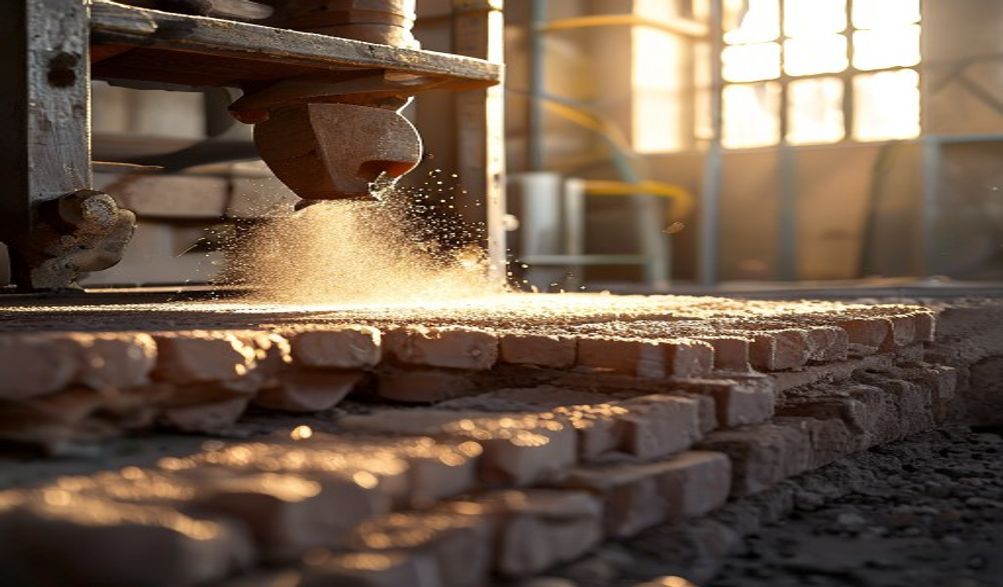
플라이 애시 벽돌 제조 기계 선택 방법: 종합 구매자 가이드
소개
건설 환경이 변화하고 있습니다. 지속 가능한 건축 방식과 비용 효율적인 재료에 대한 세계적 추세에 힘입어, 플라이 애시 벽돌이 선두주자로 떠오르고 있습니다. 기존 점토 벽돌보다 강도가 높고 균일하며 환경 친화적인 이 벽돌은 미래의 조적 공법을 대표합니다. 하지만 이 유망한 사업의 초석은 단순히 원자재가 아니라, 재를 자산으로 변환시키는 기계에 있습니다.
신규 창업자나 사업 확장을 모색하는 기업에게 플라이 애쉬 벽돌 제조 기계 시장을 탐색하는 것은 어려운 일일 수 있습니다. 기술 사양, 수동부터 완전 자동까지 다양한 모델, 그리고 크게 변동하는 가격표는 분석 마비를 초래할 수 있습니다. 잘못된 선택은 단순한 실수가 아니라, 부적합한 벽돌, 생산 병목 현상의 심각한 악화, 그리고 상당한 재정적 부담으로 이어질 수 있습니다.
이 가이드는 복잡함을 정리하기 위해 마련되었습니다. 공장 현장의 공정하고 전문적인 컨설턴트로 생각하시면 됩니다. 우리는 선택 과정을 명확하고 실행 가능한 단계로 나누어, 귀사의 비즈니스 목표, 핵심 기계 유형, 실제로 중요한 기술 사양, 그리고 적합한 공급업체와 협력하는 방법에 집중할 것입니다. 여기에 담긴 조언은 산업 표준, 기술 매뉴얼, 그리고 성공한 제조업체들의 소중한 통찰에서 정제된 것으로, 투자 결정을 위한 신뢰할 수 있는 기반을 제공합니다.
귀사의 생산 요구사항과 비즈니스 목표 이해하기
단 하나의 기계 브로셔를 살펴보기 전에, 먼저 내부를 들여다봐야 합니다. 운영 현실을 명확히 이해하는 것이 적절한 장비를 선택하는 데 가장 중요한 단계입니다. 대도시 공급업체에 완벽한 기계는 소규모 농촌 스타트업에게는 재앙과 같은 불일치가 될 수 있습니다.
예상 일일/연간 벽돌 생산량
Your production target is the primary driver for everything that follows. Don’t guess—calculate.
- Assess Market Demand: Conduct local research. How many bricks do nearby construction projects consume? What is the supply gap?
- 규모 정의
- 소규모: Up to 2,000 – 4,000 bricks per day. Often serves local communities or specific projects.
- 중형 규모 5,000 – 15,000 bricks per day. Targets town or city-level supply.
- 대규모 20,000+ bricks per day. Established commercial plant supply.
- Machine Matching: A machine’s capacity is listed as “bricks per hour” or “per shift.” Always derate this by 20-25% for practical, sustainable output accounting for maintenance, breaks, and material handling. Choose a machine that meets your 현실적인 daily target, not just your optimistic peak.
Types of Fly Ash Bricks You Plan to Manufacture
Not all bricks are created equal, and not all machines can make every type. Your product line dictates your moulding system.
- 솔리드 브릭: The standard workhorse for most construction.
- 홀로우 브릭: Lighter, with better insulation properties. Require a machine with a core-forming system in the mould.
- 포장용 블록 및 인터로킹 브릭: For landscaping and non-load-bearing walls. Require high-pressure and precise, often more complex, moulds.
- 주요 포인트: Your business plan must specify the brick types. A machine that excels at solid bricks may be incapable of producing pavers without significant modification.
Available Space, Budget, and Manpower
This is the reality check. The most productive machine in the world is useless if you can’t house, power, or operate it.
- 우주 A manual machine may need a 500 sq. ft. shed. A fully automatic line with mixing, curing, and stacking may require 5,000+ sq. ft. of organized factory space.
- 예산 Look beyond the sticker price.
- Capital Cost: The machine price.
- Operational Cost: Electricity (high HP machines consume more), manpower wages, maintenance, and spare parts.
- Manpower:
- 매뉴얼: Highly labor-intensive (6-8 workers per shift).
- 반자동 Balanced (3-4 workers for feeding, handling, and supervision).
- 완전 자동 Minimal (1-2 workers for monitoring and oversight).
Core Types of Fly Ash Brick Making Machines
Machines are broadly categorized by their level of automation, which directly correlates with cost, output, and labor needs.
Manual Fly Ash Brick Machines
- 작전: Raw material is manually fed into a mould. The operator then uses a lever or a mechanical press to compact the mix before manually ejecting the green brick.
- 장점:
- 최소 선투자 비용.
- Simple mechanics, easy to understand and repair.
- Minimal electricity requirement.
- 단점:
- Very low output (300-500 bricks per day).
- Inconsistent brick density and strength due to human effort.
- Physically demanding and labor-intensive.
- 이상적인 대상: Micro-enterprises, very low-budget startups, or producing bricks for a single, personal construction project in a remote location.
Semi-Automatic Fly Ash Brick Machines
- 작전: The operator feeds the prepared mix into the machine hopper. The machine then takes over: it automatically fills the mould, applies high hydraulic pressure, and ejects the pressed brick. The green bricks are then manually removed and stacked onto pallets.
- 장점:
- Excellent balance of cost, output, and consistency.
- Significantly higher production (1,500 – 4,000 bricks per shift) than manual.
- Produces uniform, high-strength bricks due to consistent hydraulic pressure.
- 단점:
- Requires a stable electrical connection.
- Still involves manual handling of green bricks.
- 이상적인 대상: The sweet spot for most small and medium enterprises (SMEs). It offers a professional output level without the complexity and cost of full automation.
Fully Automatic Fly Ash Brick Machines
- 작전: This is a complete production line. It features automatic material feeding via conveyor, automated pressing, and often includes an integrated brick stacker or palletizer. Human intervention is primarily for monitoring and quality checks.
- 장점:
- Very high output (10,000+ bricks per shift).
- 탁월한 일관성과 품질 관리.
- Drastically reduced direct labor costs.
- 단점:
- 최대 자본 투자
- Complex maintenance requiring skilled technicians.
- Needs a large, prepared factory space and significant auxiliary equipment.
- 이상적인 대상: Large-scale commercial plants aiming for high-volume supply to major contractors, government projects, or for distribution across a wide region.
Key Technical Specifications to Scrutinize
Once you’ve narrowed down the type, dive into the specs. These numbers tell the real story of a machine’s capability and durability.
Pressure Capacity (Tonnage)
This is arguably the most critical specification for brick quality. Pressure determines the brick’s final density and compressive strength.
- 과학: Higher pressure compacts the raw materials more tightly, eliminating voids and creating a stronger molecular bond. Strength is measured in psi (pounds per square inch) or MPa (MegaPascals).
- Recommendations:
- Standard Solid Bricks: 80-100 tons is often sufficient.
- High-Strength Bricks/Pavers: 120-200+ tons may be required.
- Ask the supplier: “What compressive strength (in MPa) can this machine achieve with a standard fly ash-cement-sand mix?”
Cycle Time and Production Capacity
Don’t be fooled by the biggest number in the brochure.
- 사이클 타임: The time taken for one complete operation (fill, press, eject). A shorter cycle time means higher output.
- 이론적 용량 대 실제 용량 A machine may have a 10-second cycle time (360 cycles/hour). If it produces 4 bricks per cycle, the theoretical output is 1,440 bricks/hour. In practice, with loading, minor stoppages, and handling, a sustainable output might be 1,000-1,200 bricks/hour. Always ask for practical, shift-based production figures.
Power Requirements & Hydraulic System
This is the heart of the machine. A robust hydraulic system ensures longevity and consistent performance.
- Power (HP/kW): Higher tonnage machines require more powerful motors. Factor this into your electricity costs and ensure your facility’s power supply can handle the load.
- Hydraulic Component Quality: Inquire about the make of the hydraulic pump, valves, and cylinders. Reputable, brand-name components (e.g., Bosch Rexroth, Yuken) are more reliable and easier to service than generic, no-name parts. Ask about the quality of the hydraulic oil filtration system—contamination is a leading cause of failure.
Mold Quality and Customization
The mould gives the brick its shape and finish. A poor mould makes poor bricks.
- 재료: Moulds must be made from high-grade, hardened steel (e.g., EN-31) to withstand constant abrasion and pressure without deforming.
- 정밀도 The inner surfaces should be perfectly smooth and the dimensions precise to ensure uniform brick size and easy demoulding.
- 맞춤 설정: Can the supplier provide different moulds for different brick sizes and shapes? What is the cost and lead time for a custom mould? This defines your future product flexibility.
Beyond the Machine: Essential Auxiliary Equipment
Your brick making machine is the star, but it needs a supporting cast. Ignoring these can bottleneck your entire operation.
Raw Material Preparation: Pan Mixer vs. Concrete Mixer
A homogeneous, properly proportioned mix is non-negotiable for quality bricks.
- Concrete Mixer (Drum Type): Common but less ideal. It can struggle to achieve a perfectly uniform mix with dry fly ash, leading to weak spots in bricks.
- 팬 믹서: Highly recommended. Its rotating stars and stationary pan create a thorough, kneading action that ensures every particle of fly ash, sand, and cement is evenly coated with moisture, resulting in consistent brick strength.
Brick Curing Systems
Freshly pressed “green” bricks are fragile. Curing is the process that gives them permanent strength.
- Water Curing: Bricks are stacked and kept wet under a shed for 14-28 days. It’s low-cost but ties up inventory and space for a long time.
- Steam Curing (Curing Chambers): Bricks are placed in a chamber and exposed to steam heat (60-80°C) for 8-12 hours. This accelerates the chemical reaction, allowing bricks to gain over 70% of their strength in a single day. This is essential for high-volume, commercial operations to turn over inventory quickly.
Handling and Storage: Pallets & Stackers
- 팔레트: Green bricks must be moved on strong, flat steel or wooden pallets to prevent deformation. Factor in the cost of dozens (or hundreds) of pallets.
- 자동 적재기: For semi- and fully-automatic plants, a mechanical stacker lifts and neatly arranges green bricks onto pallets, eliminating the slow, back-breaking manual work and dramatically increasing overall line efficiency.
The Supplier Evaluation Checklist
Your relationship with the manufacturer is a long-term partnership. Due diligence here protects your investment.
Manufacturer Reputation and Experience
- Research their history. How long have they been building these specific machines?
- Ask for a client list and, if possible, speak to existing customers about their experience.
- Check for an active industry presence at trade shows or in construction publications.
After-Sales Service and Support
This is the most critical factor for trustworthiness. A cheap machine with no support becomes a very expensive paperweight.
- 설치 및 교육: Do they provide on-site installation and comprehensive operator training?
- 예비 부품: Is there a readily available inventory of wear-and-tear parts (like mould liners, seals, hydraulic hoses)? What is the typical delivery time?
- 서비스 엔지니어 Do they have trained technicians who can travel to your site for repairs or annual maintenance?
Warranty, Trial, and Testing
- 보증: A standard warranty should cover the hydraulic system, frame, and electrical panels for at least 1 year. Understand what is and isn’t covered.
- The Power of a Trial: If feasible, insist on testing the machine with your own local raw materials. This is the only way to verify the final brick quality and machine performance under your specific conditions. A reputable supplier will encourage this.
자주 묻는 질문 (FAQ)
What is the average price range for a fly ash brick machine?
Prices vary enormously. A basic manual machine can start from $2,000 – $5,000. A semi-automatic machine typically ranges from $15,000 – $50,000+ depending on capacity and features. A fully automatic production line can begin at $80,000 and easily exceed $250,000. Always correlate price with specifications and supplier service.
Can one machine produce different types/sizes of bricks?
Yes, through interchangeable moulds. The core machine provides the pressure. By switching the mould box, you can produce solid, hollow, or paver bricks of different dimensions. Confirm the mould changeover process and cost with your supplier.
What is the payback period for this investment?
The payback period depends on your machine cost, production volume, local selling price of bricks, and operational efficiency. For a well-run SME with a semi-automatic machine, a payback period of 12 to 24 months is often achievable. Creating a detailed financial projection is essential.
What raw material mix (fly ash, sand, cement) is required?
A common mix is approximately 60-65% Fly Ash, 20-25% Sand/Stone Dust, and 8-12% Cement, with a small amount of water. This is not a fixed formula. The ideal mix depends entirely on the properties of your locally sourced materials. You must conduct lab tests to determine the optimal proportions for strength and workability.
How do I ensure the bricks meet IS 3812 or other quality standards?
Meeting standards like IS 3812 is a function of your entire process, not just the machine. It requires:
1. A consistent, tested raw material mix.
2. A machine with sufficient 압력 to achieve the required compressive strength (e.g., 7.5 MPa or higher).
3. A proper mixing system for homogeneity.
4. A controlled 치유 process.
The machine is the tool that enables you to meet the standard consistently.
결론
Choosing the right fly ash brick making machine is a strategic decision that lays the foundation for your business’s success. It requires moving from overwhelm to informed clarity—by first understanding your own production goals, then demystifying machine types and technical specs, and finally, conducting rigorous supplier vetting.
Our strongest recommendation is to prioritize production reliability and comprehensive after-sales service over the allure of the lowest upfront price. This machine is a long-term asset that will work for you for years; the supplier standing behind it is just as important as the steel it’s built from.
Your next step is to turn this knowledge into action. Create a detailed project report, shortlist 3-5 reputable manufacturers based on the criteria above, and insist on factory visits and material trials. Seeing a machine in operation and testing it with your own mix is the ultimate due diligence. We wish you great success in building a profitable and sustainable venture in the eco-construction industry. This guide is your trustworthy first step on that journey.
<