
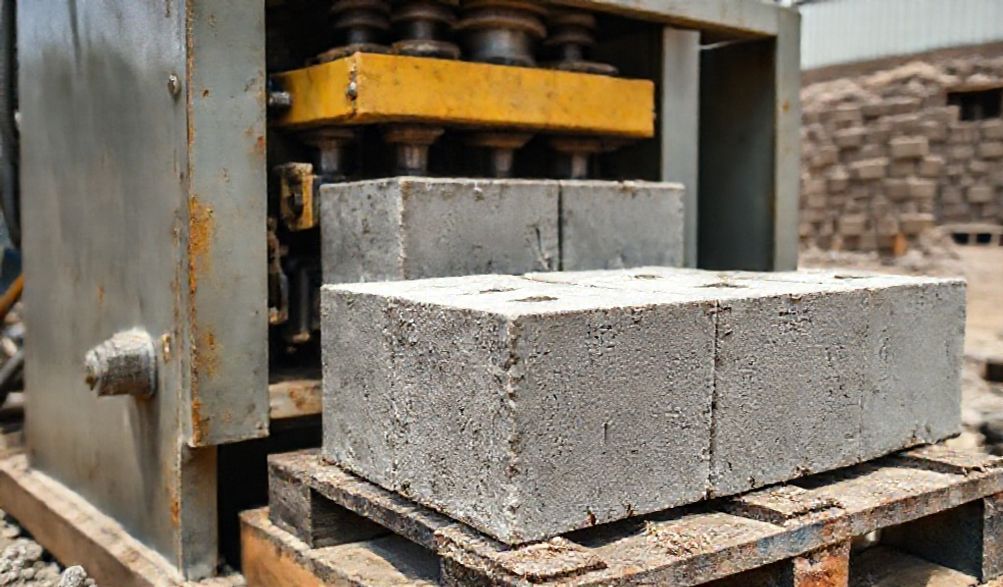
가나의 블록 제조 기계 최종 가이드: 종류, 가격 및 주요 공급업체 (2024년)
소개
가나의 스카이라인이 변모하고 있습니다. 인구 증가, 도시화, 그리고 대규모 인프라 프로젝트에 힘입어 건설 붐이 일어나며, 아크라의 번화한 거리부터 쿠마시와 타말레의 성장하는 도시 중심지까지 변화가 진행 중입니다. 이 모든 구조물의 핵심에는 기본적인 건축 자재인 콘크리트 블록이 자리 잡고 있습니다. 기업가, 계약자, 건설 회사에게 이는 중대한 기회를 제시합니다. 그러나 성공은 올바른 블록 제조 기계 선택이라는 중요한 결정에 달려 있습니다.
가나에서 블록 제작 기계 시장을 탐색하는 것은 복잡할 수 있습니다. 단순한 수동 프레스부터 완전 자동화 공장에 이르기까지 다양한 옵션과 급격히 변동하는 가격 속에서 정보에 기반한 투자를 하는 것이 무엇보다 중요합니다. 본 가이드는 가나 건설 기계 부문과의 수년간 직접 협력을 통해 제작되었습니다. 우리는 시장 동향을 분석하고 전국 공급업체를 검증하며 성공적인 블록 생산자로부터 실용적인 통찰력을 수집했습니다.
우리의 목표는 간단합니다: 여러분에게 포괄적이고, 공정하며, 실용적인 정보를 제공하는 것입니다. 우리는 다양한 유형의 기계에 대한 이해를 돕고, 2024년 가나 세디(GHS) 기준 투명한 가격대를 제시하며, 현지 상황에서 중요한 핵심 기능을 강조하고, 무엇보다 신뢰할 수 있는 공급업체를 식별하는 방법을 보여드릴 것입니다. 이 글이 가나 건설 산업의 미래를 위한 건전하고 수익성 있는 투자로 가는 여러분의 로드맵이 되길 바랍니다.
가나에서 블록 제작 기계에 투자해야 하는 이유는 무엇인가요?
사양과 가격을 살펴보기 전에 '왜'에 대한 이해가 중요합니다. 블록 생산에 투자하는 것은 단순히 기계를 구매하는 것이 아니라, 실질적인 이점이 있는 역동적인 시장에 참여하는 것입니다.
가나 건설 산업 성장: 블록 생산자를 위한 기회
숫자가 모든 것을 말해줍니다. 정부의 인프라(도로, 교량, Saglemi 프로젝트와 같은 저가 주택 사업)에 대한 집중과 활발한 민간 부동산 시장은 건축 자재에 대한 지속적인 수요를 창출합니다. 콘크리트 블록은 비용 효율성, 내구성 및 단열 특성으로 인해 선호되는 벽체 재료로 자리 잡고 있습니다. 생산 능력에 투자함으로써, 귀하는 이러한 가치 사슬 내에서 일관되게 높은 수요가 있는 제품을 공급하는 위치를 차지하게 됩니다.
원기계 구매 대 블록 구매의 비용 편익 분석
계약자들에게 있어서 수치는 매우 설득력이 있습니다. 제3자 공급업체로부터 블록을 구매하는 것은 단순한 비용 지출이지만, 자체 기계를 보유하게 되면 반복적인 지출이 자본 자산으로 전환됩니다. 시간이 지남에 따라 자체 생산한 블록의 단가는 상당히 낮아집니다. 이를 통해 다음과 같은 부분을 통제할 수 있게 됩니다:
* 품질모든 블록이 프로젝트의 특정 강도와 치수 기준을 충족하도록 하십시오.
* 공급외부 공급업체로 인한 지연과 물류 문제를 제거하세요.
* 일정:프로젝트 타임라인에 필요한 시점에 맞춰 블록을 주문 제작하세요.
* 이익 센터초과 생산분은 다른 계약자에게 판매되어 추가 수익원을 창출할 수 있습니다.
지역 발전 및 일자리 창출 지원
개인적인 이익을 넘어, 이 투자는 지역 사회에 승수 효과를 가져옵니다. 블록 생산 기업을 설립하는 것은 소규모라 할지라도 기계 조작원, 노동자, 운전사에게 직접적인 일자리를 창출합니다. 이는 원자재 공급업체(모래, 자갈)부터 운송 서비스에 이르기까지 주변 지역 비즈니스를 활성화시킵니다. 단순히 구조물을 짓는 것이 아니라, 지역 경제의 회복 탄력성과 발전에 기여하는 것입니다.
가나에서 이용 가능한 블록 제조기 종류
"올바른" 기계는 전적으로 귀하의 사업 규모, 예산 및 생산 목표에 따라 달라집니다. 가나 시장에서 구할 수 있는 주요 유형을 다음과 같이 분류해 보았습니다.
수동 블록 제조 기계
- Description & Ideal User: These are hand-operated presses, such as the popular “egg-layer” or stationary manual machines. They are the entry point into the business, ideal for very small-scale startups, individual builders, or community projects with limited capital.
- 출력 용량: Typically 300-800 blocks per 8-hour day, depending on operator efficiency.
- 장점:
- 매우 낮은 초기 투자 비용.
- Simple to understand and operate with minimal training.
- Low maintenance, no reliance on electricity or diesel.
- 단점:
- 매우 노동 집약적이고 육체적으로 힘든 작업입니다.
- Low output unsuitable for commercial contracts.
- Inconsistent block quality if not operated carefully.
반자동 블록 제작 기계
- Description & Ideal User: This category represents the “sweet spot” for most small and medium-sized enterprises (SMEs) in Ghana. These machines use a mechanical or hydraulic system, often with a vibrating table, to compact the concrete. Operation involves manually feeding the mixer and moving pallets or blocks, but the core compaction process is powered.
- 출력 범위: A robust semi-automatic machine can produce between 2,000 to 5,000 blocks in an 8-hour shift.
- 일반적인 블록 유형: They offer excellent versatility with interchangeable moulds for 9″, 6″, and 4″ solid blocks, hollow blocks (often 4-6 inch), and paving bricks (interlocking or standard).
완전 자동 블록 제작 기계
- Description & Ideal User: Designed for large-scale commercial production, these are complete systems. They integrate automatic batching, mixing, conveying, block molding, curing, and stacking. Human intervention is minimal, primarily for monitoring and maintenance.
- Investment Scale: This is a major industrial investment requiring significant capital, space, and a reliable three-phase power supply. Output can exceed 10,000 blocks per day.
- 필수 인프라: A large, paved yard for block curing and storage, and potentially a dedicated shed for the machine and control systems.
Mobile vs. Stationary Block Machines: Which is Better for Your Site?
This is a critical consideration for contractors.
* 모바일 블록 머신: Mounted on a trailer, these can be towed directly to a construction site. This eliminates block transportation costs and damage, ideal for large, remote projects. They are typically diesel-powered.
* 고정식 블록 기계 Set up in a fixed location (a production yard). They are generally more heavy-duty, offer higher output, and benefit from established workflows for material supply and block storage. They are better suited for a dedicated block-selling business.
Key Features to Consider Before Buying
Look beyond the brochure. These features will determine your long-term success and profitability.
Production Capacity (Blocks per Hour/Day): Matching Output to Your Business Plan
Don’t buy based on a theoretical maximum. Consider realistic, sustainable output. A machine rated for 5,000 blocks/day might only achieve 3,500 under normal working conditions. Assess your current and projected demand. Over-investing leads to idle capital; under-investing means missed opportunities.
Block Types and Moulds: Versatility for Market Demand
The ability to produce different block types future-proofs your investment. Ensure the supplier offers a range of standard moulds and that additional moulds can be sourced later. The demand for hollow blocks (lighter, better insulation) and paving bricks for landscaping is growing rapidly in Ghana.
Power Source: Electric, Diesel, or Manual? Considering Ghana’s Power Context
- 전기 Cleaner, quieter, and lower operating cost, but vulnerable to “dumsor” (power outages). A generator backup is almost mandatory.
- 디젤: Higher fuel cost and noise, but offers complete independence from the grid. Essential for mobile machines or areas with unreliable power.
- 매뉴얼: Only for the smallest scale; not feasible for commercial production.
Durability & After-Sales Support: The Most Critical Factor for Ghana
This cannot be overstated. A machine is a long-term asset. Prioritize build quality: thick steel frames, reputable brand hydraulics, and powerful vibration motors. Crucially, after-sales support is more important than the initial price. You must have answers to:
* Where is the supplier’s workshop located?
* Do they stock critical spare parts (springs, shafts, hydraulic seals)?
* What is their response time for technical support?
* Do they provide comprehensive operator training?
Price Range of Block Making Machines in Ghana (2024)
Prices are indicative ranges in Ghana Cedis (GHS) and can vary based on brand, configuration, and supplier. Always get a formal quotation.
Manual Machine Prices (GHS Range)
- Basic Egg-Layer / Manual Press: GHS 3,000 – GHS 8,000
Semi-Automatic Machine Prices (GHS Range)
- Single Mould Stationary Machine: GHS 25,000 – GHS 60,000
- Multi-Mould (3-4) Stationary Machine: GHS 65,000 – GHS 120,000
- Mobile Block Machine (Diesel): GHS 80,000 – GHS 180,000
Fully Automatic Plant Investment Costs (GHS Range)
- This is a custom project. Budget GHS 300,000 to well over GHS 1,000,000+ for a complete setup with mixer, conveyor, block machine, and pallet return system.
Important Note: Factors Affecting Final Price
The sticker price is not the final cost. Factor in:
* 수입 관세 및 세금 If dealing directly with an overseas supplier.
* Shipping and Logistics: Cost of delivery to your site.
* 설치 및 시운전 Some suppliers include this, others charge extra.
* Initial Set of Moulds: Often sold separately.
* Foundation/Setup Costs: For stationary machines.
How to Choose a Reliable Supplier in Ghana
Mitigating risk at this stage saves immense cost and stress later.
Local Dealers vs. Direct Import: A Balanced View
- Local Dealer: Higher price, but you pay for peace of mind. You get local warranty, faster service, available spare parts, and hands-on training. This is the recommended route for most buyers.
- Direct Import (e.g., from China): Lower upfront cost, but high risk. You handle all shipping, customs, and taxes. After-sales support is often slow (via email) or non-existent. Spare parts can take months to arrive.
Vetting Your Supplier: Checklist
Do not buy from a brochure or website alone. Your due diligence must include:
1. Physical Visit: Insist on visiting their showroom or workshop in Accra, Tema, or Kumasi. See the machines.
2. Client References: Ask for contacts of 2-3 recent buyers. Call them. Ask about machine performance and the supplier’s service responsiveness.
3. Spare Parts Inventory: Ask to see their spare parts store. A serious supplier will have common wear parts in stock.
4. 보증 약관: Get the warranty in writing. What is covered (parts/labor)? For how long? What are the terms?
The Importance of Training and Comprehensive After-Sales Service
A proper supplier will provide 1-2 days of training for your operators on-site. This training should cover operation, daily maintenance, and basic troubleshooting. Confirm their service team’s availability and typical response time.
Red Flags to Avoid When Purchasing Machinery
- Supplier who only communicates online with no physical address.
- Unrealistically low prices compared to the market.
- Pressure to pay 100% upfront before delivery.
- Vague or verbal warranty promises.
- Inability to provide local client references.
Top Block Making Machine Brands and Suppliers in Ghana
This is an unbiased overview based on market presence and reputation, not a paid listing.
Overview of Reputable International Brands Available Locally
Several global brands have established a presence through local distributors. These include:
* Zenith (Germany): Known for high-quality, fully automatic plants.
* QGM (Germany/China): Offers a wide range from semi to fully automatic.
* Bess (Turkey): Popular for robust semi-automatic and automatic machines.
* Prensoland (Spain): A premium brand for stationary machines.
* Various Chinese Brands (Hongfa, Lontto, etc.): Offer a wide price range; quality varies significantly, so supplier vetting is critical.
Established Local Ghanaian Distributors and Their Specialties
Numerous well-established Ghanaian companies import, stock, and service these machines. Look for distributors with a long track record (10+ years) in the construction equipment space. Many are clustered in industrial areas of Tema, Accra (Spintex, Industrial Area), and Kumasi. Their specialty often lies in the mid-range semi-automatic and stationary automatic machines that serve the core of the Ghanaian market.
Tips for Getting the Best Quotation and Service Agreement
- Be Specific: Provide your required block types, daily output target, and power source preference.
- Get Multiple Quotes: Approach 3-4 reputable suppliers with the same specifications.
- Compare Apples to Apples: Ensure quotes include the same items (machine, moulds, training, delivery, warranty).
- Negotiate the Service Contract: Discuss and agree on service response times and spare parts availability as part of the deal.
Operating and Maintaining Your Block Machine for Longevity
Your machine’s productivity is directly tied to how you care for it.
Best Practices for Efficient Operation
- Follow the recommended concrete mix design (cement-sand-aggregate ratio) precisely.
- Ensure raw materials are clean and free of debris.
- Keep the machine, especially the moulds and vibration table, clean after every production run.
Routine Maintenance Schedule to Prevent Downtime
- Daily: Lubricate all moving parts as per manual. Check for loose bolts and nuts.
- Weekly: Inspect hydraulic hoses for leaks. Check vibration motor mounts.
- Monthly: Thoroughly clean and inspect the entire machine. Replace any visibly worn parts immediately.
Sourcing Quality Raw Materials (Cement, Sand, Aggregate) in Ghana
Block strength starts with material quality.
* 시멘트: Use fresh, branded cement (GHACEM, Diamond, etc.) from reputable distributors. Avoid damp or clumped cement.
* 모래 Use coarse, sharp sand (from places like Shai Hills) for better bonding. Avoid fine, “silty” sand.
* Aggregate (Quarry Dust/Granite): Ensure it is well-graded and clean. The quality of your aggregate is a major determinant of final block strength.
FAQ Section
Q1: What is the cheapest block making machine I can get in Ghana?
A: The cheapest option is a manual egg-layer or press machine, costing between GHS 3,000 – GHS 8,000. However, be aware of its severe limitations in output and labor requirements. It’s only suitable for very small, personal projects, not a commercial venture.
Q2: How many blocks can a semi-automatic machine produce in a day?
A: A well-operated semi-automatic machine can produce between 2,000 to 5,000 standard 9-inch blocks in an 8-hour shift. The actual yield depends on the machine model, number of operators, efficiency of the workflow, and block type (smaller blocks like 4″ or pavers can have higher counts).
Q3: Can I get a loan or financing for a block machine in Ghana?
A: Yes, options exist. Some equipment suppliers offer in-house installment plans. Alternatively, you can explore business loans from banks or microfinance institutions. A solid business plan is essential for loan approval.
Q4: What is the most common problem with block machines in Ghana, and how do I fix it?
A: A common issue is blocks sticking to the moulds or breaking during ejection. This is often caused by insufficient vibration time, an incorrect or wet concrete mix, or worn/dirty moulds. The fix is to adjust the mix consistency, ensure proper compaction time, and regularly clean and apply a recommended mould oil. For persistent mechanical issues, always contact your supplier’s service team.
Q5: Are there any government regulations or standards for block production in Ghana?
A: Yes. The Ghana Standards Authority (GSA) has guidelines for concrete blocks (e.g., GS 719). These specify required compressive strengths for load-bearing and non-load-bearing blocks. Adhering to these standards is crucial for producing quality, marketable blocks, especially for official projects.
결론
Investing in a block making machine in Ghana is a strategic decision with the potential for significant reward. The journey begins with a clear understanding of your own needs and the local market dynamics. Remember, the goal is not to find the cheapest machine, but the most appropriate and reliable one for your business scale.
Prioritize durability and, above all, proven after-sales support from your supplier. The relationships you build with a trustworthy distributor are as valuable as the machine itself. We encourage you to use this guide as a foundation for your research. Visit multiple suppliers, inspect their machines, talk to their past clients, and ask detailed questions.
Arm yourself with this knowledge, and you will be equipped to make a confident, profitable investment that contributes to building Ghana, one block at a time.
<