
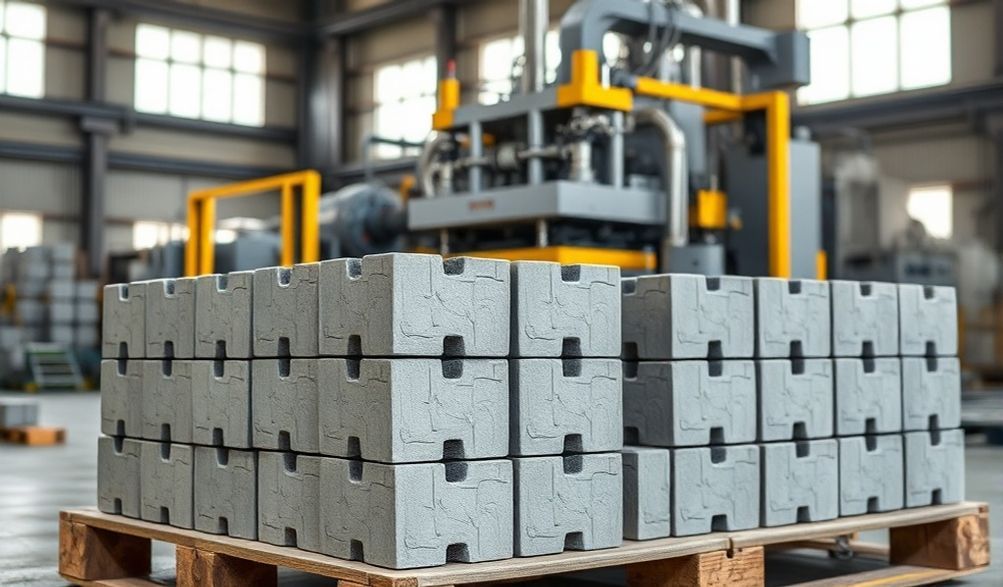
콘크리트 블록 제조기 구매 최종 가이드 (2024년)
소개
수익성 있는 건설 사업을 구축하거나 생산 역량을 확장하려고 하시나요? 적합한 콘크리트 블록 제조 기계는 가장 중요한 투자입니다. 이는 작업의 엔진과 같아, 생산량, 제품 품질, 그리고 궁극적으로 수익성을 결정합니다. 그러나 판매 중인 다양한 기계 시장을 탐색하는 것은 기술 용어와 상당한 재정적 위험으로 가득한 어려운 작업일 수 있습니다.
이 포괄적인 2024 가이드는 수십 년간의 업계 경험을 바탕으로 여러분의 믿을 수 있는 로드맵이 되어 줄 것입니다. 우리는 복잡함을 걷어내고 여러분이 정확히 무엇을 찾아야 하는지 이해하는 데 도움을 드리겠습니다.콘크리트 블록 제조 기계 판매여러분은 특정 목표에 맞는 기계 유형을 선택하는 방법, 가격 결정 요소를 해석하는 방법, 제조업체를 비판적인 시각으로 평가하는 방법, 그리고 비용이 많이 드는 일반적인 함정을 피하는 방법을 배우게 될 것입니다. 마지막에는 향후 수년간 성장을 뒷받침할 정보에 기반한 확신에 찬 구매 결정을 내릴 수 있게 될 것입니다.
콘크리트 블록 제작 기계 이해하기: 종류와 응용 분야
사양과 가격을 살펴보기 전에, 사용 가능한 기계의 기본 분류를 이해하는 것이 중요합니다. 올바른 선택은 생산 규모, 예산, 그리고 인력 운영 전략에 달려 있습니다.
수동 vs 반자동 vs 완전 자동 블록 기계
자동화 수준은 블록 머신의 주요 차별화 요소로, 생산량, 인건비 및 초기 투자에 직접적인 영향을 미칩니다.
-
수동 블록 제작 기계:
- 작전:완전히 인력으로 작동합니다. 작업자가 직접 몰드를 채우고, 레버를 사용하여 콘크리트를 압축한 후, 블록을 탈형합니다.
- 노동 및 산출:높은 노동 집약도, 매우 낮은 생산량(일일 100-500 블록 생산). 1-2명의 작업자에게 적합합니다.
- 전문가 추천:초소규모 스타트업, 지역사회 프로젝트, 또는 전력 공급이 제한되고 자본이 부족한 외딴 지역에 이상적입니다. 이는 저위험 진입점이지만 상업적 규모의 생산에는 적합하지 않습니다.
-
반자동 블록 제작 기계:
- 작전:핵심 압축 공정을 기계화(진동 및 유압을 통해)하지만 원자재의 수동 공급과 완성된 블록의 제거/팔레타이징은 수작업이 필요합니다.
- 노동 및 산출:중간 정도의 노동력 필요(2~4명), 우수한 생산량(모델에 따라 8시간 교대당 1,000~6,000개 이상의 블록 생산).
- 전문가 추천:대부분의 중소기업에 딱 맞는 선택입니다. 가격 대비 성능, 생산 속도 향상, 블록 품질 일관성 사이에서 탁월한 균형을 제공합니다. 수작업에서 규모를 확장하려는 기업에 완벽합니다.
-
완전 자동 블록 제작 기계:
- 작전:전적으로 PLC(프로그램 가능 논리 제어기) 시스템을 통해 자동화되어 있습니다. 자동 재료 공급, 성형, 압축, 경화 및 적층 기능을 갖추고 있으며, 종종 완전한 생산 라인의 일부로 구성됩니다.
- 노동 및 산출: Minimal labor (for supervision and maintenance), very high output (8,000 to 20,000+ blocks per shift).
- 전문가 추천: Reserved for large-scale commercial plants and high-volume contracts. The significant capital investment is justified by unmatched efficiency, lower per-unit cost, and superior consistency. Requires reliable power and more sophisticated maintenance.
고정식 블록 제조기 대 이동식 블록 제조기
This distinction relates to the machine’s mobility and installation footprint.
-
고정식 블록 제조 기계
- These are fixed installations, typically mounted on a solid concrete foundation in a factory or dedicated yard.
- They are generally more robust, powerful, and capable of higher production volumes.
- 신청 The standard choice for permanent block manufacturing plants supplying a regional market.
-
Mobile Block Making Machines (or “Egg-Layers”):
- These units are mounted on wheels or a trailer. They produce blocks directly on the ground or on a concrete slab, then move forward to lay the next batch.
- They are simpler, often require less foundation work, and are highly portable.
- 신청 Excellent for on-site production for large construction projects (e.g., building a housing complex) where transporting blocks is costly. They eliminate transport damage and costs.
Key Products: What Can You Manufacture?
Your business potential isn’t limited to standard blocks. Machine versatility, determined by its mold system, defines your product catalog.
- 홀로우 블록: The most common product for construction, offering excellent strength-to-weight ratio and insulation.
- 단단한 블록: Used for heavier load-bearing applications and paving.
- 포장 슬래브 및 인터로킹 포장재: For driveways, walkways, and patios. A high-demand market in landscaping and municipal work.
- 연석과 경계석: Essential for road construction and landscaping projects.
- 특수 모양: Interlocking blocks for retaining walls, chimney blocks, and decorative landscaping units.
전문가 통찰: When evaluating a 콘크리트 블록 제조 기계 판매, inquire about the mold compatibility and cost. A machine that allows for quick mold changes with a wide range of available mold designs enables you to pivot with market demands and capture diverse revenue streams.
구매하기 전에 고려해야 할 핵심 요소들
Armed with an understanding of machine types, you must now drill down into the specifics that separate a wise investment from a costly mistake.
생산 능력 및 산출 요구 사항
Don’t just look at the “maximum” output in a brochure. Think practically.
- Cycles per Hour & Blocks per Cycle: Multiply these figures to get the theoretical hourly output. A machine with a 10-second cycle time producing 4 blocks per cycle can theoretically make 1,440 blocks per hour.
- Real-World Calculation: Deduct time for mold changes, maintenance breaks, material loading delays, and operator shifts. A realistic daily output is often 70-80% of the theoretical maximum.
- 목표에 맞추기 Align the machine’s realistic output with your current orders and projected growth for the next 3-5 years. Buying slightly more capacity than you need today is often smarter than outgrowing a machine too quickly.
Machine Specifications & Technical Details
These are the nuts and bolts that determine performance and longevity.
- 압력 (톤수): Higher compaction pressure (measured in tons) generally produces denser, stronger blocks. For standard hollow blocks, machines range from 50 to 400+ tons.
- 전력 요구 사항 Manuals may need no power, while semi-automatics often use a standard 3-phase motor (e.g., 380V/50Hz or 440V/60Hz). Verify your local power supply.
- 진동 시스템 This is critical for compacting the concrete and releasing air bubbles. Look for durable, high-frequency vibrators mounted effectively within the mold table.
- 제어 시스템 From simple relay logic to touch-screen PLCs. More advanced controls offer precision, diagnostic tools, and easier operation.
- Trust Factor: Always ask about the availability of technical manuals, wiring diagrams, and spare parts lists. A supplier’s reluctance to provide these is a major red flag.
Quality of Construction & Key Components
This is where “you get what you pay for” becomes starkly real.
- 프레임과 구조 The frame should be made from heavy-duty, reinforced steel plate to withstand constant vibration and pressure without warping.
- 유압 시스템: The heart of an automatic machine. Look for reputable component brands (e.g., Bosch Rexroth, Parker, Yuken) and a well-designed, accessible system with proper filtration and cooling.
- 곰팡이: These are high-wear items. They should be made from hardened, high-chrome steel for longevity and precise block dimensions.
- Authoritative Benchmark: Reputable manufacturers will often build to recognized standards (like ISO) and can provide material certificates for critical components. Don’t hesitate to ask for them.
Space, Logistics, and Foundation Needs
A machine isn’t just the machine itself.
- Factory Space: You need space for the machine, raw material storage (aggregates, cement), a mixing area, a curing area, and finished product storage. Include space for forklift movement.
- 기반 Most stationary machines require a solid, level concrete foundation of specified thickness to absorb vibrations. The supplier should provide detailed foundation drawings.
- Logistics: Consider the machine’s shipping dimensions and weight. Do you have access for a delivery truck? Do you need a crane or heavy forklift for unloading and placement?
Navigating the Market: Cost, Suppliers, and Selection
This is the phase where due diligence separates successful buyers from regretful ones.
Concrete Block Making Machine Price Ranges
Prices vary astronomically based on the factors we’ve discussed. Here’s a transparent 2024 overview:
- 수동 기계: $1,000 – $5,000 USD.
- 반자동 기계: $8,000 – $50,000+ USD. A robust, mid-capacity model for SME production typically starts around $15,000-$25,000.
- Fully Automatic Machines / Production Lines: $50,000 – $300,000+ USD. Single-pallet fully automatic machines start around $50k-$80k, while large multi-pallet lines with full automation can reach several hundred thousand.
Critical Expertise Note: The initial purchase price is just one part of the Total Cost of Ownership (TCO). A cheaper, poorly supported machine can cost far more in downtime, repair costs, and lost production than a higher-quality, well-supported alternative.
How to Choose a Reputable Manufacturer or Supplier
Your relationship with the supplier is as important as the machine itself. Use this checklist:
- Company History & Reputation: How long have they been in business? Search for their brand name online alongside keywords like “review,” “problem,” or “service.” A 10+ year track record is a good sign.
- Quality Evidence: Do they have quality management certifications (ISO)? Can they provide test reports or videos of the machine in operation? Will they share material certificates for key parts?
- After-Sales Support Structure: This is non-negotiable. Do they have technical support staff? What is the warranty period and what does it cover? Is there a stock of commonly needed spare parts? Do they offer installation supervision and operator training?
- Transparency & References: A trustworthy supplier will be proud to connect you with previous customers in your region or a similar industry. They should also be open to a factory visit or a live video tour of their production facility.
- Red Flags: Extremely low prices, pressure to pay via insecure methods, vague company addresses, inability to communicate clearly in your language, and no physical contact details.
New vs. Used Concrete Block Making Machines
A used machine can be a great value—or a money pit.
- New Machine Pros: Full warranty, latest technology, customized to your needs, reliable performance from day one.
- Used Machine Pros: Lower upfront cost, potential for faster delivery, depreciation already absorbed.
- Used Machine Inspection Checklist:
- Hours/Cycles: Check the machine’s service hour meter or get an estimate of total production cycles.
- Physical Inspection: Look for cracks in the frame, signs of weld repairs, hydraulic oil leaks, and excessive wear on molds and vibrators.
- Test Run: 항상 insist on seeing the machine under power, producing blocks. Listen for unusual noises in the hydraulics or vibrations.
- Documentation: Request the original manuals, part lists, and maintenance history.
Maximizing Your Investment: Operation and Beyond
Your new machine is the centerpiece, but its success depends on the ecosystem around it.
Essential Auxiliary Equipment
Rarely does a machine work in isolation. Consider these for an efficient line:
- 콘크리트 믹서: A pan mixer or planetary mixer ensures a consistent, homogenous mix, which is vital for block quality.
- 컨베이어 시스템: Transports mixed concrete to the machine hopper, saving labor and time.
- 팔레트 피더/순환 시스템: Automatic systems move pallets in and out of the machine, crucial for high-output automation.
- Block Curing System: This can be a simple rack system in a sheltered yard or a sophisticated steam curing chamber for faster strength gain.
- Forklift or Block Clamp: Essential for handling raw materials and moving stacks of finished blocks.
Raw Material Considerations for Optimal Blocks
The machine can only form what you feed it.
- Mix Design: A proper ratio of cement, sand, aggregate (gravel or crushed stone), and water is critical. The water-cement ratio directly affects strength.
- Aggregate Size: Must be compatible with your mold dimensions—typically between 5mm and 10mm for standard blocks.
- 일관성이 핵심입니다 Variations in raw material quality or moisture content will lead to inconsistent block density and strength, causing production issues and customer complaints.
The Importance of After-Sales Support
The sale is the beginning of the relationship, not the end.
- 설치 및 시운전: Professional setup ensures the machine is level, calibrated, and operating safely from the start.
- 종합 훈련 Operators must be trained not just on how to run the machine, but on basic troubleshooting, daily maintenance, and safety protocols.
- Warranty & Long-Term Support: Understand the response time for technical queries. How quickly can they ship a critical spare part? A supplier with a strong support network is investing in your long-term success.
자주 묻는 질문 (FAQ)
Q: What is the average cost of a concrete block making machine for sale?
A: As detailed above, there’s no single “average.” Prices range from around $1,000 for a basic manual model to well over $200,000 for a high-capacity, fully automatic production line. Your final cost depends on automation level, capacity, brand, and included support.
Q: How many blocks can a standard machine produce per day?
A: Output varies dramatically. A 반자동 기계 might produce 2,000 to 6,000 standard hollow blocks in an 8-hour shift. A fully automatic single-pallet machine can produce 8,000 to 15,000, while large multi-pallet lines can exceed 20,000 blocks per day.
Q: Can one machine produce different block types and sizes?
A: Yes, absolutely. This is achieved through 교환 가능한 몰드. However, factor in the cost of additional molds and the time required for mold changeover, which can temporarily halt production.
Q: What kind of power supply is needed?
A: It depends entirely on the machine. Small manuals may need none. Semi-automatic and automatic machines almost always require a three-phase industrial power supply (commonly 380V/50Hz or 440V/60Hz). Always confirm the exact voltage and power (kW) requirements with the supplier before purchase.
Q: How do I ensure I’m choosing a trustworthy supplier?
A: Follow the checklist in the guide: verify their business history, ask for quality certifications, demand details on after-sales service and spare parts, and always request customer references or a factory visit. A reputable company will be transparent and eager to prove its credibility.
결론
Purchasing a 콘크리트 블록 제조 기계 판매 is a pivotal decision that hinges on careful planning and informed selection. We’ve walked through the essential pillars: defining your production needs and scale, understanding the core differences between manual, semi-automatic, and automatic systems, and prioritizing durable construction and robust after-sales support over price alone.
Remember, this machine is a long-term partner in your business growth. The most cost-effective choice isn’t the cheapest sticker price, but the machine—backed by a reputable supplier—that delivers reliable, efficient production for years with minimal downtime. Thorough research and partnering with experienced, trustworthy experts are the true foundations of your success in the block manufacturing industry.
Ready to take the next step? Browse our curated selection of verified, high-performance concrete block making machines for sale, or contact our team of technical experts today for a free, no-obligation consultation tailored to your project goals.
<