
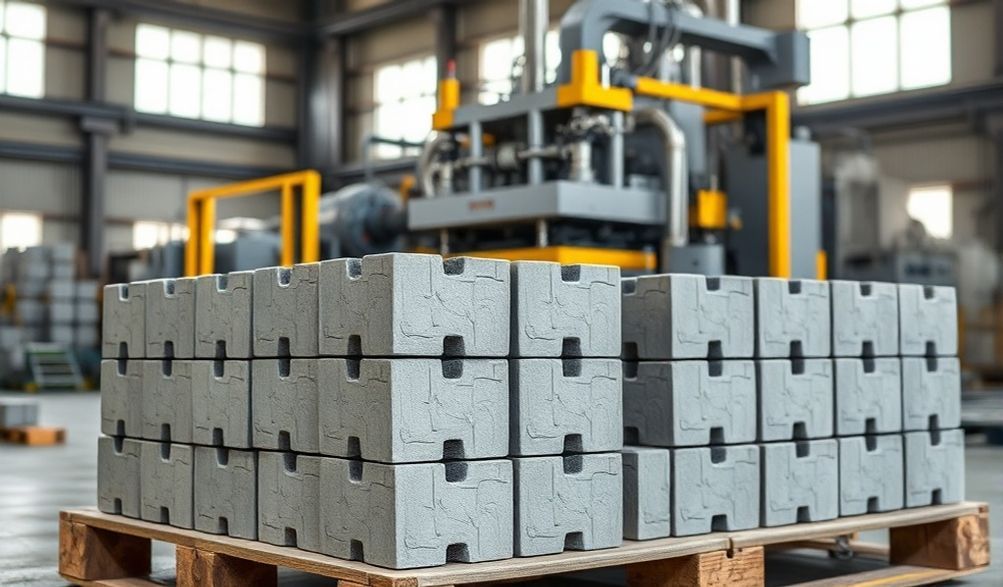
Hướng Dẫn Toàn Diện Để Mua Máy Sản Xuất Gạch Bê Tông Đang Bán (2024)
Giới thiệu
Xây dựng một doanh nghiệp xây dựng sinh lời hay mở rộng năng lực sản xuất? Máy đúc gạch bê tông phù hợp là khoản đầu tư quan trọng nhất của bạn. Đó là động cơ vận hành, quyết định sản lượng, chất lượng sản phẩm và cuối cùng là lợi nhuận của bạn. Tuy nhiên, việc tìm hiểu thị trường rộng lớn các máy móc đang bán có thể là một nhiệm vụ khó khăn, đầy rẫy thuật ngữ kỹ thuật và rủi ro tài chính đáng kể.
Hướng dẫn toàn diện năm 2024 này, được đúc kết từ nhiều thập kỷ kinh nghiệm trong ngành, sẽ là lộ trình đáng tin cậy của bạn. Chúng tôi sẽ loại bỏ mọi sự phức tạp để giúp bạn hiểu rõ chính xác những gì cần tìm kiếm trong mộtmáy làm khối bê tông để bánBạn sẽ học cách lựa chọn loại máy phù hợp với mục tiêu cụ thể, giải mã các yếu tố định giá, đánh giá nhà sản xuất bằng con mắt phân tích, và tránh những sai lầm phổ biến gây tốn kém. Đến cuối cùng, bạn sẽ được trang bị để đưa ra quyết định mua hàng sáng suốt và tự tin, thúc đẩy sự phát triển của mình trong nhiều năm tới.
Tìm Hiểu Về Máy Sản Xuất Gạch Bê Tông: Các Loại và Ứng Dụng
Trước khi đi sâu vào thông số kỹ thuật và giá cả, điều quan trọng là phải hiểu các danh mục cơ bản của các loại máy móc hiện có. Lựa chọn phù hợp phụ thuộc vào quy mô sản xuất, ngân sách và chiến lược nhân công của bạn.
Máy Định Hình Khối Thủ Công So Với Bán Tự Động So Với Tự Động Hoàn Toàn
Mức độ tự động hóa là yếu tố khác biệt chính trong máy sản xuất khối, ảnh hưởng trực tiếp đến sản lượng, chi phí nhân công và vốn đầu tư ban đầu.
-
Máy Làm Gạch Thủ Công:
- Hoạt động:Hoàn toàn dựa vào sức người. Các công nhân thủ công đổ đầy khuôn, nén bê tông (thường thông qua một đòn bẩy), và tháo khuôn khỏi khối.
- Lao động & Sản lượng:Cường độ lao động cao, sản lượng rất thấp (thường từ 100-500 khối mỗi ngày). Phù hợp cho 1-2 người vận hành.
- Khuyến nghị của chuyên gia:Lý tưởng cho các dự án khởi nghiệp quy mô rất nhỏ, dự án cộng đồng hoặc ở khu vực xa xôi với nguồn điện hạn chế và vốn ít. Chúng là điểm khởi đầu ít rủi ro nhưng không phù hợp cho sản xuất thương mại với khối lượng lớn.
-
Máy Làm Gạch Bán Tự Động:
- Hoạt động:Cơ giới hóa quy trình nén lõi (thông qua rung và áp lực thủy lực) nhưng vẫn yêu cầu cấp liệu thô thủ công và tháo dỡ/xếp pallet các khối thành phẩm.
- Lao động & Sản lượng:Yêu cầu lao động vừa phải (2-4 người), sản lượng tốt (1.000 đến 6.000+ khối mỗi ca 8 giờ, tùy theo mẫu máy).
- Khuyến nghị của chuyên gia:Điểm lý tưởng cho hầu hết các doanh nghiệp vừa và nhỏ (SME). Chúng mang lại sự cân bằng tuyệt vời giữa giá cả phải chăng, tốc độ sản xuất được cải thiện và tính ổn định về chất lượng khối. Hoàn hảo cho các doanh nghiệp muốn mở rộng quy mô từ hoạt động thủ công.
-
Máy Làm Gạch Tự Động Hoàn Toàn:
- Hoạt động:Hoàn toàn tự động hóa thông qua hệ thống PLC (Bộ điều khiển logic khả trình). Chúng có tính năng cấp liệu tự động, đúc khuôn, nén chặt, xử lý nhiệt và xếp chồng. Thường là một phần của dây chuyền sản xuất hoàn chỉnh.
- Lao động & Sản lượng:Tốn ít lao động (cho việc giám sát và bảo trì), năng suất rất cao (8.000 đến 20.000+ khối mỗi ca).
- Khuyến nghị của chuyên gia:专门用于大规模商业种植和高产量合同。通过无与伦比的效率、更低的单位成本和卓越的一致性,证明了大量资本投资的合理性。需要可靠的电力供应和更复杂的维护。
Máy Đúc Khối Cố Định So Với Máy Đúc Khối Di Động
Sự khác biệt này liên quan đến tính di động và diện tích lắp đặt của máy.
-
Máy Sản Xuất Gạch Block Cố Định:
- 这些都是固定安装的设备,通常安装在工厂或专用场地的坚固混凝土地基上。
- Chúng thường mạnh mẽ hơn, có sức mạnh lớn hơn và có khả năng đạt sản lượng cao hơn.
- Ứng dụng:服务于区域市场的永久性砌块生产厂的标准选择。
-
Máy làm gạch di động (hay còn gọi “Máy đẻ trứng”):
- 这些设备安装在轮子或拖车上。它们直接在地面或混凝土板上生产砌块,然后向前移动以进行下一批铺设。
- They are simpler, often require less foundation work, and are highly portable.
- Ứng dụng: Excellent for on-site production for large construction projects (e.g., building a housing complex) where transporting blocks is costly. They eliminate transport damage and costs.
Key Products: What Can You Manufacture?
Your business potential isn’t limited to standard blocks. Machine versatility, determined by its mold system, defines your product catalog.
- Gạch rỗng: The most common product for construction, offering excellent strength-to-weight ratio and insulation.
- Khối Đặc Used for heavier load-bearing applications and paving.
- Gạch lát vỉa hè & Gạch lát liên kết: For driveways, walkways, and patios. A high-demand market in landscaping and municipal work.
- Curb Stones & Kerbs: Essential for road construction and landscaping projects.
- Hình Dạng Chuyên Biệt: Interlocking blocks for retaining walls, chimney blocks, and decorative landscaping units.
Chuyên Gia Phân Tích: When evaluating a máy làm khối bê tông để bán, inquire about the mold compatibility and cost. A machine that allows for quick mold changes with a wide range of available mold designs enables you to pivot with market demands and capture diverse revenue streams.
Các Yếu Tố Quan Trọng Cần Xem Xét Trước Khi Mua Hàng
Armed with an understanding of machine types, you must now drill down into the specifics that separate a wise investment from a costly mistake.
Năng Lực Sản Xuất & Yêu Cầu Đầu Ra
Don’t just look at the “maximum” output in a brochure. Think practically.
- Cycles per Hour & Blocks per Cycle: Multiply these figures to get the theoretical hourly output. A machine with a 10-second cycle time producing 4 blocks per cycle can theoretically make 1,440 blocks per hour.
- Real-World Calculation: Deduct time for mold changes, maintenance breaks, material loading delays, and operator shifts. A realistic daily output is often 70-80% of the theoretical maximum.
- Matching to Goals: Align the machine’s realistic output with your current orders and projected growth for the next 3-5 years. Buying slightly more capacity than you need today is often smarter than outgrowing a machine too quickly.
Machine Specifications & Technical Details
These are the nuts and bolts that determine performance and longevity.
- Áp lực (Tấn lực): Higher compaction pressure (measured in tons) generally produces denser, stronger blocks. For standard hollow blocks, machines range from 50 to 400+ tons.
- Yêu cầu về nguồn điện: Manuals may need no power, while semi-automatics often use a standard 3-phase motor (e.g., 380V/50Hz or 440V/60Hz). Verify your local power supply.
- Hệ thống Rung This is critical for compacting the concrete and releasing air bubbles. Look for durable, high-frequency vibrators mounted effectively within the mold table.
- Hệ Thống Điều Khiển: From simple relay logic to touch-screen PLCs. More advanced controls offer precision, diagnostic tools, and easier operation.
- Trust Factor: Always ask about the availability of technical manuals, wiring diagrams, and spare parts lists. A supplier’s reluctance to provide these is a major red flag.
Quality of Construction & Key Components
This is where “you get what you pay for” becomes starkly real.
- Khung & Cấu trúc The frame should be made from heavy-duty, reinforced steel plate to withstand constant vibration and pressure without warping.
- Hệ thống thủy lực: The heart of an automatic machine. Look for reputable component brands (e.g., Bosch Rexroth, Parker, Yuken) and a well-designed, accessible system with proper filtration and cooling.
- Khuôn mẫu: These are high-wear items. They should be made from hardened, high-chrome steel for longevity and precise block dimensions.
- Authoritative Benchmark: Reputable manufacturers will often build to recognized standards (like ISO) and can provide material certificates for critical components. Don’t hesitate to ask for them.
Space, Logistics, and Foundation Needs
A machine isn’t just the machine itself.
- Factory Space: You need space for the machine, raw material storage (aggregates, cement), a mixing area, a curing area, and finished product storage. Include space for forklift movement.
- Foundation: Most stationary machines require a solid, level concrete foundation of specified thickness to absorb vibrations. The supplier should provide detailed foundation drawings.
- Logistics: Consider the machine’s shipping dimensions and weight. Do you have access for a delivery truck? Do you need a crane or heavy forklift for unloading and placement?
Navigating the Market: Cost, Suppliers, and Selection
This is the phase where due diligence separates successful buyers from regretful ones.
Concrete Block Making Machine Price Ranges
Prices vary astronomically based on the factors we’ve discussed. Here’s a transparent 2024 overview:
- Máy Móc Thủ Công: $1,000 – $5,000 USD.
- Máy Bán Tự Động: $8,000 – $50,000+ USD. A robust, mid-capacity model for SME production typically starts around $15,000-$25,000.
- Fully Automatic Machines / Production Lines: $50,000 – $300,000+ USD. Single-pallet fully automatic machines start around $50k-$80k, while large multi-pallet lines with full automation can reach several hundred thousand.
Critical Expertise Note: The initial purchase price is just one part of the Total Cost of Ownership (TCO). A cheaper, poorly supported machine can cost far more in downtime, repair costs, and lost production than a higher-quality, well-supported alternative.
How to Choose a Reputable Manufacturer or Supplier
Your relationship with the supplier is as important as the machine itself. Use this checklist:
- Company History & Reputation: How long have they been in business? Search for their brand name online alongside keywords like “review,” “problem,” or “service.” A 10+ year track record is a good sign.
- Quality Evidence: Do they have quality management certifications (ISO)? Can they provide test reports or videos of the machine in operation? Will they share material certificates for key parts?
- After-Sales Support Structure: This is non-negotiable. Do they have technical support staff? What is the warranty period and what does it cover? Is there a stock of commonly needed spare parts? Do they offer installation supervision and operator training?
- Transparency & References: A trustworthy supplier will be proud to connect you with previous customers in your region or a similar industry. They should also be open to a factory visit or a live video tour of their production facility.
- Red Flags: Extremely low prices, pressure to pay via insecure methods, vague company addresses, inability to communicate clearly in your language, and no physical contact details.
New vs. Used Concrete Block Making Machines
A used machine can be a great value—or a money pit.
- New Machine Pros: Full warranty, latest technology, customized to your needs, reliable performance from day one.
- Used Machine Pros: Lower upfront cost, potential for faster delivery, depreciation already absorbed.
- Used Machine Inspection Checklist:
- Hours/Cycles: Check the machine’s service hour meter or get an estimate of total production cycles.
- Physical Inspection: Look for cracks in the frame, signs of weld repairs, hydraulic oil leaks, and excessive wear on molds and vibrators.
- Test Run: Luôn luôn insist on seeing the machine under power, producing blocks. Listen for unusual noises in the hydraulics or vibrations.
- Tài liệu: Request the original manuals, part lists, and maintenance history.
Maximizing Your Investment: Operation and Beyond
Your new machine is the centerpiece, but its success depends on the ecosystem around it.
Essential Auxiliary Equipment
Rarely does a machine work in isolation. Consider these for an efficient line:
- Máy trộn bê tông: A pan mixer or planetary mixer ensures a consistent, homogenous mix, which is vital for block quality.
- Hệ thống băng tải: Transports mixed concrete to the machine hopper, saving labor and time.
- Hệ Thống Cấp Phôi/Bàn Xoay Pallet Automatic systems move pallets in and out of the machine, crucial for high-output automation.
- Block Curing System: This can be a simple rack system in a sheltered yard or a sophisticated steam curing chamber for faster strength gain.
- Forklift or Block Clamp: Essential for handling raw materials and moving stacks of finished blocks.
Raw Material Considerations for Optimal Blocks
The machine can only form what you feed it.
- Mix Design: A proper ratio of cement, sand, aggregate (gravel or crushed stone), and water is critical. The water-cement ratio directly affects strength.
- Aggregate Size: Must be compatible with your mold dimensions—typically between 5mm and 10mm for standard blocks.
- Consistency is Key: Variations in raw material quality or moisture content will lead to inconsistent block density and strength, causing production issues and customer complaints.
The Importance of After-Sales Support
The sale is the beginning of the relationship, not the end.
- Lắp đặt & Vận hành: Professional setup ensures the machine is level, calibrated, and operating safely from the start.
- Đào tạo Toàn diện: Operators must be trained not just on how to run the machine, but on basic troubleshooting, daily maintenance, and safety protocols.
- Warranty & Long-Term Support: Understand the response time for technical queries. How quickly can they ship a critical spare part? A supplier with a strong support network is investing in your long-term success.
Các Câu Hỏi Thường Gặp (FAQ)
Q: What is the average cost of a concrete block making machine for sale?
A: As detailed above, there’s no single “average.” Prices range from around $1,000 for a basic manual model to well over $200,000 for a high-capacity, fully automatic production line. Your final cost depends on automation level, capacity, brand, and included support.
Q: How many blocks can a standard machine produce per day?
A: Output varies dramatically. A máy bán tự động might produce 2,000 to 6,000 standard hollow blocks in an 8-hour shift. A fully automatic single-pallet machine can produce 8,000 to 15,000, while large multi-pallet lines can exceed 20,000 blocks per day.
Q: Can one machine produce different block types and sizes?
A: Yes, absolutely. This is achieved through interchangeable molds. However, factor in the cost of additional molds and the time required for mold changeover, which can temporarily halt production.
Q: What kind of power supply is needed?
A: It depends entirely on the machine. Small manuals may need none. Semi-automatic and automatic machines almost always require a three-phase industrial power supply (commonly 380V/50Hz or 440V/60Hz). Always confirm the exact voltage and power (kW) requirements with the supplier before purchase.
Q: How do I ensure I’m choosing a trustworthy supplier?
A: Follow the checklist in the guide: verify their business history, ask for quality certifications, demand details on after-sales service and spare parts, and always request customer references or a factory visit. A reputable company will be transparent and eager to prove its credibility.
Conclusion
Purchasing a máy làm khối bê tông để bán is a pivotal decision that hinges on careful planning and informed selection. We’ve walked through the essential pillars: defining your production needs and scale, understanding the core differences between manual, semi-automatic, and automatic systems, and prioritizing durable construction and robust after-sales support over price alone.
Remember, this machine is a long-term partner in your business growth. The most cost-effective choice isn’t the cheapest sticker price, but the machine—backed by a reputable supplier—that delivers reliable, efficient production for years with minimal downtime. Thorough research and partnering with experienced, trustworthy experts are the true foundations of your success in the block manufacturing industry.
Ready to take the next step? Browse our curated selection of verified, high-performance concrete block making machines for sale, or contact our team of technical experts today for a free, no-obligation consultation tailored to your project goals.
<