
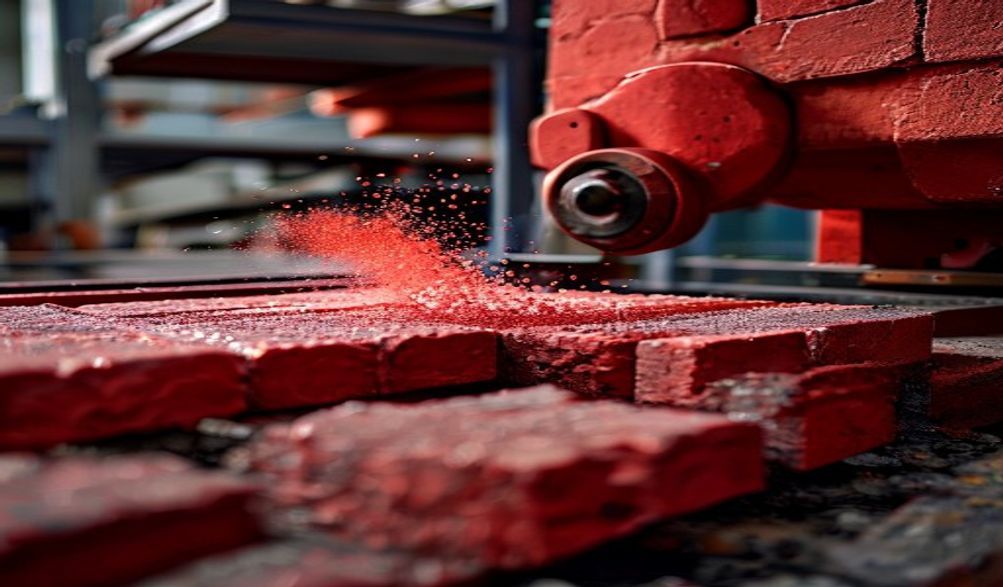
Quomodo Eligere Rectum Machinam Laterum Fictilium Faciendorum Venalem: Emptoris Ductor 2026
Introductio
In mundo aedificationis, laterculus humilis manet testimonium perenne firmitatis et fiduciae. A fundamentis muris ad facies decorativas, qualitas laterculi integritatem totius operis decernit. Pro negotiatoribus et dominis negotiorum, cardo qualitatis talis producendae non solum argilla est—sed machina quae eam transformat. Eligere machinam aptam ad laterculos faciendos venalem est investitio una maxime critica quam facies, quae productivitatem, qualitatem operis, et denique lucrum tuum determinat.
Ex decem annorum usu, quo clientes in constitutione officinarum latericiorum per orbem terrarum monuimus, intellegimus regionem esse implicatam. Cum mercatu globali obviam eamus, qui innumerabiles exempla, specificationes, et suppeditatores habet, qui omnia pollicentur, opprimi possumus. Electionem sine scientia facere non modo sumptuosa est, sed etiam periculum consilii, quod negotium tuum morari potest antequam incipere incipiat.
Hic ductor ad tumultum resecandum comparatus est. Habe eum veluti certum tibi manuale gradatim factum ad processum emptionis peragendum. Nos ultra libellos venditionis progrediemur et in considerationes practicas, technicas, oeconomicasque, quae vere moment, penitus introibimus. In fine, scientia instructus eris ad collocandum pecuniam consulte et confidenter—machinam quae cum propositis productionis tuis peculiaribus, materiae primae, et sumptu perfecte congruat. Incipiamus iter tuum.Quomodo machinam latericiam fictilem ad vendendum eligerequod fundamentum tuae prosperitatis aedificat.
Intellectio Tuarum Opificiorum Necessitatum et Propositorum
Before you look at a single machine specification, you must look inward. The most common and costly mistake is buying a machine based on a flashy feature or attractive price tag, only to find it’s a mismatch for your actual operation. This foundational step is where your business plan meets the factory floor.
Assessing Your Daily/Annual Production Volume
Output capacity is the engine of your business model. You must calculate a realistic target, not just a hopeful maximum.
- For Small-Scale/Startup Operations: Are you supplying a local community or undertaking specific projects? A realistic target might be 1,000 to 5,000 bricks per day. Here, manual or semi-automatic machines offer a lower entry cost.
- For Medium Enterprises: If you’re aiming to supply regional distributors or larger construction firms, your target may range from 8,000 to 25,000 bricks per day. This zone typically requires semi-automatic or fully automatic systems.
- For Large Factory Setups: High-volume production exceeding 30,000 bricks per day demands fully automated production lines with integrated handling, stacking, and curing systems.
Pro Tip from Experience: Always plan for scalability. Choose a machine that can meet your initial target comfortably, with a design that allows for potential future expansion or integration into a faster line.
Defining Your Brick Types and Specifications
Not all bricks are created equal, and neither are the machines that make them. Your product defines your process.
- Lateres Pleni contra Cavos Hollow bricks are lighter and offer better insulation, while solid bricks provide superior load-bearing strength. The machine type (often extrusion-based) and mold design will differ.
- Pavers and Interlocking Blocks: These require high-density compaction for durability, typically pointing you toward a robust hydraulic press machine.
- Claves Specificationes: Determine the required dimensions, compressive strength (e.g., Class A, B), and density. These specs will dictate the necessary pressure and precision of the machine you select.
Materiae Crudae Analysis: Argilla Tua Localis
This is the non-negotiable first step, yet it’s astonishingly overlooked. Your clay is not just an ingredient; it is a directive.
- Why Testing is Critical: Clay varies dramatically by region. Its plasticity, shrinkage rate, sand content, and mineral composition (like lime or silt) directly determine which forming process will work.
- The Machine-Clay Relationship:
- Highly Plastic Clay: Works well with extrusion machines, which force the soft clay through a die.
- Leaner, Sandier Clay: May be better suited for dry-press or hydraulic machines that use high pressure to compact semi-dry material.
- Actio Agenda: Before anything else, get a sample of your clay tested. A reputable machine supplier should be able to guide you on this or even test it for you.
Core Types of Clay Brick Making Machines Explained
With your needs defined, you can now navigate the different technologies available. Understanding these core types is essential to narrowing your search effectively.
Manuale contra Semi-Automatica contra Automata Plena Machina
The level of automation is a primary cost and capability driver.
- Machina Manualia: Operated primarily by hand levers. Lowest capital cost, highest labor requirement, and lowest output (300-800 bricks/day). Suitable for very small-scale, artisanal production or markets with very low labor costs.
- Semiautomaticae Machinae: Use mechanical or hydraulic systems for the pressing/ejection cycle but require manual feeding of material and removal of bricks. Offers a strong balance, providing higher output (1,500-6,000 bricks/day) with moderate investment and labor. Ideal for small to medium businesses.
- Machinamenta Plena Automata: Integrated systems with auto-feeders, conveyors, and stackers. They require minimal human intervention, deliver the highest and most consistent output (10,000+ bricks/day), but come with the highest price tag and more complex maintenance. Justified for large-scale, high-volume production.
Extrusion-Based Brick Making Machines
These are the workhorses of the hollow brick industry.
- Quomodo Operantur: A pugmill mixes and conditions the clay, which is then forced by an auger through a vacuum chamber (to remove air) and finally through a shaped die. The continuous column of clay is then cut into individual bricks.
- Optimum Pro: High-volume production of hollow bricks, perforated bricks, and roofing tiles. They excel at producing consistent shapes and can achieve high outputs efficiently.
Machinae Hydraulicae Lateres Formandae
These are known for producing high-density, premium bricks.
- Quomodo Operantur: They use a high-pressure hydraulic cylinder to compact measured amounts of (often semi-dry) clay mix into a mold. The pressure is immense and controlled.
- Optimum Pro: Manufacturing solid bricks, paving stones, and interlocking blocks where extreme density and strength are required. They are often more forgiving of variations in clay composition and can produce a wider variety of products by simply changing the mold.
Key Features and Specifications to Scrutinize
When comparing specific models, move beyond marketing headlines. These are the technical details that separate a reliable asset from a problematic liability.
Machine Capacity and Cycle Time
A “2,000 bricks per hour” claim is a theoretical maximum under ideal conditions.
- Ask About Real-World Output: Inquire about the sustainable 8-hour or daily output, factoring in time for mold changes, cleaning, and minor adjustments.
- Tempus Cycli Cognosce. The time for one complete press-and-eject cycle. A faster cycle time generally means higher output, provided the feeding and brick removal can keep pace.
Power Requirements and Operating Costs
The power source impacts your setup location and long-term overhead.
- Electrical Motors: Cleaner, quieter, and easier to maintain in areas with stable grid power. Check the required voltage (e.g., 380V) and motor power (kW).
- Machinae Dieselianae: Essential for sites without reliable electricity. They offer mobility but come with higher fuel costs, noise, and exhaust management.
- Calculate Totals: Factor in the power consumption of all components—the main motor, hydraulic pump, and any conveyor systems.
Pressure Force and Motor Power
For hydraulic machines, these specs are directly linked to your brick’s quality.
- Pressure Force (Tons): This determines the brick’s density and compressive strength. For standard solid bricks, you may need 150+ tons. For high-strength pavers, 300+ tons is common. Don’t under-specify here.
- Motor Power (kW/HP): This drives the hydraulic system. An underpowered motor will struggle to achieve the rated pressure consistently, leading to slow cycles and poor brick quality.
Durability and Construction: What to Look For
The machine must withstand years of constant vibration and pressure.
- Compages Look for a heavy-duty, welded steel frame, not a bolted assembly. Thicker steel plates resist deformation.
- Systema Hydraulicorum: Reputable brand-name pumps, valves, and cylinders are a sign of quality. Ask about the hydraulic oil tank capacity and filtration system.
- Formae & Partes Detritae: Molds should be made from hardened, high-chrome steel. Check the availability and cost of other wear parts like the auger (for extruders) or press heads.
Automation Level and Control Systems
Automation should solve a problem, not just be a fancy feature.
- Systemata Fundamentalia: Lever-operated valves or simple buttons.
- Intermediate: Programmable Logic Controller (PLC) systems with a digital interface allow you to set and store pressure, cycle time, and other parameters for consistent repeatability.
- Advanced: PLCs with touchscreen HMIs (Human-Machine Interfaces) that can diagnose faults, track production counts, and integrate with other line equipment. For a semi-automatic machine, a basic PLC can be a worthwhile investment for quality control.
The Supplier Evaluation Checklist
The machine is only as good as the company behind it. This step is where due diligence protects your investment.
Manufacturer Reputation and History
- Research how long the company has been in business.
- Look for evidence of industry participation, trade shows, or certifications.
- Search for the company name alongside keywords like “reviews,” “complaints,” or “lawsuit.”
Availability of Technical Support and Spare Parts
This is often more important than a 5% lower price.
- Ask Directly: “Do you have service engineers who can travel to my country? What is the typical response time?”
- Cautio: A standard warranty is 12 months for parts. See what it excludes (wear parts, labor, shipping).
- Parts Inventory: Do they keep a stock of critical spare parts? Can they provide a recommended spare parts list for initial purchase?
Requesting and Evaluating Client References
A trustworthy supplier will gladly connect you with past customers.
- Speak to references who have a similar production scale and use similar raw materials.
- Ask about machine reliability, brick quality, and the supplier’s responsiveness post the sale.
The Importance of Factory Testing and Trial Runs
Never buy a machine “sight unseen” from a new supplier.
- Insist on seeing video evidence of the exact model running.
- Ideally, visit the factory for a live test. The gold standard is to send a sample of your own clay for a production trial. This proves the machine’s capability with your specific material.
Financial Considerations and Smart Investment
View this purchase through the lens of Total Cost of Ownership (TCO), not just sticker price.
Total Cost of Ownership (Beyond the Purchase Price)
The initial invoice is just the beginning. Budget for:
- Shipping, Insurance, and Customs Clearance: These can add 15-30% to the cost.
- Instalatio et Fundamentum: You may need a reinforced concrete base and professional installation.
- Exercitatio. Factor in costs for sending your operators or hosting the supplier’s technician.
- Initial Spare Parts Kit: Purchasing a recommended set of wear parts upfront prevents early downtime.
- Annual Maintenance: Hydraulic oil, filters, and routine servicing.
Understanding Quotes: What Should Be Included?
A professional, detailed quote builds trust. It should clearly list:
- The complete machine model and serial number.
- Detailed technical specifications.
- Included Items: Standard molds (specify which brick type), basic toolset, operation & maintenance manuals in your language, electrical drawings.
- Excluded Items: Clearly state if shipping, installation, or training are extra.
- Payment terms, delivery timeline, and warranty details.
Return on Investment (ROI) Projections
Create a simple, conservative projection:
- Annual Production Capacity: (Bricks/Day) x (Operating Days/Year).
- Annual Revenue: Annual Capacity x (Your Local Selling Price per Brick).
- Annual Operational Costs: Raw materials + labor + power + maintenance + overhead.
- Annual Gross Profit: Revenue – Operational Costs.
- Simple Payback Period: Total Investment Cost / Annual Gross Profit.
This exercise forces you to model your business realistically and justifies the investment.
Frequently Asked Questions (FAQ)
What is the price range for a good quality clay brick making machine?
Prices vary immensely. A small manual machine can start from MMIII – VIII milia nummorum. A robust semi-automatic hydraulic press may range from $25,000 – $70,000. A fully automatic production line can easily cost $150,000 to $500,000+. The price is driven by automation, pressure rating, brand, and included features.
Can one machine produce different types and sizes of bricks?
Yes, within limits. The key is interchangeable molds. A well-built machine allows you to swap molds to produce different brick dimensions or patterns (e.g., from a solid brick to a decorative paver). However, switching between fundamentally different processes (e.g., solid to hollow) usually requires a different machine type.
How much space and what foundation is required for setup?
You need a holistic site plan:
* Production Shed: Enough space for the machine with clearance for operation and maintenance.
* Raw Material Storage: Covered area for clay and additives.
* Curing Area: A large, shaded, and ventilated space for bricks to dry and gain strength (often the largest space requirement).
* Finished Product Storage.
* Fundamentum: Typically, a level, reinforced concrete pad 300-500mm thick, specified by the manufacturer.
What are the most common maintenance issues?
Preventative care is key:
* Systema Hydraulicorum: Contaminated oil is the #1 culprit. Change oil and filters regularly as per the manual.
* Mold Cleaning: Failure to clean molds daily leads to clay buildup, causing sticking and poor brick finish.
* Partes Vestitae: Augers, cutting wires, and seal rings are consumables. Keep spares on hand.
* Lubrication: Neglecting grease points on bearings and guides causes premature failure.
Is operator training difficult? How long does it take?
For a semi-automatic machine, basic operation can be learned in 3-5 days. Mastering troubleshooting, mold changes, and maintenance may take a few weeks of hands-on experience. Fully automatic lines with PLCs require more extensive training, often 1-2 weeks with the supplier’s engineer. Good suppliers provide comprehensive training materials.
Conclusion
Choosing the right clay brick making machine is a strategic journey, not a simple transaction. It begins with a deep understanding of your own production goals and raw materials, moves through a clear-eyed evaluation of machine technologies and their specifications, and culminates in the rigorous vetting of your supplier partner.
Let’s reiterate the two non-negotiable pieces of final expert advice: First, never, ever skip the step of testing your local clay. It is the bedrock of your entire operation. Second, prioritize supplier reliability and after-sales service over the allure of the lowest price. A machine is a long-term asset, and a trustworthy partner is your greatest insurance policy for years of productive, profitable operation.
Ready to take the next step with confidence? Contact our team of brick machinery specialists today for a personalized consultation. We can provide detailed quotes based on your specific needs, arrange for material testing analysis, and connect you with references from our global client base who have walked this path successfully before you.
<