
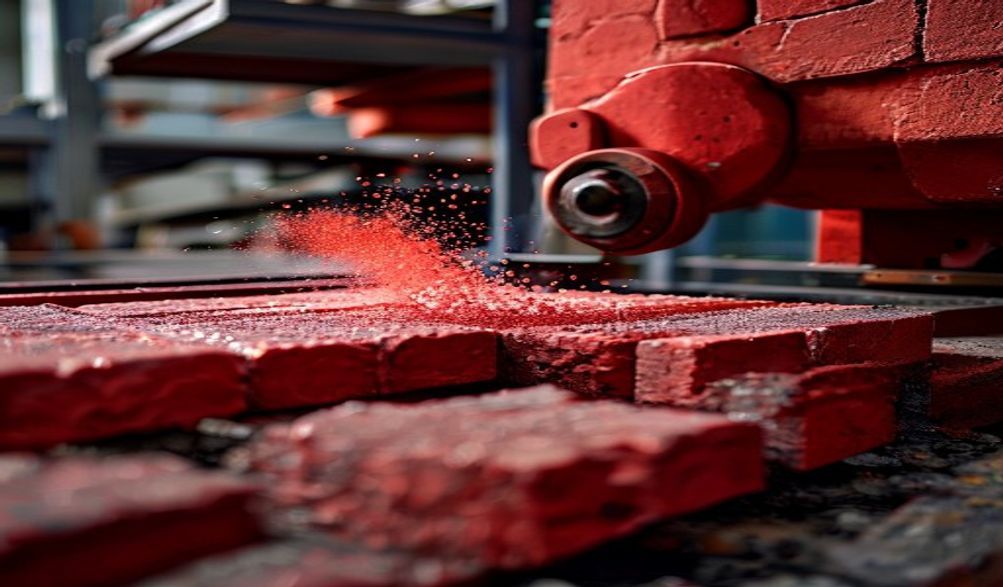
Como Escolher a Máquina de Fazer Tijolos de Barro Certa para Venda: Um Guia do Comprador para 2026
Introdução
No mundo da construção, o humilde tijolo continua sendo um testemunho atemporal de resistência e confiabilidade. Desde paredes de fundação a fachadas decorativas, a qualidade do tijolo determina a integridade de todo o projeto. Para empreendedores e proprietários de negócios, a base para produzir essa qualidade não é apenas o barro — é a máquina que o transforma. Selecionar a máquina de fazer tijolos de barro certa à venda é o investimento mais crítico que você fará, que determina sua produtividade, qualidade do produto e, em última análise, sua lucratividade.
Com base em nossa década de experiência assessorando clientes na instalação de fábricas de tijolos ao redor do mundo, entendemos que o cenário é complexo. Enfrentar um mercado global com inúmeros modelos, especificações e fornecedores que prometem mundos e fundos pode ser avassalador. Fazer uma escolha desinformada não é apenas caro; é um risco estratégico que pode paralisar seu negócio antes mesmo de ele começar.
Este guia foi projetado para eliminar o ruído. Considere-o seu manual confiável e passo a passo para navegar no processo de aquisição. Iremos além dos folhetos de vendas e nos aprofundaremos nas considerações práticas, técnicas e financeiras que realmente importam. Ao final, você terá o conhecimento necessário para fazer um investimento informado e confiante — uma máquina que se alinha perfeitamente às suas metas de produção específicas, matérias-primas e orçamento. Vamos começar sua jornada.como escolher uma máquina de fabricar tijolos de barro para vendaque constrói a base para o seu sucesso.
Compreendendo Suas Necessidades e Metas de Produção
Antes de olhar para qualquer especificação de máquina, você precisa fazer uma autoanálise. O erro mais comum e mais caro é comprar uma máquina baseando-se em uma característica chamativa ou em um preço atrativo, apenas para descobrir que ela não se adequa à sua operação real. Essa etapa fundamental é onde seu plano de negócios encontra o chão de fábrica.
Avaliando Seu Volume de Produção Diário/Anual
A capacidade de produção é o motor do seu modelo de negócios. Você deve calcular uma meta realista, não apenas um máximo esperançoso.
- Para Operações de Pequena Escala/Startup:Você está fornecendo para uma comunidade local ou realizando projetos específicos? Uma meta realista pode ser de 1.000 a 5.000 tijolos por dia. Nesse caso, máquinas manuais ou semiautomáticas oferecem um custo de entrada mais baixo.
- Para Médias Empresas:Se você está buscando abastecer distribuidores regionais ou grandes empresas de construção, seu volume-alvo pode variar de 8.000 a 25.000 tijolos por dia. Essa faixa geralmente exige sistemas semiautomáticos ou totalmente automáticos.
- Para Grandes Configurações de Fábrica:A produção em alto volume, excedendo 30.000 tijolos por dia, exige linhas de produção totalmente automatizadas, com sistemas integrados de manuseio, empilhamento e cura.
Dica Profissional da Experiência: Always plan for scalability. Choose a machine that can meet your initial target comfortably, with a design that allows for potential future expansion or integration into a faster line.
Defining Your Brick Types and Specifications
Not all bricks are created equal, and neither are the machines that make them. Your product defines your process.
- Tijolos Maciços vs. Tijolos Vazados: Hollow bricks are lighter and offer better insulation, while solid bricks provide superior load-bearing strength. The machine type (often extrusion-based) and mold design will differ.
- Pavimentos e Blocos de Pavimentação These require high-density compaction for durability, typically pointing you toward a robust hydraulic press machine.
- Especificações Principais: Determine the required dimensions, compressive strength (e.g., Class A, B), and density. These specs will dictate the necessary pressure and precision of the machine you select.
Análise de Matérias-Primas: A Argila da Sua Região
This is the non-negotiable first step, yet it’s astonishingly overlooked. Your clay is not just an ingredient; it is a directive.
- Why Testing is Critical: Clay varies dramatically by region. Its plasticity, shrinkage rate, sand content, and mineral composition (like lime or silt) directly determine which forming process will work.
- The Machine-Clay Relationship:
- Highly Plastic Clay: Works well with extrusion machines, which force the soft clay through a die.
- Leaner, Sandier Clay: May be better suited for dry-press or hydraulic machines that use high pressure to compact semi-dry material.
- Passo Acionável: Before anything else, get a sample of your clay tested. A reputable machine supplier should be able to guide you on this or even test it for you.
Core Types of Clay Brick Making Machines Explained
With your needs defined, you can now navigate the different technologies available. Understanding these core types is essential to narrowing your search effectively.
Máquinas Manuais vs. Semiautomáticas vs. Totalmente Automáticas
The level of automation is a primary cost and capability driver.
- Máquinas Manuais: Operated primarily by hand levers. Lowest capital cost, highest labor requirement, and lowest output (300-800 bricks/day). Suitable for very small-scale, artisanal production or markets with very low labor costs.
- Máquinas Semiautomáticas: Use mechanical or hydraulic systems for the pressing/ejection cycle but require manual feeding of material and removal of bricks. Offers a strong balance, providing higher output (1,500-6,000 bricks/day) with moderate investment and labor. Ideal for small to medium businesses.
- Máquinas Totalmente Automáticas: Integrated systems with auto-feeders, conveyors, and stackers. They require minimal human intervention, deliver the highest and most consistent output (10,000+ bricks/day), but come with the highest price tag and more complex maintenance. Justified for large-scale, high-volume production.
Extrusion-Based Brick Making Machines
These are the workhorses of the hollow brick industry.
- Como Funcionam: A pugmill mixes and conditions the clay, which is then forced by an auger through a vacuum chamber (to remove air) and finally through a shaped die. The continuous column of clay is then cut into individual bricks.
- Melhor Para: High-volume production of hollow bricks, perforated bricks, and roofing tiles. They excel at producing consistent shapes and can achieve high outputs efficiently.
Hydraulic Press Brick Making Machines
These are known for producing high-density, premium bricks.
- Como Funcionam: They use a high-pressure hydraulic cylinder to compact measured amounts of (often semi-dry) clay mix into a mold. The pressure is immense and controlled.
- Melhor Para: Manufacturing solid bricks, paving stones, and interlocking blocks where extreme density and strength are required. They are often more forgiving of variations in clay composition and can produce a wider variety of products by simply changing the mold.
Key Features and Specifications to Scrutinize
When comparing specific models, move beyond marketing headlines. These are the technical details that separate a reliable asset from a problematic liability.
Machine Capacity and Cycle Time
A “2,000 bricks per hour” claim is a theoretical maximum under ideal conditions.
- Ask About Real-World Output: Inquire about the sustainable 8-hour or daily output, factoring in time for mold changes, cleaning, and minor adjustments.
- Entenda o Tempo de Ciclo: The time for one complete press-and-eject cycle. A faster cycle time generally means higher output, provided the feeding and brick removal can keep pace.
Power Requirements and Operating Costs
The power source impacts your setup location and long-term overhead.
- Electrical Motors: Cleaner, quieter, and easier to maintain in areas with stable grid power. Check the required voltage (e.g., 380V) and motor power (kW).
- Motores a Diesel: Essential for sites without reliable electricity. They offer mobility but come with higher fuel costs, noise, and exhaust management.
- Calculate Totals: Factor in the power consumption of all components—the main motor, hydraulic pump, and any conveyor systems.
Pressure Force and Motor Power
For hydraulic machines, these specs are directly linked to your brick’s quality.
- Pressure Force (Tons): This determines the brick’s density and compressive strength. For standard solid bricks, you may need 150+ tons. For high-strength pavers, 300+ tons is common. Don’t under-specify here.
- Motor Power (kW/HP): This drives the hydraulic system. An underpowered motor will struggle to achieve the rated pressure consistently, leading to slow cycles and poor brick quality.
Durability and Construction: What to Look For
The machine must withstand years of constant vibration and pressure.
- Quadro: Look for a heavy-duty, welded steel frame, not a bolted assembly. Thicker steel plates resist deformation.
- Sistema Hidráulico: Reputable brand-name pumps, valves, and cylinders are a sign of quality. Ask about the hydraulic oil tank capacity and filtration system.
- Moldes e Peças de Desgaste: Molds should be made from hardened, high-chrome steel. Check the availability and cost of other wear parts like the auger (for extruders) or press heads.
Automation Level and Control Systems
Automation should solve a problem, not just be a fancy feature.
- Basic Systems: Lever-operated valves or simple buttons.
- Intermediate: Programmable Logic Controller (PLC) systems with a digital interface allow you to set and store pressure, cycle time, and other parameters for consistent repeatability.
- Advanced: PLCs with touchscreen HMIs (Human-Machine Interfaces) that can diagnose faults, track production counts, and integrate with other line equipment. For a semi-automatic machine, a basic PLC can be a worthwhile investment for quality control.
The Supplier Evaluation Checklist
The machine is only as good as the company behind it. This step is where due diligence protects your investment.
Manufacturer Reputation and History
- Research how long the company has been in business.
- Look for evidence of industry participation, trade shows, or certifications.
- Search for the company name alongside keywords like “reviews,” “complaints,” or “lawsuit.”
Availability of Technical Support and Spare Parts
This is often more important than a 5% lower price.
- Ask Directly: “Do you have service engineers who can travel to my country? What is the typical response time?”
- Garantia: A standard warranty is 12 months for parts. See what it excludes (wear parts, labor, shipping).
- Parts Inventory: Do they keep a stock of critical spare parts? Can they provide a recommended spare parts list for initial purchase?
Requesting and Evaluating Client References
A trustworthy supplier will gladly connect you with past customers.
- Speak to references who have a similar production scale and use similar raw materials.
- Ask about machine reliability, brick quality, and the supplier’s responsiveness depoisa venda.
The Importance of Factory Testing and Trial Runs
Never buy a machine “sight unseen” from a new supplier.
- Insist on seeing video evidence of the exact model running.
- Ideally, visit the factory for a live test. The gold standard is to send a sample of your own clay for a production trial. This proves the machine’s capability with your specific material.
Financial Considerations and Smart Investment
View this purchase through the lens of Total Cost of Ownership (TCO), not just sticker price.
Total Cost of Ownership (Beyond the Purchase Price)
The initial invoice is just the beginning. Budget for:
- Shipping, Insurance, and Customs Clearance: These can add 15-30% to the cost.
- Installation & Foundation: You may need a reinforced concrete base and professional installation.
- Treinamento: Factor in costs for sending your operators or hosting the supplier’s technician.
- Initial Spare Parts Kit: Purchasing a recommended set of wear parts upfront prevents early downtime.
- Annual Maintenance: Hydraulic oil, filters, and routine servicing.
Understanding Quotes: What Should Be Included?
A professional, detailed quote builds trust. It should clearly list:
- The complete machine model and serial number.
- Detailed technical specifications.
- Included Items: Standard molds (specify which brick type), basic toolset, operation & maintenance manuals in your language, electrical drawings.
- Excluded Items: Clearly state if shipping, installation, or training are extra.
- Payment terms, delivery timeline, and warranty details.
Return on Investment (ROI) Projections
Create a simple, conservative projection:
- Annual Production Capacity: (Bricks/Day) x (Operating Days/Year).
- Annual Revenue: Annual Capacity x (Your Local Selling Price per Brick).
- Annual Operational Costs: Raw materials + labor + power + maintenance + overhead.
- Annual Gross Profit: Revenue – Operational Costs.
- Simple Payback Period: Total Investment Cost / Annual Gross Profit.
This exercise forces you to model your business realistically and justifies the investment.
Perguntas Frequentes (FAQ)
What is the price range for a good quality clay brick making machine?
Prices vary immensely. A small manual machine can start from $3.000 – $8.000. A robust semi-automatic hydraulic press may range from $25,000 – $70,000. A fully automatic production line can easily cost $150,000 to $500,000+. The price is driven by automation, pressure rating, brand, and included features.
Can one machine produce different types and sizes of bricks?
Yes, within limits. The key is moldes intercambiáveis. A well-built machine allows you to swap molds to produce different brick dimensions or patterns (e.g., from a solid brick to a decorative paver). However, switching between fundamentally different processes (e.g., solid to hollow) usually requires a different machine type.
How much space and what foundation is required for setup?
You need a holistic site plan:
* Production Shed: Enough space for the machine with clearance for operation and maintenance.
* Raw Material Storage: Covered area for clay and additives.
* Curing Area: A large, shaded, and ventilated space for bricks to dry and gain strength (often the largest space requirement).
* Finished Product Storage.
* Fundação Typically, a level, reinforced concrete pad 300-500mm thick, specified by the manufacturer.
What are the most common maintenance issues?
Preventative care is key:
* Sistema Hidráulico: Contaminated oil is the #1 culprit. Change oil and filters regularly as per the manual.
* Mold Cleaning: Failure to clean molds daily leads to clay buildup, causing sticking and poor brick finish.
* Peças de Desgaste: Augers, cutting wires, and seal rings are consumables. Keep spares on hand.
* Lubrication: Neglecting grease points on bearings and guides causes premature failure.
Is operator training difficult? How long does it take?
For a semi-automatic machine, basic operation can be learned in 3-5 days. Mastering troubleshooting, mold changes, and maintenance may take a few weeks of hands-on experience. Fully automatic lines with PLCs require more extensive training, often 1-2 weeks with the supplier’s engineer. Good suppliers provide comprehensive training materials.
Conclusão
Choosing the right clay brick making machine is a strategic journey, not a simple transaction. It begins with a deep understanding of your own production goals and raw materials, moves through a clear-eyed evaluation of machine technologies and their specifications, and culminates in the rigorous vetting of your supplier partner.
Let’s reiterate the two non-negotiable pieces of final expert advice: First, never, ever skip the step of testing your local clay. It is the bedrock of your entire operation. Second, prioritize supplier reliability and after-sales service over the allure of the lowest price. A machine is a long-term asset, and a trustworthy partner is your greatest insurance policy for years of productive, profitable operation.
Ready to take the next step with confidence? Contact our team of brick machinery specialists today for a personalized consultation. We can provide detailed quotes based on your specific needs, arrange for material testing analysis, and connect you with references from our global client base who have walked this path successfully before you.
<