
Ultima Ductor ad Machinas Laterum Laterculorum Pressorum: Genera, Usus, et Quomodo Eligas
Introductio
Visionem habes. Domus nova, horti murus, vel opus mercatorium esse potest. In corde illius visionis est elementum fundamentale: later aut caementicium firmum et praestans. Sed quomodo materias rudis in acervos vertis in unitates structurae accuratas, uniformes, et solidas? Clavis ad hanc quaestionem est una machina insignis: pressor laterum et caementiciorum.
Haec machina est machinamentum hodiernae structurae latericiae, ingenti pressione utens ut materias in formas densas ac durabiles comprimat. Sive es studiosus DIY qui opus in horto aggrederis, sive socialis coeptor qui inceptum habitationis communitatis inchoas, sive societas constructionis quae rationes expedire cupit, rectam pressuram eligere est consilium maxime gravissimum quod facies.
Mercatus options abundat—a simplicibus manubriis manualibus ad lineas productionis plene automatizadas. Facile est obrui. Hoc manuale comprehensivum ad confusionem discindendam designatum est. Peritiam industriae adhibebimus ut principia fundamentalia explicemus, omne genus machinae disseramus, et clarum, actionabile consilium ad collocationem callidam faciendam praebeamus. Successus, efficientia, et integritas structuralis tui incepti ab hac electione pendent. Fundamentum illius scientiae aedificemus.
Quid est Machina Pressoria Laterum Coctilium? Principia Fundamenta Explicantur.
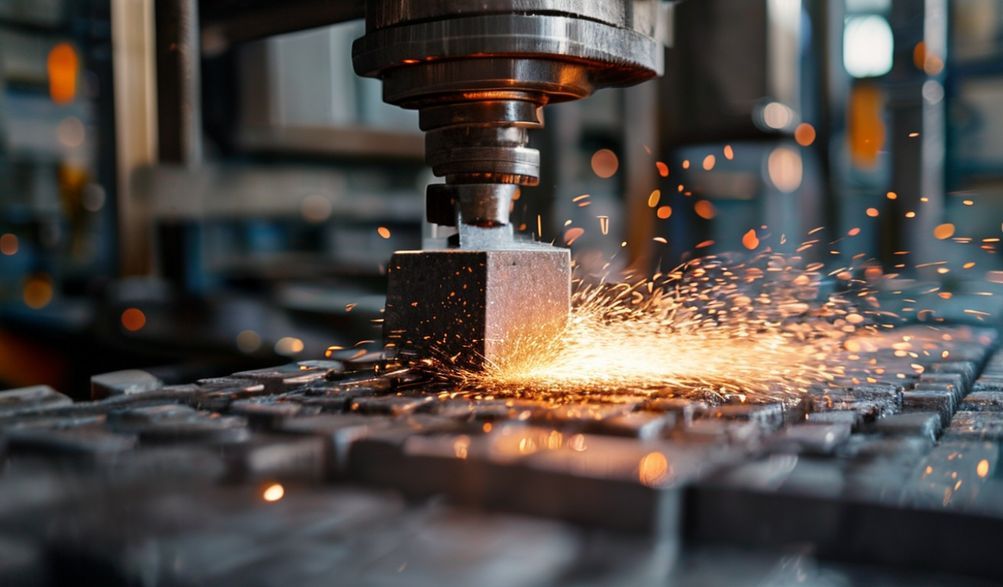
In sua essentia, machina laterum coctorum est instrumentum quod moderatam et magnam vim ad materiam rudem conclusam adhibet, eam in solidum laterem certae formae et magnitudinis comprimens. Est ratio compressione definita, prorsus dissimilis traditionalibus modis, ut lutum humidum in formas effundere vel fornaces incendere.
Processus Fundamentalis: A Materia Soluta ad Massam Solidam
The magic is in the pressure. Imagine loose, dry-ish concrete mix or soil. Its particles are spaced apart. When you apply several tons of force, you force those particles together, eliminating air voids and creating mechanical bonds through friction and particle interlock.
This process of densification is what gives pressed blocks their strength, even before any chemical curing (like cement hydration) takes full effect. The key components that make this happen are:
- The Mold or Die: This is the cavity that defines the block’s shape—whether it’s a standard 8x8x16 inch concrete block, a hollow brick, or an interlocking paving stone.
- The Pressure System: This is the “engine” of the press. It can be a hydraulic pump and cylinder, a mechanical lever and cam system, or a vibratory motor.
- Compages: This robust, steel structure must withstand the tremendous forces involved without flexing, ensuring every block is identical.
Claves Effectus: Ultra Lateres Usitatos
While the name suggests simple bricks, these machines are incredibly versatile. The output is entirely determined by the mold used. Common products include:
- Lateres Betoni Solidus et Cavus: The backbone of commercial and residential construction.
- Lapides Strati & Pavimenta Internexa:Aditus, semitae, et porticus.
- Soil-Stabilized Blocks (CSEB): Also known as Compressed Stabilized Earth Blocks, made from local soil mixed with a small amount of cement or lime.
- Formae Propriae: Curved blocks, chimney blocks, and landscaping retaining wall units.
- Lateres e Cineribus Volaticis Facti: An eco-friendly alternative using a industrial by-product.
Types of Block Brick Press Machines: Finding the Right Fit
Selecting a machine type is your first major fork in the road. Your choice will dictate your production capacity, labor requirements, and initial investment. Here’s a breakdown of the primary categories.
Manual Press Machines: Pros, Cons, and Ideal Use Cases
These are the simplest and most affordable entry point into block production. Operation relies on human power, typically through a long lever or a foot pedal that drives a mechanical piston.
- Pros: Very low cost, minimal maintenance, no power required, highly portable, perfect for learning the basics of material mix and compaction.
- Incommodis: Very low output (50-100 blocks per day), physically demanding, quality can vary with operator fatigue.
- Idoneum Ad: Small DIY projects (garden walls, sheds), pilot projects, community-led building initiatives in off-grid areas, and educational purposes.
Semi-Automatic Press Machines: Balancing Efficiency and Cost
This category strikes a crucial balance, introducing key automations to reduce labor and boost consistency while keeping costs manageable. A common design involves a manually loaded hopper, but the press cycle (compression and ejection) is powered electrically or via a small engine.
- Pros: Significantly higher output than manual presses (300-1000 blocks/day), more consistent block quality, less operator fatigue.
- Incommodis: Higher initial cost, requires a power source, more complex maintenance.
- Idoneum Ad: Small to medium-sized businesses (SMBs), block-making yards supplying local builders, and medium-scale construction projects.
Fully Automatic Press Machines: For High-Volume Production
This is the industrial workhorse. These machines are complete systems where raw material is automatically fed, measured, pressed, ejected, and often stacked onto pallets by a robotic arm—all controlled by a programmable logic controller (PLC).
- Pros: Very high, consistent output (thousands of blocks per day), minimal manual labor, exceptional product uniformity, integrated palletizing.
- Incommodis: High capital investment, significant space and power requirements, complex maintenance needing specialized technicians.
- Idoneum Ad: Large commercial block manufacturers, major construction companies producing on-site for big projects, and government infrastructure initiatives.
Specialized Press Machines: Hydraulic vs. Mechanical vs. Vibratory
Beyond automation, presses differ in how they apply force:
- Pressus Hydraulicus: Uses pressurized fluid in a cylinder. It offers smooth, controllable, and extremely high pressure. This adjustability allows for different materials and block densities. It’s the standard for most semi- and fully-automatic machines.
- Pressus Mechanicus: Uses levers, cams, or flywheels to generate force. It’s simpler and often found in manual or smaller semi-automatic models. Pressure is more fixed and can be jarring.
- Vibratory Press: Combines static pressure with high-frequency vibration. This dual action is excellent for achieving a very dense compaction and a smooth, finished surface texture, especially for paving stones and high-precision blocks.
Critical Factors for Choosing Your Block Press Machine
Now that you know the types, how do you decide? Use these actionable criteria to guide your evaluation.
Assessing Your Production Needs: Volume, Block Type, and Material
Start with the end in mind. Be brutally honest with your requirements.
- Volumen:Computa tuumverus daily or weekly need. Don’t buy a 5000-block/day machine for a 500-block/week project. Factor in future growth, but avoid massive overcapacity.
- Block Type: List every product you need to make. Does the machine offer molds for all of them? How easy and expensive is it to change molds?
- Materia This is critical. A machine perfect for a dry concrete mix might struggle with soil. Confirm the machine is designed for your primary material—be it standard concrete, soil-cement (CSEB), or fly ash.
Machine Specifications You Must Scrutinize
Look past the sales brochure. These specs tell the real story:
- Vis Pressoria (Pondus): Measured in tons (e.g., 20-ton press). Higher tonnage generally produces stronger, denser blocks. For structural blocks, you typically need a minimum of 15-20 tons of pressure.
- Tempus Cycli: How many seconds does it take to produce one block? A 15-second cycle is far faster than a 45-second one. This directly determines your maximum hourly output.
- Moldis Versatilitas: Can one press frame accept multiple mold sizes? What is the cost and lead time for additional molds?
- Potestatis Postulata: Does it need 3-phase electricity, single-phase, or a diesel engine? Ensure your site can support it.
Durability, Maintenance, and Total Cost of Ownership
The cheapest machine can become the most expensive if it breaks down constantly.
- Structurae Qualitas: Inspect the steel thickness, the quality of welds, and the reputation of the brand. A heavier frame usually indicates better durability.
- Partes Suppetiales: Are parts readily available? Is there a local dealer or must they be shipped from overseas? Downtime is lost revenue.
- Total Cost: Calculate: Machine Price + Shipping + Installation + Foundation + Training + Annual Maintenance/Spares. This is your true investment.
Operational Best Practices and Safety Guidelines
Owning the right machine is only half the battle. Operating it correctly ensures quality, efficiency, and most importantly, safety.
Raw Material Preparation for Optimal Results
The machine can only compact what you feed it. Garbage in, garbage out.
- Aggregate Size: Must be within the machine’s specification (usually under 1/4″ or 6mm for fine finishes). Large stones can damage molds.
- Humiditas Contentus: This is a science. Too dry, and the block won’t bind; too wet, and it will deform or crack. For concrete, a 5-8% moisture content is often a starting point.
- Mix Consistency: The mix must be uniform. Invest in a good mixer. For soil blocks, sieving and proper stabilization (cement/lime ratio) is non-negotiable.
Step-by-Step: Operating Your Machine for Maximum Efficiency
- Setup & Inspection: Ensure the machine is level on a solid foundation. Check hydraulic fluid, lubricate moving parts, and inspect the mold for damage or residue.
- Onus. Fill the feed box or hopper with a consistent mix. Avoid segregation of materials.
- Cycling: Initiate the press cycle. On manual machines, apply steady, even force. On automatic machines, monitor the pressure gauges.
- Ejectio et Sanatio: Handle green (freshly pressed) blocks with care. They are fragile. Stack them on pallets for the mandatory curing period (often 7-28 days for cement-based blocks) under damp cover.
Consilium Peritum: To avoid lamination (blocks separating into layers) and cracking, ensure your material mix is correct and the pressure is held for a sufficient “dwell time.”
Essential Safety Protocols for Operators
This is heavy machinery. Respect it.
- PPE is Mandatory: Safety glasses, heavy-duty gloves, steel-toe boots, and hearing protection (for loud machines) are non-negotiable.
- Lock-Out/Tag-Out (LOTO): Before any cleaning, unjamming, or maintenance, disconnect and lock the power source. This prevents accidental activation.
- Handling: Use proper lifting techniques for molds and blocks. Never place hands in the compression area while the machine is active.
The Business Case: ROI and Sustainability of Block Production
Understanding the financial and environmental impact solidifies the value of your investment.
Calculating Your Return on Investment (ROI)
A machine is a capital asset. To justify it, run the numbers:
- Costs: Machine amortization, raw materials, labor, power, maintenance, site costs.
- Revenue/Value: If selling blocks, calculate price per block. If for own use, calculate the money saved versus buying blocks.
- ROI Timeframe: A manual press for a personal home might pay for itself in a single project. A large automatic plant may have a 2-5 year ROI. Create realistic projections.
Eco-Friendly Building: The Role of Press Machines in Sustainable Construction
This is a powerful, often overlooked advantage.
- Materiae Locales: CSEB machines allow you to use on-site or local soil, drastically reducing the carbon footprint from transporting heavy building materials.
- Subsidiariae Industriae Producta: Machines can utilize fly ash (from coal plants) or slag, diverting waste from landfills.
- Efficacia Energiae: Pressed blocks cure at ambient temperature. Compared to fired clay bricks, which require immense energy in kilns, the process is vastly more energy-efficient.
- Firmitas Well-made pressed concrete or soil blocks are extremely durable, leading to long-lasting structures.
FAQ Sectio
What is the average cost of a block brick press machine?
Costs vary wildly. A basic manual press can start from $500 – $2,000. A quality semi-automatic hydraulic press may range from $5,000 – $25,000. Fully automatic production lines begin around $50,000 and can exceed $250,000. Remember to budget for molds, mixers, and material handling equipment.
Can I make strong enough bricks for a house with a manual press?
Yes, absolutely. For single or two-story load-bearing structures, manually pressed Compressed Stabilized Earth Blocks (CSEB) or concrete blocks can achieve compressive strengths well over 500 psi, which is sufficient. The critical factors are a professionally engineered soil/cement mix designetstrict adherence to proper compaction and curing protocols. Always get your blocks tested (e.g., ASTM C90 standards) and have your structure designed by an engineer.
What maintenance does a brick press machine require?
* Daily: Clean all excess material from the mold, frame, and feed system.
* Weekly: Lubricate all moving pins, bearings, and guide rods as per the manual.
* Monthly: Check hydraulic hoses for leaks, inspect electrical connections, and tighten any loose bolts on the frame.
* As Needed: Repair or replace worn mold liners. The manufacturer’s manual is your bible.
How do I choose between a hydraulic and a mechanical press?
Choose Hydraulica if you need: adjustable pressure for different materials, the highest possible block density and strength, smoother operation, and are moving towards semi-automation. Choose Mechanical (often manual) if your priorities are: lowest cost, extreme simplicity, ease of repair with basic tools, and you are producing standard blocks at a low volume in an area with limited technical support.
Where can I get training or find reliable machine suppliers?
Seek suppliers who don’t just sell but support. They should offer installation, on-site training, and provide clear manuals. Look for companies with:
* A long track record and verifiable client testimonials.
* A readily available catalog of spare parts.
* A clear after-sales service and warranty policy.
Attend international construction equipment expos, consult with trade associations for masonry or earth building, and consider reaching out to successful block yards in your region for their recommendations.
Conclusio.
Choosing a block brick press machine is a significant decision that intertwines engineering, business, and practicality. We’ve walked through the journey—from understanding the fundamental compaction process to navigating the landscape of manual, semi-automatic, and fully automatic machines. You now know the critical questions to ask about production needs, machine specifications, and long-term costs.
The right machine isn’t necessarily the biggest or the cheapest; it’s the one that perfectly balances your project’s scale, your budget, and your need for reliable, consistent output. It is the tool that will physically manifest your vision, one solid block at a time.
Use this guide as your foundational research. But don’t stop here. Before making a decision, consult with structural engineers for mix designs, request material tests from local suppliers, and, most importantly, seek demonstrations from multiple equipment manufacturers to see the machines in action. Your due diligence is the first step in building something that lasts.
<