
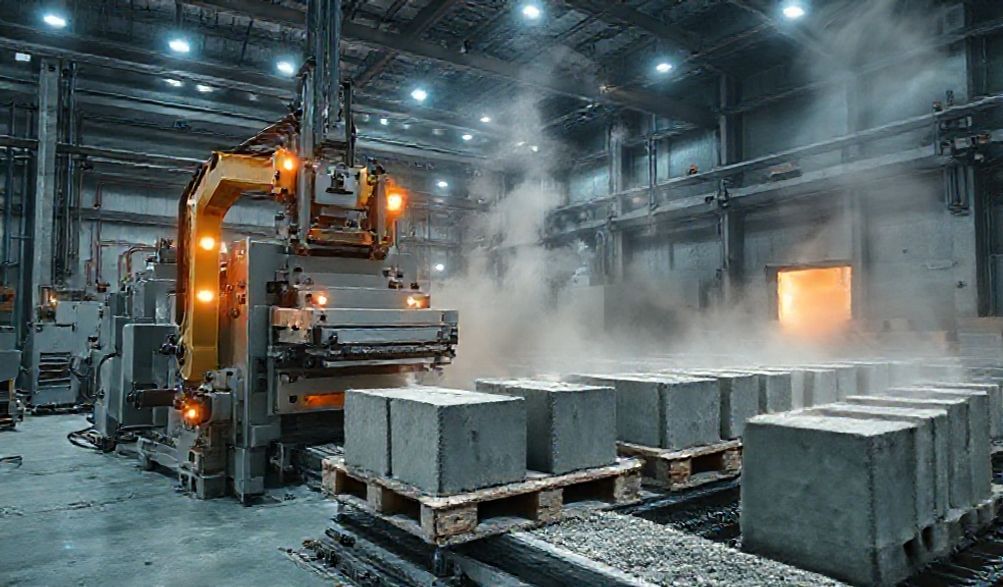
The Ultimate Guide to Full Automatic Block Making Machines: Efficiency, Types & ROI
Introductio
Industria aedificatoria globalis ad stupendam summam pervenire praevidetur.XV trilliones et CC milliarda per annum MMXXX, driven by urbanization, infrastructure development, and housing demands. At the heart of this growth lies a fundamental need: efficient, consistent, and high-quality building materials. Concrete blocks remain a cornerstone of modern construction, but the traditional methods of producing them are struggling to keep pace.
For decades, manufacturers have grappled with the limitations of manual labor and semi-automatic systems. These challenges include labor-intensive processes, inconsistent product quality leading to waste, soaring operational costs, and severe scalability constraints. The question for forward-thinking business owners is clear: how do you meet escalating demand without compromising on profit or quality?
Ingrederemachina plena automataria ad lateres faciendos—the transformative powerhouse redefining modern construction material manufacturing. This guide is not just a product overview; it’s a strategic blueprint. Synthesizing insights from international engineering standards, direct manufacturer data, and real-world operational case studies, we provide a comprehensive, expert-level resource you can trust.
By the end of this post, you will have a clear understanding of how these automated systems work, their undeniable advantages, a framework for selecting the perfect model for your operation, and the knowledge to accurately calculate your potential return on investment. Let’s build the future, efficiently.
What is a Full Automatic Block Making Machine?
A full automatic block making machine is a computer-controlled, integrated production line designed to manufacture concrete blocks with minimal human intervention. From raw material handling to the final stacked product, the entire process—batching, mixing, molding, curing, and palletizing—is orchestrated by a central system. This represents the pinnacle of automation in block production.
To appreciate its sophistication, it’s helpful to contrast it with other types:
* Machina Manualia: Entirely hand-operated, requiring significant physical labor for mixing, filling molds, and demolding. Output is very low and consistency is hard to maintain.
* Semiautomaticae Machinae: Mechanize core processes like vibration or compression but require manual handling of pallets, feeding, and block removal. They offer a middle ground in output and investment.
The full automatic system eliminates these manual touchpoints, creating a seamless, continuous flow of production.
Elementa Principalia et Quomodo Inter Se Cooperantur
Think of a full automatic plant as a symphony, where each component plays a critical role:
- Systema Cocturae et Mixturae Caementi: Precisely measures and combines cement, aggregates, sand, and water to create a perfectly consistent mix.
- Automated Conveyor System: Transports the raw mix to the molding area and moves pallets through each stage of the cycle without manual labor.
- Hydraulic/Press System & Mold: The heart of the machine. High-pressure hydraulic cylinders compress the concrete mix into the desired shape within a precision-engineered mold.
- Vibration & Compaction Unit: Works in tandem with the press to remove air pockets and ensure maximum density and strength of the block.
- Curing System (Steam Curing Chamber): Accelerates the hardening process, often using controlled steam, to achieve high early strength within hours instead of days.
- Palletizing & Stacking Robot: Automatically arranges and stacks the cured blocks onto pallets or racks, ready for transportation.
- PLC (Programmable Logic Controller) – The “Brain”: This computer monitors and controls every parameter—pressure, cycle time, vibration frequency—ensuring flawless, repeatable operation.
Key Advantages of Upgrading to Full Automation
Investing in full automation is a strategic decision that delivers tangible benefits across your entire operation.
Efficacia et Effectus Opificii Incomparabilis
- High-Speed Cycling: These machines can produce thousands of blocks per hour. A standard model might output 8,000-12,000 solid blocks in an 8-hour shift, a volume impossible with manual methods.
- 24/7 Capability: Designed for continuous operation with minimal downtime for mold changes or maintenance, maximizing your capital investment.
Superior et Constans Producti Qualitas
- Precision control over every variable means every single block meets exact dimensional tolerances and compressive strength specifications (such as ASTM C90).
- This consistency reduces waste, ensures compliance with building codes, and enhances your brand’s reputation for reliability.
Significant Reduction in Labor Costs & Dependency
- A full automatic line may require only 2-3 skilled operators for supervision and monitoring, compared to a large crew for a semi-automatic plant.
- This shifts your labor needs from physical manpower to technical skill, reducing long-term overhead and dependency on manual labor availability.
Securitas Operandi Amplificata
- Automation removes workers from high-risk tasks: heavy lifting, repetitive strain injuries from handling blocks, and exposure to constant vibration and noise.
- Safety features and guarded machinery create a more controlled industrial environment.
Long-Term Cost Savings & Scalability
- Optimal raw material use and minimal product waste directly improve your bottom line.
- Scaling production becomes a matter of adding shifts or optimizing the PLC cycle, not hiring and training large numbers of new workers.
Types of Full Automatic Block Making Machines
Choosing the right machine starts with understanding the different types available, categorized by their output, operating principle, and design.
By Product Output
- Machinae ad Lateres Cavos Faciendos: For producing standard hollow concrete blocks used in walls and partitions.
- Paver/Interlocking Block Making Machines: Designed for high-precision, aesthetic paving stones and interlocking landscaping blocks.
- Solid Block Making Machines: Used for heavy-duty solid blocks requiring very high compressive strength.
- Curbstone Making Machines: Specialized for producing long, linear curb and gutter stones.
By Operating Principle
- Static Pressure Machines: Apply high hydraulic pressure alone to form the block. Excellent for certain products like kerbstones.
- Vibration-Press Machines: The most common type for high-density blocks. They combine powerful hydraulic pressure with high-frequency vibration for superior compaction and strength.
By Station Type
- Single-Station Machines: All operations (filling, pressing, curing) occur at one station. Simpler but may have a slower cycle time.
- Multi-Station (Egg-Layer) Machines: The mold moves (“lays” blocks) on a pallet conveyor system through different stations, allowing simultaneous processes for higher output.
- Fully Fixed Plant with Pallet Circulation: The most advanced setup. Pallets circulate in a closed loop through dedicated stations for feeding, pressing, curing, and destacking. This offers the highest degree of automation and output.
Critical Factors for Choosing the Right Machine
Selecting a machine is a major capital decision. A methodical evaluation based on your specific needs is crucial.
Tuas Exigentias Productionis Perpendens
- Output Desideratum Calculate the blocks per shift or day you need to meet current and near-future demand.
- Productorum Portifolium: List the types, sizes, and mix of blocks (e.g., 60% hollow, 40% pavers) you plan to produce.
- Officina Vestigium: Measure your available space. A full plant with a pallet circulation system requires significant length and headroom.
Evaluating Machine Specifications
- Vis Pressoria (Pondus): Higher tonnage (e.g., 200+ tons) generally produces denser, stronger blocks.
- Cycle Time & Pallet Size: A faster cycle time and larger pallet (holding more blocks per cycle) directly increase output.
- Potestatis Consumptio: Evaluate the total connected load. Energy-efficient motors and drives can save substantial operational costs.
- Compatibilitas Materiae Crudae: Ensure the machine can effectively process the type and size of aggregates available in your region.
The Importance of Manufacturer Credibility & Support
This is the most critical factor for long-term success and directly impacts the Peritia, Auctoritas, et Fiducia (P-A-F) of your investment.
* Certificationes et Normae: Prioritize manufacturers with ISO 9001 certification and whose machines comply with international safety and performance standards.
* After-Sales Service Ecosystem: The real test begins after installation. Demand clarity on:
* Instalatio et Dedication: Will they provide onsite supervision?
* Exercitatio Universalis: Is certified training for your operators and maintenance staff included?
* Partes Subsidiae Praesto: Is there a local warehouse or guaranteed shipping timeline for critical parts?
* Auxilium Technicum: What are the channels (phone, remote access, onsite) and response time guarantees?
* Clientium Testimonia: Always request and contact references from existing clients in a similar market or climate. Their firsthand experience is invaluable.
Understanding the Investment: Cost Analysis & ROI
A transparent look at the financials will justify the investment.
Breakdown of Initial Costs
- Machine Price: The base cost of the main machine.
- Shipping, Insurance, and Customs: Can be significant for international purchases.
- Instalatio et Dedication: Includes foundation work, electrical connections, and initial setup by technicians.
- Instrumenta Auxiliaria: Don’t forget the cost of a pan mixer, conveyor feeders, pallets, and a forklift.
Operational & Maintenance Costs
- Energy: Electricity for the hydraulic system, vibrators, and PLC.
- Materiae Crudae Cement, aggregates, and water.
- Labor: Salaries for your skilled supervisors and maintenance team.
- Custodia Praeventiva: Regular costs for lubricants, filter changes, and wear parts.
Calculating Your Return on Investment (ROI)
A simplified ROI framework can guide your analysis:
ROI (%) = [(Annual Profit Gain from New Machine) / (Total Investment Cost)] x 100
Key Variables to Model:
1. Auctus Reditus: (Additional blocks produced per year) x (Your local selling price per block).
2. Cost Savings: Reduction in labor costs, waste, and lower per-block energy/raw material consumption.
3. Annual Profit Gain: Increased Revenue + Cost Savings – Increased Operational/Maintenance Costs.
4. Total Investment: Sum of all initial costs (machine, shipping, installation, auxiliary equipment).
A well-run automatic plant in a healthy market often sees a payback period of 18 to 36 months.
Best Practices for Operation and Maintenance
To protect your investment and ensure decades of service, disciplined operation is key.
Daily & Weekly Maintenance Checklist
- Daily: Check hydraulic oil levels and for leaks, clean molds and pallets, inspect vibration motors, and ensure all safety guards are in place.
- Weekly: Lubricate all moving parts per the manual, tighten bolts and electrical connections, and check the compaction chamber for wear.
Ensuring Optimal Raw Material Quality
- The machine can only be as good as the mix it receives. Use consistently graded aggregates and fresh, high-quality cement.
- Variations in raw materials are the leading cause of production issues and quality inconsistencies.
Training Your Team for Success
- Never skip manufacturer training. Your operators must understand PLC programming, basic troubleshooting, and the full mechanical process.
- Certify at least one maintenance technician on the specific hydraulic and control systems of your machine.
FAQ Section
Q1: What is the average production capacity of a full automatic block making machine?
A: Capacities vary dramatically based on model and block type, typically ranging from 2,000 to over 20,000 standard blocks per 8-hour shift. A specific model must be evaluated against your target output and product mix.
Q2: Can it produce different block types and sizes?
A: Yes, most advanced models are designed for quick mold changes. However, changing molds requires production downtime (from 30 minutes to a few hours) and recalibration. Discuss your planned product variety with the manufacturer during selection.
Q3: What kind of after-sales support should I expect from a reputable manufacturer?
A: Expect a comprehensive partnership. This includes detailed installation manuals and optional onsite supervision, extensive classroom and hands-on operator training, a guaranteed spare parts supply chain with clear pricing, and accessible technical support via multiple channels with defined response times. This robust support structure is a primary indicator of a manufacturer’s expertise and trustworthiness.
Q4: How long does it typically take to see ROI on this investment?
A: The payback period is highly variable, typically falling between 1 to 3 years. It depends entirely on your initial investment size, local market demand and pricing, achieved operational efficiency, and management. A detailed, conservative business plan is essential before purchasing.
Q5: Are these machines suitable for starting a new block manufacturing business?
A: Absolutely. A full automatic machine provides a turnkey solution for a new business to enter the market with high-quality, scalable production from day one. It is, however, a significant capital expenditure, so a thorough market and feasibility study is strongly recommended before investment.
Conclusion
Full automatic block making machines represent more than just an equipment purchase; they are a strategic capital investment that positions your business for scale, unwavering quality, and long-term competitiveness in the construction market. While the initial outlay is substantial, the returns in efficiency, cost savings, and market reputation are transformative.
As you move forward, let this principle guide you: prioritize expertise and trustworthiness in your supplier selection. The lowest price can often lead to the highest long-term cost through poor support and unreliable performance. Seek partners with proven engineering excellence, certified quality systems, and a demonstrable commitment to being a reliable partner for the lifecycle of your machine.
Ready to transform your production capability? Download our detailed specification checklist to systematically evaluate potential suppliers, or contact our industry consultants for a personalized analysis of your production needs and ROI potential.
<