
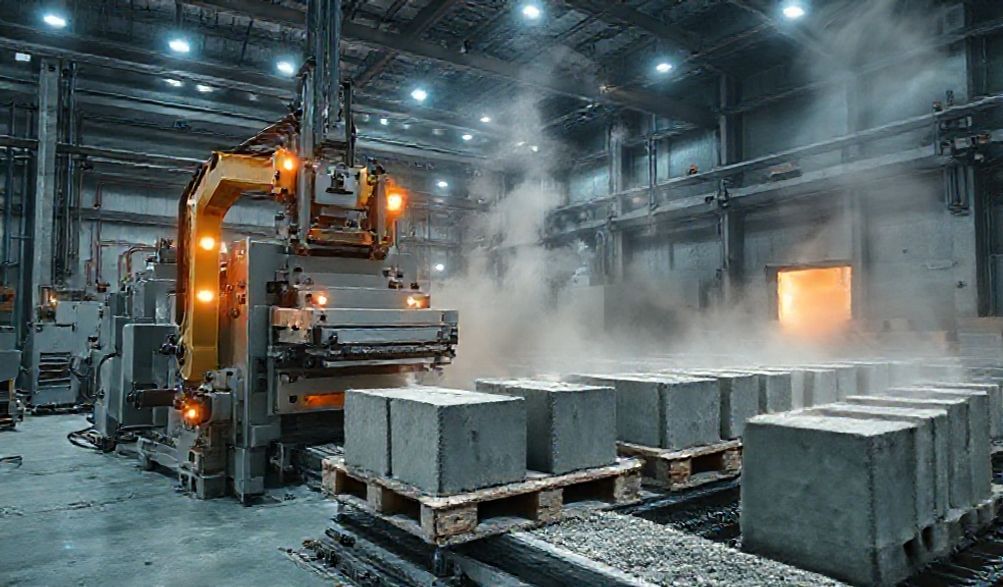
Полное руководство по полностью автоматическим машинам для производства блоков: эффективность, типы и окупаемость инвестиций
Введение
Глобальная строительная отрасль, по прогнозам, достигнет ошеломляющих15,2 триллиона долларов к 2030 годуПод влиянием урбанизации, развития инфраструктуры и потребностей в жилье. В основе этого роста лежит фундаментальная необходимость: эффективные, стабильные и качественные строительные материалы. Бетонные блоки остаются краеугольным камнем современного строительства, но традиционные методы их производства не справляются с растущими темпами.
На протяжении десятилетий производители сталкивались с ограничениями ручного труда и полуавтоматических систем. Эти проблемы включают трудоемкие процессы, нестабильное качество продукции, ведущее к потерям, стремительный рост операционных расходов и серьезные ограничения в масштабируемости. Вопрос для дальновидных владельцев бизнеса очевиден: как удовлетворить растущий спрос, не жертвуя прибылью или качеством?
Введитеполностью автоматическая машина для производства блоков— преобразующая сила, переопределяющая современное производство строительных материалов. Это руководство — не просто обзор продукции; это стратегическая дорожная карта. Объединяя данные международных инженерных стандартов, информацию непосредственно от производителей и практические примеры из реальных проектов, мы создали всеобъемлющий, экспертный ресурс, которому можно доверять.
К концу этой статьи вы получите четкое представление о том, как работают эти автоматизированные системы, их неоспоримых преимуществах, основу для выбора идеальной модели для вашего бизнеса и знания для точного расчета потенциальной окупаемости инвестиций. Давайте строить будущее эффективно.
Что такое полностью автоматическая машина для производства блоков?
Полностью автоматическая машина для производства блоков — это компьютерно-управляемая интегрированная производственная линия, предназначенная для изготовления бетонных блоков с минимальным вмешательством человека. Весь процесс — от дозирования сырья до укладки готовой продукции, включая смешивание, формование, отверждение и паллетирование — координируется центральной системой. Это воплощение высшей степени автоматизации в производстве блоков.
To appreciate its sophistication, it’s helpful to contrast it with other types:
* Ручные станки: Entirely hand-operated, requiring significant physical labor for mixing, filling molds, and demolding. Output is very low and consistency is hard to maintain.
* Полуавтоматические станки: Mechanize core processes like vibration or compression but require manual handling of pallets, feeding, and block removal. They offer a middle ground in output and investment.
The full automatic system eliminates these manual touchpoints, creating a seamless, continuous flow of production.
Основные компоненты и их взаимодействие
Think of a full automatic plant as a symphony, where each component plays a critical role:
- Система дозирования и смешивания бетона: Precisely measures and combines cement, aggregates, sand, and water to create a perfectly consistent mix.
- Automated Conveyor System: Transports the raw mix to the molding area and moves pallets through each stage of the cycle without manual labor.
- Hydraulic/Press System & Mold: The heart of the machine. High-pressure hydraulic cylinders compress the concrete mix into the desired shape within a precision-engineered mold.
- Vibration & Compaction Unit: Works in tandem with the press to remove air pockets and ensure maximum density and strength of the block.
- Curing System (Steam Curing Chamber): Accelerates the hardening process, often using controlled steam, to achieve high early strength within hours instead of days.
- Palletizing & Stacking Robot: Automatically arranges and stacks the cured blocks onto pallets or racks, ready for transportation.
- PLC (Programmable Logic Controller) – The “Brain”: This computer monitors and controls every parameter—pressure, cycle time, vibration frequency—ensuring flawless, repeatable operation.
Key Advantages of Upgrading to Full Automation
Investing in full automation is a strategic decision that delivers tangible benefits across your entire operation.
Непревзойдённая эффективность производства и объёмы выпуска
- High-Speed Cycling: These machines can produce thousands of blocks per hour. A standard model might output 8,000-12,000 solid blocks in an 8-hour shift, a volume impossible with manual methods.
- 24/7 Capability: Designed for continuous operation with minimal downtime for mold changes or maintenance, maximizing your capital investment.
Высокое и стабильное качество продукции
- Precision control over every variable means every single block meets exact dimensional tolerances and compressive strength specifications (such as ASTM C90).
- This consistency reduces waste, ensures compliance with building codes, and enhances your brand’s reputation for reliability.
Значительное сокращение затрат на рабочую силу и зависимости
- A full automatic line may require only 2-3 skilled operators for supervision and monitoring, compared to a large crew for a semi-automatic plant.
- This shifts your labor needs from physical manpower to technical skill, reducing long-term overhead and dependency on manual labor availability.
Повышение операционной безопасности
- Automation removes workers from high-risk tasks: heavy lifting, repetitive strain injuries from handling blocks, and exposure to constant vibration and noise.
- Safety features and guarded machinery create a more controlled industrial environment.
Long-Term Cost Savings & Scalability
- Optimal raw material use and minimal product waste directly improve your bottom line.
- Scaling production becomes a matter of adding shifts or optimizing the PLC cycle, not hiring and training large numbers of new workers.
Types of Full Automatic Block Making Machines
Choosing the right machine starts with understanding the different types available, categorized by their output, operating principle, and design.
By Product Output
- Машины для производства пустотелых блоков: For producing standard hollow concrete blocks used in walls and partitions.
- Paver/Interlocking Block Making Machines: Designed for high-precision, aesthetic paving stones and interlocking landscaping blocks.
- Solid Block Making Machines: Used for heavy-duty solid blocks requiring very high compressive strength.
- Curbstone Making Machines: Specialized for producing long, linear curb and gutter stones.
By Operating Principle
- Static Pressure Machines: Apply high hydraulic pressure alone to form the block. Excellent for certain products like kerbstones.
- Vibration-Press Machines: The most common type for high-density blocks. They combine powerful hydraulic pressure with high-frequency vibration for superior compaction and strength.
By Station Type
- Single-Station Machines: All operations (filling, pressing, curing) occur at one station. Simpler but may have a slower cycle time.
- Multi-Station (Egg-Layer) Machines: The mold moves (“lays” blocks) on a pallet conveyor system through different stations, allowing simultaneous processes for higher output.
- Fully Fixed Plant with Pallet Circulation: The most advanced setup. Pallets circulate in a closed loop through dedicated stations for feeding, pressing, curing, and destacking. This offers the highest degree of automation and output.
Ключевые факторы для выбора подходящего оборудования
Selecting a machine is a major capital decision. A methodical evaluation based on your specific needs is crucial.
Оценка ваших производственных потребностей
- Желаемый результат: Calculate the blocks per shift or day you need to meet current and near-future demand.
- Портфель продуктов: List the types, sizes, and mix of blocks (e.g., 60% hollow, 40% pavers) you plan to produce.
- Производственный след: Measure your available space. A full plant with a pallet circulation system requires significant length and headroom.
Evaluating Machine Specifications
- Pressure Capacity (Tonnage): Higher tonnage (e.g., 200+ tons) generally produces denser, stronger blocks.
- Cycle Time & Pallet Size: A faster cycle time and larger pallet (holding more blocks per cycle) directly increase output.
- Потребление электроэнергии: Evaluate the total connected load. Energy-efficient motors and drives can save substantial operational costs.
- Совместимость сырья: Ensure the machine can effectively process the type and size of aggregates available in your region.
The Importance of Manufacturer Credibility & Support
This is the most critical factor for long-term success and directly impacts the Экспертность, Авторитетность и Надёжность (Э-А-Н) of your investment.
* Сертификация и стандарты: Prioritize manufacturers with ИСО 9001 certification and whose machines comply with international safety and performance standards.
* After-Sales Service Ecosystem: The real test begins after installation. Demand clarity on:
* Установка и ввод в эксплуатацию: Will they provide onsite supervision?
* Комплексное обучение: Is certified training for your operators and maintenance staff included?
* Наличие запасных частей: Is there a local warehouse or guaranteed shipping timeline for critical parts?
* Техническая поддержка What are the channels (phone, remote access, onsite) and response time guarantees?
* Client References: Always request and contact references from existing clients in a similar market or climate. Their firsthand experience is invaluable.
Understanding the Investment: Cost Analysis & ROI
A transparent look at the financials will justify the investment.
Breakdown of Initial Costs
- Machine Price: The base cost of the main machine.
- Shipping, Insurance, and Customs: Can be significant for international purchases.
- Установка и ввод в эксплуатацию: Includes foundation work, electrical connections, and initial setup by technicians.
- Вспомогательное оборудование: Don’t forget the cost of a pan mixer, conveyor feeders, pallets, and a forklift.
Operational & Maintenance Costs
- Energy: Electricity for the hydraulic system, vibrators, and PLC.
- Сырье: Cement, aggregates, and water.
- Труд: Salaries for your skilled supervisors and maintenance team.
- Preventive Maintenance: Regular costs for lubricants, filter changes, and wear parts.
Calculating Your Return on Investment (ROI)
A simplified ROI framework can guide your analysis:
ROI (%) = [(Annual Profit Gain from New Machine) / (Total Investment Cost)] x 100
Key Variables to Model:
1. Increased Revenue: (Additional blocks produced per year) x (Your local selling price per block).
2. Экономия затрат: Reduction in labor costs, waste, and lower per-block energy/raw material consumption.
3. Annual Profit Gain: Increased Revenue + Cost Savings – Increased Operational/Maintenance Costs.
4. Total Investment: Sum of all initial costs (machine, shipping, installation, auxiliary equipment).
A well-run automatic plant in a healthy market often sees a payback period of 18 to 36 months.
Best Practices for Operation and Maintenance
To protect your investment and ensure decades of service, disciplined operation is key.
Daily & Weekly Maintenance Checklist
- Ежедневно: Check hydraulic oil levels and for leaks, clean molds and pallets, inspect vibration motors, and ensure all safety guards are in place.
- Weekly: Lubricate all moving parts per the manual, tighten bolts and electrical connections, and check the compaction chamber for wear.
Ensuring Optimal Raw Material Quality
- The machine can only be as good as the mix it receives. Use consistently graded aggregates and fresh, high-quality cement.
- Variations in raw materials are the leading cause of production issues and quality inconsistencies.
Training Your Team for Success
- Never skip manufacturer training. Your operators must understand PLC programming, basic troubleshooting, and the full mechanical process.
- Certify at least one maintenance technician on the specific hydraulic and control systems of your machine.
Раздел часто задаваемых вопросов
Q1: What is the average production capacity of a full automatic block making machine?
А: Capacities vary dramatically based on model and block type, typically ranging from 2,000 to over 20,000 standard blocks per 8-hour shift. A specific model must be evaluated against your target output and product mix.
Q2: Can it produce different block types and sizes?
А: Yes, most advanced models are designed for quick mold changes. However, changing molds requires production downtime (from 30 minutes to a few hours) and recalibration. Discuss your planned product variety with the manufacturer during selection.
Q3: What kind of after-sales support should I expect from a reputable manufacturer?
А: Expect a comprehensive partnership. This includes detailed installation manuals and optional onsite supervision, extensive classroom and hands-on operator training, a guaranteed spare parts supply chain with clear pricing, and accessible technical support via multiple channels with defined response times. This robust support structure is a primary indicator of a manufacturer’s expertise and trustworthiness.
Q4: How long does it typically take to see ROI on this investment?
А: The payback period is highly variable, typically falling between 1 to 3 years. It depends entirely on your initial investment size, local market demand and pricing, achieved operational efficiency, and management. A detailed, conservative business plan is essential before purchasing.
Q5: Are these machines suitable for starting a new block manufacturing business?
А: Absolutely. A full automatic machine provides a turnkey solution for a new business to enter the market with high-quality, scalable production from day one. It is, however, a significant capital expenditure, so a thorough market and feasibility study is strongly recommended before investment.
Заключение
Full automatic block making machines represent more than just an equipment purchase; they are a strategic capital investment that positions your business for scale, unwavering quality, and long-term competitiveness in the construction market. While the initial outlay is substantial, the returns in efficiency, cost savings, and market reputation are transformative.
As you move forward, let this principle guide you: prioritize expertise and trustworthiness in your supplier selection. The lowest price can often lead to the highest long-term cost through poor support and unreliable performance. Seek partners with proven engineering excellence, certified quality systems, and a demonstrable commitment to being a reliable partner for the lifecycle of your machine.
Ready to transform your production capability? Download our detailed specification checklist to systematically evaluate potential suppliers, or contact our industry consultants for a personalized analysis of your production needs and ROI potential.
<