
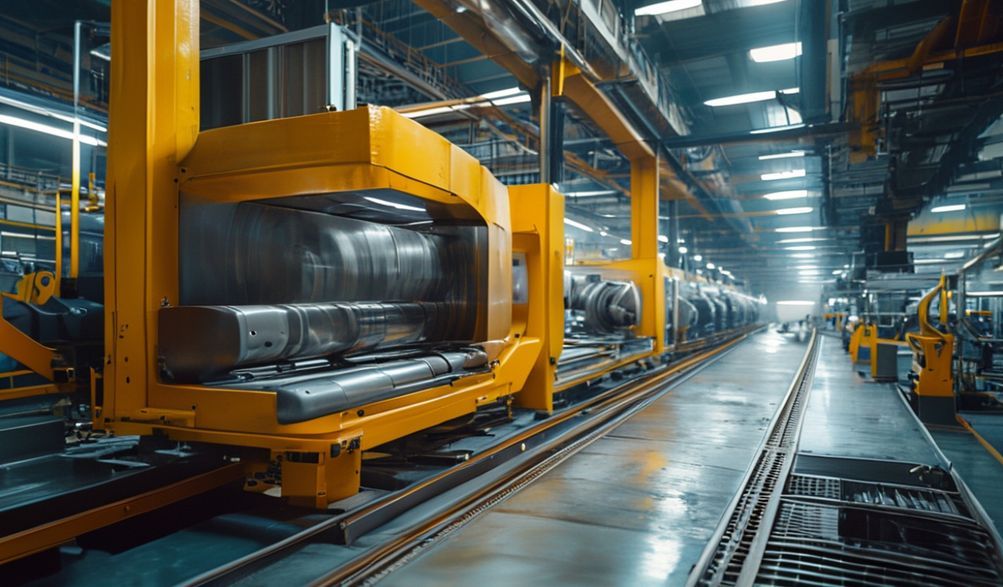
Dux tuus ad Praecipuam Sinensium Machinarum ad Lateres Cavos Faciendos Officinam: Intus FUDA Laterum Faciendorum Officina
Introductio
Orbis aedificiorum fabrica in fundamento efficacitatis, durabilitatis, et parsimoniae condita est. In medio huius industriae stat modicus sed novatorius later cavae concretus—materia quae parietes ex solidis gravibusque molibus in levia, insulantia, et structura firma membra convertit. Ad exsurgentem horum laterum postulationem occurrere plus quam manuum opera requirit; postulat machinamenta subtiliter excogitata quae in magno modo constantissime producere possint. Pro negotiatoribus, firmis aedificatoriis, et investoribus per orbem terrarum, haec machinamenta comparare saepe ad unum mercatum praevalentem ducit: Sinas.
Hic commentarius auctoritatis dux est ad mercatum illud peragrandum. Non solum superficiales indices et communia vendendi argumenta praeteribimus, sed etiam accuratam ac fide dignam disquisitionem de praecipuo actore praebebimus:FUDA lateris conficiendi officinaPropositum nostrum non est simplex approbatio, sed instrumenta professionalia ad aestimationem vobis praebere. Technologiam fundamentalem dissecabimus, criteria gravia selectionis officinarum delineabimus, atque illa instrumenta in neutra FUDA analysi adhibebimus. Hae perspicientiae in intellectu principiorum fabricandi, normarum industriae, et realitatum practicarum emptionis internationalis fundantur. Hortamur ut hac informatione utamini quasi fundamento propriae diligentiae severae.
Quid est Machina ad Cava Latericia Facienda? Technologia Principalis Explicata
Ut intellegas quid officina qualis FUDA praestet, primum machinas quae negotii eius cardinem tenent cognoscere debes. Machina ad cavos caudices faciendos est elaboratum instrumentum industriale, quod ad productionem caudicum concretorum cum cavitatibus cavis automatice efficiendam destinatur.
Munus Laterum Cavorum in Aedificatione Hodierna
Cur quare lateres cavi norma globalis facti sunt? Eorum commoda multiplicia sunt:
* Levis:Pondus imminutum onus mortuum in structura aedificii minuit, fundamenta leviora et sumptus vecturae inferiores permittens.
* Thermalis et Acustica Insulatio:Cavitates in laterculis naturalia obiecta contra calorem et sonum creant.
* Materiae Efficientia:Minore caemento ad eandem aream obtegendam adhibito, notabilis materiae compendium efficitur.
* Efficacia Impendiorum:Usus materiae inferior, tractatio facilior, et tempora constructionis celeriora summas impensas operis demittunt.
Quomodo Machina Automata Laterum Conficiendorum Operatur
Dum formae variantur, processus fundamentalis machinae automaticae has gradus sequitur:
1. Miscens:Materiae crudae (caementum, harena, congeries, cinis volaticus, aqua) in mixtorio accurate componuntur.
2. Alimentatio:Concretum mixtum in infundibulum machinae convehitur.
3. Fingere:Caementum in formam immittitur. Mixtio vibrationis alti frequentiae et pressionis hydraulicae materiam comprimit, aeris cavitates expellens et densum robustumque laterem efficiens.
4. Extractio & Consolidatio:Recens formatus caementicius massus in palletam vel in machinam quae fert eicitur. Deinde in cubiculum curationis (saepe vaporis humilis pressionis) intrat ut vires initiales acquirat antequam reponatur et curatione aeris ultima perficiatur.
Elementa praecipua quae qualitatem machinae definiunt comprehenduntmucusaciem et duritiam chalybis,Systema hydraulicafiducia et pressura,tabula moderatrix (automation level and user interface), and the conveyor/pallet system.
Genera Machinarum: A Semi-Automaticis ad Planta Omnino Automata
- Semi-Automaticus: Require more manual intervention for feeding and block removal. Lower initial investment, suitable for small-scale startups or specific, low-volume products.
- Omnino Automata: Integrated systems with automated material handling, pressing, and stacking. High output with minimal labor, ideal for medium to large-scale commercial production.
- Machinae Mobile Blocci: Smaller, often manual or semi-automatic machines that can be moved around a site. Output is low, but flexibility is high.
Key Factors When Choosing a China-Based Machinery Factory
Selecting a supplier is about more than just the price on a quote. It’s about partnering with a manufacturer that can ensure your long-term productivity. Here are the non-negotiable factors to evaluate.
Ars Fabricandi et Facultas Technica
A factory’s true value lies in its engineering depth. Look for:
* A dedicated R&D team that iterates on designs.
* In-house mold manufacturing capability, which allows for customization and faster mold replacements.
* The ability to customize machine parameters (pressure, vibration) for your specific local raw materials.
Quality Control Processes and Material Standards
The durability of your machine hinges on the quality of its parts and assembly. Scrutinize:
* Ferri Genus: The frame and mold should use high-grade, wear-resistant steel.
* Partes Fundamentales: Reputable brands for hydraulic pumps, valves, and PLC (Programmable Logic Controller) systems (e.g., Siemens, Schneider, Yuken) are a strong indicator of reliability.
* Assembly Precision: Welding should be clean and uniform; parts should align perfectly with minimal play.
Production Capacity and Supply Chain Stability
A factory’s scale impacts your project timeline.
* Can they handle your order volume without causing massive delays?
* Do they have stable relationships with component suppliers to avoid production halts?
* A well-established factory will have a smoother, more predictable production flow.
After-Sales Service: Installation, Training, and Technical Support
This is where many buyers face challenges. Essential service elements include:
* Clear, English-language documentation (manuals, electrical diagrams).
* Remote Support: Availability via WhatsApp, email, or video call for troubleshooting.
* Spare Parts Policy: A clear catalog and commitment to supplying wear-and-tear parts for years.
* Termini Cautionis: Typically 12 months for core components, clearly stated in the contract.
Spotlight on FUDA Brick Making Factory: A Detailed Analysis
Let’s apply the framework above to a specific manufacturer commonly encountered by global buyers: the FUDA brick making factory. (Note: This analysis is based on typical profiles and industry positioning of such manufacturers for educational purposes.)
Company Overview and Market Position
FUDA is typically presented as an established manufacturer located within China’s major industrial machinery hubs, such as Shandong, Fujian, or Guangdong provinces. Such factories often have over a decade of operation and have built a reputation focused on the export market, particularly targeting Southeast Asia, Africa, the Middle East, and South America. They position themselves as offering a balance between robust performance and competitive pricing.
Product Range and Technical Specifications
A factory like FUDA would typically offer a range to cater to different market segments:
* Flagship Models: Fully automatic stationary machines with outputs ranging from 5,000 to 20,000+ blocks per 8-hour shift.
* Clavis Speciminum: Machines are often compatible with various raw material mixes, including cement, sand, crushed stone, and industrial waste like fly ash. They feature hydraulic systems with pressures from 21 MPa upwards and programmable PLC control panels.
* Consuetudo: They usually offer a variety of standard mold sizes (e.g., 4″, 5″, 6″ hollow blocks) and the service to produce custom molds for unique block designs.
Strengths and Notable Features
Based on general industry profiles, their commonly promoted strengths include:
* Firmissima Structura: Emphasis on heavy-duty frames and durable components for long service life in demanding environments.
* Efficacia Energiae: Designs that aim to reduce power consumption during the vibration and pressing cycles.
* Facilis Usus: Control systems designed to be operable with moderate technical training.
Considerations for International Buyers
- Communication: Ensure there is a dedicated, technically proficient English-speaking contact.
- Incoterms: Negotiate clearly. FOB (Liberum in Navi) is common, meaning you own the goods and are responsible for cost and risk once they’re loaded on the ship. Pretium, Securitas, et Vectura simplifies the process but gives you less control over shipping.
- Factory Inspection: A virtual live video tour is a minimum requirement. It verifies the factory’s existence, scale, and ongoing production activity.
The Procurement Process: From Inquiry to Delivery
Navigating the purchase process methodically is key to a successful outcome.
Step 1: Initial Inquiry and Technical Clarification
Provide a detailed project specification:
* Desired block type, size, and compressive strength.
* Target daily/weekly output.
* Details of your local raw materials (provide samples if possible).
* Available power supply (voltage, phase).
* Factory floor space and ceiling height.
Step 2: Quotation Analysis and Negotiation
Compare quotes line-by-line:
* Does the price include all components (e.g., mold, pallets, conveyor, control panel)?
* What services are included (installation guidance, training)?
* Clarify Condiciones solutionisetwarranty details upfront.
Step 3: Factory Audit and Machine Inspection (Virtual or On-Site)
Your inspection checklist should include:
* View the workshop floor and assembly lines.
* See a machine of your model type under power (running if possible).
* Inspect the quality of welding, painting, and component brands.
* Ask to see their quality control and testing procedures.
Step 4: Shipping, Customs, and Installation Planning
- The factory should provide professional packing for ocean freight.
- They must supply all necessary export documents (Commercial Invoice, Packing List, Bill of Lading, Certificate of Origin).
- Plan for installation early. Identify a local technician or engineer who can oversee assembly, using the factory’s remote support.
Ensuring Value and Avoiding Common Pitfalls
A transparent approach helps mitigate the inherent risks of international trade.
Red Flags in Machinery Sourcing from China
- Unrealistically low prices compared to the market average.
- Vague or incomplete contracts that lack detailed specs and warranty terms.
- Pressure to make 100% payment upfront before production.
- Reluctance to provide a live video call from the factory floor.
- No technical documentation or only very basic manuals.
The Importance of a Prototype or Sample Batch
If your order is large enough, consider:
* Requesting a sample production run of your specific block design before full machine shipment.
* Having the factory send you block samples made from their machine using a simulative mix. Test these samples for strength and dimensions in your local lab.
Building a Successful Long-Term Partnership
View your supplier as a partner. Clear, respectful communication and a professional business relationship will pay dividends when you need technical support or wish to expand your production line in the future.
Interrogationes Saepius Petitae (ISP)
Q1: What is the typical price range for a FUDA hollow block making machine?
A: There is no single “typical price.” Cost varies drastically based on automation level (semi vs. fully automatic), configuration (with or without mixer, conveyor, stacker), and output capacity. A basic semi-automatic machine may start around $15,000, while a large, fully automatic production line can exceed $100,000. Always request a detailed quote based on your specific technical requirements.
Q2: Does FUDA factory provide installation guidance overseas?
A: Reputable manufacturers typically provide comprehensive installation manuals (with diagrams and photos), video guides, and ongoing remote support via video call. For an additional fee, most factories will also send their engineers to your site for installation and training. This service and its cost should be explicitly detailed in your purchase contract.
Q3: How do I verify the credibility of a factory like FUDA?
A: Use this checklist:
1. Request their official business license.
2. Visit their owned official website (not just an Alibaba storefront).
3. Ask for 2-3 customer references in a region similar to yours and contact them.
4. Insist on a live, unscripted video tour of their production facility and a running machine.
5. Check for industry certifications or participation in international trade fairs.
Q4: What are the payment terms usually expected?
A: A common and balanced structure is 30% T/T deposit to start production, 40% T/T payment before shipment after seeing photos/video of the finished machine, and 30% balance against a copy of the Bill of Lading. For larger orders, using a Letter of Credit (L/C) provides security for both buyer and seller.
Q5: Can the machine produce different block sizes and styles?
A: Yes, this is a standard feature. Machines use interchangeable mold boxes. You can order multiple molds for different block types (hollow, solid, paving, interlocking). Discuss the cost and production lead time for additional molds during your initial inquiry.
Conclusio.
Choosing the right hollow block making machine factory is a strategic decision that balances technical expertise, proven quality, reliable after-sales support, and transparent communication. As we’ve explored, a manufacturer like FUDA represents one of many options in China’s vast industrial landscape, each with its own profile and strengths.
The most critical step you can take is to apply a structured evaluation framework—exactly like the one outlined here—to every potential supplier. Let technical specifications, verifiable factory audits, and clear contractual terms guide your decision, not just the bottom-line price. Arm yourself with detailed project specs, reach out to multiple factories for comparison, and prioritize scheduling that crucial virtual or on-site factory inspection. Your due diligence today is the foundation of your production success tomorrow.
<