
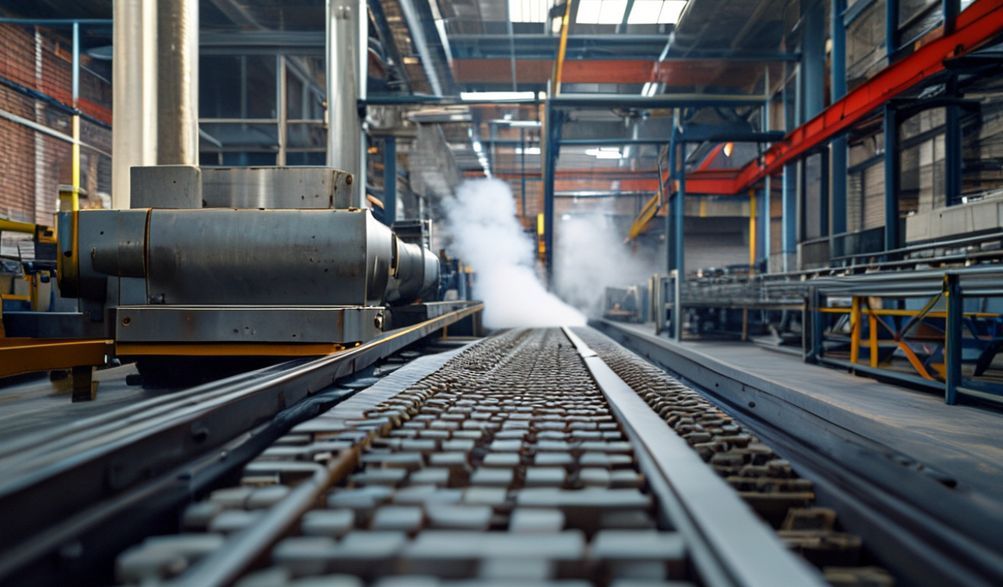
Panduan Muktamad untuk Mesin Acuan Blok: Di Dalam Kilang Pembuatan Bata Moden
Dalam dunia yang kompetitif bagi bahan binaan, bagaimana sebuah kilang pembuatan bata memastikan kualiti yang konsisten, pengeluaran tinggi, dan keuntungan? Jawapannya terletak di jantung operasi:mesin acuan blok.
Panduan ini memanfaatkan pengetahuan industri selama beberapa dekad untuk menjelaskan teknologi acuan blok. Kami akan membawa anda ke dalam proses kilang pembuatan bata profesional, seperti FUDA, untuk menunjukkan apa yang menjadikan barisan pengeluaran yang cekap dan boleh dipercayai.
Sama ada anda seorang kontraktor, pemilik kilang permulaan, atau profesional industri, catatan ini akan membantu anda memahami jenis mesin, ciri utama, kriteria pemilihan, dan amalan operasi terbaik. Matlamat kami adalah untuk menyediakan maklumat yang boleh dipercayai dan boleh dilaksanakan untuk membantu anda membuat keputusan yang berinformasi untuk perniagaan anda.
Memahami hakmesin acuan blokadalah penting untuk mana-mana kejayaankilang pembuatan bata.
Memahami Mesin Acuan Blok: Teknologi Teras untuk Pengeluaran
Sebelum menerokai lantai kilang, adalah penting untuk memahami asas-asas mesin yang menjadikan semuanya mungkin.
Apakah itu Mesin Acuan Blok?
Mesin acuan blok adalah peralatan industri khusus yang direka untuk menghasilkan blok konkrit, bata, dan pavers. Prinsip kerja utamanya melibatkan pemadatan campuran konkrit separa kering di dalam acuan (atau die) di bawah tekanan tinggi dan getaran.
Proses ini mengeluarkan poket udara dan memadatkan bahan secara padat, membentuk blok dengan bentuk, tekstur, dan integriti struktur yang tepat seperti yang diperlukan untuk pembinaan.
Dalam sebuah kilang pembuatan yang lengkap, mesin acuan blok adalah komponen utama. Ia adalah titik di mana bahan mentah diubah menjadi produk standard yang boleh dijual, menentukan kadar dan kualiti keseluruhan operasi.
Jenis-jenis Mesin Acuan Blok
Tidak semua mesin dicipta sama. Pilihan yang tepat bergantung sepenuhnya pada skala, bajet, dan matlamat automasi anda.
-
Mesin Manual & Semi-Automatik:Ini adalah titik masuk bagi banyak perniagaan.
- Mesin manualmemerlukan tenaga kerja manusia yang besar untuk memberi makan, memadatkan, dan mengalihkan blok. Ia berharga rendah tetapi mempunyai pengeluaran yang sangat terhad.
- Mesin separa automatikmemperkenalkan getaran mekanikal dan tekanan hidraulik tetapi masih memerlukan pengendalian manual blok untuk proses pengawetan dan penyusunan. Ia sesuai untuk projek berskala kecil, permulaan perniagaan, atau menghasilkan barangan khusus dalam kuantiti rendah.
-
Mesin Membuat Blok Sepenuhnya Automatik:Ini adalah tulang belakang bagi sebuah sistem moden, berproduktiviti tinggikilang pembuatan bataSistem-sistem ini mengintegrasikan keseluruhan proses:
- Pemberian bahan automatik melalui tali sawat penghantar.
- Kitaran acuan boleh diprogramkan dengan tekanan/getaran yang konsisten.
- Pengusiran blok automatik dan pemindahan ke kawasan pengerasan (melalui palet atau penumpuk).
- Mereka memaksimumkan output, memastikan kualiti seragam, dan mengurangkan kos buruh secara drastik, menawarkan pulangan pelaburan jangka panjang terbaik untuk pengeluaran berskala besar.
-
Mesin Blok Mudah Alih vs. Mesin Blok Pegun:
- Mesin Blok Mudah Alihlebih kecil, sering kali boleh ditarik, direka untuk menghasilkan blok secara langsung di tapak pembinaan, menghapuskan kos pengangkutan untuk produk akhir. Ia sesuai untuk projek besar dan terpencil.
- Mesin Blok Pegunadakah pemasangan tetap yang terdapat dikilang pembuatan bataMereka lebih besar, lebih berkuasa, dan direka untuk pengeluaran berterusan serta volum tinggi dalam persekitaran terkawal.
Komponen Utama dan Fungsinya
Kebolehpercayaan mesin acuan blok bergantung pada kualiti komponen terasnya:
- Hopper:Titik kemasukan untuk campuran konkrit siap. Pengumpan yang direka dengan baik memastikan aliran bahan yang konsisten dan tidak terganggu.
- Sistem Penghantar:Mengangkut campuran mentah dari pengadun ke corong mesin dalam talian automatik.
- Acuan (Die):Jantung mesin. Komponen keluli berketahanan tinggi ini menentukan bentuk, saiz, dan corak permukaan blok. Acuan boleh tukar membolehkan satu mesin menghasilkan pelbagai produk.
- Sistem Getaran:Penggetar frekuensi tinggi memampatkan campuran konkrit ke dalam acuan, menghapuskan lompang dan menghasilkan blok yang padat serta kuat.
- Sistem Hidraulik:Menyediakan tekanan yang amat besar yang diperlukan untuk memadatkan bahan. Kualiti pam hidraulik, silinder, dan injap secara langsung mempengaruhi ketahanan dan prestasi mesin.
- Panel Kawalan:"Otak" mesin, terutamanya dalam model automatik. Ia membolehkan operator menetapkan parameter, memantau kitaran, dan mendiagnosis masalah.
Melabur dalam mesin dengan komponen yang kukuh dan direka dengan baik daripada pengeluar yang bereputasi mengurangkan masa henti dan memastikan kualiti produk yang konsisten selama bertahun-tahun.
Di Dalam Kilang Pembuatan Bata Profesional: Aliran Kerja Pengeluaran FUDA
Mari kita melangkah masuk ke dalam persekitaran terkawal dan sistematik operasi profesional seperti kilang pembuatan bata FUDA untuk melihat bagaimana teori diterjemahkan ke dalam amalan.
Raw Material Preparation: The Foundation of Quality
The journey of a perfect block begins long before the mix reaches the machine. Consistency here is non-negotiable.
- Materials Used: A typical mix includes cement (the binder), aggregates (sand, gravel, or crushed stone for bulk and strength), fly ash (an industrial by-product that enhances workability and sustainability), and pigments for colored blocks.
- The Mixing Process: Using a computerized batching system, raw materials are combined in precise ratios. The moisture content is critically controlled; a semi-dry mix is essential for the block to hold its shape immediately after molding.
The Molding Process: Where the Magic Happens
This is the core of the kilang pembuatan bata where the mesin acuan blok takes center stage.
- Pemberian Makan: The prepared mix is conveyed into the machine’s feed hopper.
- Pengisian: The mix is distributed into the mold cavity.
- Pemadatan: The mold is subjected to intense hydraulic pressure and high-frequency vibration. This dual action compresses the material to its maximum density.
- Pengusiran: The freshly molded, yet still “green,” block is gently pushed out of the mold onto a pallet or conveyor belt.
- Pindah: In an automated factory, blocks on their pallets are automatically moved to the curing area.
Curing and Drying: Achieving Maximum Strength
A newly molded block only has “green strength.” Curing develops its full structural potential.
- Steam Curing: Used in advanced factories, blocks are moved into climate-controlled chambers. Here, controlled heat and humidity accelerate the cement hydration process, allowing blocks to achieve market-ready strength in 24 hours or less.
- Water Curing & Natural Curing: Traditional methods involve sprinkling blocks with water or simply allowing them to cure under tarps. These methods are effective but much slower, taking 7-28 days.
Quality Control & Testing: Ensuring Every Brick Meets Standards
A trustworthy kilang pembuatan bata like FUDA embeds quality checks at every stage.
- Pemeriksaan Dalam Proses: Operators regularly verify block dimensions, weight, and visual appearance.
- Laboratory Testing: Samples from production batches are tested for:
- Kekuatan Mampatan: Crushing blocks in a press to ensure they meet or exceed ASTM or local building code standards.
- Penyerapan Air: Determining porosity, which affects durability and freeze-thaw resistance.
- Ketepatan Dimensi: Ensuring consistency for easy, stable construction.
This rigorous commitment to standards is what separates professional suppliers from backyard operations.
How to Choose the Right Block Molding Machine for Your Needs
Selecting your machine is a pivotal investment. Here’s an expert framework for your decision.
Menilai Keperluan Pengeluaran Anda
Start by answering these key questions:
- What is my required output (blocks per hour or 8-hour shift)?
- What block types and sizes do I need to produce? (Hollow blocks, solid blocks, pavers?)
- What is my available factory space and power supply (3-phase electricity)?
- What is my realistic budget, including installation, training, and initial spare parts?
Must-Check Features & Specifications
Look beyond the brochure. Scrutinize these details:
- Kapasiti Pengeluaran: Ensure the stated output matches your needs for your most common block type.
- Power & Energy Consumption: Factor in long-term operational costs.
- Tahap Automasi: Balance higher upfront cost against long-term labor savings and consistency.
- Kepelbagaian Acuan: Can you easily source additional molds for new products?
- Perkhidmatan Selepas Jualan: This is arguably the most critical factor. What does the support package include?
Expert Tip: Always calculate the Kos Pemilikan Keseluruhan, not just the purchase price. A slightly more expensive, reliable machine with good support will cost less per block over 5 years than a cheap, problematic one.
Red Flags and Green Flags in a Supplier
Red Flags to Avoid:
* Vague or missing technical specifications.
* Inability or unwillingness to provide contactable customer references.
* A warranty that is unclear, very short, or excludes key components.
* Pressure to buy without allowing a factory visit or equipment demonstration.
Green Flags of a Trustworthy Partner:
* Transparency about their manufacturing facility and process.
* Offering comprehensive installation supervision and hands-on operator training.
* Maintaining a clear inventory of wear parts (like mold liners, vibration motors) for quick shipment.
* Providing genuine client testimonials and case studies.
Maximizing Efficiency and ROI in Your Brick Making Operation
Your machine is an asset. Proper operation and planning determine its return.
Operational Best Practices for Machine Longevity
- Daily: Clean the machine, especially the mold area, to prevent concrete buildup.
- Weekly: Check hydraulic fluid levels, inspect hoses for wear, and lubricate all moving parts as per the manual.
- Per Shift: Visually inspect molds for damage or excessive wear that could affect block quality.
Optimizing the Production Line Layout
Efficiency is about smooth material flow. A well-planned layout minimizes handling and delays.
- Position the raw material storage (cement silos, aggregate bays) for easy access to the mixer.
- Place the mixer to feed directly into the mesin acuan blok‘s conveyor.
- Ensure a clear, direct path from the machine to the curing area (racks or chambers).
- Designate ample space for post-curing storage and loading.
Calculating Your Return on Investment (ROI)
A simplified framework to estimate your payback period:
- Total Investment: Machine cost + Installation + Initial raw material stock.
- Monthly Operating Costs: Raw materials + Labor + Energy + Maintenance.
- Monthly Revenue: (Blocks produced per month) x (Selling price per block).
- Monthly Gross Profit: Monthly Revenue – Monthly Operating Costs.
- Simple Payback Period: Total Investment / Monthly Gross Profit.
Contoh: If your total investment is $100,000 and your monthly gross profit is $10,000, your payback period is approximately 10 months. After that, the profit contributes directly to your bottom line.
Frequently Asked Questions (FAQ) About Block Molding Machines
Q1: What is the average production capacity of a standard block molding machine?
A: Capacities vary widely. Small manual machines may produce 500-1000 blocks per 8-hour shift, while fully automatic lines in a large kilang pembuatan bata can produce over 10,000 blocks in the same time. The specific model and block size are determining factors.
Q2: Can one machine produce different types of blocks and pavers?
A: Yes, most machines are designed with interchangeable molds. A versatile mesin acuan blok can produce hollow blocks, solid blocks, interlocking pavers, curb stones, and more by simply changing the mold (die). Always confirm this capability with your supplier.
Q3: What kind of after-sales support should I expect from the manufacturer?
A: Reputable manufacturers offer installation supervision, operator training, a clear warranty (1+ years on core parts), and readily available technical support and spare parts. This support is crucial for minimizing downtime.
Q4: How important is the raw material mix for the final block quality?
A: Extremely important. The machine provides form and compaction, but the raw material mix determines the block’s strength, durability, and finish. A consistent, well-proportioned mix is non-negotiable for professional-grade results.
Kesimpulan
Memilih yang tepatmesin acuan blok is the most critical decision for establishing or upgrading a kilang pembuatan bata. It affects everything from product quality and brand reputation to operational efficiency and long-term profitability.
Success is built on a triad of pillars: robust, well-engineered machinery (demonstrating Kepakaran), optimized and systematic factory processes (establishing Kewibawaan), and an unwavering commitment to quality control and supplier reliability (building Kebolehpercayaan).
Use this guide as a framework for your research. Visit factories, ask detailed, technical questions of potential suppliers, and prioritize long-term partnership and support over the lowest initial price. With the right equipment and knowledge, your brick making operation can build a truly solid foundation for growth in the ever-evolving construction industry.
<