
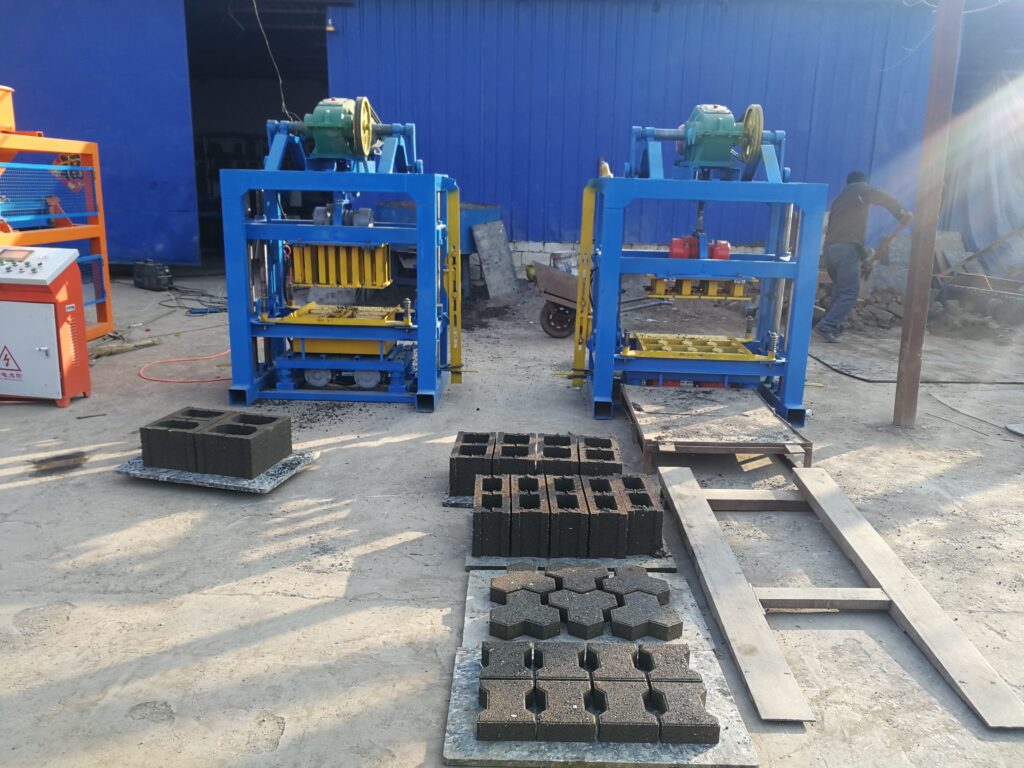
Pengenalan
Dalam arena persaingan pembekalan bahan binaan, penggunaan strategik pengeluaran bata berjentera mewakili satu lonjakan transformatif bagi perniagaan. Bagi pengedar, peniaga, dan pakar perolehan, menyatakan pelbagai kelebihan mesin pembuatan batu bata bukan sekadar taktik jualan; ia adalah komponen teras dalam menyediakan perundingan bernilai tambah kepada pelanggan.
I. Kelebihan Asas: Transformasi Operasi dan Ekonomi
Dorongan utama untuk melabur dalam mesin bata terletak pada kesan langsung dan boleh diukur terhadap operasi teras dan daya maju ekonomi sesebuah perniagaan.
A. Kecekapan dan Kebolehskalaan Pengeluaran yang Tiada Tandingan
Mekanisasi pada dasarnya mentakrifkan semula potensi output.
- Peningkatan Output Eksponen:Sebuah mesin separa automatik tunggal mampu menghasilkan dalam satu jam apa yang mungkin mengambil masa sehari untuk sekumpulan pekerja manual. Pemampatan masa pengeluaran yang drastik ini membolehkan perniagaan memenuhi pesanan yang lebih besar, mengambil pelbagai projek secara serentak, dan mengembangkan operasi mereka untuk memenuhi permintaan pasaran tanpa peningkatan linear dalam tenaga kerja.
- Throughput yang Konsisten:Berbeza dengan buruh manual yang tertakluk kepada keletihan dan ketidaktentuan, mesin beroperasi pada kadar yang konsisten dan terkalibrasi. Kebolehramalan ini membolehkan penjadualan pengeluaran yang tepat, masa penghantaran yang boleh dipercayai untuk pelanggan, dan pengurusan inventori yang cekap, sekaligus membentuk tulang belakang perniagaan bekalan yang profesional.
- Laluan Skalabiliti:Jentera menawarkan trajektori pertumbuhan yang jelas. Sebuah perniagaan boleh bermula dengan model separa automatik dan kemudian menaik taraf kepada barisan automatik sepenuhnya atau menambah peralatan bantu (pengadun automatik, penimbun). Skalabiliti modular ini melindungi pelaburan awal dan membolehkan perbelanjaan modal selaras dengan pertumbuhan perniagaan.
Pengurangan Drastik dalam Kos Pengeluaran dan Peningkatan Keuntungan
Hujah ekonomi untuk mekanisasi adalah meyakinkan, terutamanya melalui penyusunan semula struktur kos.
- Pengoptimuman Kos Buruh:Walaupun juruteknik mahir diperlukan untuk pengendalian dan penyelenggaraan mesin, tenaga kerja keseluruhan yang diperlukan bagi setiap ribu unit yang dihasilkan merosot mendadak. Ini mengubah tenaga kerja daripada kos berubah yang besar kepada kos tetap yang lebih kecil, lebih mahir, dan ketara meningkatkan margin kasar.
- Kecekapan Bahan dan Pengurangan Sisa: Precision feeding and compaction systems ensure that each unit contains the exact optimal amount of raw material. This eliminates the overuse and spillage common in manual processes. For businesses producing thousands of units daily, this precision translates into substantial direct savings on cement, aggregates, and other inputs.
- Ekonomi Skala: The high-volume output enabled by machinery reduces the fixed cost burden (e.g., administration, facility costs) per unit produced. It also strengthens purchasing power for bulk raw materials, further driving down the cost of goods sold (COGS) and enhancing competitiveness on price.
C. Superior Product Quality and Uniformity
This is a critical advantage that elevates a supplier from a commodity vendor to a trusted partner for contractors and developers.
- Dimensional Precision and Consistency: Every brick or block produced is a near-perfect replica of the last. This uniformity is impossible to achieve consistently by hand. Precise dimensions (length, width, height) streamline the bricklaying process, reduce mortar usage, and result in structurally sound, aesthetically pleasing walls.
- Controlled Physical Properties: Hydraulic pressure and vibration are precisely calibrated to produce products with specified compressive strength, density, and water absorption rates. This allows producers to consistently meet or exceed national and international building standards, opening doors to government tenders and large commercial projects with strict technical specifications.
- Enhanced Product Range and Versatility: With interchangeable molds, a single machine can produce a diverse portfolio: standard hollow blocks, solid bricks, paving stones, interlocking blocks, and decorative landscaping products. This versatility allows a producer to respond dynamically to market trends and customer requests without major capital reinvestment.
II. Strategic Business and Market Advantages
Beyond the factory floor, brick machinery confers significant strategic benefits that strengthen a business’s market position.
A. Supply Chain Control and Business Independence
Owning production capacity is a powerful strategic move.
- Mitigation of Supply Chain Volatility: Businesses are no longer at the mercy of third-party suppliers’ pricing, availability, or delivery schedules. This independence is invaluable in times of market scarcity or logistical disruptions, ensuring the business can continue to serve its own clients reliably.
- Control over Lead Times and Scheduling: In-house production allows for complete control over the manufacturing schedule. Urgent orders can be prioritized, and production can be planned around raw material deliveries and customer commitments, dramatically improving customer service levels.
- Brand Development and Proprietary Products: A company can develop its own branded line of blocks or specialize in unique, custom-designed products (e.g., specific textures, colors, or shapes). This moves competition away from price alone and towards value-added, branded differentiation.
B. Competitive Positioning and Market Responsiveness
Mechanization equips a business to compete effectively in a dynamic market.
- Competitive Pricing Power: Lower per-unit production costs allow a business to offer aggressive yet profitable pricing, capturing market share. Alternatively, it can maintain market-level pricing and enjoy superior profit margins.
- Ability to Handle Large-Scale Tenders: Public infrastructure projects, large housing developments, and commercial complexes require massive quantities of guaranteed, consistent-quality materials. Only machine-based production can reliably fulfill such contracts, making this a prerequisite for entering the high-volume project space.
- Rapid Response to Market Opportunities: The ability to quickly ramp up production or switch product lines allows a business to capitalize on emerging trends, such as a sudden demand for specific paving stones or eco-friendly blocks, before competitors reliant on external supply can react.
III. Societal and Environmental Impact Advantages
Modern brick machinery also aligns with broader global trends towards sustainability and social responsibility, which can be leveraged as a market advantage.
A. Environmental Sustainability and Resource Efficiency
- Utilization of Alternative Materials: Many machines can efficiently incorporate industrial by-products like fly ash, slag, or recycled construction and demolition waste into the production mix. This reduces the environmental footprint, minimizes landfill use, and can lower material costs.
- Energy-Efficient Production: Compared to traditional fired clay brick kilns, which are extremely energy-intensive, modern hydraulic pressing for concrete or stabilized earth blocks requires significantly less energy per unit, primarily for compaction and curing.
- Localized Production: Mobile or local stationary production reduces the carbon emissions associated with long-distance transportation of heavy building materials from centralized plants to dispersed construction sites.
B. Socio-Economic Contributions
- Entrepreneurship and Job Creation: While reducing unskilled labor, brick machinery fosters skilled employment in machine operation, maintenance, quality control, and business management. It empowers local entrepreneurs to build manufacturing businesses.
- Supporting Affordable Housing: The efficiency and cost-reduction benefits contribute to lowering the overall cost of construction, which is a critical factor in addressing the global need for affordable, quality housing.
- Dignified and Safer Working Conditions: Mechanization moves workers away from the repetitive strain injuries and dust exposure of manual molding and mixing into more supervisory, technical, and less physically taxing roles, improving workplace safety and job satisfaction.
Kesimpulan
The advantages of integrating brick making machinery into a construction materials business are profound and multi-layered. For the B2B professional, these benefits form a compelling narrative that speaks directly to the core aspirations of clients: greater profitability, operational control, market competitiveness, and sustainable growth.
The transition to mechanized production is not merely an equipment purchase; it is a strategic business decision that redefines a company’s capabilities. From the foundational gains in efficiency, cost reduction, and quality control to the strategic empowerment of supply chain independence and market agility, the machine becomes the engine of transformation. Furthermore, its role in promoting environmentally conscious production and socio-economic development adds a layer of value that resonates in today’s market.
Therefore, when advising distributors, dealers, and procurement teams, the conversation must elevate from technical specifications to a holistic discussion on business transformation. By comprehensively articulating this cascade of advantages—economic, strategic, and societal—you position yourself not just as a supplier of machinery, but as a pivotal partner in building your clients’ futures, one precise, profitable block at a time.
Soalan Lazim (FAQ)
Q1: We are a small contractor. Isn’t a brick machine an overinvestment for our scale?
A: Not necessarily. The market offers a range of machines, including smaller, mobile “egg-laying” models or compact semi-automatic units specifically designed for small to medium-sized enterprises (SMEs) and contractors. The key is a detailed ROI analysis. For a contractor regularly using blocks, the savings on purchased materials, combined with the ability to produce on-demand for your own projects and sell surplus to others, can lead to a rapid payback period and significantly improved project margins.
Q2: How does machine-made quality directly benefit our end-client, the builder or developer?
A: The benefits are direct and tangible for the builder:
- Pembinaan Lebih Cepat: Uniform blocks lay faster and with less adjustment.
- Pengurangan Sisa Bahan: Precise dimensions minimize cutting and reduce mortar waste.
- Predictable Structural Performance: Certified, consistent strength ensures the built structure meets engineering specifications.
- Superior Aesthetic Finish: Even walls and uniform joints enhance the final appearance of the building. This makes your product a productivity tool for the builder, not just a commodity.
Q3: Does adopting a brick making machine make our business more resilient to economic downturns?
A: Yes, it can enhance resilience in several ways. First, lower production costs provide a better margin buffer to withstand price pressures. Second, the ability to diversify your product line quickly allows you to pivot to market segments that may remain active (e.g., landscaping products during a housing slowdown). Third, control over your core supply insulates you from the financial instability of external suppliers.
Q4: Are the environmental benefits of using a brick machine a significant market differentiator?
A: Increasingly, yes. “Green” building practices are driven by regulations, certification systems (like LEED), and consumer demand. The ability to produce blocks with high recycled content, lower embodied energy, and through a localized supply chain is a powerful marketing tool. It can qualify projects for incentives and appeal to environmentally conscious developers, governments, and homeowners, creating a distinct competitive edge.
Q5: What is the single most underrated advantage of owning a brick machine?
A: Data and Process Control. Mechanized production generates data—output rates, block counts, downtime cycles. This allows for precise business planning, accurate job costing, and identification of inefficiencies. It transforms production from an artisanal activity into a managed, optimized industrial process, providing business intelligence that is crucial for strategic growth and continuous improvement.

