
Panduan Lengkap Mesin Blok Semen Berongga: Pemilihan, Pengoperasian, dan ROI
Pengenalan
Daya dorong global untuk pembinaan yang mampu dimiliki, pantas, dan tahan lama telah mengukuhkan blok simen berongga sebagai binaan asas dunia moden. Dari rumah kediaman ke kompleks komersial, unit serba guna ini menawarkan gabungan kekuatan, kecekapan, dan keberkesanan kos yang tiada tandingan. Namun, teras kejayaan mana-mana usaha pembuatan blok bukan sekadar bahan mentah—ia adalahmesin blok simen beronggaMemilih yang tepat adalah keputusan modal yang kritikal dan berisiko tinggi yang boleh menentukan nasib perniagaan anda.
Disusun daripada dekad pengalaman praktikal yang digabungkan daripada veteran industri, jurutera mekanikal, dan pengendali kilang berpengalaman, panduan ini memotong hingar pasaran. Kami memahami kekeliruan dan risiko yang wujud dalam pelaburan ini. Pilihan yang lemah boleh membawa kepada masa henti yang melumpuhkan, blok yang tidak memenuhi piawaian, dan pulangan pelaburan yang negatif.
Artikel ini berfungsi sebagai sumber rujukan komprehensif yang boleh dipercayai. Kami akan melangkah lebih jauh daripada brosur jualan untuk memberikan analisis mendalam yang berasaskan fakta, merangkumi jenis mesin, prinsip operasi teras, kos pemilikan sebenar, dan laluan jelas ke arah keuntungan. Setiap nasihat berlandaskan spesifikasi teknikal, kajian kes dunia sebenar, dan amalan terbaik industri, memastikan anda mempunyai maklumat yang boleh diandalkan untuk membina asas kukuh bagi perniagaan anda.
Apakah itu Mesin Blok Simen Berongga? Prinsip Teras dan Faedah
Sebelum melabur, adalah penting untuk memahami apa yang anda beli dan nilai yang dihasilkannya. Mesin blok simen berongga bukan sekadar mesin tekan; ia adalah sistem kejuruteraan berketepatan yang direka untuk mengubah bahan mentah menjadi komponen pembinaan berkekuatan tinggi yang piawai.
Mendefinisikan Mesin dan Keluarannya
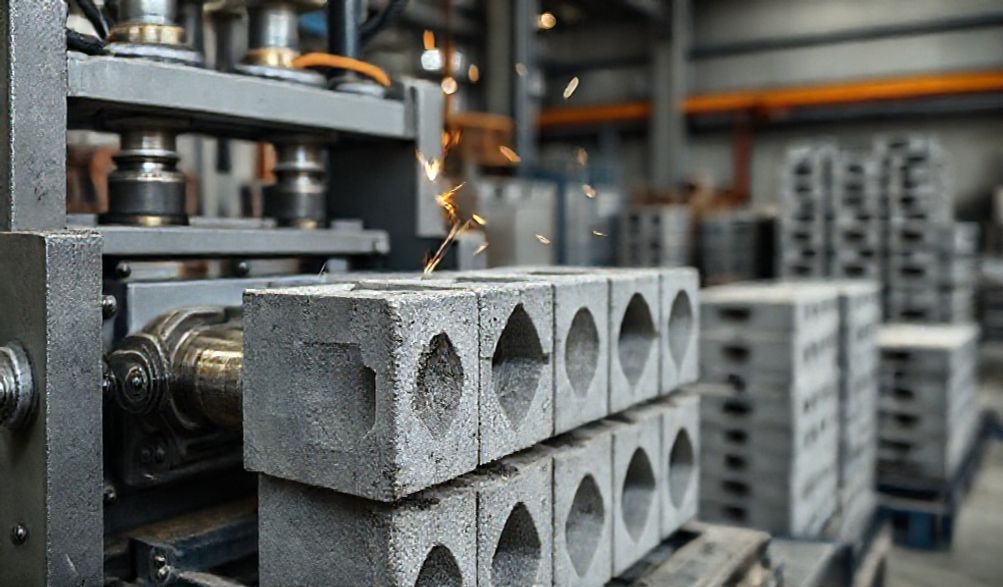
Pada terasnya, mesin blok simen berongga adalah peranti yang memadatkan campuran separa kering simen, pasir, dan agregat (seperti batu hancur) ke dalam acuan tertentu. Ciri penentunya adalah kemasukan "teras" atau "penebuk" di dalam acuan yang mencipta rongga berongga ciri dalam blok siap.
Rongga-rongga ini bukanlah tanda kelemahan tetapi tanda reka bentuk yang bijak. Ia memberikan manfaat yang besar:
* Ringan:Mengurangkan beban mati keseluruhan struktur, membolehkan asas yang lebih ringan dan pengendalian yang lebih mudah.
* Penebat Terma & Akustik:Poket udara di dalam blok bertindak sebagai penghalang kepada haba dan bunyi.
* Kecekapan Bahan:Menggunakan kurang konkrit untuk kawasan muka yang sama, mengurangkan kos bahan per blok.
* Integrasi Utiliti:Kekosongan menyediakan saluran yang mudah untuk memasang konduit elektrik dan paip paip.
Bagaimana Ia Berfungsi: Proses Pengeluaran
Walaupun kerumitan mesin berbeza, proses pengeluaran asas tetap konsisten. Memahami aliran ini menunjukkan peranan mesin dalam setiap peringkat.
- Pemberian Bahan Mentah:Kuantiti simen, pasir dan agregat yang telah diukur terlebih dahulu dimuatkan ke dalam corong mesin.
- Mencampurkan:Bahan-bahan dicampurkan dengan teliti, seringkali dengan jumlah air yang ditetapkan, untuk mencapai konsistensi separa kering yang seragam.
- Pembentukan dan Pemadatan:Ini adalah fungsi kritikal mesin. Campuran dimasukkan ke dalam kotak acuan. Serentak, dua daya bertindak:
- Getaran:Getaran frekuensi tinggi menghilangkan poket udara dan memastikan campuran mengalir ke setiap sudut acuan.
- Tekanan Pemadatan:Sebuah ram hidraulik atau mekanikal mengenakan tekanan kuat dari atas, memampatkan campuran untuk mencapai kekuatan blok yang diperlukan.
- Pengusiran dan Penyembuhan:Blok hijau yang baru terbentuk dikeluarkan ke atas palet kayu atau keluli. Ia kemudiannya dipindahkan ke kawasan pematangan, di mana ia memperoleh kekuatan dari masa ke masa melalui penghidratan terkawal.
- Palletizing: Once cured, blocks are stacked and prepared for transport.
Key Advantages Over Solid Blocks and Other Materials
Why choose hollow blocks over solid ones or traditional bricks?
* vs. Solid Concrete Blocks: Hollow blocks offer a superior strength-to-weight ratio, better insulation, and lower material cost per unit. They are easier for masons to handle and lay, speeding up construction time.
* vs. Bata Tanah Liat Bakar: The production of hollow blocks is faster, more energy-efficient (no kiln firing required), and less dependent on specific types of soil. They also typically offer larger unit sizes, leading to faster wall construction.
Types of Hollow Cement Block Machines: Finding Your Perfect Match
The market offers a spectrum of machines, from simple manual presses to fully automated production lines. Your choice must align with your business scale, budget, and labor strategy.
Mesin Manual / Dikendalikan Tangan
These are the most basic type, relying entirely on human leverage to compact the mix.
* Sesuai Untuk: Entrepreneurs testing the market, very small-scale projects (e.g., building your own home), or regions with extremely limited or unreliable power access.
* Kelebihan: Very low initial investment, simple mechanics with minimal maintenance, portable, no electricity required.
* Keburukan: Extremely labor-intensive, very low output (typically 100-400 blocks per day), inconsistent block quality dependent on operator strength and technique, not suitable for commercial production.
Mesin Semi-Automatik
This category strikes the most popular balance for small to medium businesses (SMBs). They use electric power to drive a hydraulic system and vibration table, automating the most strenuous parts of the process.
* Sesuai Untuk: Growing startups and established SMBs aiming for consistent commercial production.
* Kelebihan: Significantly higher and more consistent output than manual machines (e.g., 800-3000 blocks per 8-hour shift), better block density and strength due to powered vibration and pressure, reduces physical labor to feeding and palletizing.
* Keburukan: Requires a stable power supply, higher upfront cost than manual machines, requires basic operational training, and some manual intervention is still needed.
Mesin Pembuat Blok Sepenuhnya Automatik
These are complete production systems, often with robotic pallet handlers, conveyor belts, and computerized controls.
* Sesuai Untuk: Large-scale manufacturers, industrial plants supplying major construction projects, or businesses focused on maximizing output with minimal labor.
* Kelebihan: Highest possible output (10,000+ blocks per day), exceptional consistency in block quality, minimal manual labor required (often just supervision and maintenance), can integrate with automated curing and stacking systems.
* Keburukan: Very high capital investment, requires significant space and industrial-grade power supply, complex maintenance requiring specialized technicians, lower flexibility for short production runs.
Mesin Blok Stasioner vs. Mudah Alih
This is another key distinction:
* Mesin Pegun: These are fixed installations, typically the semi-automatic and fully automatic types. They form the core of a block-making plant and are chosen for high-volume, centralized production.
* Mobile Machines (Block Making Plants on Wheels): These are smaller, trailer-mounted units designed for on-site production. They eliminate transport costs for blocks and are ideal for large, remote projects like dams, large housing estates, or infrastructure where transporting finished blocks is expensive.
Critical Factors for Choosing Your Machine (Buyer’s Checklist)
Armed with knowledge of machine types, use this authoritative checklist to evaluate specific models and suppliers. Prioritizing these factors is a lesson learned from countless successful (and unsuccessful) setups.
Menilai Keperluan Pengeluaran Anda
Answer these questions honestly before looking at any machine brochure:
* Daily/Shift Output: How many blocks do you need to produce to meet demand and be profitable? Be realistic about your market.
* Spesifikasi Blok: What are the standard block sizes (e.g., 4″, 6″, 8″) and types (hollow, solid, paving, interlocking) in demand in your region?
* Ruang Tersedia: Do you have adequate covered space for the machine, raw material storage, and a curing area?
* Bekalan Kuasa: What is your available electrical power (Voltage, Phase)? Can it support the machine’s motor?
Machine Specifications to Scrutinize
Don’t just look at the price tag; examine the engineering.
* Sistem Tekanan & Getaran: This is the engine of your machine. A high compaction force (measured in tons or kN) and a powerful, balanced vibration system are non-negotiable for producing dense, high-strength blocks that meet ASTM or IS codes. Ask about the vibration motor’s frequency and amplitude.
* Masa Kitaran: How many blocks does the machine produce per hour? A faster cycle time means higher potential output. Compare this figure across models in the same category.
* Kepelbagaian Acuan: Can the machine easily accept different mold sets? How quickly can molds be changed? A versatile machine allows you to adapt to market demands for different block styles and paving slabs.
* Kualiti Binaan & Ketahanan: Inspect the quality of steel used in the frame and mold. Are critical components like hydraulic cylinders and pumps from reputable brands? A machine built with inferior steel will wear out quickly under constant vibration and pressure, leading to frequent breakdowns.
Beyond the Machine: Total Cost of Ownership
The purchase price is just the beginning. A savvy buyer considers:
* Pemasangan & Pentauliahan: Are these services included? Is technical support provided to get your first batch right?
* Latihan: Is comprehensive operator training part of the deal? Proper training prevents costly mistakes and accidents.
* Kos Penyelenggaraan: What is the cost and availability of spare parts (like mold liners, hydraulic seals, vibration motors)? A cheap machine with expensive, hard-to-find parts is a false economy.
* Penggunaan Tenaga: Request the motor power ratings. A more efficient machine saves significant money on electricity over its lifespan.
Operating and Maintaining Your Machine for Longevity
Your machine is a productivity asset. Treating it with care, based on practical expertise, is the single best way to ensure a long service life and consistent block quality.
Raw Material Preparation: The Foundation of Quality Blocks
The best machine cannot compensate for poor raw materials. This is the most common on-site challenge.
* Reka Bentuk Campuran: Follow a proven mix ratio (e.g., 1 part cement : 6 parts aggregate/sand blend is common for non-load-bearing blocks). The exact ratio depends on your desired block strength and local material properties.
* Kualiti Bahan: Use clean, sharp sand and well-graded aggregates. Avoid silt or organic matter. Cement must be fresh and stored properly.
* Water Content: This is critical. The mix should be semi-dry—just enough water to allow compaction but not so much that the block slumps after ejection. A simple “ball-in-hand” test (the mix should hold its shape when squeezed) is a classic operator technique.
Step-by-Step Operational Guide
- Pre-Start Check: Ensure all guards are in place, the hydraulic oil level is correct, and no tools are left on the vibration table.
- Lubrication: Grease all moving points as per the manual.
- Pemuatan Bahan: Fill the hopper with a consistent, well-mixed batch.
- Permulaan Kitaran: Start the machine cycle. The operator typically fills the mold, initiates vibration/compaction, and then removes the finished block onto a pallet.
- Post-Operation: Clean the mold, hopper, and feed system thoroughly before shutting down. Any leftover mix will harden and cause major issues.
Essential Maintenance Schedule
Preventive maintenance is far cheaper than repair downtime.
* Daily: Clean the machine thoroughly, especially the mold cavity. Check for loose bolts or nuts. Inspect hydraulic lines for leaks.
* Weekly: Check and tighten all electrical connections. Inspect the mold for wear or damage. Lubricate all bearings and guide rails.
* Monthly: Change hydraulic oil and filters as specified. Check the vibration motor mounts and alignment. Perform a thorough inspection of all safety devices.
Troubleshooting Common Issues
- Cracked Blocks: Usually caused by too much water in the mix, excessive vibration, or premature handling of green blocks.
- Poor Surface Finish/Sticking in Mold: Often due to an under-lubricated or worn-out mold, or a mix that is too wet.
- Machine Jam or Low Pressure: Check hydraulic oil level and filters. Look for a failed solenoid valve or a leaking hydraulic cylinder.
Calculating ROI and Building a Profitable Business
A hollow block machine is a business-in-a-box. Understanding the financials is as important as understanding the mechanics.
Initial Investment Breakdown
- Machine Cost: The largest variable, based on type and automation.
- Land & Shed: Cost for the production floor and curing area.
- Raw Material Inventory: Initial stockpile of cement, sand, and aggregates.
- Buruh: Wages for operators and helpers.
- Utilities & Installation: Electrical work, water connection, and machine setup.
Operational Cost Analysis (Cost per Block)
This is your key metric. Break down the cost to produce one standard block:
* Bahan-bahan: Cost of cement, sand, aggregate used in one block.
* Buruh: (Total daily labor cost) / (Number of blocks produced per day).
* Kuasa: (Machine’s hourly power consumption * hours run) / (Blocks produced).
* Maintenance & Depreciation: (Estimated annual maintenance cost + machine depreciation) / (Annual production volume).
Contoh: If your total cost per block is $0.50 and the market selling price is $0.80, your gross profit per block is $0.30.
Revenue Projections and Market Strategies
- Pricing: Research local market prices. Your price must cover your cost-per-block and provide a healthy margin while remaining competitive.
- Customers: Identify your target market: local contractors, real estate developers, hardware/construction material retailers, government housing projects.
- Marketing: Quality and consistency are your best advertisements. Offer samples to contractors. Ensure your blocks are neatly stacked and delivered on time.
Key Success Factors
Long-term profitability hinges on:
1. Uncompromising Block Quality: Consistently producing blocks that meet or exceed strength standards builds an unbeatable reputation.
2. Reliable Supply: Never miss a delivery deadline. Build a buffer stock to manage demand fluctuations.
3. Customer Relationships: Work closely with your clients. Understand their needs and be a reliable partner in their projects.
Soalan Lazim (FAQ)
Q1: What is the average production capacity of a small-scale hollow block machine?
A: For a typical semi-automatic machine suitable for an SMB, expect a realistic output range of 800 hingga 2,500 blok setiap syif 8 jam. This varies dramatically based on block size, operator speed, and machine model. Manual machines produce far less, while automatic systems produce far more.
Q2: Can one machine produce different sizes of blocks?
A: Yes, absolutely. This is achieved by changing the mold set. Reputable manufacturers offer a variety of interchangeable molds for different block sizes and styles (e.g., hollow, solid, paving). However, purchasing additional molds is an extra cost, and changing them requires time and care.
Q3: What is the curing time for blocks, and how should they be stored?
A: Blocks gain strength over time. They should remain in their molds on pallets for at least 24 hours before being carefully stacked. For full strength (as per ASTM C90), blocks require a 28-day curing period. Best practice involves keeping them moist (through water spraying or covered storage) for the first 7 days to ensure proper cement hydration.
Q4: Is special training required to operate a semi-automatic/automatic machine?
A: While suppliers provide basic operational training, investing in thorough training is crucial. Proper training ensures operator safety, maximizes production efficiency, minimizes raw material waste, and extends machine life by preventing misuse. It is not a step to be skipped.
Q5: How do I ensure the blocks meet local construction standards?
A: First, use a proven mix design and operate your machine within its specified parameters. Then, have samples of your blocks tested at a certified construction materials laboratory. They will test for compressive strength, water absorption, and dimensional tolerance against relevant standards (e.g., ASTM in the US, IS in India, BS in the UK). This certification is a powerful tool for marketing and building trust.
Kesimpulan
Choosing the right hollow cement block machine is a strategic decision that hinges on a clear understanding of your production scale, budget, and long-term business goals. It’s an investment that goes beyond metal and motors—it’s an investment in your capability to supply the construction industry.
Our final, hard-earned advice from the field: due diligence is paramount. Whenever possible, visit the supplier’s factory or an existing client’s site to see the machine in operation. Listen to the sound of its operation, observe the blocks it produces, and ask current owners about after-sales service and parts availability. Remember, the cheapest machine can become the most expensive if it leads to downtime and poor-quality products.
Ready to move forward? Use the detailed checklist in Section 3 to crystallize your requirements. Then, approach reputable suppliers with clear, informed specifications. By investing in knowledge upfront, you lay the strongest possible foundation for a profitable, sustainable, and respected block manufacturing business.
<