
Guia Completo sobre Máquinas de Blocos de Cimento Vazados: Seleção, Operação e Retorno sobre Investimento
Introdução
A busca global por construções acessíveis, rápidas e duráveis consolidou o bloco de cimento vazado como um elemento fundamental do mundo moderno. De residências a complexos comerciais, essas unidades versáteis oferecem uma combinação incomparável de resistência, eficiência e custo-benefício. No entanto, o cerne de qualquer empreendimento bem-sucedido na fabricação de blocos não está apenas nas matérias-primas—está namáquina de bloco de cimento ocoEscolher o correto é uma decisão de capital crítica e de alto risco que pode determinar o destino do seu negócio.
Compilado a partir de décadas de experiência prática combinada de veteranos do setor, engenheiros mecânicos e operadores experientes de plantas, este guia corta o ruído do mercado. Entendemos a confusão e o risco inerentes a este investimento. Uma escolha ruim pode levar a paralisações incapacitantes, blocos de qualidade inferior e um retorno sobre o investimento negativo.
Este artigo serve como seu recurso confiável e abrangente. Vamos além dos folhetos de vendas para oferecer uma análise factual e aprofundada, abrangendo tipos de máquinas, princípios operacionais fundamentais, o custo real de propriedade e caminhos claros para a rentabilidade. Cada conselho é fundamentado em especificações técnicas, estudos de caso do mundo real e melhores práticas do setor, garantindo que você tenha as informações confiáveis necessárias para construir uma base sólida para o seu negócio.
O que é uma Máquina de Bloco de Cimento Vazado? Princípios Fundamentais e Benefícios
Antes de investir, é crucial entender o que você está comprando e o valor que isso cria. Uma máquina de blocos de cimento oco é mais do que apenas uma prensa; é um sistema de engenharia de precisão projetado para transformar matérias-primas em componentes de construção padronizados e de alta resistência.
Definindo a Máquina e Sua Saída
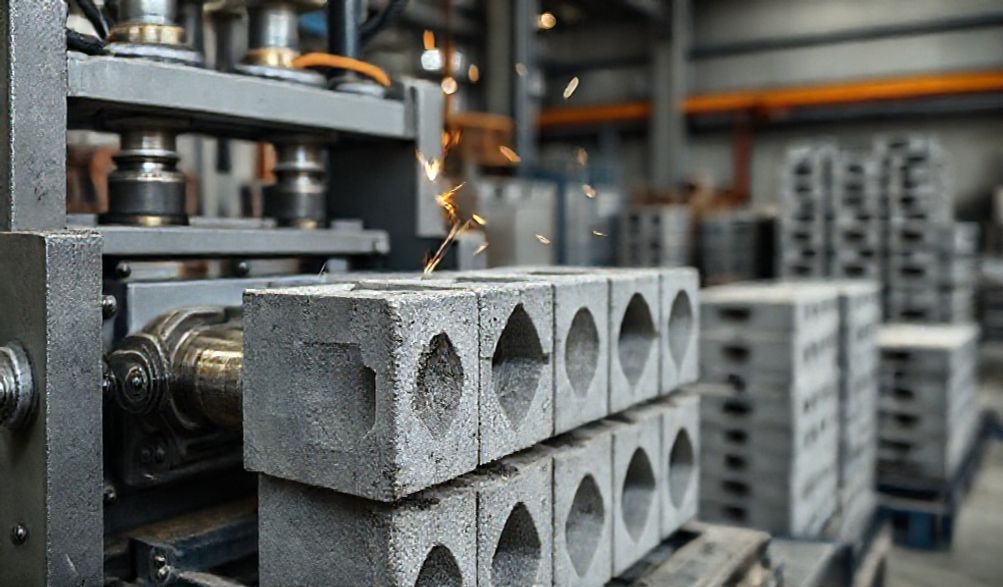
Em sua essência, uma máquina de bloco de cimento vazado é um dispositivo que compacta uma mistura semisseca de cimento, areia e agregados (como pedra britada) em um molde específico. A característica definidora é a inclusão de "núcleos" ou "punções" dentro do molde que criam as cavidades vazadas características no bloco acabado.
Essas cavidades não são um sinal de fraqueza, mas uma marca de design inteligente. Elas oferecem benefícios significativos:
* Leve:Reduz a carga permanente total de uma estrutura, permitindo fundações mais leves e manuseio mais fácil.
* Isolamento Térmico e Acústico:Os bolsões de ar dentro dos blocos atuam como uma barreira contra calor e som.
* Eficiência de Materiais:Utiliza menos concreto para a mesma área superficial, reduzindo os custos de material por bloco.
* Integração de Utilidades:Os vazios fornecem canais convenientes para a passagem de conduítes elétricos e tubulações hidráulicas.
Como Funciona: O Processo de Produção
Embora a complexidade das máquinas varie, o processo fundamental de produção permanece consistente. Compreender esse fluxo demonstra o papel da máquina em cada estágio.
- Alimentação de Matérias-Primas:Quantidades pré-medidas de cimento, areia e agregado são carregadas no funil da máquina.
- Mistura:Os materiais são misturados completamente, geralmente com uma quantidade medida de água, para alcançar uma consistência uniforme e semisseca.
- Moldagem e Compactação:Esta é a função crítica da máquina. A mistura é alimentada na caixa de molde. Simultaneamente, duas forças atuam:
- Vibração:A vibração de alta frequência remove bolsas de ar e garante que a mistura flua para todos os cantos do molde.
- Pressão de Compactação:Um martelo hidráulico ou mecânico aplica pressão intensa a partir do topo, densificando a mistura para atingir a resistência necessária do bloco.
- Ejeção e Cura:O bloco recém-formado e verde é ejetado sobre um palete de madeira ou aço. Em seguida, é movido para uma área de cura, onde ganha resistência ao longo do tempo por meio de hidratação controlada.
- Paletização: Once cured, blocks are stacked and prepared for transport.
Key Advantages Over Solid Blocks and Other Materials
Why choose hollow blocks over solid ones or traditional bricks?
* vs. Solid Concrete Blocks: Hollow blocks offer a superior strength-to-weight ratio, better insulation, and lower material cost per unit. They are easier for masons to handle and lay, speeding up construction time.
* vs. Fired Clay Bricks: The production of hollow blocks is faster, more energy-efficient (no kiln firing required), and less dependent on specific types of soil. They also typically offer larger unit sizes, leading to faster wall construction.
Types of Hollow Cement Block Machines: Finding Your Perfect Match
The market offers a spectrum of machines, from simple manual presses to fully automated production lines. Your choice must align with your business scale, budget, and labor strategy.
Máquinas Manuais / Operadas Manualmente
These are the most basic type, relying entirely on human leverage to compact the mix.
* Ideal Para: Entrepreneurs testing the market, very small-scale projects (e.g., building your own home), or regions with extremely limited or unreliable power access.
* Prós: Very low initial investment, simple mechanics with minimal maintenance, portable, no electricity required.
* Contras: Extremely labor-intensive, very low output (typically 100-400 blocks per day), inconsistent block quality dependent on operator strength and technique, not suitable for commercial production.
Máquinas Semiautomáticas
This category strikes the most popular balance for small to medium businesses (SMBs). They use electric power to drive a hydraulic system and vibration table, automating the most strenuous parts of the process.
* Ideal Para: Growing startups and established SMBs aiming for consistent commercial production.
* Prós: Significantly higher and more consistent output than manual machines (e.g., 800-3000 blocks per 8-hour shift), better block density and strength due to powered vibration and pressure, reduces physical labor to feeding and palletizing.
* Contras: Requires a stable power supply, higher upfront cost than manual machines, requires basic operational training, and some manual intervention is still needed.
Máquinas de Fabricação de Blocos Totalmente Automáticas
These are complete production systems, often with robotic pallet handlers, conveyor belts, and computerized controls.
* Ideal Para: Large-scale manufacturers, industrial plants supplying major construction projects, or businesses focused on maximizing output with minimal labor.
* Prós: Highest possible output (10,000+ blocks per day), exceptional consistency in block quality, minimal manual labor required (often just supervision and maintenance), can integrate with automated curing and stacking systems.
* Contras: Very high capital investment, requires significant space and industrial-grade power supply, complex maintenance requiring specialized technicians, lower flexibility for short production runs.
Máquinas de Bloco Estacionárias vs. Móveis
This is another key distinction:
* Máquinas Estacionárias: These are fixed installations, typically the semi-automatic and fully automatic types. They form the core of a block-making plant and are chosen for high-volume, centralized production.
* Mobile Machines (Block Making Plants on Wheels): These are smaller, trailer-mounted units designed for on-site production. They eliminate transport costs for blocks and are ideal for large, remote projects like dams, large housing estates, or infrastructure where transporting finished blocks is expensive.
Critical Factors for Choosing Your Machine (Buyer’s Checklist)
Armed with knowledge of machine types, use this authoritative checklist to evaluate specific models and suppliers. Prioritizing these factors is a lesson learned from countless successful (and unsuccessful) setups.
Avaliando Suas Necessidades de Produção
Answer these questions honestly before looking at any machine brochure:
* Daily/Shift Output: How many blocks do you need to produce to meet demand and be profitable? Be realistic about your market.
* Especificações do Bloco What are the standard block sizes (e.g., 4″, 6″, 8″) and types (hollow, solid, paving, interlocking) in demand in your region?
* Espaço Disponível: Do you have adequate covered space for the machine, raw material storage, and a curing area?
* Fonte de Alimentação: What is your available electrical power (Voltage, Phase)? Can it support the machine’s motor?
Machine Specifications to Scrutinize
Don’t just look at the price tag; examine the engineering.
* Sistema de Pressão e Vibração: This is the engine of your machine. A high compaction force (measured in tons or kN) and a powerful, balanced vibration system are non-negotiable for producing dense, high-strength blocks that meet ASTM or IS codes. Ask about the vibration motor’s frequency and amplitude.
* Tempo de Ciclo: How many blocks does the machine produce per hour? A faster cycle time means higher potential output. Compare this figure across models in the same category.
* Versatilidade do Molde: Can the machine easily accept different mold sets? How quickly can molds be changed? A versatile machine allows you to adapt to market demands for different block styles and paving slabs.
* Qualidade de Construção e Durabilidade: Inspect the quality of steel used in the frame and mold. Are critical components like hydraulic cylinders and pumps from reputable brands? A machine built with inferior steel will wear out quickly under constant vibration and pressure, leading to frequent breakdowns.
Beyond the Machine: Total Cost of Ownership
The purchase price is just the beginning. A savvy buyer considers:
* Instalação e Comissionamento: Are these services included? Is technical support provided to get your first batch right?
* Treinamento: Is comprehensive operator training part of the deal? Proper training prevents costly mistakes and accidents.
* Custos de Manutenção: What is the cost and availability of spare parts (like mold liners, hydraulic seals, vibration motors)? A cheap machine with expensive, hard-to-find parts is a false economy.
* Consumo de Energia Request the motor power ratings. A more efficient machine saves significant money on electricity over its lifespan.
Operating and Maintaining Your Machine for Longevity
Your machine is a productivity asset. Treating it with care, based on practical expertise, is the single best way to ensure a long service life and consistent block quality.
Raw Material Preparation: The Foundation of Quality Blocks
The best machine cannot compensate for poor raw materials. This is the most common on-site challenge.
* Dosagem de Concreto: Follow a proven mix ratio (e.g., 1 part cement : 6 parts aggregate/sand blend is common for non-load-bearing blocks). The exact ratio depends on your desired block strength and local material properties.
* Qualidade do Material: Use clean, sharp sand and well-graded aggregates. Avoid silt or organic matter. Cement must be fresh and stored properly.
* Water Content: This is critical. The mix should be semi-dry—just enough water to allow compaction but not so much that the block slumps after ejection. A simple “ball-in-hand” test (the mix should hold its shape when squeezed) is a classic operator technique.
Step-by-Step Operational Guide
- Pre-Start Check: Ensure all guards are in place, the hydraulic oil level is correct, and no tools are left on the vibration table.
- Lubrication: Grease all moving points as per the manual.
- Material Loading: Fill the hopper with a consistent, well-mixed batch.
- Início do Ciclo: Start the machine cycle. The operator typically fills the mold, initiates vibration/compaction, and then removes the finished block onto a pallet.
- Post-Operation: Clean the mold, hopper, and feed system thoroughly before shutting down. Any leftover mix will harden and cause major issues.
Essential Maintenance Schedule
Preventive maintenance is far cheaper than repair downtime.
* Diário: Clean the machine thoroughly, especially the mold cavity. Check for loose bolts or nuts. Inspect hydraulic lines for leaks.
* Semanal: Check and tighten all electrical connections. Inspect the mold for wear or damage. Lubricate all bearings and guide rails.
* Mensalmente: Change hydraulic oil and filters as specified. Check the vibration motor mounts and alignment. Perform a thorough inspection of all safety devices.
Solução de Problemas Comuns
- Cracked Blocks: Usually caused by too much water in the mix, excessive vibration, or premature handling of green blocks.
- Poor Surface Finish/Sticking in Mold: Often due to an under-lubricated or worn-out mold, or a mix that is too wet.
- Machine Jam or Low Pressure: Check hydraulic oil level and filters. Look for a failed solenoid valve or a leaking hydraulic cylinder.
Calculating ROI and Building a Profitable Business
A hollow block machine is a business-in-a-box. Understanding the financials is as important as understanding the mechanics.
Initial Investment Breakdown
- Machine Cost: The largest variable, based on type and automation.
- Land & Shed: Cost for the production floor and curing area.
- Raw Material Inventory: Initial stockpile of cement, sand, and aggregates.
- Trabalho: Wages for operators and helpers.
- Utilities & Installation: Electrical work, water connection, and machine setup.
Operational Cost Analysis (Cost per Block)
This is your key metric. Break down the cost to produce one standard block:
* Materiais: Cost of cement, sand, aggregate used in one block.
* Trabalho: (Total daily labor cost) / (Number of blocks produced per day).
* Poder: (Machine’s hourly power consumption * hours run) / (Blocks produced).
* Maintenance & Depreciation: (Estimated annual maintenance cost + machine depreciation) / (Annual production volume).
Exemplo: If your total cost per block is $0.50 and the market selling price is $0.80, your gross profit per block is $0.30.
Revenue Projections and Market Strategies
- Pricing: Research local market prices. Your price must cover your cost-per-block and provide a healthy margin while remaining competitive.
- Customers: Identify your target market: local contractors, real estate developers, hardware/construction material retailers, government housing projects.
- Marketing: Quality and consistency are your best advertisements. Offer samples to contractors. Ensure your blocks are neatly stacked and delivered on time.
Key Success Factors
Long-term profitability hinges on:
1. Uncompromising Block Quality: Consistently producing blocks that meet or exceed strength standards builds an unbeatable reputation.
2. Reliable Supply: Never miss a delivery deadline. Build a buffer stock to manage demand fluctuations.
3. Customer Relationships: Work closely with your clients. Understand their needs and be a reliable partner in their projects.
Perguntas Frequentes (FAQ)
Q1: What is the average production capacity of a small-scale hollow block machine?
A: For a typical semi-automatic machine suitable for an SMB, expect a realistic output range of 800 a 2.500 blocos por turno de 8 horas. This varies dramatically based on block size, operator speed, and machine model. Manual machines produce far less, while automatic systems produce far more.
Q2: Can one machine produce different sizes of blocks?
A: Yes, absolutely. This is achieved by changing the mold set. Reputable manufacturers offer a variety of interchangeable molds for different block sizes and styles (e.g., hollow, solid, paving). However, purchasing additional molds is an extra cost, and changing them requires time and care.
Q3: What is the curing time for blocks, and how should they be stored?
A: Blocks gain strength over time. They should remain in their molds on pallets for at least 24 hours before being carefully stacked. For full strength (as per ASTM C90), blocks require a 28-day curing period. Best practice involves keeping them moist (through water spraying or covered storage) for the first 7 days to ensure proper cement hydration.
Q4: Is special training required to operate a semi-automatic/automatic machine?
A: While suppliers provide basic operational training, investing in thorough training is crucial. Proper training ensures operator safety, maximizes production efficiency, minimizes raw material waste, and extends machine life by preventing misuse. It is not a step to be skipped.
Q5: How do I ensure the blocks meet local construction standards?
A: First, use a proven mix design and operate your machine within its specified parameters. Then, have samples of your blocks tested at a certified construction materials laboratory. They will test for compressive strength, water absorption, and dimensional tolerance against relevant standards (e.g., ASTM in the US, IS in India, BS in the UK). This certification is a powerful tool for marketing and building trust.
Conclusão
Choosing the right hollow cement block machine is a strategic decision that hinges on a clear understanding of your production scale, budget, and long-term business goals. It’s an investment that goes beyond metal and motors—it’s an investment in your capability to supply the construction industry.
Our final, hard-earned advice from the field: due diligence is paramount. Whenever possible, visit the supplier’s factory or an existing client’s site to see the machine in operation. Listen to the sound of its operation, observe the blocks it produces, and ask current owners about after-sales service and parts availability. Remember, the cheapest machine can become the most expensive if it leads to downtime and poor-quality products.
Ready to move forward? Use the detailed checklist in Section 3 to crystallize your requirements. Then, approach reputable suppliers with clear, informed specifications. By investing in knowledge upfront, you lay the strongest possible foundation for a profitable, sustainable, and respected block manufacturing business.
<