
Mesin Bata Ringkas: Panduan Anda untuk Pengeluaran Bata yang Mampu Milik dan Cekap
Pengenalan
Pernahkah anda melihat sebut harga pembinaan dan berasa terkejut dengan kos bahan? Atau mungkin anda seorang pembina kecil atau usahawan baru, kecewa dengan kualiti dan bekalan bata yang tidak konsisten di pasaran tempatan. Asas mana-mana projek pembinaan—secara literal dan kiasan—seringkali datang dengan harga yang tinggi dan masalah logistik yang menyusahkan.
Bagaimana jika ada cara untuk menguasai elemen penting ini? Bagaimana jika anda boleh menghasilkan batu bata yang kuat dan boleh dipercayai mengikut jadual sendiri, mengurangkan kos dan membuka peluang baru? Ini bukan khayalan yang hanya untuk para industrialis besar. Penyelesaiannya terletak pada teknologi yang mudah diakses:mesin bata ringkas.
Panduan ini direka untuk menjadi sumber komprehensif dan tidak berat sebelah anda. Kami akan melangkah lebih jauh daripada sekadar promosi jualan dan menyelami realiti praktikal mesin-mesin ini. Matlamat kami adalah untuk melengkapkan anda dengan pengetahuan industri dan pandangan yang telah diuji pengguna, membantu anda memahami apa yangmesin bata ringkasadalah, bagaimana ia berfungsi, dan sama ada melabur dalam satu adalah langkah yang tepat untuk projek atau perniagaan anda. Mari kita bina asas pengetahuan, bata demi bata.
Apakah Mesin Bata Mudah? Memahami Asas-asasnya
Pada terasnya, mesin bata ringkas adalah alat pemberdayaan. Ia mendemokrasikan penghasilan salah satu bahan binaan tertua dan paling penting di dunia dengan menjadikan proses itu mampu dimiliki, mudah difahami, dan boleh diuruskan oleh individu serta pasukan kecil.
Definisi Teras dan Cara Mereka Berja
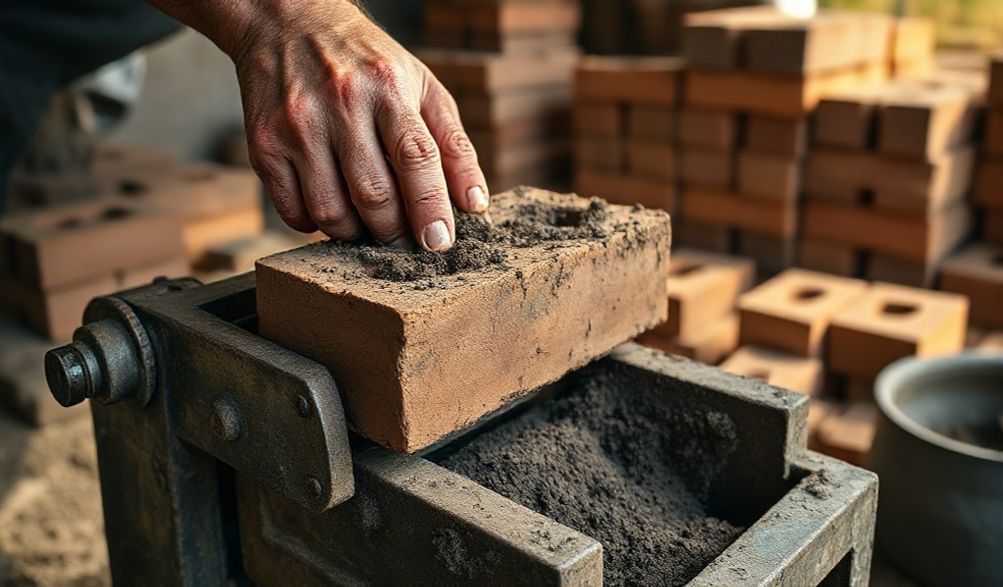
A mesin bata ringkasadalah sejenis peralatan yang direka untuk memampatkan bahan mentah—biasanya campuran tanah, simen, dan air—menjadi bata pejal yang berbentuk. Prinsip asasnya adalah mudah:pemadatan di bawah tekanan.
Berbeza dengan kilang perindustrian yang luas dan automatik sepenuhnya yang memerlukan modal dan infrastruktur besar, mesin bata ringkas dicirikan oleh:
* Operasi Manual atau Separa AutomatikBanyak yang dikendalikan secara manual melalui tuas atau pam hidraulik kecil, manakala yang lain menggunakan motor elektrik asas untuk menggerakkan proses pemadatan.
* Kebolehalihan:Mereka sering dipasang pada kerangka beroda atau cukup ringan untuk dipindahkan oleh beberapa orang.
* Reka Bentuk Minimalis:Mereka memberi tumpuan kepada fungsi-fungsi asas: mengisi, memadatkan, dan mengeluarkan, tanpa sistem berkomputer yang kompleks.
Komponen Utama Mesin Bata Sederhana Biasa
Memahami bahagian utama membongkar misteri mesin:
1. Hopper:Bilik di mana campuran bahan mentalah yang disediakan dimuatkan.
2. Cendawan atau Mati:Jantung mesin. Ini adalah rongga yang memberikan bentuk kepada bata (padat, berongga, saling mengunci). Ia biasanya diperbuat daripada keluli yang dikeraskan.
3. Sistem Pemadatan:Ini memberikan tekanan. Ia boleh jadi:
* Tuas Manual:Tuas panjang yang memberikan kelebihan mekanikal.
* Jek Hidraulik:Jack tangan atau berkuasa elektrik untuk tekanan yang lebih besar dan konsisten.
* Ram Mekanikal/Pneumatik:Ditemui dalam model separa automatik, dikuasakan oleh motor elektrik.
4. Mekanisme Pengusiran:Sebuah plat atau sistem yang menolak bata yang baru terbentuk keluar dari acuan sebaik sahaja pemadatan selesai.
5. Bingkai: The robust steel structure that holds everything together and withstands the operating forces.
Jenis-jenis Bata yang Dihasilkan
The versatility of these machines is a key advantage. By simply changing the mold, a single machine can produce various brick types:
* Bata Pejal: Standard rectangular blocks for general construction.
* Bata Berongga: Lighter bricks with cavities, offering better insulation and reduced material use.
* Bata Saling Kunci: Designed with grooves and tongues that lock together, reducing or eliminating the need for mortar in walls.
* Paving Blocks (Paver Blocks): Dense, durable blocks for driveways, walkways, and patios.
The Tangible Benefits of Investing in a Simple Brick Machine
Moving from theory to practice, let’s explore the concrete advantages that make these machines a compelling investment.
Significant Cost Reduction & ROI
The most immediate benefit is financial. By producing your own bricks, you eliminate the middleman and the transport costs baked into retail prices.
* Penjimatan Langsung: Your primary costs become raw materials (soil, a small percentage of cement) and labor. This can represent a savings of 30-50% or more compared to buying finished bricks.
* Kerangka Pulangan atas Pelaburan (ROI): Calculating a basic Return on Investment is straightforward. For a small business:
1. Calculate the total cost of the machine and setup.
2. Estimate your daily production output.
3. Determine your profit per brick (Market Price – Your Cost per Brick).
4. Divide the machine cost by your daily profit. This gives you the number of production days to break even. Many small operations report an ROI within a few months of consistent operation.
Unmatched Flexibility and Control
You are no longer at the mercy of supplier schedules or market shortages.
* Pengeluaran Atas Permintaan: Produce exactly what you need, when you need it. This is invaluable for custom projects or phased construction.
* Kawalan Kualiti: You control the mix, the compaction, and the curing. This direct oversight ensures every brick meets your strength and durability standards.
* Penyesuaian: Need a non-standard size or a slight mix alteration for a specific purpose? With your own machine, it’s possible.
Empowerment and Local Sustainability
The impact goes beyond the balance sheet.
* Keusahawanan: A simple brick machine is a classic starter business. It can create jobs, support local construction, and build a sustainable enterprise with a low entry barrier.
* Sustainable Construction: It promotes the use of locally sourced soil and industrial by-products like fly ash or quarry dust. This reduces the environmental footprint associated with long-distance transport and can utilize waste materials effectively.
Key Considerations Before You Buy a Simple Brick Machine
Informed decisions prevent costly mistakes. This section will help you evaluate your specific situation against the machine’s capabilities.
Assessing Your Production Needs: Scale & Output
Be brutally honest about your requirements. Are you making bricks for a single home, for a small business supplying a local community, or for a specific commercial project?
* Ask Yourself: How many bricks do I need per day or per week?
* Machine Capacity: Machine specs list output in “bricks per hour.” Remember, this is an ideal, sustained rate. Factor in time for mixing material, curing, and breaks. A manual machine might produce 200-400 bricks per day, while a semi-automatic electric model could reach 800-1500.
Raw Material Compatibility: It’s Not Just Dirt
Not all soil is created equal. The success of your bricks depends heavily on the raw material.
* Tanah yang Ideal: A well-graded mixture of clay, silt, and sand (sandy loam) is often best. Pure clay can cause excessive shrinkage and cracking.
* Penstabilan: Most simple brick machines require the soil to be stabilized with a small percentage (5-10%) of cement or lime to achieve waterproof and durable bricks.
* Alternative Materials: Many machines can work with fly ash, crushed stone dust, or laterite soil. Confirm this compatibility with the supplier.
Power Source: Manual vs. Semi-Automatic vs. Electric
This choice balances cost, labor, and speed.
* Manual (Lever Operated):
* Kelebihan: Lowest cost, no electricity needed, simple maintenance.
* Keburukan: Labor-intensive, slower output, dependent on operator strength and consistency.
* Semi-Automatic (Electric Motor):
* Kelebihan: Higher, more consistent output, less physical labor, better compaction uniformity.
* Keburukan: Higher initial cost, requires a reliable power source, slightly more complex.
* Hydraulic (Hand-Pump or Electric):
* Kelebihan: Very high pressure for denser bricks, good control.
* Keburukan: Can be more expensive, hydraulic systems require specific maintenance.
Build Quality and Supplier Reputation
This is where due diligence pays off. A poorly built machine will fail quickly.
* Checklist for Quality:
* Steel Thickness: The frame and critical parts should be made from thick, robust steel plate.
* Weld Quality: Welds should be clean, even, and without cracks.
* Mold Hardness: The mold/die should be made of hardened steel to resist wear.
* Reputasi: Research the brand. Look for companies with several years of presence.
* Alat Ganti: Ensure spare parts (especially molds and wear plates) are readily available.
* Reviews & Testimonials: Seek out genuine user reviews and videos, not just promotional material.
A Step-by-Step Guide to Operating Your Simple Brick Machine
Let’s walk through the basic production cycle. Proper process is key to quality bricks.
Site and Raw Material Preparation
- Soil Sourcing & Screening: Source suitable soil and sieve it through a 5-10mm mesh to remove stones, roots, and debris.
- Mencampurkan: Combine the sieved soil with your stabilizer (e.g., 7% cement by volume). Use a mixer or turn it repeatedly on a clean, hard surface until the color is uniform.
- Moistening: Gradually add water while mixing. The optimal moisture content is critical. The mix should hold its shape when squeezed in your fist without crumbling or oozing excess water—the “plastic limit.”
The Production Cycle: Filling, Compacting, Ejecting
- Penentuan Kedudukan: Place the machine on a level, stable surface.
- Pengisian: Load the moist mix into the hopper and use a trowel to fill the mold cavity completely.
- Pemadatan: Apply steady, firm pressure using the lever, hydraulic pump, or by activating the electric motor. Ensure full compression.
- Mengeluarkan: Engage the ejection mechanism to push the green (uncured) brick out onto a pallet or a prepared drying area.
Curing and Drying: The Key to Durable Bricks
This step cannot be rushed. Proper curing develops the brick’s strength.
* Initial Setting (24-48 hrs): Keep the freshly made bricks in a shaded area and cover them with a plastic sheet to prevent moisture loss.
* Water Curing (7-14 days): After initial setting, regularly spray the bricks with water 2-3 times a day. This allows the cement to hydrate fully.
* Air Drying: After curing, allow the bricks to dry completely in the shade for another 1-2 weeks before use. Avoid rapid sun drying, which causes cracks.
Maximizing Success: Maintenance and Troubleshooting Tips
Treat your machine well, and it will serve you for years.
Essential Daily and Weekly Maintenance Routines
- After Each Use: Thoroughly clean out all residual material from the hopper and mold.
- Daily: Check and tighten any bolts or nuts that may have vibrated loose.
- Weekly: Lubricate all moving parts (pivots, guides, ejection mechanism) as per the manufacturer’s instructions with appropriate grease or oil.
Common Operational Issues and Simple Fixes
| Problem | Likely Cause | Solution |
| :— | :— | :— |
| Bricks breaking during ejection | 1. Mix too dry. 2. Worn or damaged mold. | 1. Increase moisture content slightly. 2. Inspect mold for damage; replace liners if worn. |
| Bricks lack strength/crumble easily | 1. Insufficient compaction pressure. 2. Inadequate cement content. 3. Improper curing. | 1. Ensure full compression stroke. 2. Adjust mix ratio. 3. Follow curing protocol strictly. |
| Machine jams or is hard to operate | 1. Material lodged in mechanism. 2. Lack of lubrication. 3. Misalignment. | 1. Stop, clean thoroughly. 2. Lubricate all points. 3. Check for bent parts. |
| Inconsistent brick size/shape | 1. Uneven filling of the mold. 2. Worn mold components. | 1. Ensure hopper is filled evenly each time. 2. Measure mold dimensions; replace if out of spec. |
Frequently Asked Questions (FAQ) About Simple Brick Machines
Q1: What is the average production capacity of a simple brick machine?
A: It varies widely. A basic manual machine can produce 80-150 bricks per hour with a dedicated operator. A semi-automatic electric model can produce 200-400 bricks per hour. Remember, these are peak rates; actual daily output will be lower when factoring in material prep and breaks.
Q2: Can I start a profitable business with just one machine?
A: Absolutely. Many successful small-scale brick-making businesses start with a single semi-automatic machine. The key is managing your market, production, and costs effectively. Start by supplying local individual home builders or small contractors to build reputation and cash flow.
Q3: How much space do I need to set up a small brick-making yard?
A: You need space for three main activities: raw material storage, the machine operation area, and the brick curing/drying yard. A minimum of 200-300 square meters (approx 2,150-3,200 sq ft) is a practical starting point for a micro-enterprise.
Q4: Are the bricks made with these machines strong enough for house construction?
A: Yes, provided the correct soil-cement mix is used, compaction is adequate, and proper curing is followed. These bricks can easily meet or exceed the strength requirements for load-bearing walls in single-story structures and are excellent for two-story buildings with appropriate engineering.
Q5: What is the typical price range for a good quality manual or semi-automatic machine?
A: Prices depend on capacity, features, and region. As a rough guide:
* Manual Lever Machines: $500 – $1,500 USD.
* Semi-Automatic Electric Machines: $2,000 – $6,000+ USD.
Always prioritize build quality and supplier support over the lowest price.
Kesimpulan
Simple brick machines represent more than just a piece of equipment; they are a tool for financial savings, entrepreneurial venture, and sustainable practice. They offer a path to bypass inflated material costs, take command of your supply chain, and create a tangible product from locally available resources.
We’ve covered the journey from understanding the basic mechanics to operating and maintaining your own unit. Use this guide as your foundational blueprint. The next step is action: connect with multiple suppliers, ask detailed questions, and if possible, request a live demonstration or visit an existing user. Consider starting with a small pilot project to test your soil and your process.
Assess your needs against the considerations we’ve outlined. Your perfect machine is out there, waiting to help you lay the foundation for your next project—or your next business.
<