
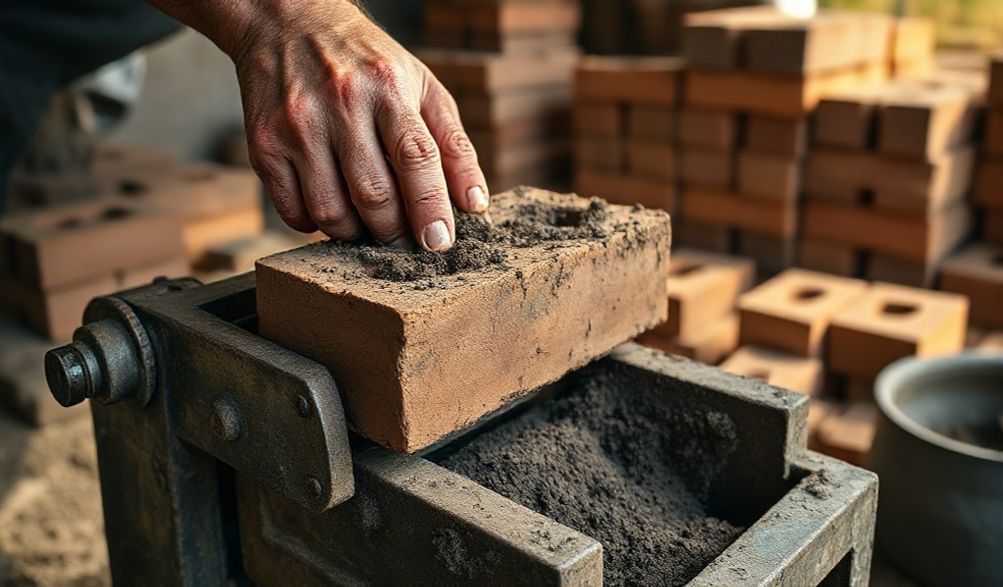
Máquinas Simples de Tijolos: Seu Guia para Produção de Tijolos Acessível e Eficiente
Introdução
Você já olhou para um orçamento de construção e sentiu uma pontada de incredulidade com o custo dos materiais? Ou talvez você seja um construtor em pequena escala ou um empreendedor em ascensão, frustrado com a qualidade inconsistente e o fornecimento de tijolos no seu mercado local. A base de qualquer projeto de construção — literal e figurativamente — frequentemente vem com um preço elevado e dores de cabeça logísticas.
E se houvesse uma maneira de assumir o controle deste elemento crucial? E se você pudesse produzir tijolos fortes e confiáveis no seu próprio cronograma, reduzindo custos e abrindo novas oportunidades? Esta não é uma fantasia reservada para grandes industriais. A solução está na tecnologia acessível:máquinas simples de tijolos.
Este guia foi projetado para ser seu recurso abrangente e imparcial. Vamos além dos discursos de vendas e mergulhamos nas realidades práticas dessas máquinas. Nosso objetivo é munir você com conhecimento do setor e insights testados por usuários, ajudando-o a entender o quemáquinas simples de tijolossão, como funcionam e se investir em um é a decisão certa para o seu projeto ou negócio. Vamos construir uma base de conhecimento, tijolo por tijolo.
O Que São Máquinas de Tijolos Simples? Entendendo o Básico
Em sua essência, as máquinas simples de tijolos são ferramentas de empoderamento. Elas democratizam a produção de um dos materiais de construção mais antigos e essenciais do mundo, tornando o processo acessível, compreensível e gerenciável para indivíduos e pequenas equipes.
Definição de Núcleo e Como Funcionam
A máquina simples de tijolosé um equipamento projetado para comprimir matérias-primas—tipicamente uma mistura de solo, cimento e água—em um tijolo sólido e moldado. O princípio fundamental é simples:compactação sob pressão.
Ao contrário das vastas plantas industriais totalmente automatizadas que exigem capital e infraestrutura maciços, as máquinas simples de tijolos são caracterizadas por sua:
* Operação Manual ou Semiautomática:Muitos são operados manualmente por meio de uma alavanca ou de uma pequena bomba hidráulica, enquanto outros utilizam um motor elétrico básico para alimentar o processo de compactação.
* Portabilidade:Eles são frequentemente montados em um chassi com rodas ou são leves o suficiente para serem movidos por algumas pessoas.
* Design Minimalista:Eles se concentram nas funções essenciais: enchimento, compactação e ejeção, sem sistemas computadorizados complexos.
Componentes Principais de uma Típica Máquina Simples de Tijolos
Compreender as partes principais desmistifica a máquina:
1. Hopper:A câmara onde a mistura de matéria-prima preparada é carregada.
2. Mofo ou Morra:O coração da máquina. Esta é a cavidade que dá ao tijolo sua forma (sólido, vazado, de encaixe). Normalmente é feita de aço endurecido.
3. Sistema de Compactação:Isso aplica a pressão. Pode ser:
* Alavanca Manual:Uma alavanca longa que proporciona vantagem mecânica.
* Macaco Hidráulico:Um macaco manual ou elétrico para pressão maior e mais consistente.
* Ram Mecânico/Pneumático:Encontrado em modelos semiautomáticos, alimentado por um motor elétrico.
4. Mecanismo de Ejeção:Uma placa ou sistema que empurra o tijolo recém-formado para fora do molde uma vez que a compactação esteja concluída.
5. Quadro: The robust steel structure that holds everything together and withstands the operating forces.
Tipos de Tijolos Produzidos
The versatility of these machines is a key advantage. By simply changing the mold, a single machine can produce various brick types:
* Tijolos Sólidos: Standard rectangular blocks for general construction.
* Blocos Vazios: Lighter bricks with cavities, offering better insulation and reduced material use.
* Tijolos de Encravamento: Designed with grooves and tongues that lock together, reducing or eliminating the need for mortar in walls.
* Paving Blocks (Paver Blocks): Dense, durable blocks for driveways, walkways, and patios.
The Tangible Benefits of Investing in a Simple Brick Machine
Moving from theory to practice, let’s explore the concrete advantages that make these machines a compelling investment.
Significant Cost Reduction & ROI
The most immediate benefit is financial. By producing your own bricks, you eliminate the middleman and the transport costs baked into retail prices.
* Economias Diretas: Your primary costs become raw materials (soil, a small percentage of cement) and labor. This can represent a savings of 30-50% or more compared to buying finished bricks.
* Estrutura de ROI: Calculating a basic Return on Investment is straightforward. For a small business:
1. Calculate the total cost of the machine and setup.
2. Estimate your daily production output.
3. Determine your profit per brick (Market Price – Your Cost per Brick).
4. Divide the machine cost by your daily profit. This gives you the number of production days to break even. Many small operations report an ROI within a few months of consistent operation.
Unmatched Flexibility and Control
You are no longer at the mercy of supplier schedules or market shortages.
* Produção Sob Demanda: Produce exactly what you need, when you need it. This is invaluable for custom projects or phased construction.
* Controle de Qualidade: You control the mix, the compaction, and the curing. This direct oversight ensures every brick meets your strength and durability standards.
* Personalização: Need a non-standard size or a slight mix alteration for a specific purpose? With your own machine, it’s possible.
Empowerment and Local Sustainability
The impact goes beyond the balance sheet.
* Empreendedorismo: A simple brick machine is a classic starter business. It can create jobs, support local construction, and build a sustainable enterprise with a low entry barrier.
* Sustainable Construction: It promotes the use of locally sourced soil and industrial by-products like fly ash or quarry dust. This reduces the environmental footprint associated with long-distance transport and can utilize waste materials effectively.
Key Considerations Before You Buy a Simple Brick Machine
Informed decisions prevent costly mistakes. This section will help you evaluate your specific situation against the machine’s capabilities.
Assessing Your Production Needs: Scale & Output
Be brutally honest about your requirements. Are you making bricks for a single home, for a small business supplying a local community, or for a specific commercial project?
* Ask Yourself: How many bricks do I need per day or per week?
* Machine Capacity: Machine specs list output in “bricks per hour.” Remember, this is an ideal, sustained rate. Factor in time for mixing material, curing, and breaks. A manual machine might produce 200-400 bricks per day, while a semi-automatic electric model could reach 800-1500.
Raw Material Compatibility: It’s Not Just Dirt
Not all soil is created equal. The success of your bricks depends heavily on the raw material.
* Solo Ideal: A well-graded mixture of clay, silt, and sand (sandy loam) is often best. Pure clay can cause excessive shrinkage and cracking.
* Estabilização: Most simple brick machines require the soil to be stabilized with a small percentage (5-10%) of cement or lime to achieve waterproof and durable bricks.
* Alternative Materials: Many machines can work with fly ash, crushed stone dust, or laterite soil. Confirm this compatibility with the supplier.
Power Source: Manual vs. Semi-Automatic vs. Electric
This choice balances cost, labor, and speed.
* Manual (Lever Operated):
* Prós: Lowest cost, no electricity needed, simple maintenance.
* Contras: Labor-intensive, slower output, dependent on operator strength and consistency.
* Semi-Automatic (Electric Motor):
* Prós: Higher, more consistent output, less physical labor, better compaction uniformity.
* Contras: Higher initial cost, requires a reliable power source, slightly more complex.
* Hydraulic (Hand-Pump or Electric):
* Prós: Very high pressure for denser bricks, good control.
* Contras: Can be more expensive, hydraulic systems require specific maintenance.
Build Quality and Supplier Reputation
This is where due diligence pays off. A poorly built machine will fail quickly.
* Checklist for Quality:
* Steel Thickness: The frame and critical parts should be made from thick, robust steel plate.
* Weld Quality: Welds should be clean, even, and without cracks.
* Mold Hardness: The mold/die should be made of hardened steel to resist wear.
* Reputação: Research the brand. Look for companies with several years of presence.
* Peças de Reposição: Ensure spare parts (especially molds and wear plates) are readily available.
* Reviews & Testimonials: Seek out genuine user reviews and videos, not just promotional material.
A Step-by-Step Guide to Operating Your Simple Brick Machine
Let’s walk through the basic production cycle. Proper process is key to quality bricks.
Site and Raw Material Preparation
- Soil Sourcing & Screening: Source suitable soil and sieve it through a 5-10mm mesh to remove stones, roots, and debris.
- Mistura: Combine the sieved soil with your stabilizer (e.g., 7% cement by volume). Use a mixer or turn it repeatedly on a clean, hard surface until the color is uniform.
- Moistening: Gradually add water while mixing. The optimal moisture content is critical. The mix should hold its shape when squeezed in your fist without crumbling or oozing excess water—the “plastic limit.”
The Production Cycle: Filling, Compacting, Ejecting
- Posicionamento: Place the machine on a level, stable surface.
- Recheio: Load the moist mix into the hopper and use a trowel to fill the mold cavity completely.
- Compactação: Apply steady, firm pressure using the lever, hydraulic pump, or by activating the electric motor. Ensure full compression.
- Ejetando: Engage the ejection mechanism to push the green (uncured) brick out onto a pallet or a prepared drying area.
Curing and Drying: The Key to Durable Bricks
This step cannot be rushed. Proper curing develops the brick’s strength.
* Initial Setting (24-48 hrs): Keep the freshly made bricks in a shaded area and cover them with a plastic sheet to prevent moisture loss.
* Water Curing (7-14 days): After initial setting, regularly spray the bricks with water 2-3 times a day. This allows the cement to hydrate fully.
* Air Drying: After curing, allow the bricks to dry completely in the shade for another 1-2 weeks before use. Avoid rapid sun drying, which causes cracks.
Maximizing Success: Maintenance and Troubleshooting Tips
Treat your machine well, and it will serve you for years.
Essential Daily and Weekly Maintenance Routines
- After Each Use: Thoroughly clean out all residual material from the hopper and mold.
- Daily: Check and tighten any bolts or nuts that may have vibrated loose.
- Weekly: Lubricate all moving parts (pivots, guides, ejection mechanism) as per the manufacturer’s instructions with appropriate grease or oil.
Common Operational Issues and Simple Fixes
| Problem | Likely Cause | Solution |
| :— | :— | :— |
| Bricks breaking during ejection | 1. Mix too dry. 2. Worn or damaged mold. | 1. Increase moisture content slightly. 2. Inspect mold for damage; replace liners if worn. |
| Bricks lack strength/crumble easily | 1. Insufficient compaction pressure. 2. Inadequate cement content. 3. Improper curing. | 1. Ensure full compression stroke. 2. Adjust mix ratio. 3. Follow curing protocol strictly. |
| Machine jams or is hard to operate | 1. Material lodged in mechanism. 2. Lack of lubrication. 3. Misalignment. | 1. Stop, clean thoroughly. 2. Lubricate all points. 3. Check for bent parts. |
| Inconsistent brick size/shape | 1. Uneven filling of the mold. 2. Worn mold components. | 1. Ensure hopper is filled evenly each time. 2. Measure mold dimensions; replace if out of spec. |
Frequently Asked Questions (FAQ) About Simple Brick Machines
Q1: What is the average production capacity of a simple brick machine?
A: It varies widely. A basic manual machine can produce 80-150 bricks per hour with a dedicated operator. A semi-automatic electric model can produce 200-400 bricks per hour. Remember, these are peak rates; actual daily output will be lower when factoring in material prep and breaks.
Q2: Can I start a profitable business with just one machine?
A: Absolutely. Many successful small-scale brick-making businesses start with a single semi-automatic machine. The key is managing your market, production, and costs effectively. Start by supplying local individual home builders or small contractors to build reputation and cash flow.
Q3: How much space do I need to set up a small brick-making yard?
A: You need space for three main activities: raw material storage, the machine operation area, and the brick curing/drying yard. A minimum of 200-300 square meters (approx 2,150-3,200 sq ft) is a practical starting point for a micro-enterprise.
Q4: Are the bricks made with these machines strong enough for house construction?
A: Yes, provided the correct soil-cement mix is used, compaction is adequate, and proper curing is followed. These bricks can easily meet or exceed the strength requirements for load-bearing walls in single-story structures and are excellent for two-story buildings with appropriate engineering.
Q5: What is the typical price range for a good quality manual or semi-automatic machine?
A: Prices depend on capacity, features, and region. As a rough guide:
* Manual Lever Machines: $500 – $1,500 USD.
* Semi-Automatic Electric Machines: $2,000 – $6,000+ USD.
Always prioritize build quality and supplier support over the lowest price.
Conclusão
Simple brick machines represent more than just a piece of equipment; they are a tool for financial savings, entrepreneurial venture, and sustainable practice. They offer a path to bypass inflated material costs, take command of your supply chain, and create a tangible product from locally available resources.
We’ve covered the journey from understanding the basic mechanics to operating and maintaining your own unit. Use this guide as your foundational blueprint. The next step is action: connect with multiple suppliers, ask detailed questions, and if possible, request a live demonstration or visit an existing user. Consider starting with a small pilot project to test your soil and your process.
Assess your needs against the considerations we’ve outlined. Your perfect machine is out there, waiting to help you lay the foundation for your next project—or your next business.
<