Spektrum Kejuruteraan bagi Jentera Pemuatan dan Pembongkaran
Mendefinisikan Fungsi dan Prinsip Operasi Teras
Mesin pemuat dan pembongkar bata blok adalah peralatan pengendalian bahan khusus yang direka untuk mengautomasikan pemindahan unit batu antara lokasi berbeza, paling lazim dari palet pengeluaran ke kenderaan pengangkutan, dan dari kenderaan tersebut ke titik penggunaan di tapak pembinaan. Fungsi terasnya adalah untuk menggantikan buruh manual yang perlahan, memerlukan tenaga fizikal, dan berisiko kecederaan dalam mengendalikan beban berat yang berulang dengan sistem yang pantas, konsisten, dan boleh dipercayai.
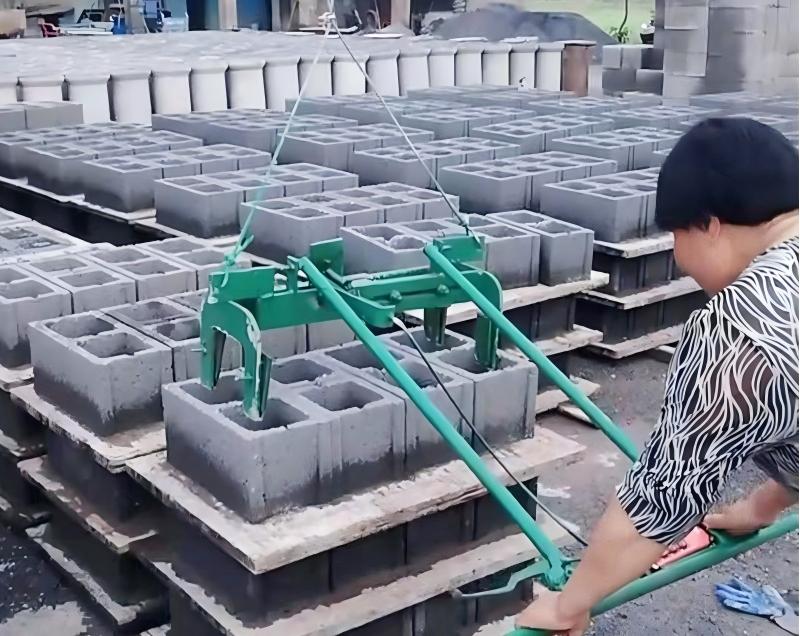
Prinsip operasi asas melibatkan tiga peringkat utama:Perolehan, Pengangkutan, dan PenempatanMesin itu mesti terlebih dahulu memperoleh bata, biasanya menggunakan penggenggam mekanikal atau sistem berasaskan vakum. Kemudian, ia mengangkut muatan yang diperoleh itu sepanjang laluan yang telah ditetapkan, yang boleh terdiri daripada gerakan linear yang mudah hingga pergerakan pelbagai paksi yang kompleks. Akhirnya, ia mesti meletakkan bata-bata tersebut dengan tepat ke atas sasaran, seperti palet, tali sawat penghantar, atau troli tapak, tanpa menyebabkan kerosakan pada unit-unit yang rapuh itu. Kehalusan dengan mana mesin melaksanakan ketiga-tiga peringkat ini menentukan keupayaannya, aplikasi sasarannya, dan kedudukannya dalam pasaran.
Pengkategorian mengikut Seni Bina Sistem dan Mobiliti
Pasaran untuk peralatan ini bukanlah monolitik; ia terbahagi kepada kategori-kategori berbeza berdasarkan reka bentuk dan mobiliti, masing-masing memenuhi ceruk khusus dalam rantaian logistik yang lebih luas.
- Paletizer/Depaletizer Statik dan Semi-Automatik:Ini adalah jentera teras bagi kilang pembuatan bata blok dan halaman pengedaran utama. Ia adalah mesin berkedudukan tetap yang direka untuk tugas berulang dengan volum tinggi. Sebuah mesin nyahpalet secara sistematik memunggah bata dari palet tempat ia disembuhkan, selalunya menghantarnya ke sistem penghantar untuk dibalut, disusun, atau dimuatkan terus. Sebuah mesin pemalet pula menjalankan fungsi berlawanan, menyusun bata longgar dari talian pengeluaran menjadi palet stabil yang diikat untuk simpanan dan penghantaran. Sistem ini mengutamakan kelancaran pemprosesan dan kebolehpercayaan berbanding mobiliti.
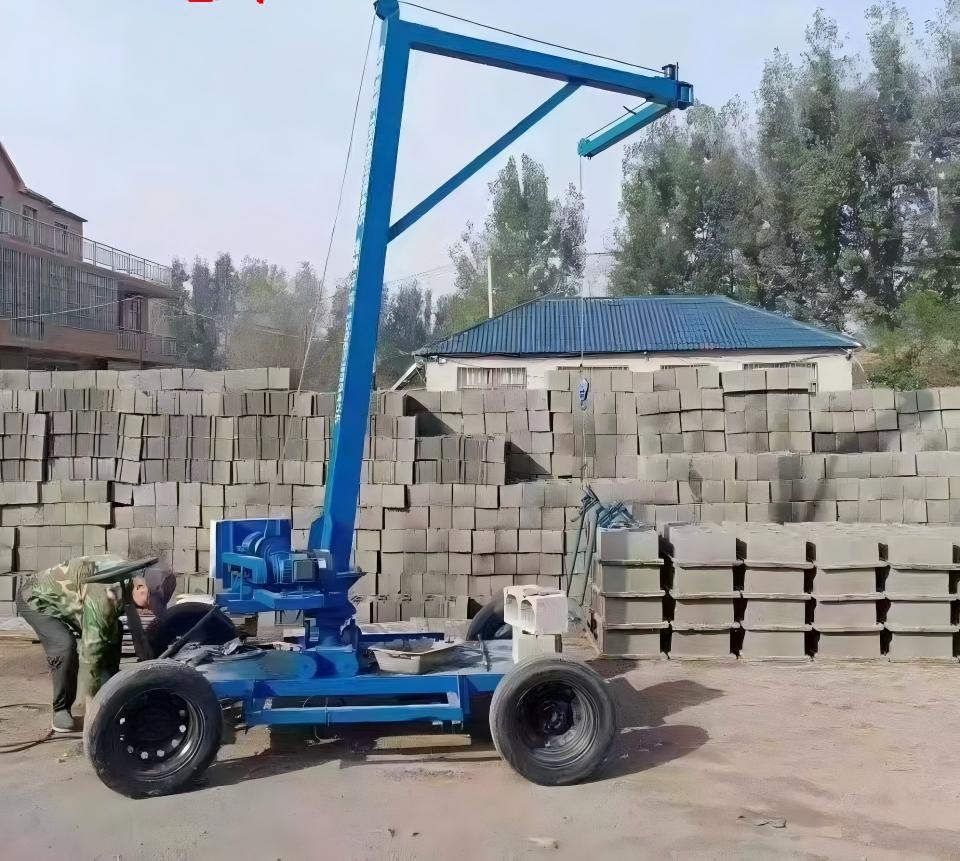
- Pemuat dan Pembongkar Lori Mudah Alih:Kategori ini direka untuk persekitaran dinamik di kawasan penghantaran dan penerimaan. Mesin-mesin ini sering dipasang pada landasan tetap atau asas mudah alih yang bergerak selari dengan dok pemuatan. Ia diprogram untuk memuatkan trak keluar secara automatik dengan muatan palet bercampur atau seragam, atau untuk memunggah kenderaan penghantaran masuk. Proposisi nilai utamanya adalah memaksimumkan kelajuan pusing ganti trak, metrik kritikal dalam logistik yang dikenali sebagai masa "dok-ke-stok". Dengan mengurangkan masa trak berada di dok, ia secara langsung meningkatkan penggunaan armada dan menurunkan kos pengangkutan.
- Sistem Lengan Robotik dan Artikulasi:Mewakili kemuncak fleksibiliti dan integrasi teknologi, sistem ini menggunakan lengan robot industri pelbagai paksi yang dilengkapi dengan end-effector (pemegang) tersuai. Kelebihan utama mereka adalah keupayaan untuk melaksanakan tugas kompleks melebihi sekadar penyusunan palet, seperti mengasingkan batu bata mengikut jenis, membina palet campuran untuk pesanan khusus, atau bahkan menghantar batu bata terus ke mesin pemasang batu bata di barisan pengeluaran. Mereka boleh diprogram semula untuk saiz dan corak batu bata yang berbeza, menjadikannya sesuai untuk operasi dengan variasi produk yang tinggi dan prinsip pembuatan tepat pada masanya.
- Penyelesaian Dipasang pada Telehandler dan Rata-Rata Kasar:Untuk "50 kaki terakhir" di tapak pembinaan itu sendiri, jentera medan kasar adalah sangat diperlukan. Ini selalunya adalah aksesori atau mesin khusus yang dibina di atas telehandler atau casis kukuh yang serupa. Ia direka untuk merentasi tanah yang tidak disediakan, selalunya berlumpur dan tidak rata, untuk memunggah trak dan meletakkan palet batu bata tepat di tempat yang diperlukan oleh tukang batu. Ini menghapuskan pengendalian berganda, mengurangkan kesesakan di tapak, dan mengelakkan kerosakan yang disebabkan oleh pemunggahan manual yang kasar.
Market Dynamics and Strategic Application for Distributors
Identifying the End-User Profile and Pain Points
Understanding who benefits from this technology is the first step in effective sales and distribution. The client profile is diverse, but their pain points are remarkably consistent.
- Block and Brick Manufacturers: For producers, the loading bay is the final checkpoint before revenue is realized. Their pain points include labor shortages for physically taxing work, high rates of product damage from manual handling (directly impacting profitability), and the need to meet high daily shipping volumes. They seek solutions that integrate seamlessly with their production flow, offering high speed, minimal damage, and 24/7 operational readiness.
- Material Distributors and Large Retailers: These entities operate vast yards and warehouses. Their challenges revolve around inventory management, efficient order fulfillment, and labor cost control. A machine that can quickly and accurately build mixed pallets for specific customer orders is a tremendous asset. For them, the value lies in order accuracy, space optimization through dense palletizing, and reduced reliance on a large, specialized forklift operator workforce.
- Large-Scale Construction Contractors: The primary pain points on a job site are time, safety, and labor efficiency. Manual unloading is slow, halts other activities, and poses a significant safety risk. Contractors need robust, mobile equipment that can operate in confined and challenging site conditions to keep projects on schedule and reduce the risk of costly workplace injuries and material loss.
The Convergence of Trends Driving Adoption
Several powerful macro-trends are accelerating the demand for automated loading solutions, creating a favorable market environment for distributors.
- The Acute Labor Shortage and Worker Safety Mandates: The global construction and manufacturing sectors are facing a critical shortage of workers willing to perform strenuous manual labor. Simultaneously, regulatory bodies are enforcing stricter health and safety standards regarding manual handling and repetitive strain injuries. Automated loading systems provide a direct, tangible solution to both problems, ensuring operational continuity while creating a safer work environment.
- The Rise of Smart Logistics and Industry 4.0: The modern supply chain is data-driven. Advanced loading and unloading machines are no longer isolated mechanical devices; they are data nodes. They can be equipped with sensors and software that track inventory in real-time (e.g., counting every brick loaded or unloaded), monitor machine performance for predictive maintenance, and integrate with Warehouse Management Systems (WMS) and Enterprise Resource Planning (ERP) systems. This data integration allows for unprecedented levels of supply chain visibility and control.
- The Imperative of Supply Chain Optimization: In an era of just-in-time delivery and heightened focus on cost efficiency, every minute of delay is expensive. Automated systems drastically reduce truck loading and unloading times, directly impacting the number of deliveries a fleet can make per day. This optimization lowers fuel costs, increases asset utilization, and enhances overall customer satisfaction through more reliable delivery windows.
A Granular Analysis of Pricing and Total Cost of Ownership
Deconstructing the Capital Investment
The price of a block brick loading/unloading machine is a direct reflection of its technological sophistication and intended duty cycle. Key factors include:
- Tahap Pengautomasian: A simple, operator-controlled machine with basic functionality will be the most accessible. A fully automated system with programmable logic controllers (PLCs), vision systems for brick recognition, and full integration with plant logistics software will represent the highest tier of investment.
- Lifting Capacity and Speed: The machine’s specification in terms of weight per cycle (e.g., 500 kg vs. 2000 kg) and its cycles per hour directly influence its price. Higher capacity and speed require more powerful motors, heavier-duty structural components, and more sophisticated hydraulic or electrical systems, all contributing to a higher cost.
- Versatility and Reconfigurability: A machine dedicated to a single brick size and pallet pattern is less complex and costly than one that can be quickly reprogrammed to handle multiple product lines and load configurations. The cost of versatility is found in the complexity of the gripper head, the software, and the precision of the servo motors.
- Mobility and Chassis Type: A fixed, stationary machine has a lower base cost than a mobile unit. Adding mobility via a tracked system, a wheeled chassis, or integration onto a rough-terrain carrier introduces significant engineering complexity, power requirements, and cost.
- Control System and Software: The “intelligence” of the machine is a major differentiator. Basic machines use simple joystick controls. Advanced systems feature touchscreen HMIs (Human-Machine Interfaces) with intuitive software that allows for pattern creation, data logging, and system diagnostics. The development cost of this software is factored into the machine’s price.
Calculating the True Total Cost of Ownership (TCO)
For a B2B client, the purchase price is merely the entry fee. The true financial impact is measured by the TCO, which includes:
- Initial Purchase and Installation: The machine cost, plus any costs for foundation work, electrical hookups, or safety fencing.
- Operational Labor: While these machines reduce labor, they may require a skilled technician or operator, albeit at a higher wage but for fewer total hours.
- Penggunaan Tenaga: The cost of electricity for electric models or diesel for combustion-engine and hydraulic models.
- Preventive and Corrective Maintenance: Regular servicing, replacement of wear parts (e.g., gripper fingers, vacuum cups, hydraulic seals, filters), and any unforeseen repairs.
- Masa Henti: The single largest hidden cost. A machine with high reliability and excellent service support minimizes project delays and production stoppages.
- Residual Value: A well-built machine from a technically robust platform will retain a higher percentage of its value, offering a better return on investment when it is eventually upgraded or sold.
Strategic Procurement Framework for B2B Decision-Makers
Selecting the right machine for inventory or for a specific client application requires a methodical and strategic approach.
- Needs Analysis and Workflow Integration: The first step is a deep analysis of the client’s current workflow. What is the average daily volume? What are the brick sizes and varieties? What is the current damage rate? How is the site or warehouse laid out? The machine must be a solution that integrates into this ecosystem, not a disruptive standalone product.
- Technical Evaluation and Component Scrutiny: Go beyond marketing claims. Evaluate the machine’s specifications against the needs analysis. Scrutinize the quality of key components like the PLC, motors, and structural steel. Assess the design of the gripper mechanism for its gentleness on the brick product and its adaptability.
- Compliance and Safety Certification: Ensure the machine meets all relevant regional and international safety standards (e.g., CE, OSHA, ISO). The integrity of safety interlocks, emergency stop systems, and guarding is non-negotiable for liability and workplace safety.
- Manufacturer Viability and Support Ecosystem: For a distributor, the manufacturer is a long-term partner. Assess their financial health, R&D commitment, and most importantly, their support structure. What is their warranty policy? What is the lead time on critical spare parts? Do they offer comprehensive training for your service technicians and the end-client’s operators?
- Financial Justification and ROI Modeling: Build a detailed business case. Model the ROI by quantifying the savings: reduced labor hours, lower product damage, decreased truck demurrage fees, fewer worker compensation claims, and increased throughput. A machine with a higher initial price but a demonstrably faster payback period and lower TCO is the smarter investment.
Kesimpulan
The market for block brick loading and unloading machinery is transitioning from a niche segment to a core component of a modern, efficient, and resilient construction supply chain. For the astute distributor or procurement manager, this represents a significant and sustainable business opportunity. The driving forces—labor scarcity, safety imperatives, and the relentless pursuit of supply chain optimization—are not fleeting trends but permanent shifts in the industry landscape.
Success in this field hinges on a consultative approach. It requires the ability to look beyond the machine itself and understand the entire logistical flow of your clients’ operations. By offering a solution that not only moves bricks but also moves data, enhances safety, and protects profitability, you position yourself as a strategic partner rather than just a equipment vendor. The future of material handling is automated, interconnected, and intelligent. Embracing this category with a deep and nuanced understanding is the key to unlocking new levels of growth and value for your business and for your clients.
Soalan Lazim (FAQ)
Q1: What is the typical cycle time for a standard palletizing/depalletizing machine?
A: Cycle times vary based on the machine’s design and the weight of the load. A typical mid-range, fully automated system can achieve a cycle time (pick, move, and place) of between 20 to 45 seconds per layer of bricks. High-speed systems can be even faster, but the key is consistent, reliable cycling over an entire shift, not just peak speed.
Q2: How significant is the product damage reduction with automated handling?
A: The reduction is often substantial. Manual handling can lead to damage rates of 3-8% due to dropping, chipping, and rough placement. A well-calibrated automated system with a gentle gripper or vacuum head can reduce this rate to below 0.5%. This directly improves the bottom line by turning waste into saleable product.
Q3: Can one machine handle both loading and unloading functions?
A: Absolutely. Many systems are designed to be bi-directional. With the correct programming and potentially a universal end-effector, a single machine can unload raw materials or incoming goods and then load finished, palletized products onto outbound trucks. This maximizes the utility and return on investment from a single piece of equipment.
Q4: What are the primary power sources for these machines, and what are the trade-offs?
A: The three main power sources are:
- Elektrik: Quiet, clean, and efficient for indoor use. Lower operating cost but requires proximity to a power source.
- Hydraulic: Powerful and robust, ideal for heavy loads and rough-terrain applications. Can be louder and have higher maintenance needs (leaks, filter changes).
- Diesel/Combustion: Offers complete mobility and high power for outdoor, off-grid sites. Higher fuel costs, emissions, and noise levels are the trade-offs.
Q5: What is the typical operational lifespan of this equipment, and what impacts it most?
A: With proper maintenance, a well-built machine can have an operational lifespan of 7 to 15 years, or 20,000 to 40,000 operating hours. The factors that most impact lifespan are the duty cycle (e.g., single-shift vs. 24/7 operation), the quality of preventive maintenance, the abrasiveness of the operating environment, and the care taken by the operators. The machine’s structural frame and major components should be designed to last this long, with wear parts being replaced as needed.