
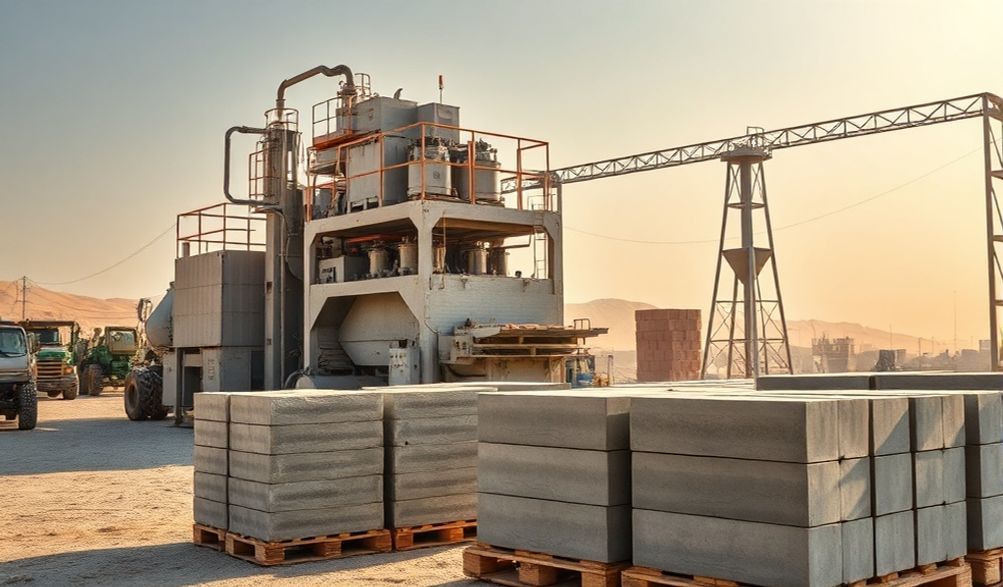
Panduan Muktamad untuk Mesin Pembuat Bata di Arab Saudi: Jenis, Kos & Pembekal (2026)
Pengenalan
Garis langit Arab Saudi bukan lagi sekadar visi; ia kini realiti yang kian menjadi kenyataan. Didorong oleh Wawasan 2030 yang bercita-cita tinggi, Kerajaan kini menyaksikan ledakan pembinaan yang belum pernah berlaku sebelumnya. Megaproyek seperti bandar futuristik NEOM, hab pelancongan mewah Projek Laut Merah, dan ibu kota hiburan Qiddiya bukan sekadar berita utama—ia merupakan penjana permintaan besar-besaran bagi berjuta-juta tan bahan binaan. Dalam landasan kren dan konkrit ini, satu persoalan kritikal timbul: bagaimanakah bekalan bahan asas seperti bata dan blok dapat mengejarnya?
Jawapannya terletak pada pengeluaran yang setempat, cekap dan boleh ditingkatkan. Di sinilah mesin pembuatan bata bertukar daripada sekadar peralatan industri menjadi aset strategik. Bagi syarikat pembinaan, kontraktor dan pelabur, melabur dalam mesin pengeluaran bata yang tepat bukan lagi satu pilihan; ia merupakan keputusan penting untuk menjamin jadual projek, mengawal kos, dan menyumbang kepada matlamat perindustrian Kerajaan. Dengan pengalaman langsung lebih sedekad membekalkan jentera berat kepada sektor pembinaan dan perindustrian Saudi, saya telah menyaksikan sendiri peralihan daripada kebergantungan pada bahan import kepada pengeluaran tempatan yang diberi kuasa. Panduan ini direka sebagai sumber pakar komprehensif anda—memotong hingar untuk memberikan pandangan boleh tindakan yang anda perlukan untuk membuat pelaburan termaklum dalam masa depan pembinaan Arab Saudi.
Mengapa Pasaran Saudi Arabia Memerlukan Jentera Pembuatan Bata Maju
Permintaan untuk mesin pembuatan bata di Kerajaan bukanlah satu trend sementara tetapi peralihan struktur yang didorong oleh kuasa ekonomi dan strategi yang kuat.
Wawasan 2030 dan Lonjakan Pembinaan
Wawasan 2030 adalah enjin transformasi ini. Ia adalah cetak biru yang telah menggerakkan ratusan bilion dolar ke dalam infrastruktur fizikal. Skalanya amat menakjubkan:
* نيوم:Memerlukan seluruh ekosistem bandar dibina dari asas.
* Projek Laut Merah:Menuntut resort dan infrastruktur yang mampan di seluruh 90+ pulau.
* قيدية:Akan memerlukan segala-galanya dari stadium ke struktur taman tema.
* الرياض مترو والتوسعة:Terus mendorong pembangunan kediaman dan komersial bandar.
Volume pembinaan ini menjadikan logistik dan kos untuk mengimport setiap bata atau blok tidak praktikal. Pengeluaran setempat berhampiran tapak projek ini semakin penting untuk memastikan rantaian bekalan yang stabil, boleh dipercayai dan kos efektif.
Faedah Pengeluaran Tempatan dengan Mesin
Melabur dalam kilang pembuatan bata di Arab Saudi menawarkan kelebihan yang menarik:
* Penjimatan Kos yang Dramatik:Menghapuskan kos penghantaran yang tidak menentu, duti import, dan markah rantaian bekalan yang panjang.
* Kelajuan & Kawalan Tiada Tandingan:Hasilkan tepat apa yang anda perlukan, apabila anda perlukannya, menghapuskan kelewatan projek menunggu penghantaran.
* Kawalan Kualiti Unggul:Pengawasan langsung terhadap campuran bahan mentah, proses pengawetan, dan kekuatan produk akhir memastikan pematuhan dengan spesifikasi projek.
* Menyokong Matlamat Nasional:Selaras secara langsung dengan objektif Wawasan 2030 bagi pelokalan industri, penciptaan pekerjaan, dan kepelbagaian eksport.
Kelestarian dan Piawaian Moden
Pembinaan moden bukan sekadar membina dengan lebih pantas; ia tentang membina dengan lebih bijak. Mesin pembuatan bata canggih hari ini adalah kunci kepada pembangunan lestari:
* Penggunaan Bahan Tempatan:Mereka boleh direka untuk mengoptimumkan campuran menggunakan agregat yang diperoleh secara tempatan, mengurangkan jejak karbon pengangkutan.
* Produk Cekap Tenaga:Mesin boleh menghasilkan blok konkrit bertebat berprestasi tinggi (seperti blok berongga) atau blok konkrit berudara ringan (AAC), yang meningkatkan kecekapan terma bangunan dengan ketara—faktor penting dalam iklim Arab Saudi.
* Kecekapan Sumber Automated systems minimize raw material waste, and many machines can recycle production waste back into the process.
Types of Brick Making Machines Available in Saudi Arabia
Choosing the right type of machine is the first critical step. The Saudi market offers a full spectrum to match every business scale and project requirement.
Mesin Manual & Semi-Automatik
Ideal for entrepreneurs, small workshops, or specialized production runs.
* Terbaik Untuk: Startups, small-scale villa projects, producing decorative or specialty pavers, and low-budget entry into manufacturing.
* Output: Lower output, typically ranging from 500 to 2,000 blocks per day, depending on labor.
* Pandangan Utama: While the initial investment is lower, the per-unit labor cost is higher. They serve as an excellent proof-of-concept before scaling up.
Mesin Pembuat Blok Sepenuhnya Automatik
The backbone of medium to large-scale commercial block yards and major project suppliers.
* Proses: From raw material feeding, mixing, and high-pressure vibration compaction to curing and palletizing, the process is seamless and controlled via a Programmable Logic Controller (PLC).
* Output: High and consistent. Capacities can range from 8,000 to over 30,000 standard blocks per 8-hour shift.
* Ciri-ciri Utama: PLC touchscreen control, automatic pallet changers, synchronized conveyor systems, and high-pressure hydraulic systems for superior block density and strength.
Mesin Pembuatan Bata Mudah Alih
A game-changer for the Kingdom’s vast geography and remote megaprojects.
* Sesuai Untuk: On-site production at locations like NEOM or remote mining camps, where transporting finished bricks is prohibitively expensive.
* Fleksibiliti: These units can be towed to a site, set up quickly, and produce bricks directly where they are needed, using on-site or locally sourced materials.
* Kelebihan: Eliminates up to 80% of transportation costs for the finished product.
Mesin Khusus
The market extends far beyond standard hollow blocks.
* Mesin Pavers Saling Mengunci: Produce paving blocks for landscaping, parking lots, and hardscaping—a huge market in developing urban areas.
* Kerbstone Machines: For dedicated production of road edging and landscaping borders.
* AAC Block Plants: For manufacturing lightweight, insulating autoclaved aerated concrete blocks, which are growing in popularity for high-rise and energy-efficient construction.
Key Features to Consider When Buying a Brick Machine in KSA
Beyond the machine type, these features will determine your long-term success and profitability.
Kapasiti Pengeluaran & Output
Ketidakpadanan kapasiti adalah satu kesilapan yang biasa dan mahal.
* Strategy: Analyze your current orders and realistic 3–5 year growth. It’s often wiser to invest in a machine that can grow with you.
* Panduan Am: A standard fully automatic machine can produce approximately 1,000–1,200 blocks per hour. Calculate your required daily output based on your business model.
Automation Level and Ease of Operation
Automation directly impacts your operational costs and consistency.
* Labor vs. Investment: A fully automatic line may require only 3-5 personnel for operation, while a semi-automatic line needs significantly more. Calculate the wage savings over 5 years.
* PLC Systems: A non-negotiable for medium/large machines. They ensure consistent quality, simplify operation, and provide diagnostic data.
* Latihan: Ensure your supplier offers comprehensive on-site training in Arabic and English for your operators and technicians.
Keserasian Bahan Mentah
This is perhaps the most critical factor for Saudi operations.
* Local Aggregates: Machines must be designed to handle the specific gradation and properties of Saudi sand and aggregates. Not all machines are.
* The Desert Sand Question: While challenging due to its fine, round grains, it can be used in mixes, often requiring blending with coarser aggregates or specific binder adjustments. You must test your local material mix with your chosen machine supplier.
* Kebolehsesuaian: The best suppliers will offer mixer and mold configurations optimized for your available materials.
After-Sales Support & Service Availability
In the harsh Saudi industrial environment, this is your most important purchase criterion.
* Local Presence: Does the supplier have a warehouse, showroom, and—critically—a team of technicians based in Riyadh, Jeddah, or Dammam?
* Spare Parts Inventory: Ask for a list of commonly stocked parts within the Kingdom. Air freight delays from Europe or China can halt your production for weeks.
* Service Contract: Clarify response time guarantees, warranty coverage (parts and labor), and the availability of preventive maintenance visits.
Cost Analysis: Investment and Operational Expenses
A transparent look at the financials is essential for planning.
Upfront Purchase Price Ranges
(Note: Prices are estimates and vary based on configuration, brand, and exchange rates.)
* Manual/Small Semi-Automatic: SAR 25,000 – SAR 150,000
* Stationary Semi-Automatic Plant: SAR 200,000 – SAR 600,000
* Mesin Membuat Blok Sepenuhnya Automatik: SAR 700,000 – SAR 2,500,000+
* Complete AAC Plant: SAR 5,000,000 – SAR 15,000,000+
Pecahan Kos Operasi
Your ongoing expenses will include:
* Raw Materials (Cement, Aggregates, Water): Your largest variable cost. Sourcing locally is key.
* Penggunaan Tenaga: Hydraulic and vibration systems are power-intensive. Factor in Saudi industrial electricity rates.
* Buruh: Wages for operators, forklift drivers, and maintenance staff.
* Maintenance & Spares: Typically 3-5% of the machine’s initial cost per year for a well-maintained unit.
* Land & Overheads: Cost of your production yard or factory.
ROI Calculation Framework
A simplified model to guide your planning:
1. Calculate Daily Production Value: (Blocks per day) x (Selling price per block in your market).
2. Calculate Daily Operational Cost: (Raw material cost per block + labor/energy/maintenance overhead per block) x (Blocks per day).
3. Determine Daily Gross Profit: Step 1 minus Step 2.
4. Estimate Payback Period: (Total Machine Investment Cost) / (Daily Gross Profit * ~22 working days/month).
Contoh: If your daily gross profit is SAR 5,000, a SAR 1.1 million machine would have a payback period of roughly 10 months. This is a simplified model; always conduct a detailed business plan.
Navigating the Saudi Market: Suppliers and Logistics
Understanding the supply landscape is half the battle.
Leading Local Suppliers and Distributors
Partnering with an established local entity is highly recommended.
* Local Heavy Machinery Distributors: Companies like Sahara MachineryatauAl Kobaisi Group often represent international brands and provide localized service.
* International Brands with KSA Presence: Look for global leaders like Zenith (Germany), Hess (Germany), or QGM (China) that have invested in local offices, spare parts, and technician training.
* Pengesahan: Always visit their showroom or an existing customer site to see the machine in operation.
Importing Directly: Customs and Regulations
While possible, it comes with complexities.
* SASO Certification: The Saudi Standards, Metrology and Quality Organization (SASO) may require specific certifications for electrical components.
* Customs Clearance: You will need a competent clearing agent. Duties and VAT apply.
* The Support Gap: The major challenge remains after-sales support. Who will install, commission, and repair the machine?
Installation, Commissioning, and Training
A professional supplier package must include:
1. Foundation Drawings: Provided in advance for your civil works.
2. Supervised Installation: A technician to oversee the assembly.
3. Pentauliahan: Running the first production batches and calibrating the machine.
4. Hands-On Training: For your production and maintenance teams.
Maintaining Your Brick Making Machine for the Saudi Climate
The Saudi environment of extreme heat, dust, and sand is your machine’s biggest adversary. Proactive maintenance is not optional.
Combatting Heat and Dust
- Electronics & PLCs: House them in air-conditioned, sealed cabinets. Check cooling systems regularly.
- Sistem Hidraulik: Heat degrades hydraulic oil rapidly. Use high-grade oil, ensure cooling radiators are clean, and monitor oil temperature closely.
- Dust Protection: Regularly clean and replace air filters on motors and hydraulic systems. Use protective covers for bearings and guide rods.
Preventive Maintenance Schedule
- Daily: Check oil levels, clean the machine, inspect for loose bolts, listen for unusual noises.
- Weekly: Grease all lubrication points, check vibration motor mounts, inspect hydraulic hoses for wear.
- Monthly: Change hydraulic oil filters, test safety systems, calibrate the mixer water measurement system.
Sourcing Spare Parts Locally
Before purchasing, agree on a critical spare parts list (e.g., hydraulic pumps, vibration motors, control cards) to be stocked locally by your supplier. Build a small inventory of wear parts like mold liners and mixer blades on-site.
Soalan Lazim (FAQ)
Q1: What is the average production output of a standard automatic block machine in Saudi Arabia?
A: A standard single-pallet fully automatic machine typically produces between 8,000 to 12,000 standard 20cm hollow blocks in an 8-hour shift. High-end multi-pallet machines can exceed 25,000 blocks.
Q2: Can brick making machines use Saudi desert sand effectively?
A: Yes, but it often requires processing or strategic mixing. Its fine, uniform grains can affect block strength and cement ratio. The key is to work with a supplier who will test your specific sand mix and potentially adapt the machine’s mixer or recommend blending with crushed aggregate.
Q3: What are the main advantages of buying from a local Saudi supplier versus importing directly?
A: The advantages are decisive: immediate local technical support and spare parts, understanding of local SASO regulations and material challenges, assistance with logistics and installation, and generally stronger warranty enforcement. The peace of mind and reduced downtime are worth any potential premium.
Q4: Are there government incentives for setting up a brick manufacturing plant in Saudi Arabia?
A: Potentially, yes. The Saudi Authority for Industrial Cities and Technology Zones (MODON) offers various incentives for setting up in one of its industrial cities, including subsidized land leases, utility connections, and streamlined licensing. It is highly recommended to consult with MODON or the Ministry of Industry and Mineral Resources to explore available support for localizing building material production.
Q5: How do I calculate the right machine size for my project or business plan?
A: Start with your market demand. How many blocks do you need to sell per day to be profitable? Factor in a 20-30% growth buffer. Then, match that number to a machine’s realistic daily output (ask for proven data, not theoretical maximums). Always choose a machine that meets your near-future (2-3 year) goals, not just your startup needs.
Kesimpulan
The opportunity in Saudi Arabia’s construction sector is historic, and securing your supply chain through local brick production is a powerful strategic move. Success hinges on three pillars: selecting the right machine type for your scale and products, prioritizing after-sales support and local service above all else, and conducting a thorough analysis of both investment and operational costs.
This is not a decision to be made from a brochure or a website alone. The unique conditions of the Saudi market demand hands-on verification. I strongly advise visiting the facilities of reputable local suppliers, seeing the machinery in operation, and speaking directly with their technical teams and existing clients. This due diligence is the single best investment you can make before your financial investment, ensuring your brick making machine becomes a cornerstone of your profitability for years to come.
<