
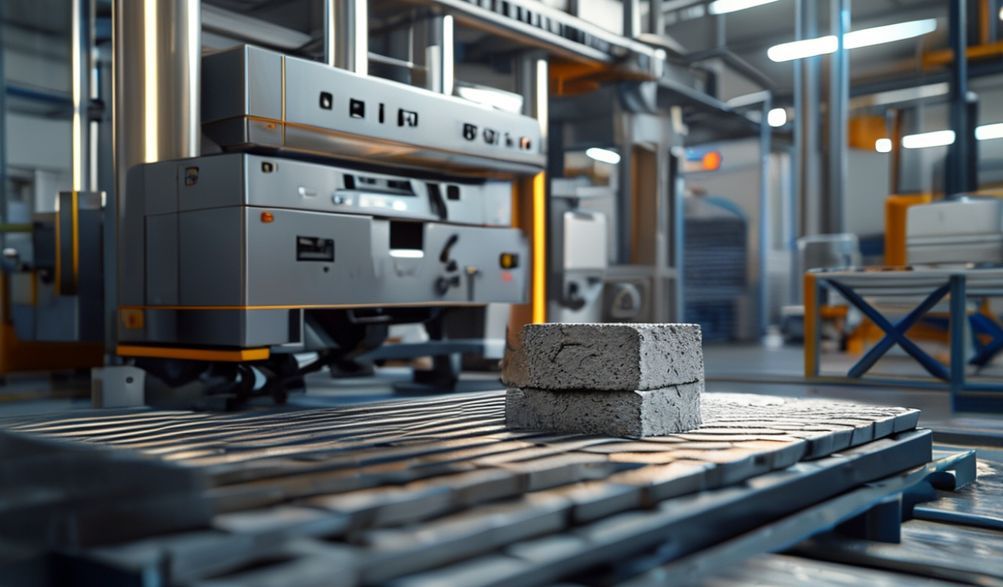
Panduan Utama untuk Mesin Bata Interlock: Di Dalam Kilang Membuat Blok FUDA
Industri pembinaan global berada di persimpangan jalan. Dengan peningkatan permintaan terhadap perumahan dan infrastruktur, tekanan untuk mencari penyelesaian pembinaan yang mampan, kos efektif, dan berdaya tahan juga semakin meningkat. Bata tanah liat tradisional, meskipun biasa digunakan, membawa beban yang besar: penggunaan tenaga yang tinggi, pelepasan karbon yang ketara, dan kebergantungan kepada tenaga kerja mahir untuk kerja bata yang teliti.
Masukkan bata saling kunci—satu keajaiban kejuruteraan moden yang membentuk semula landskap daripada rumah desa hingga pembangunan bandar. Bata-bata ini, dengan reka bentuk seperti teka-teki yang bijak, menawarkan alternatif yang lebih cepat, lebih kuat, dan lebih mesra alam. Namun wira sebenar di sebalik revolusi pembinaan ini bukan hanya bata itu sendiri; ia adalah mesin yang menghasilkannya.
Panduan ini menyelami dunia mesin bata interlock, dengan tumpuan khusus pada kepakaran yang terdapat dalam kilang pembuatan bata seperti FUDA. Disusun daripada pandangan industri dan prinsip kejuruteraan, matlamat kami adalah untuk memberikan pengetahuan berwibawa yang diperlukan untuk membuat pelaburan yang yakin dalam masa depan pembinaan atau perniagaan anda.
Apakah itu Mesin Bata Interlock?
Mesin bata saling kunci adalah peralatan khusus yang direka untuk memampatkan campuran bahan mentah—seperti tanah, simen, dan pasir—menjadi bongkah padat dan seragam bentuknya. Tidak seperti bata konkrit biasa, bata ini mempunyai reka bentuk saling kunci yang unik pada permukaan atas dan bawahnya. Reka bentuk ini membolehkan bata-bata tersebut dipasang dengan rapat tanpa, atau dengan sedikit, mortar, menghasilkan struktur dinding yang stabil dan monolitik.
Teknologi Teras dan Cara Ia Berfungsi
Keajaiban berlaku melalui gabungan pemadatan tekanan tinggi dan pengacuan ketepatan.
- The Compression Principle: Most modern machines use a powerful hydraulic system to exert immense pressure (measured in tons) on the raw material mix within a mold. This compression eliminates air pockets, resulting in a block of exceptional density and strength.
- Reka Bentuk Saling Berkunci: The mold cavity is engineered to form specific patterns, commonly a “tongue-and-groove” or “shear key” system. When stacked, these patterns interlock, creating mechanical friction and shear resistance that distributes load evenly across the entire wall, significantly enhancing its stability.
Komponen Utama Mesin Pembuat Blok Moden
Understanding the machine’s anatomy is key to appreciating its efficiency:
- Hopper & Mixer: Where raw materials are fed and uniformly blended.
- Sistem Penghantar:Mengangkut bahan campuran ke kawasan acuan.
- Mold & Vibration Table: The heart of the machine. The mold defines the block’s shape, while vibration (in many models) helps settle the material for uniform density before final compression.
- Mesin Tekan Hidraulik: Applies the critical high pressure to form the block.
- Panel Kawalan: The brain, often featuring PLC (Programmable Logic Controller) systems for automating cycles and settings.
- Pallet Feeder/Stacker: Automatically feeds empty pallets for molding and stacks finished blocks for curing.
From Raw Material to Finished Block: The Production Cycle
A single cycle is a symphony of mechanical actions:
- Pemberian Makan & Pencampuran: Raw materials are loaded into the hopper and mixed to a consistent ratio.
- Pembentukan: The mix is conveyed into the mold cavity, vibrated, and then compressed under high pressure.
- Pengusiran: The freshly formed, “green” block is ejected onto a pallet.
- Penyembuhan: Blocks are stacked and kept moist for 7-14 days to gain their full compressive strength through hydration.
- Site Ready: After curing, the interlocking bricks are ready for construction.
Advantages of Using Interlock Bricks and Machines
The benefits of this system are transformative, impacting every stage from production to the final building.
Construction Benefits
- Rapid Construction: The interlocking design allows for dry-stacking or minimal mortar use, speeding up wall erection by up to 50% compared to conventional bricklaying.
- Integriti Struktur Dipertingkatkan: The interlocking mechanism creates walls with superior seismic (earthquake) and lateral load resistance.
- Reka Bentuk Fleksibiliti: A variety of molds can produce blocks for straight walls, corners, and even curved structures.
- Reduced Skill Dependency: Simplified stacking reduces the need for highly skilled masons.
Economic and Operational Benefits
- High Return on Investment (ROI): Producing bricks on-site slashes material costs and transportation logistics.
- Kos Buruh yang Lebih Rendah Faster building and simpler techniques directly reduce labor expenses.
- Sisa Dikurangkan: Precise production and reduced mortar use lead to near-zero material waste on site.
- Peluang Perniagaan: The machine itself can become a revenue center, producing blocks for sale.
Environmental Benefits
- Sustainable Materials: Can utilize locally sourced soil, industrial by-products like fly ash, and recycled construction aggregate.
- Low Carbon Footprint: No firing process is required, eliminating a major source of CO2 emissions associated with traditional bricks.
- Cekap Tenaga: The production process consumes significantly less energy than kiln-fired alternatives.
Exploring the FUDA Block Making Factory: A Model of Expertise
Choosing a machine isn’t just about specs on a sheet; it’s about choosing the manufacturer’s expertise. A visit to a factory like FUDA reveals why this partnership matters.
FUDA’s Manufacturing Philosophy and Experience
With years of dedicated operation in the block making machinery sector, FUDA’s philosophy is built on practical, hands-on engineering. Their mission typically centers on delivering robust, reliable, and user-friendly machines that perform consistently in real-world conditions, from small entrepreneurial startups to large-scale commercial projects. This depth of experience translates into machines designed with an operator’s needs in mind.
Inside the Factory: Quality Control and R&D
The production floor of a reputable factory is a testament to quality. Key processes include:
- Pencarian Bahan: Using high-grade steel plates, precision hydraulic components, and durable electrical systems.
- Fabrication & Welding: Employing skilled welders and advanced techniques to ensure the machine’s frame can withstand years of high-pressure operation.
- Assembly & Testing: Each machine is assembled methodically and put through rigorous performance tests before leaving the factory.
- Fokus R&D: Continuous investment in research and development leads to improvements in energy efficiency, automation, and mold design.
The FUDA Machine Portfolio
A leading factory offers a range to suit every need and budget:
- Mesin Manual: Lever-operated, ideal for very small-scale, community-based projects with minimal investment.
- Mesin Semi-Automatik: The sweet spot for most small to medium businesses. They automate the critical compression and ejection cycles, requiring minimal operator intervention for feeding and pallet placement. Output can range from 1,000 to 4,000+ blocks per 8-hour shift.
- Mesin Sepenuhnya Automatik: Complete production lines with automatic material handling, mixing, molding, and stacking. Designed for high-volume commercial production with minimal labor.
- Mesin Mudah Alih: Mounted on trailers for on-site production, eliminating block transportation entirely.
How to Choose the Right Interlock Brick Machine for Your Project
Selecting the perfect machine requires honest assessment and clear priorities.
Menilai Keperluan Pengeluaran Anda
Tanya diri anda soalan-soalan penting ini:
- What is my target daily or monthly block output?
- What is my total available budget (including shipping, installation, and raw materials)?
- What is the skill level of my available operators?
- What power sources are available (3-phase electricity, diesel)?
- What raw materials (soil type, sand, cement) are locally accessible?
Mesin Manual vs. Semi-Automatik vs. Sepenuhnya Automatik
| Ciri | Mesin Manual | Mesin Separa Automatik | Loji Automatik Sepenuhnya |
| :— | :— | :— | :— |
| Kos | Lowest | Moderate | Highest |
| Terjemahkan teks ke Bahasa Melayu. Output HANYA teks yang telah diterjemahkan. | Low (300-800/day) | Medium-High (1000-6000/day) | Very High (10,000+/day) |
| Tenaga Buruh Diperlukan | High | Moderate | Low |
| Space Needed | Minimal | Moderate | Significant |
| Terbaik Untuk | Micro-projects, testing | SMEs, housing projects | Large contractors, block yards |
Critical Technical Specifications to Evaluate
Beyond the type, scrutinize these details:
- Masa Kitaran: How many seconds to produce one block? This dictates maximum output.
- Daya Tekanan: Measured in tons; higher pressure generally yields stronger blocks.
- Kuasa Motor: Determines energy consumption and overall machine capability.
- Penyesuaian Acuan: Can the factory provide custom molds for unique block designs?
- Sokongan Selepas Jualan: This is non-negotiable. Inquire explicitly about warranty, spare parts availability, and technical support channels.
Ensuring Success: Installation, Training, and Support
Your relationship with the factory begins after the purchase order is signed.
The Importance of Professional Installation and Commissioning
A machine is a complex system. Factory-supervised installation and commissioning ensure it is leveled, calibrated, and tested with your local materials. This step is crucial for achieving the specified block quality and preventing early mechanical issues.
Operator Training and Safety Protocols
Comprehensive training is a hallmark of a reputable supplier like FUDA. This should cover:
* Machine operation and daily maintenance routines.
* Optimal raw material mix design for local ingredients.
* Safety procedures for handling hydraulics and moving parts.
* Basic troubleshooting for common issues.
After-Sales Service, Warranty, and Parts Supply
The true test of a factory’s commitment is its after-sales service. Confirm:
* The length and coverage of the warranty period.
* The availability of a commonly used spare parts inventory.
* The responsiveness of their technical support team (email, phone, remote assistance).
* The possibility of scheduling periodic maintenance checks.
Soalan Lazim (FAQ)
Q1: What raw materials can be used with an interlock brick machine?
A: A wide variety! This includes local soil (laterite, clay), sand, cement (as a stabilizer), fly ash, crushed stone/aggregate, and even some recycled materials like crushed concrete. The optimal mix ratio should be determined through testing with your specific soil.
Q2: What is the typical output of a semi-automatic machine from a factory like FUDA?
A: Output varies significantly by model and operator efficiency. A standard semi-automatic machine can typically produce between 1,000 to 4,000 standard blocks in an 8-hour shift. Always request output data for the specific model you are considering.
Q3: Do interlock bricks require curing?
A: Absolutely. Especially for cement-stabilized blocks, proper water curing (keeping the blocks moist) for 7 to 14 days is essential. This process allows the cement to hydrate fully, enabling the block to reach its designed compressive strength.
Q4: Can I get a custom mold for a unique block design?
A: Reputable factories with strong engineering departments, like FUDA, often provide custom mold design and fabrication services. This allows you to produce unique shapes for architectural features, specialized landscaping, or proprietary building systems.
Q5: What is the lifespan of a well-maintained block making machine?
A: With diligent daily maintenance, proper operation, and the use of genuine spare parts, a high-quality machine from a reliable factory can have a productive service life of 10 to 15 years or even longer. The build quality of the core components (hydraulics, frame, electrical) is the primary determinant.
Kesimpulan
The interlock brick machine represents more than just a piece of industrial equipment; it is a gateway to more efficient, sustainable, and profitable construction. The technology empowers individuals, entrepreneurs, and large companies alike to take control of their building material supply chain.
However, your success hinges on a critical factor: the expertise, authoritativeness, and trustworthiness of the manufacturing factory. The machine’s durability, performance, and ultimately your return on investment are direct reflections of the engineering quality and support behind it. Partnering with an established factory with a proven track record, like FUDA, is the most effective way to mitigate risk and ensure long-term operational success.
Ready to transform your construction project or business? Take the next step with confidence. We encourage you to reach out directly to the FUDA block making factory for a detailed consultation. Request a production video of their machines in action, discuss your specific project needs, and ask for a comprehensive quotation. Investing in quality engineering and a reliable partnership is the foundation for building your future.
<