
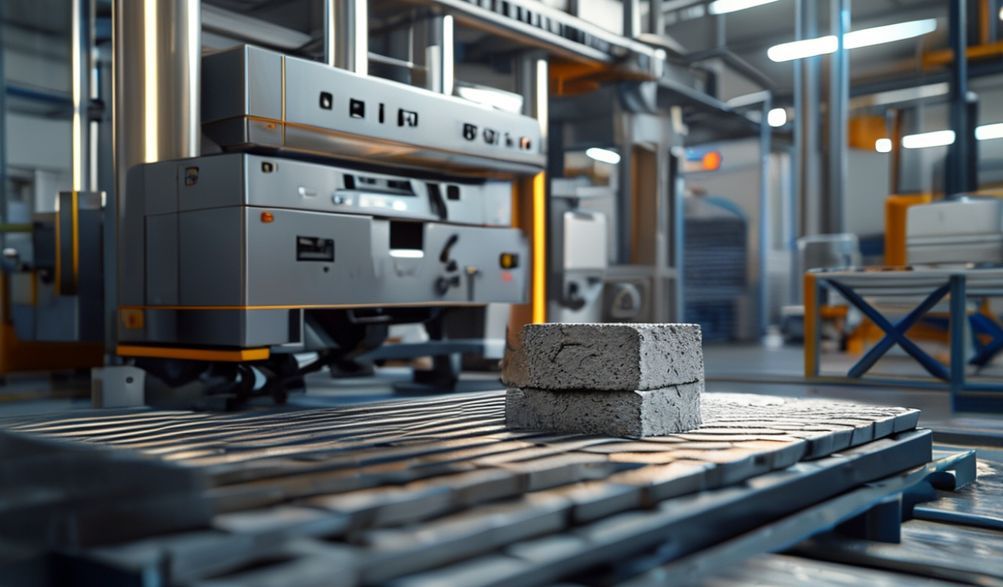
Полное руководство по машинам для производства блоков с замком: Внутри завода по производству блоков FUDA
Глобальная строительная отрасль стоит на перепутье. По мере роста спроса на жилье и инфраструктуру усиливается и давление, требующее поиска строительных решений, которые были бы устойчивыми, экономически эффективными и надежными. Традиционные обожженные глиняные кирпичи, хотя и привычны, несут с собой тяжелое бремя: высокое энергопотребление, значительные выбросы углерода и зависимость от квалифицированной рабочей силы для тщательной кладки.
Вот и появляется блокирующий кирпич — современное инженерное чудо, которое меняет ландшафты от сельских усадеб до городских застроек. Своей гениальной, похожей на головоломку конструкцией эти кирпичи предлагают более быструю, прочную и экологичную альтернативу. Но настоящий герой этой строительной революции — не сам кирпич, а машина, которая его производит.
Это руководство глубоко погружается в мир машин для производства блоков с замковым соединением, уделяя особое внимание опыту, накопленному на специализированных заводах по производству блоков, таких как FUDA. Основанное на отраслевых знаниях и инженерных принципах, оно призвано предоставить вам авторитетную информацию, необходимую для уверенных инвестиций в ваше строительство или бизнес-будущее.
Что такое станок для производства блоков с замковым соединением?
Машина для производства блоков с замковым соединением — это специализированное оборудование, предназначенное для прессования смеси сырьевых материалов, таких как грунт, цемент и песок, в плотные блоки единообразной формы. В отличие от стандартных бетонных блоков, эти блоки имеют уникальную замковую конструкцию на верхней и нижней гранях. Такая конструкция позволяет им плотно соединяться друг с другом без использования раствора или с его минимальным количеством, образуя устойчивую монолитную стеновую структуру.
Основная технология и принцип ее работы
Магия происходит благодаря сочетанию высокого давления для уплотнения и точного формования.
- Принцип сжатия: Most modern machines use a powerful hydraulic system to exert immense pressure (measured in tons) on the raw material mix within a mold. This compression eliminates air pockets, resulting in a block of exceptional density and strength.
- Переплетённый дизайн: The mold cavity is engineered to form specific patterns, commonly a “tongue-and-groove” or “shear key” system. When stacked, these patterns interlock, creating mechanical friction and shear resistance that distributes load evenly across the entire wall, significantly enhancing its stability.
Ключевые компоненты современной машины для производства блоков
Understanding the machine’s anatomy is key to appreciating its efficiency:
- Хоппер и Миксер: Where raw materials are fed and uniformly blended.
- Конвейерная система:Транспортирует смешанный материал в зону формования.
- Mold & Vibration Table: The heart of the machine. The mold defines the block’s shape, while vibration (in many models) helps settle the material for uniform density before final compression.
- Гидравлический пресс: Applies the critical high pressure to form the block.
- Панель управления: The brain, often featuring PLC (Programmable Logic Controller) systems for automating cycles and settings.
- Паллетоподатчик/Паллетоукладчик: Automatically feeds empty pallets for molding and stacks finished blocks for curing.
From Raw Material to Finished Block: The Production Cycle
A single cycle is a symphony of mechanical actions:
- Кормление и смешивание: Raw materials are loaded into the hopper and mixed to a consistent ratio.
- Формование: The mix is conveyed into the mold cavity, vibrated, and then compressed under high pressure.
- Выброс: The freshly formed, “green” block is ejected onto a pallet.
- Курение: Blocks are stacked and kept moist for 7-14 days to gain their full compressive strength through hydration.
- Site Ready: After curing, the interlocking bricks are ready for construction.
Advantages of Using Interlock Bricks and Machines
The benefits of this system are transformative, impacting every stage from production to the final building.
Construction Benefits
- Rapid Construction: The interlocking design allows for dry-stacking or minimal mortar use, speeding up wall erection by up to 50% compared to conventional bricklaying.
- Повышенная структурная целостность: The interlocking mechanism creates walls with superior seismic (earthquake) and lateral load resistance.
- Гибкость дизайна: A variety of molds can produce blocks for straight walls, corners, and even curved structures.
- Reduced Skill Dependency: Simplified stacking reduces the need for highly skilled masons.
Economic and Operational Benefits
- High Return on Investment (ROI): Producing bricks on-site slashes material costs and transportation logistics.
- Снижение затрат на рабочую силу: Faster building and simpler techniques directly reduce labor expenses.
- Минимизация отходов: Precise production and reduced mortar use lead to near-zero material waste on site.
- Бизнес-возможность: The machine itself can become a revenue center, producing blocks for sale.
Environmental Benefits
- Sustainable Materials: Can utilize locally sourced soil, industrial by-products like fly ash, and recycled construction aggregate.
- Low Carbon Footprint: No firing process is required, eliminating a major source of CO2 emissions associated with traditional bricks.
- Энергоэффективный: The production process consumes significantly less energy than kiln-fired alternatives.
Exploring the FUDA Block Making Factory: A Model of Expertise
Choosing a machine isn’t just about specs on a sheet; it’s about choosing the manufacturer’s expertise. A visit to a factory like FUDA reveals why this partnership matters.
FUDA’s Manufacturing Philosophy and Experience
With years of dedicated operation in the block making machinery sector, FUDA’s philosophy is built on practical, hands-on engineering. Their mission typically centers on delivering robust, reliable, and user-friendly machines that perform consistently in real-world conditions, from small entrepreneurial startups to large-scale commercial projects. This depth of experience translates into machines designed with an operator’s needs in mind.
Inside the Factory: Quality Control and R&D
The production floor of a reputable factory is a testament to quality. Key processes include:
- Закупка материалов: Using high-grade steel plates, precision hydraulic components, and durable electrical systems.
- Fabrication & Welding: Employing skilled welders and advanced techniques to ensure the machine’s frame can withstand years of high-pressure operation.
- Assembly & Testing: Each machine is assembled methodically and put through rigorous performance tests before leaving the factory.
- Фокус на исследованиях и разработках: Continuous investment in research and development leads to improvements in energy efficiency, automation, and mold design.
The FUDA Machine Portfolio
A leading factory offers a range to suit every need and budget:
- Ручные станки: Lever-operated, ideal for very small-scale, community-based projects with minimal investment.
- Полуавтоматические станки: The sweet spot for most small to medium businesses. They automate the critical compression and ejection cycles, requiring minimal operator intervention for feeding and pallet placement. Output can range from 1,000 to 4,000+ blocks per 8-hour shift.
- Полностью автоматические машины: Complete production lines with automatic material handling, mixing, molding, and stacking. Designed for high-volume commercial production with minimal labor.
- Мобильные машины: Mounted on trailers for on-site production, eliminating block transportation entirely.
How to Choose the Right Interlock Brick Machine for Your Project
Selecting the perfect machine requires honest assessment and clear priorities.
Оценка ваших производственных потребностей
Задайте себе эти ключевые вопросы:
- What is my target daily or monthly block output?
- What is my total available budget (including shipping, installation, and raw materials)?
- What is the skill level of my available operators?
- What power sources are available (3-phase electricity, diesel)?
- What raw materials (soil type, sand, cement) are locally accessible?
Ручные, полуавтоматические и полностью автоматические машины
| Особенность | Ручная машина | Полуавтоматическая машина | Полностью автоматический завод |
| :— | :— | :— | :— |
| Стоимость | Lowest | Moderate | Highest |
| Вывод | Low (300-800/day) | Medium-High (1000-6000/day) | Very High (10,000+/day) |
| Требуемая рабочая сила | High | Moderate | Low |
| Space Needed | Minimal | Moderate | Significant |
| Лучшее для | Micro-projects, testing | SMEs, housing projects | Large contractors, block yards |
Critical Technical Specifications to Evaluate
Beyond the type, scrutinize these details:
- Время цикла: How many seconds to produce one block? This dictates maximum output.
- Сила давления Measured in tons; higher pressure generally yields stronger blocks.
- Мощность двигателя: Determines energy consumption and overall machine capability.
- Индивидуализация форм Can the factory provide custom molds for unique block designs?
- Послепродажная поддержка: This is non-negotiable. Inquire explicitly about warranty, spare parts availability, and technical support channels.
Ensuring Success: Installation, Training, and Support
Your relationship with the factory begins after the purchase order is signed.
The Importance of Professional Installation and Commissioning
A machine is a complex system. Factory-supervised installation and commissioning ensure it is leveled, calibrated, and tested with your local materials. This step is crucial for achieving the specified block quality and preventing early mechanical issues.
Operator Training and Safety Protocols
Comprehensive training is a hallmark of a reputable supplier like FUDA. This should cover:
* Machine operation and daily maintenance routines.
* Optimal raw material mix design for local ingredients.
* Safety procedures for handling hydraulics and moving parts.
* Basic troubleshooting for common issues.
After-Sales Service, Warranty, and Parts Supply
The true test of a factory’s commitment is its after-sales service. Confirm:
* The length and coverage of the warranty period.
* The availability of a commonly used spare parts inventory.
* The responsiveness of their technical support team (email, phone, remote assistance).
* The possibility of scheduling periodic maintenance checks.
Frequently Asked Questions (FAQ)
Q1: What raw materials can be used with an interlock brick machine?
А: A wide variety! This includes local soil (laterite, clay), sand, cement (as a stabilizer), fly ash, crushed stone/aggregate, and even some recycled materials like crushed concrete. The optimal mix ratio should be determined through testing with your specific soil.
Q2: What is the typical output of a semi-automatic machine from a factory like FUDA?
А: Output varies significantly by model and operator efficiency. A standard semi-automatic machine can typically produce between 1,000 to 4,000 standard blocks in an 8-hour shift. Always request output data for the specific model you are considering.
Q3: Do interlock bricks require curing?
А: Absolutely. Especially for cement-stabilized blocks, proper water curing (keeping the blocks moist) for 7 to 14 days is essential. This process allows the cement to hydrate fully, enabling the block to reach its designed compressive strength.
Q4: Can I get a custom mold for a unique block design?
А: Reputable factories with strong engineering departments, like FUDA, often provide custom mold design and fabrication services. This allows you to produce unique shapes for architectural features, specialized landscaping, or proprietary building systems.
Q5: What is the lifespan of a well-maintained block making machine?
А: With diligent daily maintenance, proper operation, and the use of genuine spare parts, a high-quality machine from a reliable factory can have a productive service life of 10 to 15 years or even longer. The build quality of the core components (hydraulics, frame, electrical) is the primary determinant.
Заключение
The interlock brick machine represents more than just a piece of industrial equipment; it is a gateway to more efficient, sustainable, and profitable construction. The technology empowers individuals, entrepreneurs, and large companies alike to take control of their building material supply chain.
However, your success hinges on a critical factor: the expertise, authoritativeness, and trustworthiness of the manufacturing factory. The machine’s durability, performance, and ultimately your return on investment are direct reflections of the engineering quality and support behind it. Partnering with an established factory with a proven track record, like FUDA, is the most effective way to mitigate risk and ensure long-term operational success.
Ready to transform your construction project or business? Take the next step with confidence. We encourage you to reach out directly to the FUDA block making factory for a detailed consultation. Request a production video of their machines in action, discuss your specific project needs, and ask for a comprehensive quotation. Investing in quality engineering and a reliable partnership is the foundation for building your future.
<