
O Guia Definitivo para Máquinas de Blocos de Postura de Ovos: Como Funcionam e Por Que Você Precisa de Uma
Introdução
Se você está no ramo da construção, conhece a rotina. Os prazos dos projetos se aproximam, mas a produção de blocos é um gargalo. Você luta com os custos de mão de obra disparados, o desgaste físico da moldagem manual e a frustrante inconsistência na qualidade dos blocos de um lote para o outro. Esses não são apenas pequenos incômodos; são margens de lucro escapando a cada projeto atrasado e carga rejeitada.
E se houvesse uma maneira de transformar sua produção de blocos de um desafio constante em um motor confiável e eficiente para o crescimento? Eis que surge amáquina de bloco para postura de ovos—um equipamento revolucionário que transformou a fabricação de blocos de concreto em pequena e média escala em todo o mundo. Ao automatizar as partes mais intensivas em mão de obra do processo, ele traz uma consistência industrial para o seu canteiro de obras, sem a complexidade e o custo de uma planta estacionária completa.
Este guia abrangente é construído com base em insights do setor, princípios fundamentais de engenharia e décadas de conhecimento operacional coletivo. Destilamos o essencial para cortar o ruído de marketing. Ao final deste artigo, você terá uma compreensão clara de como essas máquinas funcionam, seus benefícios tangíveis, os fatores críticos para escolher a certa e como operá-la para máxima longevidade e retorno sobre o investimento.
O que é uma Máquina de Blocos de Postura de Ovos? Desmistificando a Tecnologia
À primeira vista, o nome "máquina de bloco de postura de ovos" pode parecer curioso. Mas, ao vê-la em ação, a analogia se torna perfeitamente clara. Esta seção detalha a tecnologia central que a torna um recurso tão único e valioso.
Definição e Função do Núcleo
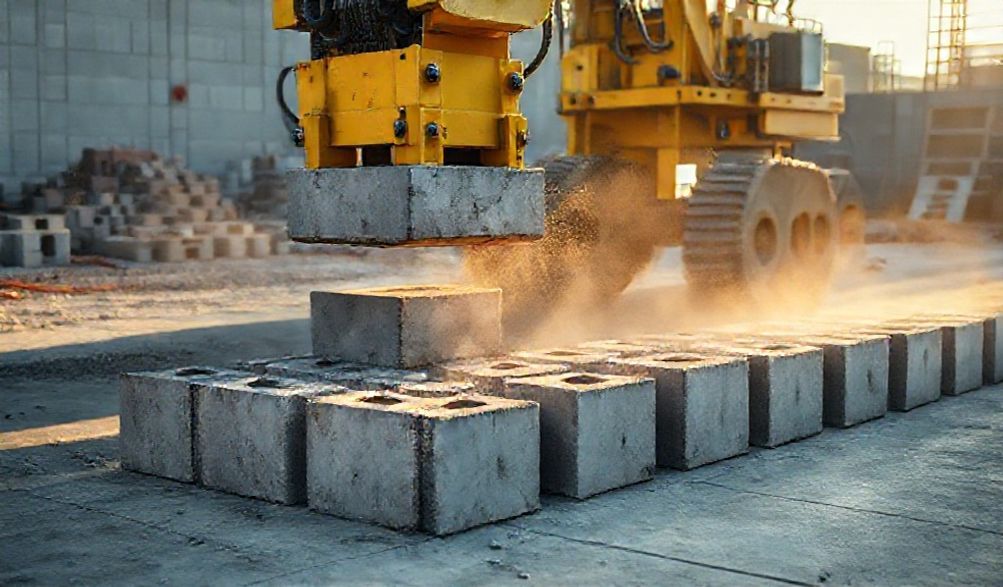
Uma máquina de blocos de concreto tipo "poedeira" é uma máquina móvel, geralmente movida a diesel ou eletricidade, projetada para fabricar blocos de concreto — como blocos vazados, blocos maciços, tijolos de pavimentação e meio-fios — diretamente sobre uma superfície nivelada de cura. Diferente das fábricas estacionárias, que produzem blocos sobre paletes que são então transportados para uma área de cura, a "poedeira" cria o bloco e depois se move para "depositá-lo" suavemente no solo, de forma semelhante a uma galinha que põe um ovo. Essa diferença fundamental na metodologia é a fonte de sua notável eficiência e simplicidade.
Mecanismo de "Postura de Ovos" Explicado
A mágica acontece em um processo contínuo e cíclico. Compreender esse ciclo é fundamental para apreciar o design da máquina:
- Mistura & Alimentação:Uma mistura de concreto pré-misturada (uma mistura semi-seca de cimento, areia e agregado) é carregada no funil da máquina.
- Moldagem & Compactação:A mistura é alimentada em uma caixa de molde. Vibradores potentes, frequentemente auxiliados por uma cabeça de prensa hidráulica, compactam o material com vibração intensa. Isso remove bolsas de ar e garante um bloco denso e resistente.
- O Momento da "Postura":Este é o movimento característico. Todo o carro do molde—agora contendo o bloco recém-formado e compactado—eleva-se verticalmente. A máquina então se desloca para frente ou para trás sobre seus trilhos ou rodas.
- Deposição:O carrinho do molde desce, e o bloco é ejetado sobre o piso de cura preparado. O molde retorna à sua posição inicial, deixando para trás um bloco perfeitamente formado, pronto para a cura.
- Ciclo Repetir:A máquina reinicia e o ciclo recomeça, colocando blocos em um padrão organizado e sequencial no chão.
Componentes Principais e Seus Papéis
Cada parte desempenha um papel crucial neste balé automatizado:
- Hopper:O ponto de entrada para a mistura de concreto bruto. Seu tamanho determina a quantidade de material que pode ser carregada de uma só vez.
- Unidade de Moldagem/Vibrador:O coração da máquina. Moldes intercambiáveis definem o formato e o tamanho do bloco. Vibradores integrados fornecem a força de compactação necessária.
- Sistema Hidráulico ou Mecânico:Fornece a potência para levantar a carruagem do molde, aplicar pressão durante a compactação e executar movimentos. Sistemas hidráulicos são comuns devido à sua potência suave e controle.
- Painel de Controle:Abriga os controles para as operações da máquina, permitindo que o operador gerencie o ciclo, o tempo de vibração e o movimento.
- Pallet Feeder (or lack thereof): Notably, most true egg layers do não use pallets. The block is deposited directly onto the curing floor, which is a major cost and logistics saver.
Advantages of Using an Egg Laying Block Machine
Moving from theory to practice, the real-world benefits reported by operators and business owners are what make this machine a game-changer. Here’s what you can expect.
Unmatched Efficiency and Output
On-site observations consistently show that a single egg laying machine operated by a crew of 3-5 people can outperform a team of 15-20 manual laborers. With cycle times ranging from 15 to 30 seconds, production rates of 2,000 to 5,000 blocks per 8-hour shift are common for standard hollow blocks. This dramatic increase in output with a smaller crew directly translates to faster project completion and the ability to take on more work.
Superior Space and Logistics Management
Because blocks are laid directly onto the curing floor, you eliminate two major headaches:
* No Pallet Investment: You don’t need to purchase, maintain, or replace thousands of wooden or steel pallets.
* Simplified Handling: There’s no need for complex forklift movements or racking systems to move pallets of green blocks. The blocks cure where they are laid, and are simply picked up once hardened. This significantly reduces the required yard space and handling equipment.
Enhanced Block Quality and Consistency
Manual production is vulnerable to human error—variations in mixing, compaction, and molding lead to inconsistent blocks. An egg laying machine applies precise, repeatable vibration and pressure every single cycle. This results in:
* Higher compressive strength due to better compaction.
* Uniform dimensions and sharp edges.
* Denser blocks with lower water absorption.
* A more professional, reliable product that commands better market trust and price.
Custo-benefício e ROI
For a growing construction firm or block-making entrepreneur, the financial argument is compelling:
* Menor Despesa de Capital: It is significantly more affordable than a fully automated stationary block making plant.
* Redução da Dependência de Mão de Obra Cuts your largest variable cost.
* Manutenção Mínima: With fewer complex conveyors and transfer systems, maintenance is simpler and less costly.
* Escalabilidade: You can start with one machine and add more as demand grows, making it a low-risk, high-return entry into automated production.
Key Considerations Before Buying an Egg Laying Block Machine
A wise investment requires due diligence. This checklist, drawn from industry best practices, will help you evaluate your options and partner with the right supplier.
Avaliando Suas Necessidades de Produção
Begin with a clear business plan:
* Tipos e Tamanhos de Blocos: What will you primarily produce? 4″, 6″, 8″ hollow blocks? Pavers? Interlocking bricks? Ensure the machine you choose offers readily available molds for your needs.
* Output Targets: Calculate your average daily or weekly requirement based on current and projected contracts. Don’t just buy for today’s peak; plan for steady growth.
* Project Scale & Mobility: Will the machine operate at a fixed yard, or do you need to move it between sites? This affects your choice of trailer-mounted vs. static models.
Machine Specifications Deep Dive
When comparing models, these specs are non-negotiable:
* Tempo de Ciclo: The time to produce one block. Faster cycles mean higher output.
* Block Capacity per Cycle: Some machines produce 1, 2, 3, or even 4 blocks per cycle (e.g., for pavers).
* Potência do Motor: Indicates the machine’s overall capability (e.g., 10 HP, 15 HP). More power typically supports heavier cycles and larger blocks.
* Sistema de Vibração: Frequency (Hz) and amplitude (mm) determine compaction efficiency. A combination of high frequency and variable amplitude is often ideal for different mix designs.
* Nível de Automação: Semi-automatic machines require an operator to initiate each cycle. Fully automatic models run a continuous cycle, offering the highest output.
Power Source and Operational Environment
Your site conditions dictate the best choice:
* Elétrico: Clean, quiet, and cost-effective to run, but requires reliable grid connection.
* Diesel: Offers complete independence and high torque, ideal for remote sites. Factor in fuel costs and emissions.
* Híbrido: Some models offer the flexibility to switch between power sources, providing the best of both worlds.
Manufacturer and Supplier Evaluation
This is the most critical step. The right partner ensures long-term success.
* Company History & Reputation: How long have they been in business? Look for established manufacturers with a track record.
* After-Sales Service & Support: Do they offer installation guidance, operator training, and timely technical support? Ask for specific details.
* Disponibilidade de Peças de Reposição: Are parts standardized and readily available locally or through a quick supply chain? Downtime is lost revenue.
* Client Testimonials & Site Visits: Request references and, if possible, visit an existing installation to see the machine running.
* Warranty Terms: A clear, comprehensive warranty is a sign of a manufacturer that trusts its product’s quality.
Operating and Maintaining Your Machine for Longevity
Your machine is a significant asset. Proper operation and maintenance, as outlined in standard industry protocols, protect your investment and ensure consistent performance.
Step-by-Step Operational Procedure
Follow this safety-focused checklist for daily operation:
1. Pre-Start Check: Inspect the machine for loose bolts, hydraulic leaks, and clean the mold box. Ensure the vibration motors are secure.
2. Preparação do Material: Use a consistent, semi-dry concrete mix with the correct cement-aggregate ratio. Inconsistent mix is the leading cause of block defects.
3. Machine Setup: Position the machine on a perfectly level and prepared curing floor (often a concrete slab).
4. Cycle Operation: Load the hopper, initiate the cycle, and monitor the block formation and laying process. Adjust vibration time based on block density.
5. Post-Operation: Thoroughly clean all concrete residue from the hopper, mold, and vibrator shafts before it hardens. This is a daily non-negotiable task.
Essential Daily and Periodic Maintenance
Adherence to a maintenance schedule prevents major breakdowns:
* Diário: Clean machine thoroughly. Check oil levels in the hydraulic tank. Lubricate all guide rails and moving joints as per the manual.
* Semanal: Tighten all bolts and nuts, especially on vibrator mounts. Inspect hydraulic hoses for wear. Check electrical connections.
* Monthly/Periodically: Change hydraulic oil and filters as recommended. Inspect the vibrator motors for bearing wear. Have a qualified technician perform a full system check.
Solução de Problemas Comuns
- Block Sticking in Mold: Usually caused by a worn/damaged mold, insufficient mold release agent, or an overly wet concrete mix.
- Compactação Pobre/Blocos Fracos: Likely due to incorrect vibration time, low vibration frequency, or an improper raw material mix (too dry or poor gradation).
- Hydraulic Leaks or Slow Movement: Check hose fittings, seals, and hydraulic fluid levels. Contaminated oil can also cause system issues.
Safety Protocols for Operators
- Mandatory PPE: Safety glasses, steel-toe boots, hearing protection, and gloves.
- Lockout/Tagout (LOTO): Always disconnect and lock out the power source (electrical or diesel) before performing any maintenance or clearing a jam.
- Safe Material Handling: Use appropriate equipment for loading raw materials to avoid strain injuries.
Egg Laying Block Machine vs. Stationary Block Making Plant
Choosing the right technology depends on your business model. Here’s an authoritative comparison to guide your decision.
Comparative Analysis: Investment and Flexibility
- Egg Laying Machine: Lower initial investment. Quick setup and commissioning. Highly mobile—can be moved between sites. Ideal for medium-scale production, start-ups, and projects requiring on-site block manufacturing.
- Planta Estacionária: High capital cost. Requires permanent, significant foundation and infrastructure. Fixed location. Designed for ultra-high-volume, single-location production (e.g., 10,000+ blocks/day).
Production Output and Labor Comparison
- Egg Laying Machine: High output for its class (up to ~5,000 blocks/day). Requires a small crew (3-5). Output is ultimately limited by the sequential laying process.
- Planta Estacionária: Maximum output potential is far higher due to continuous, parallel production lines. Often more automated, but may still require a larger operational and maintenance team.
Making the Right Choice for Your Business
Use this simple matrix:
* Choose an Egg Laying Machine if: You are a growing business, have multiple sites, need flexibility, have a medium-scale demand, or are working with a constrained budget.
* Consider a Stationary Plant if: You are supplying a massive, constant market (e.g., a major city), have a single, large factory site, and have the capital for a long-term, fixed infrastructure investment.
FAQ Section
Q1: What is the average production capacity of a standard egg laying block machine?
A: For a standard 4″ or 6″ hollow block, a well-operated machine can produce between 2,000 and 5,000 blocks in an 8-hour shift, depending on the model’s cycle time and crew efficiency.
Q2: Can one machine produce different types and sizes of blocks?
A: Yes, absolutely. This is a key advantage. By changing the mold box, the same machine can produce hollow blocks, solid blocks, paving stones, and more. Ensure you purchase the desired molds from your supplier.
Q3: What is the typical lifespan of a well-maintained egg laying machine?
A: With strict adherence to maintenance schedules and operation within design limits, a quality machine can have a productive lifespan of 10-15 years or more. Critical components like vibrators and hydraulic parts may require replacement sooner based on usage.
Q4: What raw material mix is recommended for optimal results?
A: A standard, reliable mix is a 1:6:4 ratio (Cement: Sand: Aggregate, by volume). Use a coarse, well-graded sand and 3/8″ aggregate. The mix should be semi-dry—holding its shape when squeezed in your hand but crumbling when poked.
Q5: Is special training required to operate this machinery?
A: While not overly complex, formal training from your supplier is highly recommended. Proper training ensures safety, maximizes output, minimizes waste, and extends machine life. Most reputable suppliers include basic operational training.
Q6: How much space is needed for operation and block curing?
A: You need a level, solid concrete curing floor. Space required depends on daily output. As a rule of thumb, for curing 1000 blocks, you need approximately 150-200 sq. meters, accounting for walking aisles. The machine itself requires an operational area about 4m wide by 10m long per lane.
Conclusão
The egg laying block machine stands as a testament to smart, practical engineering. It elegantly solves the core problems of labor intensity, inconsistent quality, and logistical complexity in block production. By understanding its “lay-and-go” mechanism, recognizing the substantial benefits in efficiency and cost-saving, and carefully selecting a machine and manufacturer based on your specific needs, you can make an investment that pays dividends for years to come.
For most small to medium-sized construction businesses and block manufacturing entrepreneurs, it represents the ideal balance of capability, affordability, and flexibility. It’s not just a machine; it’s a strategic tool for scalable growth.
Pronto para dar o próximo passo? We strongly encourage you to use the criteria outlined here to consult with several reputable manufacturers. Request detailed specifications, ask for client references, and if possible, insist on a live demonstration. Have specific questions about your project? Feel free to reach out—our goal is to be a continuing resource in your journey toward more efficient and profitable construction.
Author Bio:
This guide was authored by a team with over 20 years of combined experience in civil engineering, construction machinery distribution, and on-site block manufacturing operations. Our insights are drawn from direct collaboration with manufacturers, technical training sessions, and countless hours observing these machines in action across diverse project sites. We are dedicated to providing accurate, practical information to help industry professionals build their businesses on a solid foundation.