
Йумурта ташлайýш блок машиналарыныň Iň Ýokary Gollanmasy: Olar nähili işleýär we Näme üçin Size Biriniň Gerekdigi
Giriş
Gurluşyk işinde bolsaňyz, bu meseleleri ýagşy bilýärsiňiz. Taslama möhletleri ýakynlaşýar, emma blok öndürijiligi bir darboýazdyr. Ýokary galýan iş haky, gol bilen galyplamagyň fiziki kynçylyklary we bir partiýadan beýlekisine bloklaryň hiliniň üýtgeýşligi bilen göreşýärsiňiz. Bu diňe kiçi kynçylyklar däl; her gijikdirilen taslama we ret edilen ýük bilen peýda çykdajylaryňyz azalýar.
Eger blok öndürijiligini yzygiderli synagdan ösüş üçin ygtybarly we netijeli maşyna öwürmek usuly bolsa? Şu ýerdeýumurtlama blok maşyny—dünýä boýunça kiçi we orta ölçegli beton blok öndürişini üýtgeden rewolýusion enjam. Işiň iň köp güç talap edýän böleklerini awtomatlaşdyrmak bilen, doly stasionar zawodynyň çylşyrymlylygy we bahasysyz, öz meýdançaňyza zawod ýaly yzygiderliligi getirýär.
Bu gollap görnüşli gollagç, senagat içgöreşleri, esaslary gurluşyk principalary we onlaryň ýyldaş iş tejribesi bilen gurlan. Biz marketing şowşunyndan daşlaşmak üçin esasy zatlary saýladyk. Makalanyň soňunda, bu maşynlaryň nädip işleýändigini, olaryň hakyky peýdalaryny, dogry birini saýlamak üçin möhüm faktorlary we ony iň uzyn ömür we gelir üçin nädip işletmelidigini düşünersiňiz.
Ýumurt goýýan blok maşyny näme? Tehnologiýanyň syryny açmak
Ilkinji synpda, "ýumurtga taýýarlýan blok maşyny" ady garyp görünüp biler. Emma ony işde görüň, oňa berlen meňzeşlik doly düşnükli bolýar. Bu bölüm, ony şeýle özboluşly we gymmatly edýän esasy tehnologiýany düşündirýär.
Esasy Düşünje we Wezipeleri
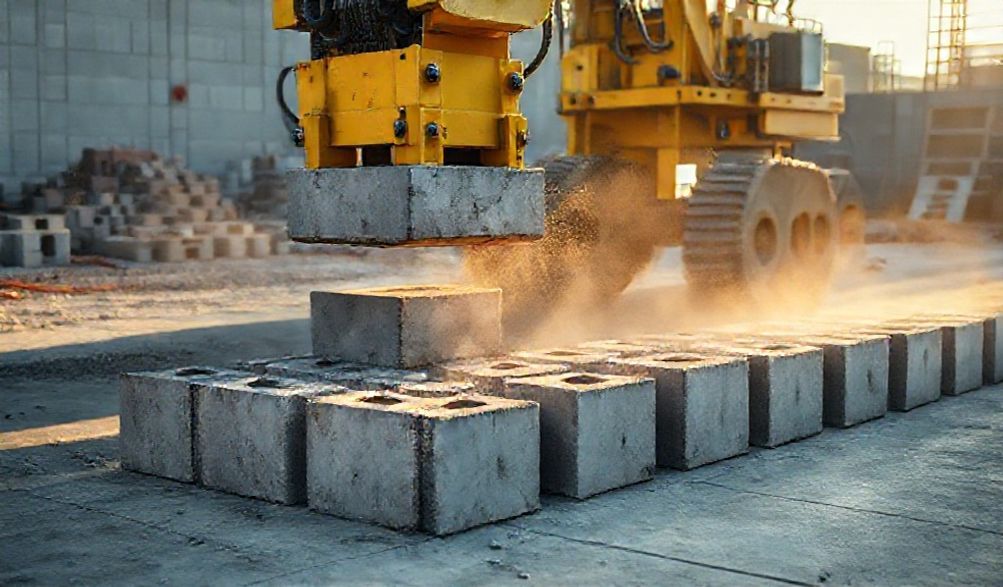
Ýumurta goýýan blok maşyny, beton bloklary—ýassy bloklar, doly bloklar, hasaplaýan kerpiçler we bordýur ýaly—göni bir tekiz saklaýan üstünde öndürmek üçin niýetlenen, hereketli, köplenç dizel ýa-da elektrik güýçli enjamdyr. Paletlerde blok öndürýän we soňra saklaýan meýdana daşynýan stasionar zawodlardan tapawutlylykda, ýumurta goýujy blok döredýär we soňra ony bir towuk ýumurtasyny goýşy ýaly, ýumşaklyk bilen ýere “goýmak” üçin hereket edýär. Bu usuldaky esasy tapawut, onuň ajaýyp netijeliligini we ýönekeýliginiň sebäbidir.
“Ýumurtga Goýmak” Mekanizminiň Düşündirişi
Sihirli proses dowamly we aýlawly bolup geçýär. Bu aýlawy düşünmek, maşynyň dizaýnynyň gymmatlygyny düşünmek üçin esasy ähmiýete eýe.
- Gatnaşdyrmak we Iýmek:Öňden garylan beton goşundy (sement, çigek we agrega garyndysynyň ýary-gura goşundy) maşynynyň bunkerine ýüklenýär.
- Гыпланмак & Ыгырмак:Aralga kalypa gowşurylýar. Güýçli wibratorlar, köplenç gidrawliki basyş başy bilen ýardamlaşýar, materialy güýçli titreme bilen ýygnýar. Bu howa boşluklaryny aýyrýar we ýygy, güýçli blok üpjün edýär.
- "Töşeme" SanyБу аýdarlaryň iňlisçe görnüşi. Tutuş galybyň arabasy—häzir täze düzülen, gysylan blok bilen—dik göterilýär. Soňra maşyna relsleri ýa-da tekerlekleri boýunça öňe ýa-da yzyna hereket edýär.
- Бейада:Kalıp arabasy aşak düşýär we blok taýýarlanan gurylaýan ýere çykarylýar. Kalyp başlangyç ýerine gaýdyp gelýär we gurylamaga taýýar mukammal ýasalan blok yzda galýar.
- Gaýtala:Машина баштапкы абалына келет ве цикл кайталана, жерде блокларды таза, иреттүү үлгү боюнча жайгаштыра.
Esasy Bölümleri we Olaryň Roluny
Her bir bölek bu awtomatlaşdyrylan baletde möhüm rol oýnaýar:
- Хоппер: The entry point for the raw concrete mix. Its size determines how much material can be loaded at once.
- Mold/Vibrator Unit: The heart of the machine. Interchangeable mold boxes define the block’s shape and size. Integrated vibrators provide the necessary compaction force.
- Hydraulic or Mechanical System: Provides the power to lift the mold carriage, apply pressure during compaction, and execute movements. Hydraulic systems are common for their smooth power and control.
- Kontrol paneli: Houses the controls for the machine’s operations, allowing the operator to manage the cycle, vibration time, and movement.
- Pallet Feeder (or lack thereof): Notably, most true egg layers do ýok use pallets. The block is deposited directly onto the curing floor, which is a major cost and logistics saver.
Advantages of Using an Egg Laying Block Machine
Moving from theory to practice, the real-world benefits reported by operators and business owners are what make this machine a game-changer. Here’s what you can expect.
Unmatched Efficiency and Output
On-site observations consistently show that a single egg laying machine operated by a crew of 3-5 people can outperform a team of 15-20 manual laborers. With cycle times ranging from 15 to 30 seconds, production rates of 2,000 to 5,000 blocks per 8-hour shift are common for standard hollow blocks. This dramatic increase in output with a smaller crew directly translates to faster project completion and the ability to take on more work.
Superior Space and Logistics Management
Because blocks are laid directly onto the curing floor, you eliminate two major headaches:
* No Pallet Investment: You don’t need to purchase, maintain, or replace thousands of wooden or steel pallets.
* Simplified Handling: There’s no need for complex forklift movements or racking systems to move pallets of green blocks. The blocks cure where they are laid, and are simply picked up once hardened. This significantly reduces the required yard space and handling equipment.
Enhanced Block Quality and Consistency
Manual production is vulnerable to human error—variations in mixing, compaction, and molding lead to inconsistent blocks. An egg laying machine applies precise, repeatable vibration and pressure every single cycle. This results in:
* Higher compressive strength due to better compaction.
* Uniform dimensions and sharp edges.
* Denser blocks with lower water absorption.
* A more professional, reliable product that commands better market trust and price.
Cost-Effectiveness and ROI
For a growing construction firm or block-making entrepreneur, the financial argument is compelling:
* Pes maýa goýumlary: It is significantly more affordable than a fully automated stationary block making plant.
* Iş güjüne bolan garaýyşyň azalmagy: Cuts your largest variable cost.
* Minimal Ýagdaýynda Saklamak With fewer complex conveyors and transfer systems, maintenance is simpler and less costly.
* Ölçeklenirlik: You can start with one machine and add more as demand grows, making it a low-risk, high-return entry into automated production.
Key Considerations Before Buying an Egg Laying Block Machine
A wise investment requires due diligence. This checklist, drawn from industry best practices, will help you evaluate your options and partner with the right supplier.
Öndürijilik Talapynyzy Bahalandyrmak
Begin with a clear business plan:
* Блоклардыň Görnüşleri we Ölçegleri: What will you primarily produce? 4″, 6″, 8″ hollow blocks? Pavers? Interlocking bricks? Ensure the machine you choose offers readily available molds for your needs.
* Output Targets: Calculate your average daily or weekly requirement based on current and projected contracts. Don’t just buy for today’s peak; plan for steady growth.
* Project Scale & Mobility: Will the machine operate at a fixed yard, or do you need to move it between sites? This affects your choice of trailer-mounted vs. static models.
Machine Specifications Deep Dive
When comparing models, these specs are non-negotiable:
* Sikl wagty: The time to produce one block. Faster cycles mean higher output.
* Block Capacity per Cycle: Some machines produce 1, 2, 3, or even 4 blocks per cycle (e.g., for pavers).
* Motor Güýji: Indicates the machine’s overall capability (e.g., 10 HP, 15 HP). More power typically supports heavier cycles and larger blocks.
* Titreşim Sistemi: Frequency (Hz) and amplitude (mm) determine compaction efficiency. A combination of high frequency and variable amplitude is often ideal for different mix designs.
* Awtomatlaşdyryş derejesi: Semi-automatic machines require an operator to initiate each cycle. Fully automatic models run a continuous cycle, offering the highest output.
Power Source and Operational Environment
Your site conditions dictate the best choice:
* Elektrik: Clean, quiet, and cost-effective to run, but requires reliable grid connection.
* Дизель: Offers complete independence and high torque, ideal for remote sites. Factor in fuel costs and emissions.
* Gatnaşyk: Some models offer the flexibility to switch between power sources, providing the best of both worlds.
Manufacturer and Supplier Evaluation
This is the most critical step. The right partner ensures long-term success.
* Company History & Reputation: How long have they been in business? Look for established manufacturers with a track record.
* After-Sales Service & Support: Do they offer installation guidance, operator training, and timely technical support? Ask for specific details.
* Ätiýaçlyk bölekleriniň bardygy: Are parts standardized and readily available locally or through a quick supply chain? Downtime is lost revenue.
* Client Testimonials & Site Visits: Request references and, if possible, visit an existing installation to see the machine running.
* Warranty Terms: A clear, comprehensive warranty is a sign of a manufacturer that trusts its product’s quality.
Operating and Maintaining Your Machine for Longevity
Your machine is a significant asset. Proper operation and maintenance, as outlined in standard industry protocols, protect your investment and ensure consistent performance.
Step-by-Step Operational Procedure
Follow this safety-focused checklist for daily operation:
1. Pre-Start Check: Inspect the machine for loose bolts, hydraulic leaks, and clean the mold box. Ensure the vibration motors are secure.
2. Material taýýarlamak: Use a consistent, semi-dry concrete mix with the correct cement-aggregate ratio. Inconsistent mix is the leading cause of block defects.
3. Machine Setup: Position the machine on a perfectly level and prepared curing floor (often a concrete slab).
4. Cycle Operation: Load the hopper, initiate the cycle, and monitor the block formation and laying process. Adjust vibration time based on block density.
5. Post-Operation: Thoroughly clean all concrete residue from the hopper, mold, and vibrator shafts before it hardens. This is a daily non-negotiable task.
Essential Daily and Periodic Maintenance
Adherence to a maintenance schedule prevents major breakdowns:
* Daily: Clean machine thoroughly. Check oil levels in the hydraulic tank. Lubricate all guide rails and moving joints as per the manual.
* Weekly: Tighten all bolts and nuts, especially on vibrator mounts. Inspect hydraulic hoses for wear. Check electrical connections.
* Monthly/Periodically: Change hydraulic oil and filters as recommended. Inspect the vibrator motors for bearing wear. Have a qualified technician perform a full system check.
Troubleshooting Common Issues
- Block Sticking in Mold: Usually caused by a worn/damaged mold, insufficient mold release agent, or an overly wet concrete mix.
- Poor Compaction/Weak Blocks: Likely due to incorrect vibration time, low vibration frequency, or an improper raw material mix (too dry or poor gradation).
- Hydraulic Leaks or Slow Movement: Check hose fittings, seals, and hydraulic fluid levels. Contaminated oil can also cause system issues.
Safety Protocols for Operators
- Mandatory PPE: Safety glasses, steel-toe boots, hearing protection, and gloves.
- Lockout/Tagout (LOTO): Always disconnect and lock out the power source (electrical or diesel) before performing any maintenance or clearing a jam.
- Safe Material Handling: Use appropriate equipment for loading raw materials to avoid strain injuries.
Egg Laying Block Machine vs. Stationary Block Making Plant
Choosing the right technology depends on your business model. Here’s an authoritative comparison to guide your decision.
Comparative Analysis: Investment and Flexibility
- Egg Laying Machine: Lower initial investment. Quick setup and commissioning. Highly mobile—can be moved between sites. Ideal for medium-scale production, start-ups, and projects requiring on-site block manufacturing.
- Stationary Plant: High capital cost. Requires permanent, significant foundation and infrastructure. Fixed location. Designed for ultra-high-volume, single-location production (e.g., 10,000+ blocks/day).
Production Output and Labor Comparison
- Egg Laying Machine: High output for its class (up to ~5,000 blocks/day). Requires a small crew (3-5). Output is ultimately limited by the sequential laying process.
- Stationary Plant: Maximum output potential is far higher due to continuous, parallel production lines. Often more automated, but may still require a larger operational and maintenance team.
Making the Right Choice for Your Business
Use this simple matrix:
* Choose an Egg Laying Machine if: You are a growing business, have multiple sites, need flexibility, have a medium-scale demand, or are working with a constrained budget.
* Consider a Stationary Plant if: You are supplying a massive, constant market (e.g., a major city), have a single, large factory site, and have the capital for a long-term, fixed infrastructure investment.
FAQ Section
Q1: What is the average production capacity of a standard egg laying block machine?
A: For a standard 4″ or 6″ hollow block, a well-operated machine can produce between 2,000 and 5,000 blocks in an 8-hour shift, depending on the model’s cycle time and crew efficiency.
Q2: Can one machine produce different types and sizes of blocks?
A: Yes, absolutely. This is a key advantage. By changing the mold box, the same machine can produce hollow blocks, solid blocks, paving stones, and more. Ensure you purchase the desired molds from your supplier.
Q3: What is the typical lifespan of a well-maintained egg laying machine?
A: With strict adherence to maintenance schedules and operation within design limits, a quality machine can have a productive lifespan of 10-15 years or more. Critical components like vibrators and hydraulic parts may require replacement sooner based on usage.
Q4: What raw material mix is recommended for optimal results?
A: A standard, reliable mix is a 1:6:4 ratio (Cement: Sand: Aggregate, by volume). Use a coarse, well-graded sand and 3/8″ aggregate. The mix should be semi-dry—holding its shape when squeezed in your hand but crumbling when poked.
Q5: Is special training required to operate this machinery?
A: While not overly complex, formal training from your supplier is highly recommended. Proper training ensures safety, maximizes output, minimizes waste, and extends machine life. Most reputable suppliers include basic operational training.
Q6: How much space is needed for operation and block curing?
A: You need a level, solid concrete curing floor. Space required depends on daily output. As a rule of thumb, for curing 1000 blocks, you need approximately 150-200 sq. meters, accounting for walking aisles. The machine itself requires an operational area about 4m wide by 10m long per lane.
Netije
The egg laying block machine stands as a testament to smart, practical engineering. It elegantly solves the core problems of labor intensity, inconsistent quality, and logistical complexity in block production. By understanding its “lay-and-go” mechanism, recognizing the substantial benefits in efficiency and cost-saving, and carefully selecting a machine and manufacturer based on your specific needs, you can make an investment that pays dividends for years to come.
For most small to medium-sized construction businesses and block manufacturing entrepreneurs, it represents the ideal balance of capability, affordability, and flexibility. It’s not just a machine; it’s a strategic tool for scalable growth.
Ready to take the next step? We strongly encourage you to use the criteria outlined here to consult with several reputable manufacturers. Request detailed specifications, ask for client references, and if possible, insist on a live demonstration. Have specific questions about your project? Feel free to reach out—our goal is to be a continuing resource in your journey toward more efficient and profitable construction.
Author Bio:
This guide was authored by a team with over 20 years of combined experience in civil engineering, construction machinery distribution, and on-site block manufacturing operations. Our insights are drawn from direct collaboration with manufacturers, technical training sessions, and countless hours observing these machines in action across diverse project sites. We are dedicated to providing accurate, practical information to help industry professionals build their businesses on a solid foundation.