
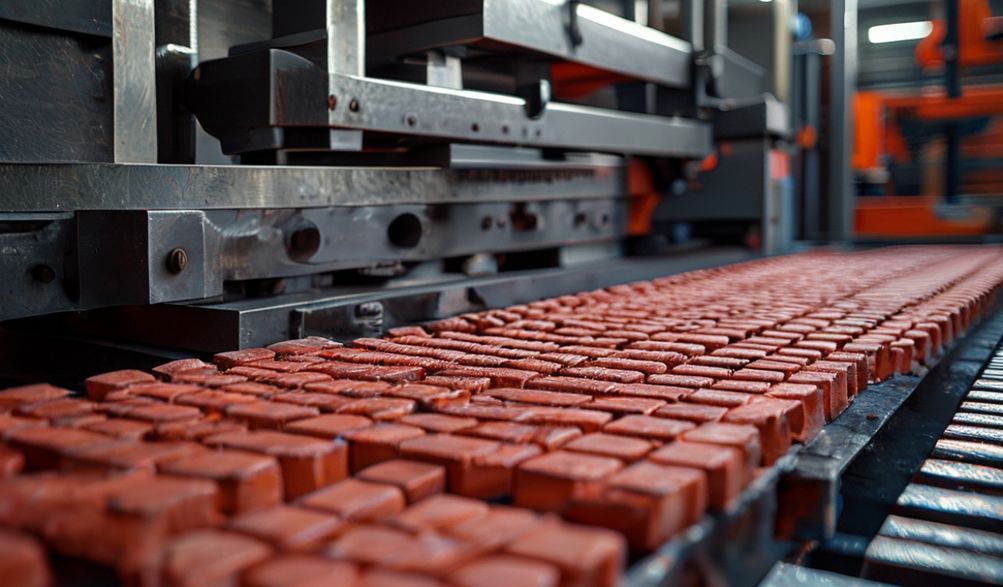
Brick Interlocking Machine Price List 2026: A Complete Buyer’s Guide
Introdução
Budgeting for construction equipment is a universal headache. Whether you’re a contractor planning a new development, an entrepreneur launching a building materials business, or a self-builder embarking on a dream project, the search for clear, reliable pricing can feel like navigating a maze. You find a tantalizingly low price online, only to discover it’s for a bare-bones model, or you get a quote that seems to include everything but the kitchen sink—and the cost.
This guide is designed to cut through that frustration. As seasoned analysts in the construction equipment sector, we’ve compiled this comprehensive 2026 price list and buyer’s guide to bring transparency to the brick interlocking machine market. We understand that prices aren’t just numbers; they’re a reflection of capacity, automation, durability, and long-term value.
The cost of a brick interlocking machine varies wildly—from a few thousand dollars to over eighty thousand. This variation isn’t arbitrary; it’s dictated by the machine’s intended use, from a small community project to a large-scale commercial operation. In this post, we will decode these factors, provide transparent price ranges, and offer practical advice to ensure you get the best valor for your investment, not just the lowest preço. The information here is built on current industry data, manufacturer specifications, and market trend analysis, giving you a trustworthy foundation for your purchasing decision.
Understanding Brick Interlocking Machines: Types and Applications
Before diving into costs, it’s crucial to understand what you’re buying. This knowledge is the first step in making an informed investment.
O que é uma Máquina de Tijolos Intertravados?
At its core, an interlocking brick machine is a device that compresses a mixture of soil, sand, and a small percentage of cement (or other stabilizers like lime) into high-density bricks. These bricks are uniquely designed with grooves and protrusions that allow them to lock together tightly without the need for mortar. This interlocking system is the key to their benefits:
- Custo-Eficaz: Eliminates mortar costs and reduces skilled labor requirements.
- Ecológico: Often uses on-site or local soil, minimizes cement use, and produces less waste.
- Durable & Strong: The compression creates a dense, weather-resistant brick ideal for walls, paving, and landscaping.
Primary Types of Machines (This is a Key Price Driver)
The level of human input required is the primary classifier and the most significant driver of price.
- Máquinas Manuais: These are the simplest and most affordable. Operated by a hand lever, they rely entirely on human force for compression. They are portable, require no electricity, and are perfect for training or very low-volume production.
- Máquinas Semiautomáticas: This is the most popular category for small to medium businesses. They use an electric motor to power a hydraulic system, automating the compression cycle. An operator is still needed to feed the raw material and remove finished bricks, but the process is faster and less labor-intensive than manual operation.
- Máquinas Totalmente Automáticas: These are the powerhouses of the industry. Controlled by a Programmable Logic Controller (PLC), they automate the entire process: feeding, compression, ejection, and stacking. Conveyor belts move bricks through the system. They offer the highest output with minimal labor but come with a significantly higher initial investment.
Key Factors That Determine Brick Interlocking Machine Prices
Why does one machine cost $5,000 and another $50,000? Several intertwined factors determine the final price tag. Understanding these will help you compare apples to apples.
Capacidade de Produção (Tijolos Por Hora)
Output is king. The price scales directly with the machine’s ability to produce more bricks in less time.
* Low Capacity (200-800 BPH): Suitable for manual and entry-level semi-automatic machines. Ideal for small, phased projects.
* Medium Capacity (800-2,000 BPH): The sweet spot for growing businesses and housing projects. Covered by robust semi-automatic models.
* High Capacity (2,000-5,000+ BPH): The domain of fully automatic lines for large-scale commercial production or government infrastructure projects.
Nível de Automação
Automation is an investment in efficiency. A higher upfront cost buys you long-term labor savings and consistency.
* Manual: Lowest capex, highest operational labor cost.
* Semi-Auto: Moderate capex, significantly reduced labor cost per brick. Offers the best balance for many.
* Fully Auto: Highest capex, minimal operational labor. The ROI is calculated on volume and scale over time.
Machine Quality and Brand Reputation
Not all steel is created equal. Established brands like Makiga, Hydraform, or Wangda command higher prices for good reason:
* Confiabilidade Comprovada: Their designs are field-tested over thousands of hours.
* Serviço Pós-Venda: They offer technical support, warranty (typically 1-2 years), and troubleshooting.
* Disponibilidade de Peças de Reposição: You can source a replacement hydraulic seal or mold without halting production for weeks.
A “too-good-to-be-true” cheap machine often becomes expensive through downtime, frequent repairs, and a complete lack of support.
Componentes Principais e Qualidade de Construção
Look under the hood. The quality of components directly impacts price, performance, and lifespan.
* Motor: A reputable, correctly rated electric motor (e.g., 7.5 HP vs. 10 HP) ensures consistent power.
* Sistema Hidráulico: The heart of the machine. Quality pumps, valves, and cylinders prevent leaks and maintain pressure.
* Moldes: High-grade, hardened steel molds resist wear and produce bricks with sharp, precise interlocking edges.
* Quadro: A heavy-duty, welded steel frame absorbs vibration and ensures the machine stays aligned during operation.
Personalização e Recursos Adicionais
The base model is just the start. Optional add-ons increase functionality and cost:
* Moldes Extras: For producing different brick designs (e.g., herringbone, hexagonal).
* Misturador Pan An integrated mixer for preparing raw material.
* Brick Stacker/Pallet Feeder: Essential attachments for fully automatic lines to handle output.
* Sistema de Vibração: Some models add vibration during compression for even denser bricks.
2026 Brick Interlocking Machine Price List & Ranges
Critical Note: The prices below are estimated ranges in USD for the machine on a FOR (Free on Rail) or EXW (Ex-Works) basis. This means the price at the factory gate. It does not include shipping, insurance, import duties, taxes, or installation. These can add 15-30% to the total landed cost. Always request a formal, detailed quotation from suppliers.
Price Table by Machine Type
| Machine Type | Production Capacity | Key Features | Estimated Price Range (USD) | Best For |
| :— | :— | :— | :— | :— |
| Manual Press | 200 – 500 BPH | Lever-operated, portable, no power required, simple mold. | $1,000 – $3,000 | DIY enthusiasts, very small projects, training centers, NGOs in remote areas. |
| Semiautomático | 800 – 1,500 BPH | Electric motor, hydraulic compression system, single-operator design, may include basic vibration. | $5,000 – $15,000 | Small/medium construction businesses, individual housing projects, block-making startups. |
| Totalmente Automático | 2,000 – 5,000+ BPH | PLC control panel, automatic material feeder, conveyor system, automatic brick stacker/palletizer. | $25,000 – $80,000+ | Large-scale commercial block yards, industrial construction projects, government housing schemes. |
Regional Price Variations
Where you buy influences the price. Major manufacturing hubs in China and India often offer highly competitive base prices due to economies of scale. However, final landed cost must account for:
* Envio & Logística: Cost increases with distance and machine size/weight.
* Impostos e Taxas de Importação: These vary significantly by country and can be substantial.
* Local Competition: In regions with local assemblers or distributors, prices may be higher but include in-country support and faster parts delivery.
Beyond the Sticker Price: Calculating Total Cost of Ownership
The smartest buyers look beyond the initial quote. The Total Cost of Ownership (TCO) reveals the true investment.
Initial vs. Long-Term Costs
Your budget must extend beyond the machine invoice:
* Shipping & Insurance: Ocean freight or air cargo costs.
* Installation & Foundation: Many machines require a leveled concrete pad for stable operation.
* Power Setup: Ensuring your site has the correct electrical supply (e.g., three-phase power for larger machines).
* Treinamento de Operadores: Factor in the cost of training your team to use and perform basic maintenance.
Operational Costs
These are the ongoing expenses of running your machine:
* Consumo de Energia: A semi-automatic machine may consume 5-10 kW per hour. Calculate your local electricity costs.
* Routine Maintenance: Regular oil changes for the hydraulic system, greasing of moving parts.
* Peças de Reposição: Budget for wear items like mold liners, hydraulic hoses, and seals.
The Importance of After-Sales Service
This is non-negotiable. A reliable supplier provides:
* Clear Warranty: Understand what is covered (parts, labor) and for how long.
* Suporte Técnico: Access to engineers who can help troubleshoot over phone or video.
* Parts Supply Chain: A guarantee that critical spare parts are available and can be shipped promptly.
Downtime is lost revenue. Good after-sales service is an insurance policy for your productivity.
How to Get the Best Value for Your Investment
Armed with knowledge, you can now shop strategically.
Define Your Project Needs Clearly
Answer these questions first:
* What is my required daily or weekly brick output?
* What is the total duration and scale of my project(s)?
* What is my total available budget, including setup costs?
* What space and power infrastructure do I have at my site?
Research and Vet Suppliers Thoroughly
Don’t just browse websites.
* Check Company History: How long have they been in business?
* Request Client References & Videos: Ask for contacts of past buyers in your region. Demand a live or recorded video of the exact model running.
* Search for Reviews: Look for independent feedback or forum discussions.
Request and Compare Detailed Quotations
A proper quote should be a multi-page document including:
* Detailed technical specifications.
* Itemized price list of the machine and all accessories.
* Clear warranty terms and conditions.
* Delivery timeline and Incoterms (e.g., FOB, CIF).
* List of included spare parts and tools.
Consider Buying Used or Refurbished
This can be a viable path to higher capacity on a limited budget.
* Prós: Significant cost saving (30-50% off new); potential for faster delivery.
* Contras: Unknown maintenance history; limited or no warranty; potential difficulty sourcing older parts. Always insist on a thorough inspection, preferably by a third-party mechanic.
Perguntas Frequentes (FAQ)
Q1: What is the cheapest brick interlocking machine available?
A: Basic manual lever presses are the least expensive, starting around $1,000. However, remember you are trading money for significant manual labor and very low output. It’s only suitable for tiny, non-commercial projects.
Q2: Can I get a good quality machine under $10,000?
A: Absolutely. The $5,000-$10,000 range is populated with many capable semi-automatic machines from reputable manufacturers. Focus on finding a model that reliably meets your target production capacity rather than simply finding the lowest price in this bracket.
Q3: How much does shipping and installation cost?
A: This is highly variable. As a rough estimate, budget an additional 10% to 25% of the machine cost for shipping, insurance, and basic installation. For international shipments, always get a firm freight quote and clarify who handles customs clearance.
Q4: Are there any hidden costs I should know about?
A: Yes, savvy buyers account for: the concrete foundation slab, electrical work to provide adequate power (potentially requiring a transformer), initial raw material testing to perfect your mix formula, and customs clearance agent fees for imports.
Q5: Which brand offers the best value for money?
A: There is no single “best” brand for everyone. Value is a combination of fair pricing, machine durability, and—critically—strong after-sales support in your region. We recommend shortlisting 2-3 established brands, getting their detailed quotes, and speaking directly to their past customers in your area to gauge real-world performance and support.
Conclusão
Navigating the brick interlocking machine market requires seeing price as a function of capability, not just a cost. As we’ve outlined, your investment is determined by the type of machine, its production capacity, the quality of its components, and the support network behind it. The “right” machine isn’t the cheapest or the most expensive—it’s the one that aligns with your project scale, budget, and long-term business goals, becoming a reliable, profit-generating asset.
Our final recommendation is to invest time upfront. Use this price list as a benchmark for your discussions. Consult with a local construction equipment expert who understands your specific soil conditions and climate. When you’re ready, approach suppliers with your clear project requirements in hand.
Investing in the right interlocking brick technology is more than a purchase; it’s a step towards more efficient, sustainable, and cost-effective construction. Make that step a confident one.
<