
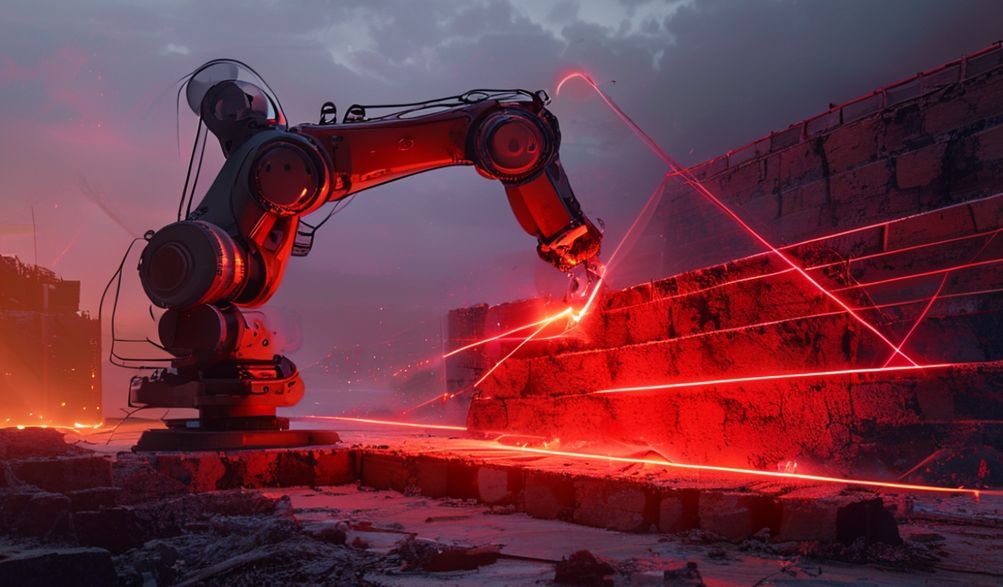
The Complete Guide to Brick Laying Machines: Revolutionizing Modern Construction
To build a modest single-family home, a skilled mason traditionally lays over 10,000 bricks by hand—a monumental task of precision and endurance. Now, imagine a machine that can place those bricks with robotic consistency, completing the shell of that same home in a matter of days instead of weeks. This is not science fiction; it’s the current reality of construction technology. The industry faces a perfect storm: a chronic shortage of skilled masons, relentless pressure to complete projects faster, ever-rising labor costs, and the physical toll the work takes on the human body.
Enter the brick laying machine—a technological leap that is automating one of humanity’s oldest crafts. This guide provides an expert, unbiased deep dive into this transformative technology. Whether you’re a contractor evaluating ROI, a builder curious about future trends, or a construction enthusiast, we’ll equip you with a comprehensive understanding of how these machines work, their benefits, their costs, and how they are reshaping the future of building. By the end, you’ll have a clear picture of where automation fits in the modern construction landscape.
What is a Brick Laying Machine? Understanding the Automation
No seu cerne, umbrick laying machine is a robotic or mechanized system designed to automate the process of picking, mortaring, and placing bricks or blocks with high precision. Its primary function is to take over the repetitive, labor-intensive task of bricklaying, translating digital designs into physical structures with speed and accuracy that far surpass manual methods.
Think of it not as a simple tool, but as a sophisticated production unit. It integrates mechanics, software, and sometimes advanced robotics to perform a sequence of tasks that would require multiple skilled workers.
From Concept to Reality: A Brief History
The quest to mechanize bricklaying is over a century old. Early attempts involved simple mechanical aids and conveyor systems to bring materials to the mason. The late 20th century saw the development of semi-automatic mortar sprayers and block-laying cranes, which assisted with parts of the process but still relied heavily on human skill for placement and alignment.
The true revolution began with the advent of computer numerical control (CNC) and robotics in the early 2000s. Companies started developing systems that could interpret digital architectural plans. Today’s advanced robotic bricklayers, like those from industry leaders, represent the culmination of this evolution—fully autonomous units that can work around the clock, turning blueprints into brick walls.
How Does a Brick Laying Machine Work? The Basic Process
While models vary, the workflow of a fully automatic robotic bricklayer typically follows a consistent, efficient cycle:
- Alimentação: Bricks are loaded into a magazine or conveyor system, often pre-sorted and delivered to the machine.
- Aplicação de Argamassa: A precise amount of mortar (or adhesive) is applied to the brick, the bed, or both. This is often done via a pressurized extrusion system for consistency.
- Picking & Orienting: A robotic gripper or suction head picks up the brick, correctly orienting it for placement.
- Precise Placement: Using guidance from lasers, GPS, or on-site spatial mapping, the machine places the brick in its exact programmed position with millimeter-level tolerance.
- Finishing (Optional): Some advanced systems include an attachment to tool the mortar joints for a finished look immediately after placement.
This process repeats relentlessly, with the machine moving along a track or rail system to build the wall layer by layer.
Types of Brick Laying Machines: Choosing the Right Tool
Not all brick laying machines are created equal. They fall into distinct categories, each suited for different project scales, budgets, and levels of automation.
Semi-Automatic Brick Layers (e.g., Mortar Sprayers, Conveyors)
These systems automate a single, specific part of the bricklaying process, requiring human operators to complete the cycle.
- Mortar Sprayers/Extruders: These devices apply a consistent bed of mortar onto the wall course with speed and uniformity, eliminating the trowel. The mason then manually places and aligns each brick.
- Material Conveyors & Assist Arms: These lift and position pallets of bricks or individual blocks at an ergonomic height for the worker, drastically reducing bending and lifting.
Melhor para: Small to mid-sized crews looking to accelerate a particular bottleneck (like mortar application), custom projects with complex details, or contractors taking a first step into automation with a lower initial investment.
Fully Automatic Robotic Bricklayers
These are the headline-grabbers. They are programmable, often track-mounted robots that perform the entire laying cycle autonomously based on a 3D digital model.
- They require initial setup and programming by a trained technician.
- Once running, they can place bricks 24/7 in optimal conditions, governed only by maintenance and material supply.
- Examples include systems like Construction Robotics’ SAM (Semi-Automated Mason) which works alongside masons, and FBR’s Hadrian X, which is designed for fully autonomous, large-scale construction.
Melhor para: Large-scale commercial projects (apartment complexes, schools, industrial walls), repetitive long walls, and any project where maximizing speed, output, and consistent quality is the primary driver.
Mobile vs. Static Systems
Another key distinction is mobility:
- Mobile Systems: These are truck-mounted or trailer-based units that can be transported between job sites. They offer great flexibility and are the standard for on-site residential and commercial construction.
- Static/Gantry Systems: These are large, fixed installations typically found in factories for prefabrication. Walls or entire wall panels are constructed in a controlled environment, then shipped to the site for assembly. This method offers the highest possible speed and quality control, unaffected by weather.
Key Benefits of Using a Brick Laying Machine
The adoption of bricklaying automation is driven by a powerful set of advantages that address the core pain points of the construction industry.
Unmatched Speed and Increased Productivity
This is the most compelling benefit. While a highly productive mason might lay 300-500 bricks in a day, a fully automatic brick laying machine can place 1,000+ bricks per hour. This doesn’t just shorten project timelines from months to weeks; it allows builders to take on more projects per year and reduces financing costs associated with long construction periods.
Superior Precision and Consistent Quality
Machines eliminate human variables like fatigue, distraction, or skill variance.
* Every brick is placed with laser-guided accuracy, ensuring perfect alignment and plumb walls.
* Mortar joints are uniform in thickness and application, leading to structurally sounder walls and a flawless aesthetic finish.
* This precision directly translates to reduced rework and fewer callbacks for defects.
Addressing Labor Shortages and Reducing Physical Strain
The average age of a mason is rising, and fewer young people are entering the trade. Automation provides a solution:
* It augments the existing workforce, allowing a smaller crew to achieve vastly greater output.
* It shifts the skilled mason’s role from repetitive, back-breaking placement to machine supervision, programming, and handling complex architectural details—more technical, less physically taxing work.
Long-Term Cost Efficiency and Waste Reduction
While the upfront investment is significant, the long-term financial calculus is strong:
* Redução de Custos com Mão de Obra: Over the lifespan of the machine and across multiple projects, the savings on labor can be substantial, leading to a strong ROI.
* Minimização de Resíduos de Materiais: Precise mortar application means almost no wasted material. Accurate placement reduces brick breakage and the need for cuts.
Enhanced Worker Safety
Automation directly tackles some of the most common causes of injury in masonry:
* Eliminates Repetitive Strain: No more thousands of daily trowel motions leading to tendonitis.
* Reduces Heavy Lifting: Machines handle the heavy bricks.
* Minimizes Exposure: Less direct contact with wet mortar and silica dust, improving long-term respiratory health.
Important Considerations Before Investing
Adopting this technology is a major strategic decision. A clear-eyed assessment of these factors is crucial.
Upfront Costs and Return on Investment (ROI) Analysis
Costs vary dramatically:
* Semi-Automatic Aids: Can range from $20,000 to $100,000.
* Fully Robotic Systems: Typically start around $500,000 and can exceed $2 million for top-tier models.
Estrutura de ROI: Don’t just look at the price tag. Calculate:
1. Project Savings: (Labor hours saved x local labor rate) + Material waste savings.
2. Increased Revenue Potential: Ability to complete more projects per year.
3. Offsetting Costs: Operator training, maintenance, potential financing costs.
A detailed, project-based analysis is essential. For many small firms, semi-automation may offer the best balance.
Project Suitability and Limitations
These machines are powerful but not magical. They excel at specific tasks:
* Ideal Projects: Long, straight exterior walls, large facades, partition walls in commercial buildings, and repetitive fencing.
* Challenging Projects: Highly custom homes with intricate curves, small renovations with tight access, complex corners and arches (though technology is improving here), and foundations/structural elements requiring different techniques.
Operator Training and Technical Support
This is not a “buy and forget” purchase. Success depends on people.
* Treinamento: Your team will need training in machine operation, basic programming, troubleshooting, and maintenance. This represents an investment in time and money.
* Vendor Support: The quality and responsiveness of the manufacturer’s technical support and service network are critical. This should be a top criterion in your purchasing decision.
Compatibilidade de Materiais
Not every machine works with every material.
* Check specifications for compatible brick types (clay, concrete, AAC blocks), sizes, and weights.
* Ensure the machine can work with your preferred mortar mix or adhesive. Some systems require specific proprietary materials.
The Future of Bricklaying: Automation and the Construction Industry
Brick laying machines are just the beginning. They are a key component in the broader digital transformation of construction.
Integration with BIM (Building Information Modeling)
This is where the true power is unlocked. Modern robotic bricklayers don’t just follow simple instructions; they execute a rich, 3D BIM model.
* The machine’s software imports the digital model, which contains every brick’s precise location.
* This allows for flawless execution of complex designs, automatic generation of cut lists for non-standard bricks, and seamless data flow from architect to finished wall.
The Evolving Role of the Mason
The mason is not being replaced but evolved. The future mason is a tech-savvy equipment supervisor.
* Their value shifts from manual dexterity to skills in machine operation, digital layout, quality control of the automated process, and handling the complex, non-repetitive tasks that machines still cannot do.
Emerging Technologies: AI and Advanced Robotics
The next wave is already forming:
* AI & Machine Learning: Systems that can adapt to minor on-site variations, self-correct for environmental factors like wind, or optimize their own path for maximum efficiency.
* Multi-Tasking Robots: Single robotic platforms that can switch tools to lay bricks, install insulation, and apply render.
* Drone Integration: Using drones for pre-site scanning to create accurate models and for post-placement inspection to verify quality against the digital twin.
Perguntas Frequentes (FAQ)
Q: How much does a brick laying machine cost?
A: Costs range widely based on capability. Semi-automatic aids (mortar sprayers, conveyors) can cost from $20,000 to $100,000. Fully automatic robotic bricklaying systems typically start around $500,000 and can go well above $2 million. The final price is influenced by brand, level of autonomy, and specific features.
Q: Can a brick laying machine build an entire house?
A: Currently, they are primarily used for constructing the exterior wall shells and interior partitions—the “envelope.” They generally do not handle foundations, roofing, plumbing/electrical rough-ins, or complex interior finish work. The vision of a fully automated, single-machine house builder is still in development.
Q: Do brick laying machines put masons out of work?
A: This is a common concern. The balanced view is that they change the nature of the work rather than eliminate it outright. Demand for pure manual bricklaying may decrease, but demand for skilled technicians, machine operators, programmers, and supervisors will increase. It’s an evolution of the trade, demanding new skills to complement the technology.
Q: What is the learning curve for operating one?
A: For individuals with construction experience and basic mechanical/technical aptitude, the learning curve is manageable but real. Comprehensive training from the manufacturer (often 1-4 weeks) is standard. The key is a willingness to move from purely physical work to a more technology-focused role.
Q: Where can I see a brick laying machine in action?
A: The best place to start is online. Search for videos from major manufacturers like Construction Robotics (SAM), FBR (Hadrian)eFastbrick Robotics. Industry trade shows such as World of Concrete or Bauma are also excellent places to see live demonstrations and compare different technologies.
Conclusão
Brick laying machines represent a profound shift in construction methodology, offering a powerful solution to the industry’s most persistent challenges: speed, cost, quality, and labor availability. They are not a universal panacea—their high initial cost and suitability for specific project types mean they won’t replace traditional masonry on every job site. However, for the right application, they are a transformative tool that can provide a decisive competitive edge.
For forward-thinking contractors and builders, understanding this technology is no longer optional; it’s a critical part of strategic planning. The future of construction is a blend of human skill and robotic precision. By objectively assessing your project portfolio, calculating potential ROI, and investing in the necessary training, you can position your business to build faster, smarter, and better. The wall of the future is being laid today, one automated brick at a time.
Call to Action: Ready to explore further? Begin by researching specific manufacturers, request detailed ROI calculators from equipment dealers, or look into the growing number of technical training programs focused on construction robotics. The first step towards integrating this technology is informed investigation.
<