
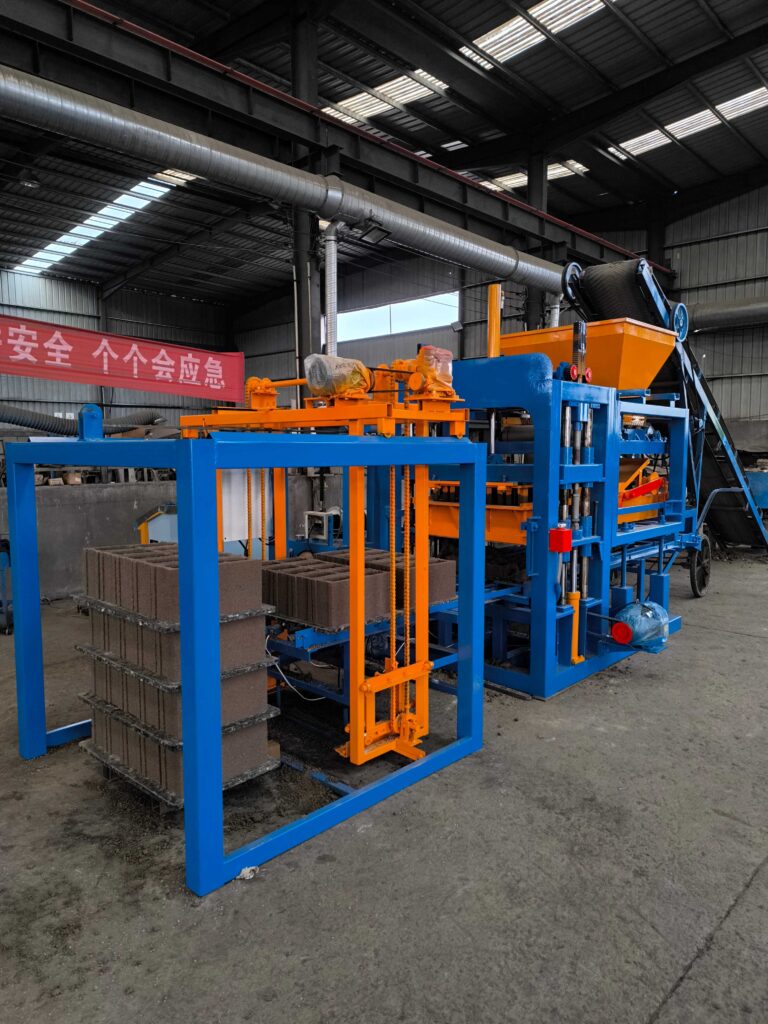
1. Dinâmica do Mercado e a Proposta de Negócio para Tijolos de Cinzas Volantes
Antes de analisar os custos das máquinas, é crucial compreender o ambiente de negócios convincente. Os tijolos de cinzas volantes oferecem várias vantagens sobre os tijolos de argila tradicionais, incluindo maior resistência, tamanho uniforme, melhor isolamento térmico e, mais importante, uma pegada ambiental significativamente menor, pois utilizam um resíduo industrial. Políticas governamentais em muitos países que obrigam ou incentivam o uso de cinzas volantes na construção criaram um mercado robusto e frequentemente subsidiado. Para um distribuidor, isso se traduz em vender para um setor com fatores de demanda intrínsecos. O custo da máquina não é meramente uma despesa, mas um bilhete de entrada neste ecossistema sustentável e frequentemente lucrativo. O investimento é justificado pelo crescente deslocamento dos tijolos de argila queimada em projetos de infraestrutura, comerciais e residenciais.
2. Desconstruindo a Estrutura de Custos: Determinantes-Chave de Preços
O preço de uma máquina de fabricar tijolos de cinzas volantes não é um valor único, mas um espectro influenciado por uma matriz de fatores interdependentes. Compreender estes permite um orçamento preciso e uma comparação eficaz entre as opções.
2.1. Nível de Automação e Capacidade de Produção
Este é o principal fator de custo. As máquinas são amplamente categorizadas por sua metodologia operacional:
- Máquinas Manuais ou Operadas à Mão:Estas são prensas mecânicas que exigem mão de obra humana significativa para alimentação, compactação e remoção dos tijolos. Elas representam o ponto de entrada mais acessível, sendo adequadas para operações de pequena escala ou baseadas na comunidade. Sua produção é baixa, geralmente variando de 500 a 1.500 tijolos por turno de 8 horas.
- Máquinas Semiautomáticas:Esta categoria representa um salto significativo de desempenho. Elas incorporam sistemas hidráulicos para compressão e podem incluir sistemas mecanizados de alimentação ou ejeção. A operação exige menos trabalho físico e oferece melhor consistência. A capacidade de produção varia de 1.500 a 6.000 tijolos por turno. Esta categoria oferece o melhor equilíbrio entre custo e produção para muitas pequenas e médias empresas (PMEs).
- Máquinas Totalmente Automáticas:Estas são linhas de produção completas com dosagem automática de materiais, mistura, transporte, compressão de alta pressão, empilhamento de tijolos e paletização. Elas exigem intervenção manual mínima, garantem uniformidade excepcional do produto e maximizam a produção, que pode ultrapassar 10.000 tijolos por turno. Naturalmente, isso representa o maior investimento de capital, mas o menor custo de mão de obra por unidade.
2.2. Especificações e Características Técnicas das Máquinas
Dentro de cada categoria de automação, as especificações causam variações de preço:
- Capacidade de Pressão (Tonelagem):A força de compressão, medida em toneladas (por exemplo, 60 toneladas, 100 toneladas, 150 toneladas), impacta diretamente a densidade e a resistência dos tijolos. Máquinas com maior tonelagem produzem tijolos de qualidade superior, adequados para estruturas de carga, mas a um custo mais elevado.
- Qualidade do Sistema Hidráulico:O coração da máquina. Sistemas que utilizam bombas, válvulas e cilindros de fabricantes certificados, reputados e energeticamente eficientes são mais confiáveis e duráveis, mas aumentam o custo inicial.
- Sofisticação do Sistema de Controle:Os painéis de relé básicos são mais baratos do que os sistemas baseados em Controladores Lógicos Programáveis (CLP) com Interfaces Homem-Máquina (IHM) de tela sensível ao toque. Os sistemas CLP oferecem precisão, facilidade na resolução de problemas e melhor controle de processos.
- Construção e Materiais: Machines built with heavy-duty structural steel, hardened steel molds, and quality wear plates have longer lifespans and lower maintenance costs but involve higher material and fabrication expenses.
2.3. Output Versatility and Mold Configuration
A machine capable of producing multiple brick types (solid, hollow, paver, interlocking) using quick-change mold systems will be priced higher than a single-product machine. The number of cavities in the mold (e.g., 4-brick mold vs. 6-brick mold) also affects both output and price.
3. Beyond the Sticker Price: Calculating the Total Cost of Ownership (TCO)
For a prudent distributor or end-user, the purchase price is only the first component of the financial outlay. The Total Cost of Ownership (TCO) provides a holistic view and is critical for advising clients or evaluating suppliers.
- Installation and Commissioning: Costs for foundation preparation, electrical work, and on-site assembly by technicians. For automatic lines, this is a more complex and costly process.
- Equipamento Auxiliar: A functional plant requires more than just the brick press. Costs for pan mixers, conveyor belts, belt feeders, pallet trucks, and curing racks must be factored into the overall project budget.
- Shipping, Logistics, and Import Duties: For international distributors, freight costs, insurance, and applicable tariffs can add 15-40% to the ex-factory price, depending on origin and destination.
- Inventário de Peças de Reposição: A prudent initial investment in a kit of critical spare parts (hydraulic seals, hoses, relief valves) prevents prolonged downtime.
- Consumo de Energia: Automated, high-tonnage machines have higher horsepower motors. Their energy efficiency impacts long-term operational costs.
- Maintenance and Service: Machines with simpler designs and better service accessibility may have lower long-term maintenance costs. Availability and cost of spare parts are crucial.
4. Strategic Pricing Models and Supplier Evaluation
When engaging with manufacturers, understanding their pricing philosophy is key.
- Modular vs. Turnkey Pricing: Some suppliers quote for the core machine only, while others offer a “plant and machinery” package. The latter, though seemingly more expensive upfront, often provides better integration and single-point responsibility.
- Quality-to-Price Correlation: The market often segments into tiers: economy, standard, and premium. Economy machines may have lower-grade components, thinner steel, and limited after-sales support. Premium machines justify their price with superior engineering, components, warranties, and support services. The best value often lies in the standard-to-premium range, avoiding the false economy of frequent breakdowns.
- Warranty and After-Sales Support Value: A machine with a comprehensive 12-18 month warranty on major components and a commitment to providing timely technical support (remote or on-site) carries intrinsic value that mitigates risk. This support structure should be a evaluated as a core part of the “cost.”
5. Financial Analysis and Return on Investment (ROI) Framework
Distributors must be equipped to help clients justify the investment. A basic ROI analysis should consider:
- Total Project Cost: Sum of machine, auxiliaries, installation, and working capital.
- Capacidade de Produção: Shifts per day, bricks per shift, annual output.
- Custos Operacionais: Raw materials (fly ash, cement, sand), labor, power, maintenance, and overheads per brick.
- Revenue Projections: Selling price per brick, based on local market rates.
- Gross Profit per Brick: Revenue minus operational cost.
- Período de Retorno do Investimento: Total Project Cost / (Gross Profit per Brick * Annual Brick Output).
Machines with higher automation, while costlier, typically show a faster payback due to drastically reduced labor costs and higher, more consistent output, leading to greater overall profitability.
Conclusão
The cost of a fly ash brick making machine is a multi-faceted variable, deeply intertwined with production goals, desired quality, and long-term business strategy. For industry partners, a sophisticated understanding that moves beyond the initial price tag to encompass automation levels, technical specifications, total cost of ownership, and the supplier’s value-added services is non-negotiable. The most economically sound decision is rarely the cheapest machine on the market; rather, it is the machine that offers the optimal balance of reliable performance, operational efficiency, and durable construction for the target production scale. By focusing on the lifetime value and productivity of the equipment, distributors can make procurement choices—and provide guidance to their clients—that ensure sustainable profitability and a strong competitive position in the burgeoning green construction materials market. The investment in the right machinery is fundamentally an investment in the future stability and growth of the business.
FAQ
Q1: What is the typical price range for a fly ash brick making machine?
A: Prices vary dramatically based on type. Basic manual presses can start from a few thousand dollars. Semi-automatic hydraulic machines commonly range from approximately $5,000 to $10,000. Fully automatic production lines can begin around $12,000 and exceed $60,000 for high-capacity, sophisticated models. These are broad estimates; final costs depend on specifications and configuration.
Q2: Does a higher price always mean better quality and output?
A: Generally, yes, within the offerings of reputable manufacturers. A higher price typically reflects better-grade materials (e.g., superior steel, branded hydraulics), more precise engineering, higher automation, and greater production capacity. However, thorough due diligence on the supplier’s reputation, component origins, and testing standards is essential to ensure value aligns with price.
Q3: What are the key operating costs beyond the machine purchase?
A: Major ongoing costs include raw materials (fly ash, cement, sand, water), electrical power for running motors and hydraulic systems, labor for operation and handling, routine maintenance and spare parts, and the cost of pallets or racks for brick curing and storage.
Q4: How long is the average payback period for such an investment?
A: The payback period is highly sensitive to local market conditions, management efficiency, and scale. For a well-run, medium-sized semi-automatic plant, it can typically range from 1.5 to 3 years. Fully automatic plants, with their higher output and lower per-unit cost, can sometimes achieve payback in 12-24 months if operating near capacity with good market demand.
Q5: What should be included in the supplier’s quotation?
A: A comprehensive quotation should clearly list: machine model and detailed specifications, production capacity, pictorial or diagrammatic view, detailed price breakdown, warranty terms, delivery time, shipping terms (e.g., FOB, CIF), list of included accessories and spare parts, and scope of installation and training services, if any.
Q6: Are there financing options available for this equipment?
A: Yes, many equipment manufacturers or their regional partners collaborate with financial institutions to offer leasing or loan programs. Additionally, in countries promoting fly ash utilization, government subsidies or soft loans may be available for qualifying projects. It is advisable to inquire with the supplier about potential financing avenues.
