
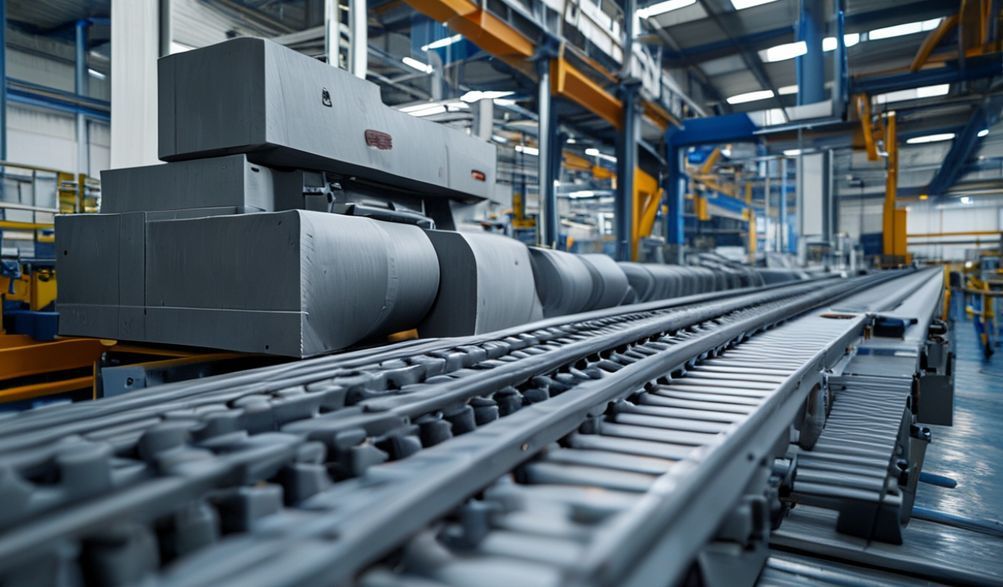
O Guia Definitivo para a Máquina de Tijolos de Concreto FUDA e a Fábrica de Blocos
Para profissionais da construção, empreendedores e incorporadores, a busca por um fornecimento confiável e econômico de blocos de construção é um desafio constante. O abastecimento tradicional está repleto de variáveis — flutuações de preço, qualidade inconsistente e atrasos logísticos — que podem descarrilar cronogramas e orçamentos de projetos. A solução moderna? Assumir o controle da produção com uma máquina de tijolos de concreto. Isso não se trata apenas de fabricar tijolos; trata-se de fabricar certeza, rentabilidade e crescimento para o seu negócio.
Este guia definitivo baseia-se em décadas de experiência combinada na indústria de máquinas de construção e fabricação para oferecer uma análise aprofundada e autorizada sobre um dos principais atores do setor: aFábrica de blocos FUDAVamos dissecar a tecnologia por trás de suamáquinas de tijolos de concretoExplore os benefícios tangíveis que eles oferecem e forneça uma estrutura clara para ajudá-lo a selecionar o modelo perfeito para o seu empreendimento. Seja para estabelecer um novo pátio de blocos, expandir as capacidades da sua empresa de construção ou lançar um negócio de fabricação lucrativo, este recurso foi projetado para capacitar sua decisão de investimento com confiança e clareza.
Compreendendo as Máquinas de Fabricação de Tijolos de Concreto: Tecnologia Central e Tipos
Antes de mergulhar em um fabricante específico, é crucial entender a máquina em si. Uma máquina para fabricar blocos de concreto é um sistema de engenharia de precisão projetado para transformar matérias-primas — cimento, agregados e água — em unidades de alvenaria densas, uniformes e de alta resistência, por meio de um processo de compactação mecanizada.
Como Funciona uma Máquina de Tijolos de Concreto?
O processo, embora sofisticado em sua execução, segue uma sequência lógica e eficiente:
- Mistura:As matérias-primas são dosadas e misturadas com precisão para criar uma mistura de concreto homogênea e semi-seca. A consistência aqui é crítica para a resistência do bloco final.
- Alimentação & Moldagem:A mistura é alimentada em uma caixa de molde (ou "cavidade do molde") na máquina. Este molde define o formato do bloco — seja um bloco vazado, um tijolo maciço ou um pavimento intertravado.
- Compactação:Este é o cerne do processo. A máquina emprega forças poderosas para eliminar bolsas de ar e densificar o material.
- Vibração:Vibrações de alta frequência assentam a mistura uniformemente dentro do molde.
- Pressão Hidráulica:Um martelo hidráulico aplica uma pressão substancial a partir do topo, compactando ainda mais o concreto até sua densidade máxima.
- Ejeção (Remoção):O bloco compactado, agora mantendo sua forma, é gentilmente ejetado do molde sobre um palete ou prateleira de cura.
- Cura:Os blocos verdes são movidos para uma área de cura. A cura adequada — frequentemente envolvendo temperatura e umidade controladas — permite que o cimento hidrate completamente, atingindo sua resistência à compressão projetada.
Tipos de Máquinas de Fabricação de Blocos: Do Manual ao Totalmente Automático
O nível de automação está diretamente correlacionado com a produção, as necessidades de mão de obra e o investimento.
- Máquinas Manuais:Operado principalmente à mão, com alavancas para compactação e moldagem. Adequado para projetos de pequena escala e baixo volume ou startups com capital mínimo. A produção é baixa e a intensidade de mão de obra é alta.
- Máquinas Semiautomáticas:Estas atingem um equilíbrio. Processos centrais como compactação e moldagem são mecanizados (frequentemente com sistemas de vibração e hidráulicos), mas tarefas como alimentar a matéria-prima e remover os blocos acabados podem ser manuais. Ideal para pequenas e médias empresas.
- Máquinas Totalmente Automáticas:O ápice da eficiência. Essas linhas de produção controladas por computador automatizam todo o processo, desde a dosagem e mistura até a moldagem, compactação, transferência de blocos, empilhamento e retorno de paletes. Elas oferecem a maior produção, consistência notável e trabalho manual mínimo, representando um investimento significativo, mas de alto retorno.
Componentes Principais de uma Máquina de Tijolos Confiável
A longevidade e o desempenho de qualquer máquina dependem da qualidade dos seus componentes principais:
- Sistema de Moldagem: The soul of the machine. High-chromium, hardened steel molds ensure precise block dimensions, smooth surface finish, and withstand abrasion for thousands of cycles.
- Sistema de Vibração: A robust, well-balanced vibration table with high-amplitude motors is essential for achieving optimal compaction and uniform block density.
- Sistema Hidráulico: The powerhouse. A reliable, energy-efficient hydraulic unit with precision valves and cylinders ensures consistent pressure and smooth operation with minimal downtime.
- Sistema de Controle: From simple relay panels to advanced PLC (Programmable Logic Controller) interfaces, a user-friendly control system allows for easy operation, mode selection, and troubleshooting.
- Estrutura Organizacional: A heavy-duty, welded steel frame provides the stability needed to handle constant vibration and pressure without distortion, ensuring long-term alignment and accuracy.
Spotlight on FUDA Block Making Factory: A Legacy of Engineering
In a market filled with options, the manufacturer’s pedigree matters. The Fábrica de blocos FUDA represents a synthesis of extensive engineering experience and a focused manufacturing philosophy.
Who is FUDA? Company History and Manufacturing Philosophy
FUDA has established itself as a prominent force in construction machinery manufacturing through a commitment to core principles. With a history spanning years of dedicated operation, the company has built its reputation not just on selling machines, but on providing production solutions. Their philosophy typically centers on:
- Durabilidade em Primeiro Lugar: Engineering machines for the harsh realities of industrial production.
- Innovation through Application: Developing features and models that solve real-world problems on construction sites and in block yards.
- Customer-Centric Support: Understanding that the sale is just the beginning of a long-term partnership.
This authoritative standing is often backed by international certifications (such as CE, ISO) that attest to standardized quality management and safety compliance in their manufacturing processes.
The FUDA Factory Advantage: Quality Control and R&D
The true measure of a manufacturer is in its factory. FUDA’s advantage lies in its integrated approach:
- Fabricação Interna: Critical components are often fabricated and assembled under one roof, allowing for stringent quality control at every stage.
- Testes Rigorosos: Machines and components undergo performance and endurance testing before leaving the factory, ensuring they meet specified output and reliability standards.
- Pesquisa e Desenvolvimento Dedicados: A focus on research and development means continuous improvement in machine efficiency, ease of use, and adaptability to new block designs and material mixes. This builds immense confiabilidade with buyers investing in long-term assets.
FUDA’s Product Range: Matching Machine to Project Need
FUDA typically offers a spectrum of machines to cater to diverse business scales, a key aspect of their experiência in the market. Their range often includes:
- Small Mobile Block Machines: Ideal for on-site production, reducing transport costs for projects in remote locations.
- Stationary Semi-Automatic Machines: The workhorses for growing block manufacturing businesses, offering a great balance of output and affordability.
- Linhas de Produção de Blocos Totalmente Automáticas: High-capacity systems like the Série QT for large-scale, commercial block yards requiring maximum output with minimal labor. These lines can produce thousands of blocks per shift, encompassing everything from hollow blocks and solid bricks to decorative paving stones and curbs.
Key Benefits of Choosing a FUDA Concrete Brick Machine
Investing in a FUDA machine translates into specific, measurable advantages for your business operations and bottom line.
Unmatched Productivity and Consistent Output
- High Cycle Counts: Engineered for speed, these machines can produce blocks in rapid succession, dramatically increasing your daily output compared to manual or outdated methods.
- Low Downtime: Reliable components and robust design minimize breakdowns, keeping your production schedule on track.
- Consistência Dimensional: Every block is identical. This uniformity speeds up construction, reduces mortar use, and results in straighter, stronger walls—a critical quality benchmark for professional projects.
Versatility in Block Production: Paving Stones, Hollow Blocks, and More
A single FUDA machine can be a multi-product factory. By simply changing the mold, you can switch production between:
* Blocos Vazados (vários tamanhos)
* Solid Concrete Bricks
* Interlocking Pavers & Landscape Stones
* Kerbstones and Edgers
* Specialty Shapes (e.g., grass pavers, chimney blocks)
This agility allows you to respond to market demand and diversify your product offering without major new investments.
Durability and Long-Term Cost Efficiency
The initial investment is balanced by a superior Return on Investment (ROI) over time:
* Materiais Premium: The use of hardened steel for molds and wear parts extends service life dramatically.
* Construção Robusta: The heavy-duty frame and components are built to endure years of demanding operation.
* Baixa Manutenção: Intelligent design simplifies routine maintenance, and the inherent durability reduces the frequency and cost of repairs.
Ease of Operation and After-Sales Support
FUDA’sexperiência shines in the total ownership package:
* User-Friendly Controls: Intuitive control panels, whether manual or PLC-based, reduce the learning curve for operators.
* Treinamento Abrangente: Proper training ensures your team can operate and perform basic maintenance safely and efficiently.
* Global Support Network: Access to readily available spare parts, detailed technical documentation, and remote or on-site service support minimizes potential disruptions, providing peace of mind.
How to Select the Right FUDA Machine for Your Business
Choosing the correct model is a strategic decision. Here’s a framework to guide your selection.
Assessing Your Production Requirements: Volume and Block Types
Start with the fundamentals:
* Saída Diária/Semanal Calculate your current and projected near-future demand. Be realistic but allow for growth.
* Mix de Produtos: What types of blocks are in highest demand in your market? Prioritize a machine whose standard or optional molds cover your core products.
Considering Space, Power, and Labor Constraints
- Factory Space: Measure your available floor space, including height for block stacking. Mobile and stationary models have different footprints.
- Fonte de Alimentação: Check the voltage and power (kW) requirements of the machine against your facility’s capacity. Fully automatic lines have higher demands.
- Trabalho: Semi-automatic machines may require 3-4 operators, while a fully automatic line might run with 1-2. Factor in local labor costs and skill availability.
Budgeting: Initial Investment vs. Total Cost of Ownership
Look beyond the purchase price:
1. Custo Inicial: The machine price, plus shipping, import duties, and installation.
2. Custos Operacionais: Electricity, raw materials, and labor.
3. Valor a Longo Prazo: Consider the machine’s expected lifespan, maintenance costs, and its ability to scale with your business. A slightly higher upfront cost for a more durable, automated machine often leads to lower cost-per-block over its lifetime.
The Investment Journey: From Inquiry to Production
Understanding the process demystifies purchasing industrial equipment from an international supplier.
Consultation and Customization Process with FUDA
Your journey begins with a dialogue. Reputable manufacturers like FUDA will have technical sales engineers to:
* Discuss your specific needs and constraints.
* Recommend the most suitable machine model and configuration.
* Provide detailed quotations and layout drawings.
* Discuss custom mold options for unique block designs.
Logistics, Installation, and Commissioning
- Logística: FUDA typically handles export formalities and arranges shipping to your nearest port. Clear communication about Incoterms (e.g., FOB, CIF) is essential.
- Installation: While you provide the foundation and utilities, FUDA usually supplies comprehensive installation manuals and may offer the option for an engineer to supervise on-site installation.
- Comissionamento: This is the final factory test on your site. The machine is assembled, powered up, and test blocks are produced to ensure everything operates perfectly before handover.
Training and Ongoing Technical Support
The relationship continues after the sale. A proper handover includes:
* Hands-On Training: For your operators and maintenance staff on safe operation, daily checks, routine maintenance, and basic troubleshooting.
* Support Structure: Clear points of contact for ordering spare parts and accessing technical assistance, which may include email, phone, and video call support.
Perguntas Frequentes (FAQ)
Q1: What is the average production output of a mid-range FUDA automatic block machine?
Output varies by model, but a typical semi-automatic or mid-range automatic machine can produce between 1,500 to 5,000 standard blocks (e.g., 400x200x200mm) in an 8-hour shift, depending on cycle time and block type.
Q2: Can FUDA provide custom molds for unique block designs?
Yes, FUDA’s factory has extensive in-house mold design and fabrication capabilities, allowing for customization to meet specific project requirements. You can provide a drawing or sample, and their engineering team can create a mold to match.
Q3: What kind of after-sales service and warranty does FUDA offer?
FUDA typically provides a comprehensive warranty (e.g., 12-18 months) on core components and offers a global network of service partners, along with readily available spare parts and remote technical assistance. Specific terms should be confirmed in your contract.
Q4: How does the quality of blocks from a FUDA machine compare to traditional methods?
Machine-made blocks provide superior compaction and consistency, resulting in blocks with higher compressive strength, uniform dimensions, and better surface finish than manual methods. This leads to stronger, more aesthetically pleasing construction.
Q5: What are the main raw materials needed, and can fly ash or other aggregates be used?
The primary materials are cement, aggregates (sand, gravel, crushed stone), and water. Most FUDA machines are designed to work efficiently with various mix designs, including those incorporating industrial by-products like fly ash or slag, which can reduce material costs and improve certain block properties.
Conclusão
Selecting a concrete brick machine is a pivotal decision that impacts your operational efficiency, product quality, and business scalability. This guide has outlined the critical technological considerations, the substantial benefits of automated production, and the strategic factors involved in choosing the right equipment. Opting for a machine from an established, engineering-focused Fábrica de blocos FUDA is more than a purchase—it’s a partnership built on a foundation of durability, innovation, and comprehensive support.
By prioritizing long-term reliability and total cost of ownership, you invest not just in a piece of machinery, but in the growth and resilience of your business. The control, consistency, and profitability that come with in-house block production are within reach.
Ready to transform your block supply chain? Take the next step with confidence. Contact the FUDA team today for a personalized consultation, request a detailed product catalog, or ask to speak directly with a technical sales engineer to discuss your specific project requirements and receive a tailored quotation.
<