
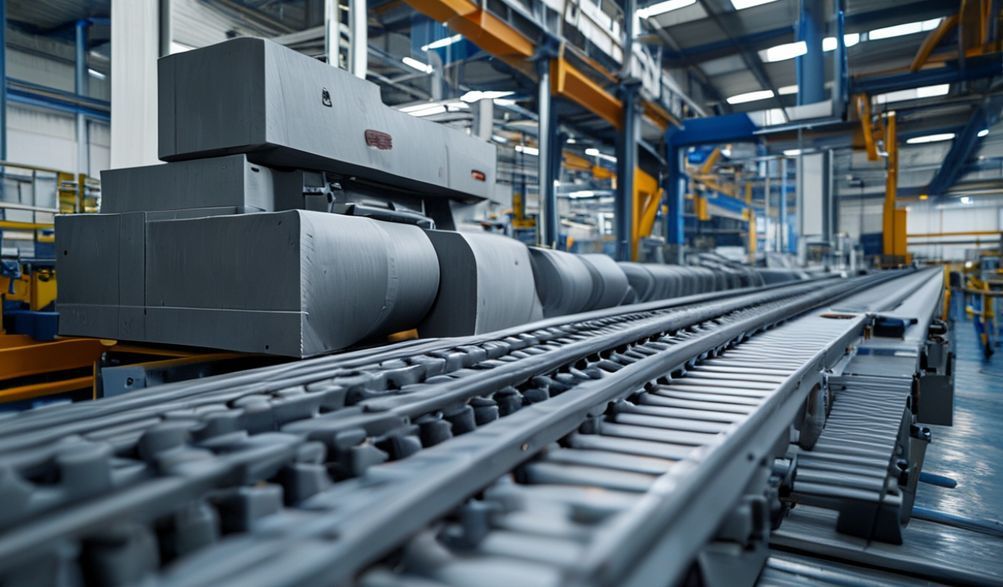
Hướng Dẫn Toàn Diện Về Máy Gạch Bê Tông FUDA & Nhà Máy Sản Xuất Gạch Block
Đối với các chuyên gia xây dựng, nhà phát triển và doanh nhân, việc tìm kiếm nguồn cung cấp gạch xây dựng đáng tin cậy và tiết kiệm chi phí luôn là một thách thức thường trực. Các phương thức cung ứng truyền thống chứa đầy biến số—biến động giá cả, chất lượng không đồng nhất và chậm trễ hậu cần—có thể làm đảo lộn tiến độ và ngân sách dự án. Giải pháp hiện đại? Chính là chủ động kiểm soát sản xuất với máy làm gạch bê tông. Đây không chỉ đơn thuần là sản xuất gạch; mà còn là tạo ra sự chắc chắn, lợi nhuận và tăng trưởng cho doanh nghiệp của bạn.
Hướng dẫn toàn diện này dựa trên nhiều thập kỷ kinh nghiệm kết hợp từ ngành công nghiệp máy móc xây dựng và sản xuất, nhằm cung cấp cái nhìn chuyên sâu và có tính thẩm quyền về một trong những nhân tố then chốt của lĩnh vực:Nhà máy sản xuất khối FUDAChúng ta sẽ phân tích công nghệ đứng saumáy sản xuất gạch bê tôngkhám phá những lợi ích thiết thực mà chúng mang lại và cung cấp một khuôn khổ rõ ràng để giúp bạn lựa chọn mô hình hoàn hảo cho dự án của mình. Dù bạn đang muốn thiết lập một bãi gạch mới, mở rộng năng lực của công ty xây dựng hay khởi nghiệp một doanh nghiệp sản xuất sinh lời, nguồn tài nguyên này được thiết kế để trao quyền cho quyết định đầu tư của bạn với sự tự tin và rõ ràng.
Tìm hiểu về Máy Sản Xuất Gạch Bê Tông: Công Nghệ Lõi và Các Loại Máy
Trước khi đi sâu vào một nhà sản xuất cụ thể, điều quan trọng là phải hiểu chính bản thân loại máy móc đó. Máy sản xuất khối bê tông là một hệ thống được thiết kế chính xác, nhằm biến nguyên liệu thô—xi măng, cốt liệu và nước—thành các đơn vị xây dựng đặc chắc, đồng nhất và có cường độ cao thông qua quá trình nén cơ khí hóa.
Máy Sản Xuất Gạch Bê Tông Hoạt Động Như Thế Nào?
Quá trình này, dù được thực hiện một cách tinh vi, vẫn tuân theo một trình tự hợp lý và hiệu quả:
- Pha trộn:Nguyên liệu thô được định lượng chính xác và trộn đều để tạo ra hỗn hợp bê tông đồng nhất, bán khô. Độ đồng nhất ở đây rất quan trọng đối với độ bền của khối thành phẩm.
- Cho ăn & Tạo khuôn:Hỗn hợp được đưa vào hộp khuôn (hay "khoang khuôn") trên máy. Khuôn này xác định hình dạng của khối - có thể là khối rỗng, gạch đặc, hoặc gạch lát tự khóa.
- Nén chặt:Đây là trọng tâm của quá trình. Máy móc sử dụng các lực mạnh để loại bỏ các túi khí và làm đặc vật liệu.
- Rung động:Các rung động tần số cao giúp hỗn hợp lắng đều trong khuôn.
- Áp suất thủy lực:Một đầm thủy lực tạo áp lực đáng kể từ phía trên, tiếp tục nén bê tông đến mật độ tối đa.
- Đẩy (Tước)Khối nén đã giữ được hình dạng, được nhẹ nhàng đẩy ra khỏi khuôn lên một pallet hoặc giá bảo dưỡng.
- Chữa bệnh:Các khối xanh được chuyển đến khu vực bảo dưỡng. Quá trình bảo dưỡng thích hợp—thường bao gồm kiểm soát nhiệt độ và độ ẩm—cho phép xi măng thủy hóa hoàn toàn, đạt được cường độ nén thiết kế.
Các Loại Máy Sản Xuất Gạch: Từ Thủ Công Đến Tự Động Hoàn Toàn
Mức độ tự động hóa có mối tương quan trực tiếp với sản lượng, nhu cầu lao động và đầu tư.
- Máy Móc Thủ Công:主要以手动操作,通过杠杆进行压实和成型,适用于规模极小、产量低的项目或资金有限的初创企业。产出低且劳动强度高。
- Máy Bán Tự Động:Các quy trình cốt lõi như nén và đúc được cơ giới hóa (thường sử dụng hệ thống rung và thủy lực), nhưng các công việc như cấp nguyên liệu thô và lấy các khối thành phẩm có thể thực hiện thủ công. Phù hợp lý tưởng cho các doanh nghiệp vừa và nhỏ.
- Máy Móc Tự Động Hoàn Toàn:Đỉnh cao của hiệu quả. Các dây chuyền sản xuất được điều khiển bằng máy tính này tự động hóa toàn bộ quy trình từ phối trộn, trộn nguyên liệu đến đúc khuôn, ép nén, vận chuyển khối, xếp chồng và thu hồi pallet. Chúng mang lại năng suất cao nhất, sự đồng nhất vượt trội và giảm thiểu lao động thủ công, đại diện cho một khoản đầu tư lớn nhưng sinh lời cao.
Key Components of a Reliable Brick Machine
The longevity and performance of any machine hinge on the quality of its core components:
- Hệ thống khuôn The soul of the machine. High-chromium, hardened steel molds ensure precise block dimensions, smooth surface finish, and withstand abrasion for thousands of cycles.
- Hệ thống Rung A robust, well-balanced vibration table with high-amplitude motors is essential for achieving optimal compaction and uniform block density.
- Hệ thống thủy lực: The powerhouse. A reliable, energy-efficient hydraulic unit with precision valves and cylinders ensures consistent pressure and smooth operation with minimal downtime.
- Hệ Thống Điều Khiển: From simple relay panels to advanced PLC (Programmable Logic Controller) interfaces, a user-friendly control system allows for easy operation, mode selection, and troubleshooting.
- Khung cấu trúc: A heavy-duty, welded steel frame provides the stability needed to handle constant vibration and pressure without distortion, ensuring long-term alignment and accuracy.
Spotlight on FUDA Block Making Factory: A Legacy of Engineering
In a market filled with options, the manufacturer’s pedigree matters. The Nhà máy sản xuất khối FUDA represents a synthesis of extensive engineering experience and a focused manufacturing philosophy.
Who is FUDA? Company History and Manufacturing Philosophy
FUDA has established itself as a prominent force in construction machinery manufacturing through a commitment to core principles. With a history spanning years of dedicated operation, the company has built its reputation not just on selling machines, but on providing production solutions. Their philosophy typically centers on:
- Độ Bền Trên Hết Engineering machines for the harsh realities of industrial production.
- Innovation through Application: Developing features and models that solve real-world problems on construction sites and in block yards.
- Customer-Centric Support: Understanding that the sale is just the beginning of a long-term partnership.
This authoritative standing is often backed by international certifications (such as CE, ISO) that attest to standardized quality management and safety compliance in their manufacturing processes.
The FUDA Factory Advantage: Quality Control and R&D
The true measure of a manufacturer is in its factory. FUDA’s advantage lies in its integrated approach:
- Sản Xuất Nội Bộ: Critical components are often fabricated and assembled under one roof, allowing for stringent quality control at every stage.
- Kiểm Tra Nghiêm Ngặt: Machines and components undergo performance and endurance testing before leaving the factory, ensuring they meet specified output and reliability standards.
- Dedicated R&D: A focus on research and development means continuous improvement in machine efficiency, ease of use, and adaptability to new block designs and material mixes. This builds immense đáng tin cậy with buyers investing in long-term assets.
FUDA’s Product Range: Matching Machine to Project Need
FUDA typically offers a spectrum of machines to cater to diverse business scales, a key aspect of their kinh nghiệm in the market. Their range often includes:
- Small Mobile Block Machines: Ideal for on-site production, reducing transport costs for projects in remote locations.
- Stationary Semi-Automatic Machines: The workhorses for growing block manufacturing businesses, offering a great balance of output and affordability.
- Dây chuyền sản xuất khối hoàn toàn tự động: High-capacity systems like the Dòng QT for large-scale, commercial block yards requiring maximum output with minimal labor. These lines can produce thousands of blocks per shift, encompassing everything from hollow blocks and solid bricks to decorative paving stones and curbs.
Key Benefits of Choosing a FUDA Concrete Brick Machine
Investing in a FUDA machine translates into specific, measurable advantages for your business operations and bottom line.
Unmatched Productivity and Consistent Output
- High Cycle Counts: Engineered for speed, these machines can produce blocks in rapid succession, dramatically increasing your daily output compared to manual or outdated methods.
- Low Downtime: Reliable components and robust design minimize breakdowns, keeping your production schedule on track.
- Tính Đồng Nhất Thứ Nguyên Every block is identical. This uniformity speeds up construction, reduces mortar use, and results in straighter, stronger walls—a critical quality benchmark for professional projects.
Versatility in Block Production: Paving Stones, Hollow Blocks, and More
A single FUDA machine can be a multi-product factory. By simply changing the mold, you can switch production between:
* Hollow Blocks (various sizes)
* Solid Concrete Bricks
* Interlocking Pavers & Landscape Stones
* Kerbstones and Edgers
* Specialty Shapes (e.g., grass pavers, chimney blocks)
This agility allows you to respond to market demand and diversify your product offering without major new investments.
Durability and Long-Term Cost Efficiency
The initial investment is balanced by a superior Return on Investment (ROI) over time:
* Vật Liệu Cao Cấp: The use of hardened steel for molds and wear parts extends service life dramatically.
* Xây Dựng Bền Vững: The heavy-duty frame and components are built to endure years of demanding operation.
* Ít Tốn Công Chăm Sóc: Intelligent design simplifies routine maintenance, and the inherent durability reduces the frequency and cost of repairs.
Ease of Operation and After-Sales Support
Phúc Đạtkinh nghiệm shines in the total ownership package:
* User-Friendly Controls: Intuitive control panels, whether manual or PLC-based, reduce the learning curve for operators.
* Đào tạo Toàn diện: Proper training ensures your team can operate and perform basic maintenance safely and efficiently.
* Global Support Network: Access to readily available spare parts, detailed technical documentation, and remote or on-site service support minimizes potential disruptions, providing peace of mind.
How to Select the Right FUDA Machine for Your Business
Choosing the correct model is a strategic decision. Here’s a framework to guide your selection.
Assessing Your Production Requirements: Volume and Block Types
Start with the fundamentals:
* Kết quả hàng ngày/hàng tuần: Calculate your current and projected near-future demand. Be realistic but allow for growth.
* Hỗn hợp sản phẩm: What types of blocks are in highest demand in your market? Prioritize a machine whose standard or optional molds cover your core products.
Considering Space, Power, and Labor Constraints
- Factory Space: Measure your available floor space, including height for block stacking. Mobile and stationary models have different footprints.
- Nguồn điện: Check the voltage and power (kW) requirements of the machine against your facility’s capacity. Fully automatic lines have higher demands.
- Lao động Semi-automatic machines may require 3-4 operators, while a fully automatic line might run with 1-2. Factor in local labor costs and skill availability.
Budgeting: Initial Investment vs. Total Cost of Ownership
Look beyond the purchase price:
1. Chi phí ban đầu: The machine price, plus shipping, import duties, and installation.
2. Chi phí vận hành: Electricity, raw materials, and labor.
3. Giá Trị Dài Hạn: Consider the machine’s expected lifespan, maintenance costs, and its ability to scale with your business. A slightly higher upfront cost for a more durable, automated machine often leads to lower cost-per-block over its lifetime.
The Investment Journey: From Inquiry to Production
Understanding the process demystifies purchasing industrial equipment from an international supplier.
Consultation and Customization Process with FUDA
Your journey begins with a dialogue. Reputable manufacturers like FUDA will have technical sales engineers to:
* Discuss your specific needs and constraints.
* Recommend the most suitable machine model and configuration.
* Provide detailed quotations and layout drawings.
* Discuss custom mold options for unique block designs.
Logistics, Installation, and Commissioning
- Logistics: FUDA typically handles export formalities and arranges shipping to your nearest port. Clear communication about Incoterms (e.g., FOB, CIF) is essential.
- Installation: While you provide the foundation and utilities, FUDA usually supplies comprehensive installation manuals and may offer the option for an engineer to supervise on-site installation.
- Commissioning: This is the final factory test on your site. The machine is assembled, powered up, and test blocks are produced to ensure everything operates perfectly before handover.
Training and Ongoing Technical Support
The relationship continues after the sale. A proper handover includes:
* Hands-On Training: For your operators and maintenance staff on safe operation, daily checks, routine maintenance, and basic troubleshooting.
* Support Structure: Clear points of contact for ordering spare parts and accessing technical assistance, which may include email, phone, and video call support.
Các Câu Hỏi Thường Gặp (FAQ)
Q1: What is the average production output of a mid-range FUDA automatic block machine?
Output varies by model, but a typical semi-automatic or mid-range automatic machine can produce between 1,500 to 5,000 standard blocks (e.g., 400x200x200mm) in an 8-hour shift, depending on cycle time and block type.
Q2: Can FUDA provide custom molds for unique block designs?
Yes, FUDA’s factory has extensive in-house mold design and fabrication capabilities, allowing for customization to meet specific project requirements. You can provide a drawing or sample, and their engineering team can create a mold to match.
Q3: What kind of after-sales service and warranty does FUDA offer?
FUDA typically provides a comprehensive warranty (e.g., 12-18 months) on core components and offers a global network of service partners, along with readily available spare parts and remote technical assistance. Specific terms should be confirmed in your contract.
Q4: How does the quality of blocks from a FUDA machine compare to traditional methods?
Machine-made blocks provide superior compaction and consistency, resulting in blocks with higher compressive strength, uniform dimensions, and better surface finish than manual methods. This leads to stronger, more aesthetically pleasing construction.
Q5: What are the main raw materials needed, and can fly ash or other aggregates be used?
The primary materials are cement, aggregates (sand, gravel, crushed stone), and water. Most FUDA machines are designed to work efficiently with various mix designs, including those incorporating industrial by-products like fly ash or slag, which can reduce material costs and improve certain block properties.
Conclusion
Selecting a concrete brick machine is a pivotal decision that impacts your operational efficiency, product quality, and business scalability. This guide has outlined the critical technological considerations, the substantial benefits of automated production, and the strategic factors involved in choosing the right equipment. Opting for a machine from an established, engineering-focused Nhà máy sản xuất khối FUDA is more than a purchase—it’s a partnership built on a foundation of durability, innovation, and comprehensive support.
By prioritizing long-term reliability and total cost of ownership, you invest not just in a piece of machinery, but in the growth and resilience of your business. The control, consistency, and profitability that come with in-house block production are within reach.
Ready to transform your block supply chain? Take the next step with confidence. Contact the FUDA team today for a personalized consultation, request a detailed product catalog, or ask to speak directly with a technical sales engineer to discuss your specific project requirements and receive a tailored quotation.
<