
Revolutionizing Construction: The Complete Guide to FUDA’s Brick Automatic Machines
The global construction industry is booming, driven by urbanization, infrastructure development, and the constant need for housing. Yet, at the very foundation of this growth lies a persistent challenge: the demand for efficient, sustainable, and cost-effective building materials. For centuries, the humble brick has been a cornerstone of construction, but its traditional manufacturing methods are struggling to keep pace with modern demands.
Traditional brick-making is often a story of inconsistency. It’s labor-intensive, relying on large crews for molding, drying, and stacking. This manual process leads to variable brick quality, high rates of waste, and production speeds that can bottleneck entire projects. In an era where precision, speed, and sustainability are not just advantages but necessities, a new solution is required.
Enter FUDA, a leading innovator in construction machinery. This guide delves into FUDA’s groundbreaking solution: the fully integrated brick automatic machine and the concept of the FUDA brick making factory. Our analysis is built on technical specifications, industry best practices, and an understanding of the economic pressures facing builders, contractors, and business owners today. This post serves as a trustworthy, authoritative resource to explore how automating your brick production can fundamentally enhance productivity, guarantee unparalleled quality, and drive significant, long-term profitability.
What is a Brick Automatic Machine? Defining Modern Manufacturing
Gone are the days when brick-making was solely the domain of manual labor and sun-dried clay. The modern brick automatic machine represents a leap into integrated, precision manufacturing. It’s a complete system designed to automate the entire production cycle—from raw material mixing to the final stacking of cured bricks—with minimal human intervention.
From Manual Labor to Automated Precision
The history of brick-making is a journey from hand-molded mud bricks to fired kilns. The industrial revolution introduced mechanization, but true transformation arrived with full automation. A brick automatic machine is precisely that: a synchronized set of components controlled by a central brain (a PLC or computer) that manages proportioning, mixing, molding, curing, and palletizing. This shift moves production from a craft to a controlled science, ensuring every unit meets exact specifications.
Key Components of an Automated Brick Plant
Understanding a FUDA system means understanding its integrated parts:
- Concrete Mixer: The starting point. This ensures a perfectly homogeneous blend of cement, aggregates (sand, gravel), and water, which is critical for consistent brick strength.
- Automatic Brick Molding Machine: The heart of the operation. It receives the mixed material and uses high-pressure vibration to compact it into molds, forming bricks, hollow blocks, or pavers with precise dimensions and density.
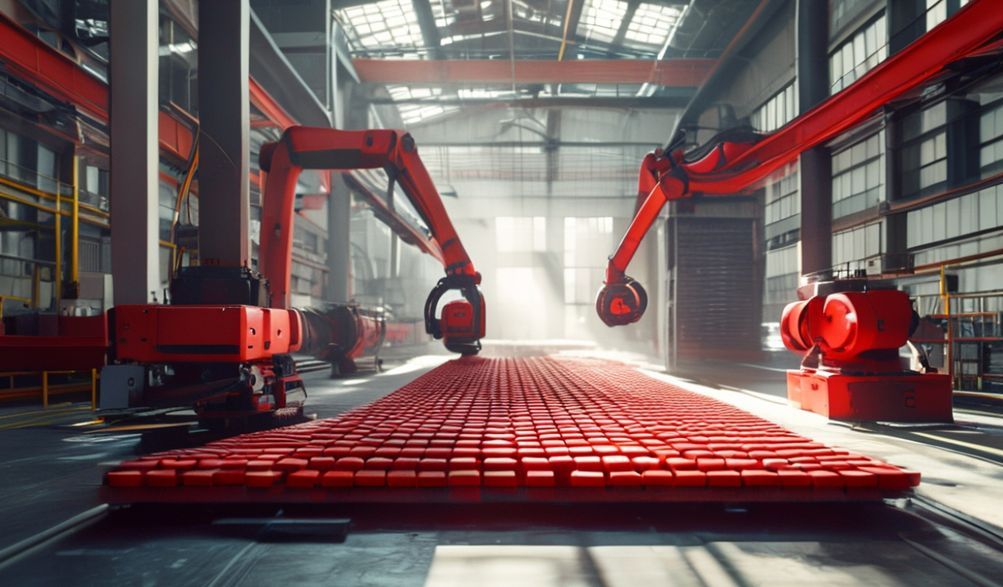
- Brick Stacker/Palletizer: This robotic arm or mechanism gently lifts and arranges the freshly molded products onto pallets or curing racks, ready for the next stage.
- Conveyor Systems: The arteries of the factory. Belt or roller conveyors seamlessly transport raw materials, mixed concrete, and finished products between different stages without manual handling.
- Control Panel & PLC (Programmable Logic Controller): The brain and nervous system. The PLC automates the entire sequence, allowing operators to set parameters, monitor production, and ensure consistent, repeatable cycles.
Why Choose a FUDA Brick Making Factory? The Competitive Edge
Investing in automation is a strategic business decision. Choosing a FUDA system provides a distinct competitive advantage that addresses the core inefficiencies of traditional methods.
Unmatched Efficiency and High Output Capacity
A FUDA brick automatic machine is engineered for speed and continuous operation. While manual yards might produce a few thousand bricks per day with a large crew, a single automated FUDA line can produce tens of thousands of units in a 24-hour period. This high output capacity translates directly into faster project completion timelines and the ability to reliably fulfill large-scale commercial or municipal contracts.
Superior and Consistent Product Quality
Human hands introduce variation. Automation eliminates it. FUDA machines apply the exact same pressure, vibration frequency, and material volume for every single brick. This results in products with uniform size, consistent density, and reliable compressive strength. For builders, this means predictable structural performance, easier compliance with strict building codes, and a professional, high-quality finish on every project.
Significant Reduction in Labor Costs and Operational Overheads
This is a major financial driver. A traditional brick yard requires a large team for molding, carrying, and stacking—tasks that are physically demanding and lead to high labor turnover and costs. A FUDA automated factory shifts the requirement to a small number of machine operators and supervisors. The result is dramatically lower long-term labor costs, reduced dependence on scarce skilled manual labor, and fewer work-related injuries.
Enhanced Sustainability and Material Optimization
Modern construction demands eco-conscious practices. FUDA machines excel here through precision. Computer-controlled batching ensures no excess raw materials are used, drastically reducing waste. Furthermore, these systems are perfectly designed to utilize industrial by-products like fly ash or slag, turning waste into valuable building materials. The efficient production process also often leads to lower energy consumption per brick produced compared to traditional firing kilns.
Inside the FUDA Brick Automatic Machine: Models and Capabilities
FUDA doesn’t offer a one-size-fits-all machine; they provide a range of solutions scalable to different business needs and market demands.
Flagship Models: An Overview of FUDA’s Range
FUDA’s portfolio includes several key models:
* Fully Automatic Block Making Machines: These are the workhorses for high-volume production of hollow blocks, solid blocks, and pavers. They are the core of a stationary FUDA brick making factory.
* Mobile Brick Machines: Offering greater flexibility, these units are ideal for producing bricks directly on a construction site, saving on transportation costs for large projects.
* Specialty Machines: Configurations for producing specific products like interlocking bricks for landscaping, curbstones, or permeable pavers.
The versatility in mold design allows a single machine to produce a wide array of products, enabling manufacturers to adapt to market trends quickly.
Technical Specifications and Customization
While specific specs vary by model, key parameters buyers should consider include:
* Power: The total electrical load required (e.g., 30-50 kW).
* Mold Size & Cycle Time: Determines the brick dimensions and how many units are produced per machine cycle (e.g., 6-12 blocks per cycle, cycle time of 15-20 seconds).
* Pressure System: The hydraulic pressure (measured in tons) that ensures proper compaction and strength.
Critically, FUDA is known for its engineering support to customize solutions. This can involve adapting molds for unique regional block sizes or calibrating the mix parameters for locally available raw materials.
The FUDA Factory Ecosystem: Beyond the Single Machine
FUDA sells more than a machine; they enable a production ecosystem. Their support extends to designing the complete factory layout, including:
* Raw material storage and feeding systems.
* Automated curing rooms or chambers to accelerate strength gain.
* Logistics planning for finished product storage and dispatch.
This holistic approach ensures your investment works as an efficient, integrated production line from day one.
Implementing Your Automated Brick Making Factory: A Practical Guide
Transitioning to an automated factory requires careful planning. Here’s a framework for successful implementation.
Planning and Space Requirements
Adequate space is crucial. You’ll need a covered production area for the machine line, space for raw material storage (cement silos, aggregate bays), a curing area, and storage for finished goods. A typical small-to-medium line might require a building of 1,500 to 3,000 square meters. Reliable access to three-phase electrical power and a water source is also essential.
Investment Analysis: Cost vs. Return on Investment (ROI)
The initial investment in a FUDA brick automatic machine is significant, but must be viewed through the lens of long-term ROI. A sound financial analysis should consider:
- Upfront Costs: Machine purchase, shipping, import duties, foundation work, and factory shed construction.
- Operational Costs: Raw materials, electricity, labor, maintenance, and spare parts.
- Projected Revenue: Based on production capacity, local market price per brick/block, and estimated capacity utilization.
A well-run automated factory typically sees a ROI period of 1.5 to 3 years, after which the significantly higher margins (due to lower labor and waste costs) provide a strong, steady profit stream. It is essential to conduct a detailed, localized business plan rather than rely on generic promises.
Training, Maintenance, and FUDA Support
The machine’s longevity depends on its care. FUDA typically provides comprehensive on-site training for your operators and maintenance staff on safe operation, daily checks, and routine servicing. Proactive maintenance is far cheaper than reactive repairs.
A key factor in choosing FUDA is their after-sales commitment. Inquire about:
* The warranty period and coverage.
* Availability of spare parts and their global supply network.
* Access to remote technical support and the possibility of in-person service visits.
Addressing Common Concerns: The FUDA Brick Machine FAQ
FAQ 1: What is the production capacity of a standard FUDA automatic brick machine?
Capacity varies by model. A standard fully automatic line can produce from 8,000 to over 30,000 standard hollow blocks (200x100x400mm) in an 8-hour shift, depending on cycle time and mold configuration.
FAQ 2: What raw materials can be used with these machines?
These machines are primarily for concrete products. They can use cement, sand, gravel, crushed stone, and industrial by-products like fly ash, slag, and even certain types of construction waste. The mix design can be adjusted.
FAQ 3: How durable and reliable are FUDA machines? What is the expected lifespan?
Built with robust steel frames, high-quality hydraulic systems, and wear-resistant components, FUDA machines are designed for industrial, continuous use. With proper maintenance, a lifespan of 10-15 years or more is standard.
FAQ 4: What kind of after-sales service and warranty does FUDA offer?
FUDA typically offers a 12-18 month warranty on core components. They provide installation guidance, operator training, and have a global network for spare parts and technical support, which is a critical aspect of their value proposition.
FAQ 5: Can the machine be exported and installed in my country? Does FUDA provide installation guidance?
Yes, FUDA regularly exports worldwide. They provide detailed foundation drawings, electrical schematics, and often send engineers to supervise installation and commissioning, ensuring the machine is set up correctly.
FAQ 6: How does the brick quality compare to traditional or handmade bricks?
The quality is superior in terms of consistency and strength. Automated production ensures every brick has identical dimensions and meets precise compressive strength targets (e.g., 5MPa, 7.5MPa, etc.), which is difficult to guarantee with manual methods. The finish is also cleaner and more uniform.
Conclusion
The evidence is clear: automating brick production with a FUDA brick making factory is a transformative step. It directly addresses the critical challenges of modern construction—delivering unmatched efficiency, guaranteed quality, and a stronger, more sustainable bottom line. As the industry evolves, trends like IoT-enabled machine monitoring and even greener material formulas will further integrate with these automated systems.
Partnering with an experienced and authoritative manufacturer is the cornerstone of this success. FUDA’s engineering expertise, comprehensive support, and proven technology provide the trustworthy foundation needed for such a significant investment. The future of construction manufacturing is automated, precise, and smart.
Ready to build the foundation of your more profitable and efficient business? The next step is to engage with FUDA’s engineering team for a personalized consultation and a detailed quotation tailored to your specific production goals and local market conditions.