
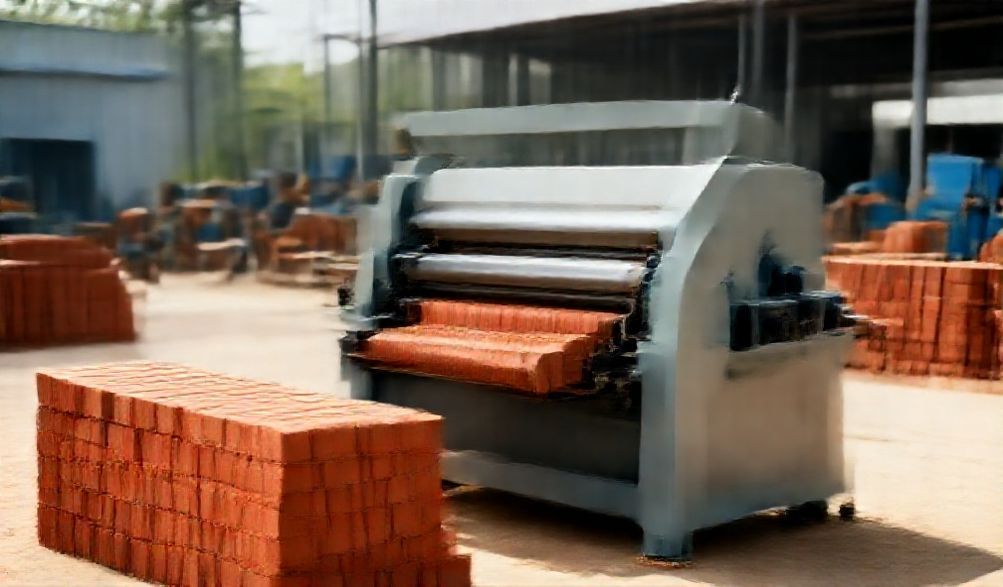
தமிழ்நாட்டில் களிமண் செங்கல் தயாரிக்கும் இயந்திரங்கள் குறித்த உங்கள் இறுதி வழிகாட்டி | ஃபூடா பிளாக் மேக்கிங் ஃபேக்டரியின் நுண்ணறிவுகள்
Введение
От древних храмов Мадурая до стремительно растущих IT-коридоров Ченнаи, ландшафт Тамилнада построен на фундаменте из глиняных кирпичей. Этот скромный материал формировал архитектурную идентичность штата на протяжении веков. Сегодня масштабный строительный бум — охватывающий жилые комплексы, промышленные парки и городскую инфраструктуру — порождает беспрецедентный спрос на высококачественные строительные материалы.
Однако для многих местных производителей и предпринимателей удовлетворение этого спроса традиционными ручными методами является постоянной борьбой. Ручная формовка кирпичей требует больших трудозатрат, мучительно медленна и страдает от несоответствий в размере и прочности. Это приводит к потерям материалов, ненадежным цепочкам поставок и неспособности конкурировать за более крупные и прибыльные контракты.
Решение? Механизация. Инвестиции в современнуюகளிமண் செங்கல் தயாரிக்கும் இயந்திரம் தமிழ்நாடுбольше не является роскошью; это стратегическая необходимость для роста и выживания. Это руководство служит вашим всеобъемлющим ресурсом, опираясь на лучшие отраслевые практики и опыт устоявшихся игроков, таких какФабрика по производству блоков FUDAНаша цель — предоставить вам достоверную и практическую информацию, основанную на опыте, экспертизе, авторитетности и надежности (E-E-A-T), чтобы вы могли сделать уверенные и обоснованные инвестиции в будущее своего бизнеса.
Почему стоит механизировать? Преимущества машин для производства глиняного кирпича
Переход от ручного к машинному производству меняет правила игры. Преимущества выходят далеко за рамки простого ускорения производства кирпича; они преобразуют всю вашу бизнес-модель, повышая качество, эффективность и прибыльность.
Непревзойдённая стабильность и превосходное качество
- Прецизионная инженерия:Машины производят кирпичи с точными, одинаковыми размерами каждый раз. Эта точность критически важна для современного строительства, обеспечивая более быструю укладку, меньший расход раствора и структурно прочные стены.
- Оптимальное уплотнение:Гидравлическое или механическое прессование уплотняет глиняную смесь до однородной плотности, что напрямую обеспечивает более высокую прочность на сжатие, лучшую долговечность и долговечность конструкций по сравнению с переменной плотностью ручного производства кирпича.
Значительно увеличенный объем производства
- Экспоненциальный скачок:В то время как опытный мастер может изготовить 500-800 кирпичей за полный рабочий день, простая полуавтоматическая машина способна производить 2 000-3 000 кирпичей за 8-часовую смену. Полностью автоматизированные заводы, подобные тем, что используются в крупномасштабных производствах, могут выпускать десятки тысяч единиц продукции в сутки.
- Удовлетворение спросаЭтот огромный рост выпуска позволяет вам надежно обеспечивать жилищные проекты, коммерческих застройщиков и государственные контракты, превращая ваше подразделение в ключевое звено в цепочке поставок строительных материалов штата Тамилнад.
Значительное снижение затрат на рабочую силу и уменьшение зависимости от неё.
- Оптимизация рабочей силыМеханизация автоматизирует самые трудоёмкие задачи — смешивание, формование и уплотнение. Это снижает физическую нагрузку и позволяет перераспределить квалифицированную рабочую силу на контроль, управление качеством и логистику.
- Решение проблемы нехватки:随着农村向城市迁移的增加,寻找稳定的体力劳动变得越来越困难。机器能提供运营的稳定性,减少你面对劳动力短缺和工资波动需求时的风险。
Повышение эффективности использования материалов и экономия затрат
- Минимизация отходов: Manual processes often lead to significant clay wastage due to spillage and irregular molding. Machines use precisely measured amounts of material for each brick, optimizing raw material consumption.
- Lower Cost Per Unit: The combined savings from reduced labor, lower material waste, and higher output volume drastically reduce the production cost per brick, directly boosting your profit margins.
Exploring Clay Brick Making Machine Types (Popular in Tamil Nadu)
The market offers a range of machines to suit different scales of operation and investment levels. Understanding these types is the first step in selecting the right fit for your enterprise.
Manual / Hand-Operated Brick Making Machines
- Лучше всего подходит для: Micro-enterprises, village-level startups, and entrepreneurs testing the market.
- Ключевые особенности: Low initial investment, no power requirement, and high portability. They involve manually feeding the mixture and using a lever to compress it into a mold.
- Вывод: Can significantly improve consistency over purely handmade methods, with a production of 300-500 bricks per day.
Полуавтоматические машины для производства кирпича
- Лучше всего подходит для: Small to medium-scale businesses (SMEs) looking to scale up sustainably. This is one of the most popular choices across Tamil Nadu.
- Ключевые особенности: These electrically powered machines automate the mixing, compaction, and molding processes. An operator is needed to feed raw material and remove finished bricks.
- Вывод: Offers an excellent balance, producing between 2,000 to 6,000 bricks per 8-hour shift, depending on the model and brick size.
Полностью автоматизированные заводы по производству кирпича
- Лучше всего подходит для: Large-scale manufacturers like the Фабрика по производству блоков FUDA, aiming for mass production to supply major projects.
- Ключевые особенности: These are complete production lines with automated material handling, mixing, molding, curing, and stacking systems. They require a higher initial investment and more space but deliver maximum efficiency.
- Вывод: Production can exceed 10,000 to 50,000 bricks per day, making them ideal for meeting bulk orders consistently.
Specialized Machines: Hollow Block, Paver, Interlocking Brick Makers
- Market Diversification: Beyond solid clay bricks, demand is growing for specialized products. Many machines come with interchangeable molds.
- Пустотелые блоки: Lighter weight, better insulation, and reduced material cost.
- Pavers & Interlocking Bricks: For landscaping, driveways, and pavements, catering to the booming real estate and urban development sectors.
Key Features to Evaluate Before Buying a Machine
Choosing the right machine requires careful consideration of your specific needs and local conditions. Don’t just look at the price tag; evaluate these critical features.
Production Capacity (Bricks per Hour/Day)
- Align with Goals: Honestly assess your current orders and projected growth. Buying an undersized machine will leave you unable to meet demand, while an oversized one will strain your finances. Calculate based on brick type and size.
Разнообразие типов и размеров кирпича
- Обеспечение будущей устойчивости: A machine that allows for easy mold changes lets you adapt to market trends. Check if the supplier offers molds for different brick sizes (e.g., 4”, 6”, 9”) and types (solid, hollow, perforated).
Power Requirement (Electric, Diesel, Hybrid)
- Critical for Tamil Nadu: While electric motors are common, power fluctuations or outages in some areas can halt production. Diesel engines offer independence but have higher fuel costs. Hybrid models provide a flexible backup. Assess your local power reliability.
Durability & After-Sales Support
- Качество сборки: Inspect the frame, hydraulics, and mold quality. Machines with robust, wear-resistant parts may cost more upfront but save on downtime and repair costs.
- Локальная сервисная сеть: This is non-negotiable. Ensure the supplier or manufacturer has a reliable service team and spare parts inventory within Tamil Nadu. Prompt support is crucial for minimizing production losses.
Spotlight: FUDA Block Making Factory – A Case Study in Efficiency
Examining established players provides a blueprint for success. While specific proprietary details may not be public, the operational principles of a factory like FUDA offer valuable lessons.
Who is FUDA? Establishing Authoritativeness
- FUDA represents the class of established, forward-thinking manufacturers in the region. Their longevity and scale in the block and brick manufacturing sector demonstrate a successful adaptation to market demands through mechanization and process optimization.
Machine Integration in Their Production Line
- A factory at this scale likely operates a fully or highly automated plant. The workflow is seamless:
- Raw Material Processing: Local clay is fed into automated crushers and mixers to achieve a perfectly consistent blend.
- Формование и уплотнение: The mixture is conveyed to high-pressure automatic brick making machines for shaping.
- Curing & Drying: Newly formed bricks move on conveyor belts to dedicated drying yards or chambers, followed by systematic water curing to achieve maximum strength.
- Automated Stacking: Finally, bricks are automatically stacked and prepared for dispatch.
- This integration minimizes human handling, maximizes speed, and ensures product uniformity from the first brick to the ten-thousandth.
The Tangible Business Outcomes
- By adopting such mechanized systems, a factory like FUDA achieves key outcomes:
- Надежность цепочки поставок: The ability to guarantee large, consistent volumes makes them a preferred supplier for major construction firms and infrastructure projects.
- Enhanced Competitiveness: High efficiency lowers the per-unit cost, allowing competitive pricing while maintaining healthy profit margins.
- Brand Reputation: Delivering uniform, high-strength bricks consistently builds a reputation for quality and trust, which is invaluable in the construction industry.
Setting Up Your Machine for Success in Tamil Nadu
Buying the machine is only half the battle. Proper setup and operation are key to realizing its full potential.
Sourcing Quality Raw Materials Locally
- Clay Testing: The quality of your brick depends on the clay. Test local soil for its plasticity, shrinkage, and iron content. Districts like Tirunelveli, Vellore, and Kancheepuram have known clay deposits suitable for brick making.
- Mix Consistency: Aim for a consistent mix of clay, sand (for reducing shrinkage), and water. The right proportion is critical for the machine to function smoothly and produce strong bricks.
Site Preparation and Basic Infrastructure Needs
- Adequate Space: You need space for the machine, raw material storage, a mixing area, a drying yard, and a curing area. Plan for easy material flow.
- Strong, Level Flooring: The machine must be installed on a solid, level concrete base to prevent vibrations and misalignment.
- Shelter: Protect the machine from direct rain and sun to extend its lifespan.
- Utilities: Ensure access to the required power connection and a reliable water source for mixing and curing.
The Curing Process: Essential for Strength
- Сушка: After molding, bricks must be dried slowly to prevent cracking. In Tamil Nadu’s climate, initial sun-drying should be controlled; shaded drying yards are ideal.
- Water Curing: Bricks gain most of their strength through proper water curing. They should be kept moist for 7-14 days after drying. This step cannot be rushed—it is what creates a durable, weather-resistant final product.
Operator Training and Safety Protocols
- Invest in Training: A well-trained operator can optimize output, perform basic maintenance, and identify minor issues before they become major breakdowns. Insist on comprehensive training from your supplier.
- Safety First: Ensure all moving parts are guarded. Operators should use safety gloves, goggles, and boots. Establish clear protocols for machine operation and emergency shutdowns.
Navigating the Market: Cost & Supplier Selection in Tamil Nadu
Making a smart purchase involves diligent research and asking the right questions.
Understanding Pricing Factors
- Уровень автоматизации: Manual machines can start from a few thousand rupees, semi-automatic models range from ₹2-10 lakhs, and fully automatic plants can cost ₹20 lakhs and above.
- Brand & Origin: Internationally branded or high-end Indian machines cost more but may offer better technology. Reliable Indian manufacturers provide robust options at competitive prices.
- Capacity & Features: Higher output capacity, additional features like auto-feeding, and the number of included molds will increase the price.
Identifying Reputable Manufacturers & Suppliers
- Verify Track Record: Research the company’s history. How long have they been in business?
- Visit if Possible: A factory visit reveals build quality and operational scale. Ask to see machines running.
- Check Client Testimonials: Speak directly to other brick manufacturers in Tamil Nadu who use their equipment. This is the most reliable reference.
- Compare Support: Evaluate their after-sales service promise, warranty period, and spare parts logistics.
Key Questions to Ask Before Purchase
- What is the exact warranty coverage and duration?
- Do you provide on-site installation and commissioning?
- Is operator training included?
- What is the availability and cost of critical spare parts?
- Can you provide contact details for 2-3 current customers in a similar district whom I can speak to?
- What is the recommended maintenance schedule?
Frequently Asked Questions (FAQ)
Q1: What is the approximate price range for a clay brick making machine suitable for a small business in Tamil Nadu?
A: For a small-scale startup, a manual machine can cost between ₹50,000 to ₹1.5 lakhs. A entry-level semi-automatic machine, which is highly recommended for serious small businesses, typically ranges from ₹2 lakhs to ₹5 lakhs, depending on capacity and features.
Q2: Can these machines use different types of local soil or clay found across Tamil Nadu districts?
A: Yes, most machines are designed to work with a variety of clayey soils. However, the soil may need to be tempered—mixed with sand or other additives—to achieve the right plasticity and shrinkage properties. It’s advisable to get your local soil tested and consult with the machine supplier on the ideal mix formula.
Q3: How much power (in kW or HP) is typically required to run a semi-automatic brick making machine?
A: A standard semi-automatic machine for making solid bricks usually requires a motor in the range of 5 HP to 10 HP (approximately 3.7 kW to 7.5 kW). Always confirm the exact requirement with the specific model you are considering.
Q4: What is the average payback period on the investment for a medium-capacity machine?
A: With efficient operation and good market demand, a well-run semi-automatic brick making unit can often see a payback period of 12 to 24 months. This depends heavily on factors like production efficiency, raw material cost, local brick prices, and sales volume.
Q5: Besides the machine itself, what are the other major setup costs I should budget for?
A: Key additional costs include: site development (leveling, flooring, shed), raw material stockpile, a mixer (if not integrated), trolleys for material handling, a water pump and tank for curing, electrical setup (transformers/wiring), and initial working capital for labor and materials for the first few months.
Q6: Are there any government subsidies or schemes for setting up a brick manufacturing unit in Tamil Nadu?
A: Schemes for MSMEs (Micro, Small, and Medium Enterprises) can sometimes be applicable. It is recommended to check with the Tamil Nadu Industrial Investment Corporation (TIIC) or your local District Industries Centre (DIC) for the most current information on credit-linked capital subsidy schemes, interest subsidies, or other support for manufacturing units.
Заключение
The journey from manual brick-making to mechanized production is the definitive path to scaling your business and securing a competitive edge in Tamil Nadu’s vibrant construction market. Investing in the right clay bricks making machine is an investment in consistency, quality, and long-term profitability.
Let the operational insights from successful entities like the Фабрика по производству блоков FUDA serve as your benchmark. Their success underscores the importance of choosing durable equipment, setting up efficient processes, and prioritizing after-sales support.
Use this guide as your foundational research. Take the next step: visit supplier workshops, request live demonstrations, and, most importantly, speak directly with existing machine owners in your region. There is no substitute for first-hand experience. By making an informed, strategic decision today, you are not just buying a machine—you are building the foundation for your business’s future growth, ready to meet the demands of a state that is constantly building upwards and outwards.
<