
Полное руководство по машинам для производства глиняно-зольных кирпичей: эффективность, процесс и выбор
В эпоху, определяемую двойным давлением устойчивого строительства и растущих затрат на материалы, поиск отраслью эффективных, экологичных строительных решений как никогда актуален. Появляются зольные кирпичи: превосходный строительный материал, который гениально перерабатывает промышленные побочные продукты, такие как зола-унос. Однако истинный потенциал этого инновационного материала реализуется не одним лишь намерением — он раскрывается благодаря точному инжинирингу. Краеугольным камнем современного эффективного производства являетсяГлиняный кирпичный станок для производства кирпича из золы.
Это всестороннее руководство глубоко погружается в мир специализированного оборудования. Опираясь на отраслевой опыт, мы разберем все — от основных принципов работы до тонкостей принятия решений при покупке. Независимо от того, являетесь ли вы руководителем строительства, стремящимся сократить затраты на проект, гражданским инженером, выбирающим устойчивые материалы, или предпринимателем, запускающим экологически чистое производственное предприятие, этот авторитетный источник предоставит фундаментальные знания, необходимые для принятия уверенного и обоснованного решения.
Что такое машина для производства кирпича из глины и золы?
Прежде чем инвестировать в какое-либо оборудование, крайне важно четко понимать его основное назначение. Это не просто универсальный пресс для кирпича; это система, разработанная для конкретного, передового состава материала.
Основная функция и определение
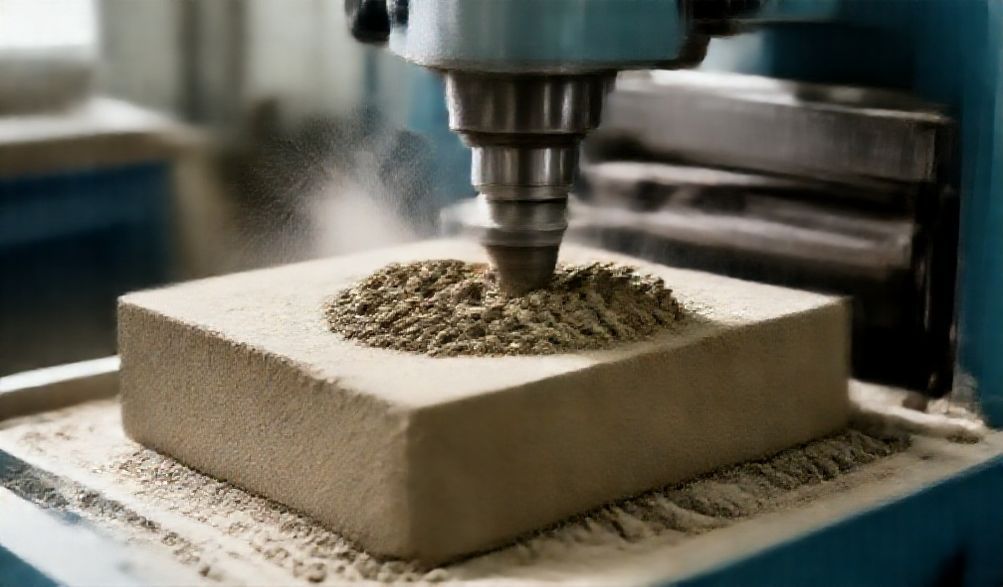
Машина для производства кирпича из глины и золы-уноса — это механизированная или автоматизированная система, специально предназначенная для точного смешивания глины и золы-уноса в заданных пропорциях и формования из них высокопрочных, однородных кирпичей или блоков посредством высокого давления. Её основная функция выходит за рамки простого формования: она обеспечивает процесс превращения отходов (золы-уноса) и природного материала (глины) в прочные строительные элементы без необходимости высокотемпературного обжига в печи.
Машина обеспечивает постоянное дозирование сырья, тщательное перемешивание и, что наиболее важно, приложение значительного давления к смеси в форме. Именно это уплотнение придает кирпичам первоначальную "сырую" прочность, которая затем полностью развивается в ходе контролируемого процесса отверждения.
How It Differs from Traditional Brick Making Machines
While they may appear similar, clay ash brick machines are distinct from traditional clay brick equipment in several key ways:
- Material Input: They are specifically designed to handle the unique properties of a fly ash-clay mix, which has different binding and compaction characteristics compared to pure clay.
- Эффективность процесса: These machines are often engineered for higher pressure compaction (hydraulic or mechanical), which is essential for activating the pozzolanic properties of fly ash and creating a dense, strong brick without firing.
- Качество вывода: The end product differs significantly. Clay ash bricks typically offer higher compressive strength, better dimensional consistency, lower water absorption, and improved thermal insulation compared to conventional fired red bricks.
Key Benefits of Using a Clay Ash Brick Machine
Adopting this technology isn’t merely a change in equipment; it’s an upgrade in your entire production philosophy. The benefits are multi-faceted, impacting product quality, environmental footprint, and your bottom line.
Superior Product Quality & Strength
The high-pressure compaction process results in a denser, more homogeneous brick. This directly translates to:
* Higher compressive strength, often exceeding the requirements for standard load-bearing bricks as per IS codes.
* Excellent dimensional consistency, leading to less mortar use and faster, more precise construction.
* Lower water absorption, which enhances durability, reduces efflorescence, and improves frost resistance in colder climates.
Enhanced Sustainability & Eco-Friendliness
This is perhaps the most significant advantage from a global perspective.
* Утилизация отходов: It consumes fly ash, a major by-product of coal-fired power plants, diverting it from landfills and reducing environmental pollution.
* Сохранение ресурсов: It uses less topsoil than traditional brick manufacturing, preserving agricultural land.
* Энергоэффективность: The process eliminates the need for fossil fuel-fired kilns, drastically cutting carbon emissions and energy consumption.
High Production Efficiency & Cost-Effectiveness
Automation and mechanization bring tangible operational advantages:
* Снижение зависимости от рабочей силы: Semi-automatic and fully automatic models significantly cut down on manual labor for mixing, molding, and stacking.
* Последовательный вывод: Machines eliminate human error in shaping and compaction, ensuring every brick meets the same high standard.
* Долгосрочные сбережения: Lower energy costs, potential government incentives for using fly ash, and reduced waste all contribute to a healthier ROI over time.
Versatility in Brick Design
Modern machines are not limited to standard rectangular bricks. With interchangeable molds, you can produce:
* Solid bricks of various sizes.
* Hollow blocks for reduced weight and improved insulation.
* Interlocking bricks for dry-stack or minimal-mortar construction.
* Paving blocks and landscaping products.
Types of Clay Ash Brick Making Machines
The market offers solutions for every scale of operation. Understanding these categories is the first step in aligning technology with your business goals.
Manual / Semi-Automatic Machines
Ideal for entrepreneurs, small-scale projects, or community-based initiatives.
* Операция: Require manual feeding of the mixture and often manual removal of the pressed brick. Some semi-automatic models use a lever or small hydraulic system for compaction.
* Плюсы: Very low capital investment, simple to operate and maintain, perfect for low-volume production or testing the market.
* Минусы: High physical labor requirement, lower output (typically 500-2,000 bricks per day), less consistency compared to automated systems.
Fully Automatic Stationary Plants
The workhorses of commercial clay ash brick manufacturing.
* Операция: Integrated systems that automate the entire process: raw material feeding, precise mixing, high-pressure compaction in a central machine, and automatic brick stacking/palletizing.
* Плюсы: Very high output (from 8,000 to over 50,000 bricks per day), exceptional consistency, minimal manual labor, and optimized for continuous production.
* Минусы: Significant upfront investment, requires a fixed factory setup, and needs trained personnel for operation and maintenance.
Мобильные станки для производства кирпича
A niche but highly effective solution for specific scenarios.
* Операция: Compact, trailer-mounted plants that can be transported directly to a large construction site.
* Плюсы: Eliminates brick transportation costs for large projects, allows for just-in-time production, and is ideal for remote infrastructure projects.
* Минусы: Production capacity is usually lower than large stationary plants, and they require a prepared, level site for operation.
The Clay Ash Brick Production Process: Step-by-Step
Understanding the production journey demystifies the machine’s role and highlights the importance of each stage in achieving a quality final product.
1. Raw Material Preparation & Mixing
The foundation of a good brick is a perfectly proportioned and homogeneous mix.
* Sourcing: Clay (free of organic matter) and fly ash (usually Class F or C) are sourced and stored separately.
* Дозирование: The typical ratio ranges from 60:40 to 70:30 (Clay:Fly Ash). A small percentage of cement or lime (3-5%) is sometimes added as an activator.
* Смешивание: The raw materials are fed into a pan mixer or similar equipment. Water is added gradually to achieve optimal moisture content (usually around 10-12%). Proper mixing is critical for uniform strength and color.
2. Compaction and Molding
This is the heart of the process, where the machine performs its core function.
* The prepared mix is fed into the machine’s feed box.
* It is then delivered into a precision steel mold cavity.
* A hydraulic ram or mechanical press applies intense pressure—often ranging from 15 to 30 tons or more—compacting the mixture into a dense, coherent block.
* The pressure is held momentarily before the ram retracts and the freshly formed “green brick” is ejected onto a pallet or conveyor.
3. Curing and Drying
The bricks gain their final strength through curing, not firing.
* Initial Setting: Green bricks are kept under a plastic sheet or in a shaded area for 24-48 hours to prevent moisture loss.
* Water Curing: Bricks are then stacked and regularly sprayed with water for 14-28 days. This allows for the pozzolanic reaction between fly ash and lime/cement, which steadily increases strength.
* Steam Curing (Accelerated): In industrial settings, bricks may be placed in a steam chamber for 8-12 hours. This accelerates the chemical reactions, allowing bricks to achieve handling strength in a single day.
* Air Drying: After curing, bricks are dried in ambient air before being ready for dispatch and use.
How to Choose the Right Machine: A Buyer’s Checklist
This decision requires careful analysis. Use this expert-backed checklist to evaluate your options systematically.
Assess Your Production Scale & Demand
Begin with the end in mind. Ask yourself:
* What is my required daily or monthly output (in bricks)?
* Is this for a one-time project or continuous commercial production?
* What is my available workspace and infrastructure (power supply, water access)?
* What is the local market demand and competition for clay ash bricks?
Evaluate Machine Specifications
Dig into the technical details. Key metrics include:
* Сила давления Measured in tons. Higher pressure generally yields denser, stronger bricks.
* Время цикла: The time to produce one brick/cycle. This directly determines hourly output.
* Требуемая мощность: Ensure your facility can support the electrical or hydraulic needs (e.g., 3-phase power).
* Уровень автоматизации: From manual to fully automatic. Match this to your labor availability and budget.
* Варианты форм Check the availability and cost of different mold shapes and sizes.
Consider Quality, Durability, and After-Sales Support
Это то место, гденадёжность in a supplier becomes non-negotiable.
* Качество сборки: Inspect the quality of steel, the robustness of the frame, and the brands of critical components (hydraulic pumps, PLCs).
* Гарантия: A comprehensive warranty is a sign of manufacturer confidence.
* Запчасти: Ensure spare parts are readily available. Ask for a list of common wear parts and their costs.
* Техническая поддержка Does the supplier offer installation, commissioning, and operator training? What is their response time for technical issues? This support is critical for long-term operational success and is a major factor in E-E-A-T (Experience, Expertise, Authoritativeness, Trustworthiness).
Budget and Return on Investment (ROI) Analysis
Look beyond the sticker price.
* Total Cost: Include machine price, shipping, installation, and initial spare parts.
* Operational Cost: Factor in power consumption, labor, maintenance, and raw material costs.
* ROI Calculation: Estimate your production cost per brick versus the selling price in your market. A slightly more expensive, robust machine with lower downtime often provides a faster ROI than a cheaper, unreliable model.
Frequently Asked Questions (FAQ)
What is the typical ratio of clay to fly ash in these bricks?
The most common ratio ranges from 60:40 to 70:30 (Clay:Fly Ash). The optimal ratio depends heavily on the specific properties of your locally sourced clay and fly ash. For best results, laboratory testing and trial batches are highly recommended before full-scale production.
Are clay ash bricks as strong as conventional red bricks?
Yes, and often stronger. When produced with adequate compaction pressure and proper curing, clay ash bricks consistently achieve higher compressive strength than traditional fired clay bricks, comfortably meeting and exceeding standard IS code requirements for load-bearing units.
Do I need special skills to operate this machinery?
For manual and basic semi-automatic machines, basic training is sufficient. For fully automatic plants, trained operators are necessary. A reputable supplier should always provide comprehensive hands-on training for your team during machine installation and commissioning, covering operation, basic troubleshooting, and safety procedures.
What is the average production capacity of a standard machine?
Capacity varies dramatically. A small manual press may produce 500-1,000 bricks per 8-hour shift. A mid-range semi-automatic machine might produce 2,500-5,000 bricks per day. Large, fully automatic plants can have outputs ranging from 10,000 to over 50,000 bricks per day. You must define your “standard” based on your specific project or business needs.
How do I maintain a clay ash brick making machine?
Proactive maintenance is key to longevity:
* Ежедневно: Clean all mix residue from the machine, especially the mold and feed hopper. Check for loose bolts.
* Weekly: Lubricate all moving parts as per the manufacturer’s manual. Inspect hydraulic hoses for leaks.
* Monthly: Check hydraulic oil levels and condition. Inspect the mold for wear or damage.
* Always follow the manufacturer’s prescribed maintenance schedule.
Заключение
Investing in a Глиняный кирпичный станок для производства кирпича из золы is more than a capital expenditure; it’s a strategic move towards sustainable, efficient, and profitable construction practices. By understanding the distinct types, the science-backed production process, and the critical selection criteria outlined in this guide, you are now equipped to make a choice that aligns perfectly with your technical requirements and business vision. The right machine acts as a catalyst, transforming readily available clay and industrial fly ash into high-quality, durable building blocks for a greener future.
Ready to explore specific models or get a quote? We recommend consulting with multiple reputable manufacturers. Request live demonstrations using a mix similar to your own, scrutinize their client testimonials and case studies, and, above all, verify the depth of their after-sales service and support commitments. A trustworthy partnership with your supplier is the final, essential component for long-term success.
<