
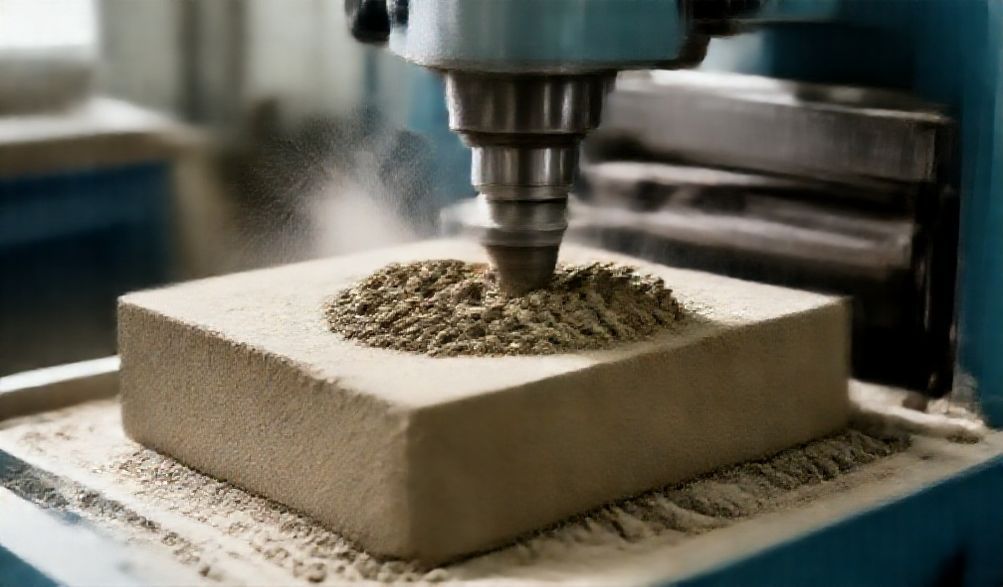
Hagidda Ugu Wanaagsan ee Makiinadaha Sameynta Lebi Dhagax: Waxsoosaarka, Habka & Doorashada
Qarnigan casriga ah ee lagu qeexayo cadaadiska laba-geesoodka ah ee dhismaha waara iyo qiimaha qalabka ee koraya, baaritaanka warshadaha ee xalalka dhismaha ee wax ku oolka ah, ee deegaanka ilaaliya, ma aynan weligood u baahanayn sida hadda. Halkan waxaa soo galay lebiska dhoobada ah: qalab dhisme oo ka sarreeya oo si caqli leh u isticmaala soo saarada warshadaha sida budada duusha. Si kastaba ha ahaatee, awoodda dhabta ah ee qalabkan cuskaan lama gaaro iyadoo keliya loogu talagalay—waa la furaa iyadoo loo adeegsado injineernimada saxda ah. Xidhidda soo saarista casriga ah ee wax ku oolka ah waadhagax dhalaal qori qashin leh oo dhagax sameeya.
Hageegan dhamaan oo qoto dheer ayaa lagu soo bandhigay dunida makiinadaha khaaska ah ee la xiriira. Iyadoo la adeegsanayo khibradda warshadeed, waxaan ka faahfaahin doono wax kasta laga bilaabo mabda'aasha aasaasiga ah ee hawlgalka ilaa go'aanka la qaadayo ee loo baahan yahay iibsashada. Haddii aad tahay maamule dhismo oo doonaya inaad dhimiso kharashka mashruuca, injineer dhismeed oo qeexaya alaabta waarta, ama ganacsade oo bilaabaya shirkad wax soo saar oo dabiici ah, macluumaadka awoodda leh ee aasaasiga ah ayaa ku siinaya aqoonta aasaasiga ah ee aad u baahan tahay si aad u gaarto go'aanka kalsooni leh ee aad ku xallin karto.
Waa maxay Makiinada Sameynta Lebi ee Dhoobo iyo Daawo?
Ka hor inta aadan wax qalab ah maalgelin, fahamka cad ee ujeeddada aasaasiga ah ayaa muhiim ah. Tani ma ahan oo keliya tuubo caadi ah oo dhagax lagu kariyo; waa nidaam loo habeeyay qaab dhismeed gaar ah, oo ka kooban maaddo horumar leh.
Farshaxanka Aasaasiga ah iyo Qeexidda
Makiinada dhisidda lebbiska dhoobo iyo daxda waa nidaam aan badeeco ahayn ama oo otomaatig ah oo loogu talagalay si gaar ah in uu isku dhufto dhoobo iyo daxda nisbead sax ah, oo uu u sameeyo lebbiska ama boolooyinka xoogga sare leh iyo isku midka ah iyadoo la adeegsanayo cadaadis sare. Shaqadeeda ugu muhiimsani maahan oo keliya qaab-dhismeedka—waxay fududeyso hab ka dhigaya wax la tashado (daxda) iyo qalab dabiici ah (dhoobo) halbeeg dhisid oo adag iyadoo aan loo baahnayn in la gubo foorno kulayl sare leh.
Makiinadu waxay hubinaysaa isku midka qaybinta alaabta ee la isku darayo, isku dhafka buuxda, iyo, muhiim ahaan, waxay ku dhaqaaqda cadaadis weyn oo lagu darayo isku dhafka gudaha qaabka. Cufnaanta ayaa ah waxa ka dhigayo lebiska xoogga hore ee "cagaaran", kaas oo markaas si buuxda loo horumarinayo hab dhawrista la maamulayo.
Waxay ka duwan tahay Makiinadaha Qori ee Dhaqanka
In kasta oo ay u eg yihiin, makiinadaha labista dhoobada dhoobada ayaa ka duwan qalabka dhoobada dhaqanka ee dhowr qaab oo muhiim ah:
- Gelinta AlaabtaWaxaa si gaar ah loogu talagalay inay qabtaan astaamaha gaarka ah ee isku-dhafka dhoobada iyo barafka, kaas oo leh sifooyin isku-dhafkaan iyo dhejinta kala duwan marka loo eego dhoobada saf ah.
- Hagaajinta HawlahaQalabkani waxaa badanaa loo nadiifiyaa si loo xoojiyo cadaadis sare (hydraulic ama mechanical), taasoo muhiim u ah in la kiciyo sifooyinka pozzolanic ee duxusha dabka iyo in la sameeyo bir dhuuban oo adag oo aan la gubin.
- Tayada Soo-saarkaNatiijada ugu dambayntu way kala duwan tahay. Lebi-dhuxul lebbiska ayaa inta badan bixiyaan xoog dheeraad ah oo ku habboon, isku mid dhererkiis, biyo yar oo la qaadan karo, iyo diyaarinta kulka si ka wanaagsan lebbiska guduudan ee caadiga ah.
Faahfaahinta Muhiimka ah ee Isticmaalka Makiinada Lebiska Dhoobo iyo Daawo
Adeegsiga farsamadan ma aha kaliya isbeddel qalab; waa horumar nidaamka wax soo saarkaaga oo dhan. Faaiidooyinkeedu waa mid kala duwan, oo saameeya tayada wax soo saarka, saameynta deegaanka, iyo dakhligaaga.
Tayada Alaabta iyo Xoogga Ugu Sarreeya
Habka isku dhufashada cadaadis sare waxa uu keenaa dhagax adag oo isku mid ah.
* Xoogga kiciyaha sare,badanaa ka sarreeya shuruudaha la doonayo lebbiska caadiga ah ee xambaarsan sida uu qeexo IS codes.
* Tayada fiican ee isku midka ah,taasina waxay keentaa isticmaalka dheecaanka yar yar iyo dhismaha degdeg ah oo sax ah.
* Hoos u qalajinta biyaha,taas oo sii kordhisa adkeysiga, yareeyso efflorescence, oo wanaajiso iska caabbinta barafka deegaano qaboobaya.
Wanaajinta Sugaanta & Daryeelka Deegaanka
Tani waa laga yaabaa inay tahay faa'iidada ugu muhiimsan ee aragtida caalamiga ah.
* Isticmaalka Qashinka:Waxay isticmaashaa dhoobada duushaanka, taas oo ah wax soo saar weyn oo ka imanayo saldhigyada korontada ee loo isticmaalo dhuxusha, iyadoo laga ilaalinayo in la ridi meelaha dhoofinta iyadoo lagana hortago wasakhda deegaanka.
* Kheyraadka La ilaaliyo:Waxay isticmaalaa dhul dhoobada oo yar ka dibida caadiga ah, iyadoo lagu ilaalinayo dhulka beeraha.
* Waxsoorka Tamarta:Habkani wuxuu baabi'iyaa baahida loo qabo foornada shidaalka ah, si xad dhaaf ah uga yara daynaya daah-furista karbaanka iyo isticmaalka tamarta.
Warshadaynta Sare & Tayo-Wanaagga Qiimaha
Awtoomeysiinta iyo makineysiintu waxay keenaan faa'iidooyin howlgal oo la taaban karo:
* La'aanta Shaqo ee La Yareeyay: Semi-automatic and fully automatic models significantly cut down on manual labor for mixing, molding, and stacking.
* Soo saaridda joogtada ah Machines eliminate human error in shaping and compaction, ensuring every brick meets the same high standard.
* Dhaqaale Dheer-amaadka: Lower energy costs, potential government incentives for using fly ash, and reduced waste all contribute to a healthier ROI over time.
Versatility in Brick Design
Modern machines are not limited to standard rectangular bricks. With interchangeable molds, you can produce:
* Solid bricks of various sizes.
* Hollow blocks for reduced weight and improved insulation.
* Interlocking bricks for dry-stack or minimal-mortar construction.
* Paving blocks and landscaping products.
Types of Clay Ash Brick Making Machines
The market offers solutions for every scale of operation. Understanding these categories is the first step in aligning technology with your business goals.
Manual / Semi-Automatic Machines
Ideal for entrepreneurs, small-scale projects, or community-based initiatives.
* Hawlgalka: Require manual feeding of the mixture and often manual removal of the pressed brick. Some semi-automatic models use a lever or small hydraulic system for compaction.
* Faaiidooyinka: Very low capital investment, simple to operate and maintain, perfect for low-volume production or testing the market.
* Laba. High physical labor requirement, lower output (typically 500-2,000 bricks per day), less consistency compared to automated systems.
Fully Automatic Stationary Plants
The workhorses of commercial clay ash brick manufacturing.
* Hawlgalka: Integrated systems that automate the entire process: raw material feeding, precise mixing, high-pressure compaction in a central machine, and automatic brick stacking/palletizing.
* Faaiidooyinka: Very high output (from 8,000 to over 50,000 bricks per day), exceptional consistency, minimal manual labor, and optimized for continuous production.
* Laba. Significant upfront investment, requires a fixed factory setup, and needs trained personnel for operation and maintenance.
Qalabka Gacanta ee Dhismaha Jaajuurta
A niche but highly effective solution for specific scenarios.
* Hawlgalka: Compact, trailer-mounted plants that can be transported directly to a large construction site.
* Faaiidooyinka: Eliminates brick transportation costs for large projects, allows for just-in-time production, and is ideal for remote infrastructure projects.
* Laba. Production capacity is usually lower than large stationary plants, and they require a prepared, level site for operation.
The Clay Ash Brick Production Process: Step-by-Step
Understanding the production journey demystifies the machine’s role and highlights the importance of each stage in achieving a quality final product.
1. Raw Material Preparation & Mixing
The foundation of a good brick is a perfectly proportioned and homogeneous mix.
* Sourcing: Clay (free of organic matter) and fly ash (usually Class F or C) are sourced and stored separately.
* Proportioning: The typical ratio ranges from 60:40 to 70:30 (Clay:Fly Ash). A small percentage of cement or lime (3-5%) is sometimes added as an activator.
* Isku-dhafka: The raw materials are fed into a pan mixer or similar equipment. Water is added gradually to achieve optimal moisture content (usually around 10-12%). Proper mixing is critical for uniform strength and color.
2. Compaction and Molding
This is the heart of the process, where the machine performs its core function.
* The prepared mix is fed into the machine’s feed box.
* It is then delivered into a precision steel mold cavity.
* A hydraulic ram or mechanical press applies intense pressure—often ranging from 15 to 30 tons or more—compacting the mixture into a dense, coherent block.
* The pressure is held momentarily before the ram retracts and the freshly formed “green brick” is ejected onto a pallet or conveyor.
3. Curing and Drying
The bricks gain their final strength through curing, not firing.
* Initial Setting: Green bricks are kept under a plastic sheet or in a shaded area for 24-48 hours to prevent moisture loss.
* Water Curing: Bricks are then stacked and regularly sprayed with water for 14-28 days. This allows for the pozzolanic reaction between fly ash and lime/cement, which steadily increases strength.
* Steam Curing (Accelerated): In industrial settings, bricks may be placed in a steam chamber for 8-12 hours. This accelerates the chemical reactions, allowing bricks to achieve handling strength in a single day.
* Air Drying: After curing, bricks are dried in ambient air before being ready for dispatch and use.
How to Choose the Right Machine: A Buyer’s Checklist
This decision requires careful analysis. Use this expert-backed checklist to evaluate your options systematically.
Assess Your Production Scale & Demand
Begin with the end in mind. Ask yourself:
* What is my required daily or monthly output (in bricks)?
* Is this for a one-time project or continuous commercial production?
* What is my available workspace and infrastructure (power supply, water access)?
* What is the local market demand and competition for clay ash bricks?
Evaluate Machine Specifications
Dig into the technical details. Key metrics include:
* Cadaad Xoog: Measured in tons. Higher pressure generally yields denser, stronger bricks.
* Waqtiga Wareegga: The time to produce one brick/cycle. This directly determines hourly output.
* Baahida Korontada: Ensure your facility can support the electrical or hydraulic needs (e.g., 3-phase power).
* Heerka Automationka: From manual to fully automatic. Match this to your labor availability and budget.
* Ikhtiyaarada Qalabka Check the availability and cost of different mold shapes and sizes.
Consider Quality, Durability, and After-Sales Support
Halkan ayaaaamin in a supplier becomes non-negotiable.
* Qaybta Qaab-dhismeedka Inspect the quality of steel, the robustness of the frame, and the brands of critical components (hydraulic pumps, PLCs).
* Warranty: A comprehensive warranty is a sign of manufacturer confidence.
* Qaybaha Geynta: Ensure spare parts are readily available. Ask for a list of common wear parts and their costs.
* Taageerada Tekniko Does the supplier offer installation, commissioning, and operator training? What is their response time for technical issues? This support is critical for long-term operational success and is a major factor in E-E-A-T (Experience, Expertise, Authoritativeness, Trustworthiness).
Budget and Return on Investment (ROI) Analysis
Look beyond the sticker price.
* Total Cost: Include machine price, shipping, installation, and initial spare parts.
* Operational Cost: Factor in power consumption, labor, maintenance, and raw material costs.
* ROI Calculation: Estimate your production cost per brick versus the selling price in your market. A slightly more expensive, robust machine with lower downtime often provides a faster ROI than a cheaper, unreliable model.
Su'aalaha Inta Badan La Is Weydiiyo (FAQ)
What is the typical ratio of clay to fly ash in these bricks?
The most common ratio ranges from 60:40 to 70:30 (Clay:Fly Ash). The optimal ratio depends heavily on the specific properties of your locally sourced clay and fly ash. For best results, laboratory testing and trial batches are highly recommended before full-scale production.
Are clay ash bricks as strong as conventional red bricks?
Yes, and often stronger. When produced with adequate compaction pressure and proper curing, clay ash bricks consistently achieve higher compressive strength than traditional fired clay bricks, comfortably meeting and exceeding standard IS code requirements for load-bearing units.
Do I need special skills to operate this machinery?
For manual and basic semi-automatic machines, basic training is sufficient. For fully automatic plants, trained operators are necessary. A reputable supplier should always provide comprehensive hands-on training for your team during machine installation and commissioning, covering operation, basic troubleshooting, and safety procedures.
What is the average production capacity of a standard machine?
Capacity varies dramatically. A small manual press may produce 500-1,000 bricks per 8-hour shift. A mid-range semi-automatic machine might produce 2,500-5,000 bricks per day. Large, fully automatic plants can have outputs ranging from 10,000 to over 50,000 bricks per day. You must define your “standard” based on your specific project or business needs.
How do I maintain a clay ash brick making machine?
Proactive maintenance is key to longevity:
* Daily: Clean all mix residue from the machine, especially the mold and feed hopper. Check for loose bolts.
* Weekly: Lubricate all moving parts as per the manufacturer’s manual. Inspect hydraulic hoses for leaks.
* Monthly: Check hydraulic oil levels and condition. Inspect the mold for wear or damage.
* Always follow the manufacturer’s prescribed maintenance schedule.
Gabagabo
Investing in a dhagax dhalaal qori qashin leh oo dhagax sameeya is more than a capital expenditure; it’s a strategic move towards sustainable, efficient, and profitable construction practices. By understanding the distinct types, the science-backed production process, and the critical selection criteria outlined in this guide, you are now equipped to make a choice that aligns perfectly with your technical requirements and business vision. The right machine acts as a catalyst, transforming readily available clay and industrial fly ash into high-quality, durable building blocks for a greener future.
Ready to explore specific models or get a quote? We recommend consulting with multiple reputable manufacturers. Request live demonstrations using a mix similar to your own, scrutinize their client testimonials and case studies, and, above all, verify the depth of their after-sales service and support commitments. A trustworthy partnership with your supplier is the final, essential component for long-term success.
<